


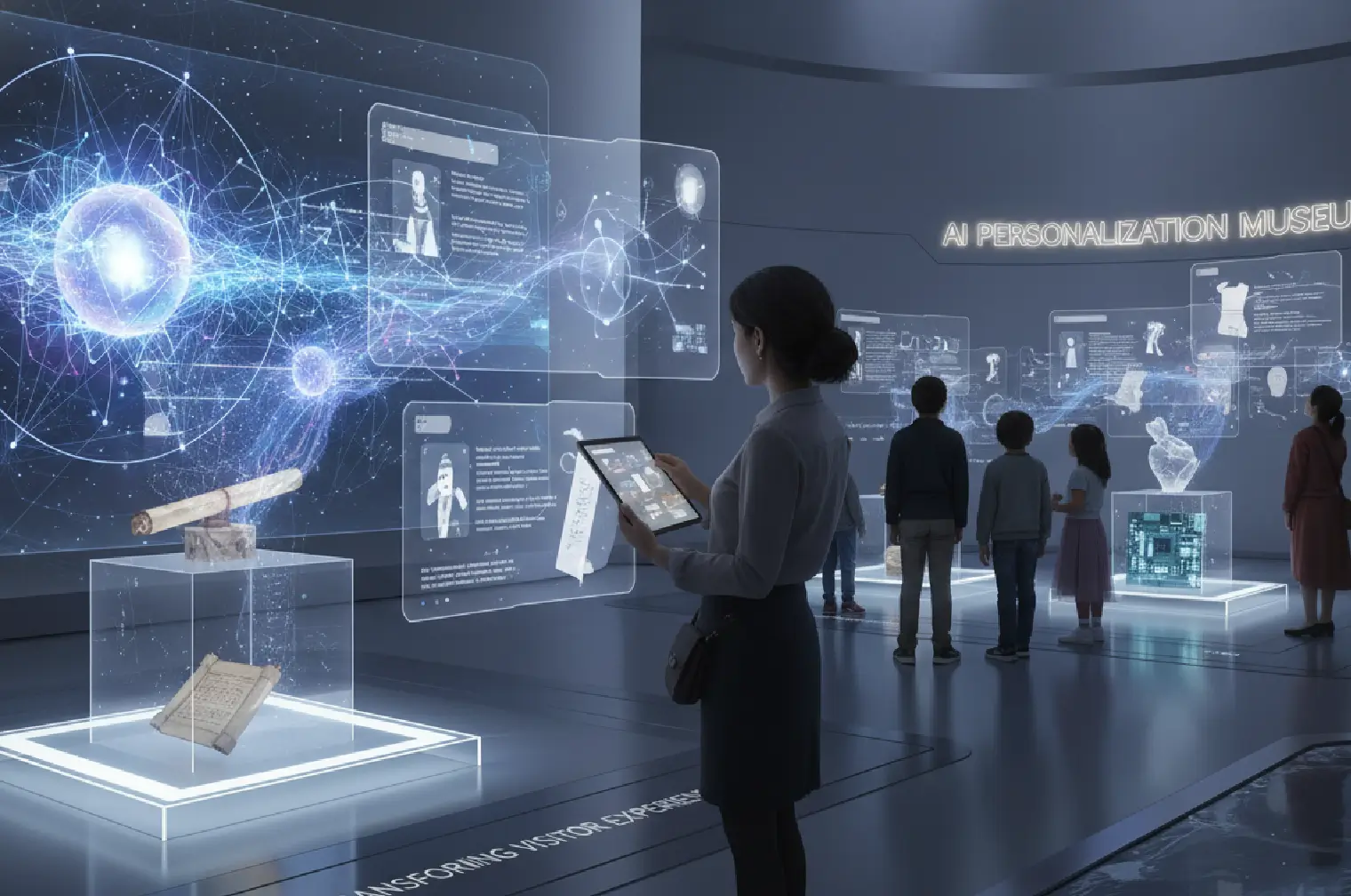
Museums can use AI personalization museum strategies—recommendation engines, conversational guides, and adaptive audio guide platforms—to tailor every visit based on interests, pace, and behavior, while visitor analytics for museums track dwell time, repeat visits, and membership conversions to prove ROI. Institutions working this way report more engaged visitors, better crowd flow, and clearer links between digital experience investments and revenue or loyalty outcomes.
Why Are Museums Moving from Objects to Stories with AI Personalization?
Museums are shifting from “holders of objects” to “platforms for stories” because audiences, especially younger, mobile‑first visitors, expect personalized, interactive journeys instead of static labels and linear tours.
At the same time, boards and funders want clear evidence that new digital experience solutions for museums drive visits, learning, accessibility, and financial sustainability.
Personalization bridges this gap by using data and AI to personalize museum experiences around interests, prior knowledge, time available, and access needs, so every visit feels relevant rather than generic.
Leading institutions now use AI-powered museum platforms to tailor routes, stories, and formats; this creates deeper engagement while generating rich behavioral data that feeds continuous improvement.
How Can AI Recommendation Engines and Adaptive Guides Personalize Visitor Journeys?
AI recommendation engines learn from visitor profiles, behavior, and context (time, crowding, device) to suggest exhibits, themes, or routes in real time, much like a streaming platform but tuned for culture rather than content bingeing.
For an AI personalization museum strategy, these engines typically combine explicit preferences (topics, artists, visit length) with implicit signals (what visitors tap, how long they stay, which items they skip) to deliver curated journeys that feel like a knowledgeable companion.
Here’s how to decide your first AI recommendations:
- Define a pilot scope, such as one gallery or a “first‑time family” segment, and decide how you want to personalize museum experiences (interest-based routes, accessibility layers, or language preferences).
- Structure your collection metadata so objects can be clustered by theme, difficulty, popularity, and accessibility attributes, which allows the recommendation engine to assemble coherent tours.
- Integrate the engine into your app or web experience so visitors answer a few questions or sign in, then receive personalized paths and content cards that adapt as they move.
- Feed visitor analytics for museums—dwell time, completion rates, skipped suggestions—back into the model so recommendations improve with every visit.
Create Personalized Museum Journeys with AI
Bring exhibits to life using AI Personalization Museum strategies designed to engage every visitor.
How Does ViitorCloud Help Here
ViitorCloud designs and implements digital experience solutions for museums that combine recommendation engines, mobile apps, and CMS integrations into cohesive AI-powered museum platforms. Our team works end‑to‑end, from defining personalization use cases and data models to building scalable APIs and admin tools, so curators can easily configure rules, content variants, and AI models without relying on constant vendor intervention.
Check: Digital Experience Service: Accessibility in Modern Museums
How Do Conversational Guides and Adaptive Audio Tours Boost Engagement and Data?
AI conversational guides act as on‑device or kiosk-based companions that recognize artworks, answer questions, summarize background, and suggest “next best exhibits,” helping personalize museum experiences in natural language instead of menu trees. They can also capture anonymous questions and behavior, feeding visitor analytics for museums on what confuses, fascinates, or overwhelms guests.
An adaptive audio guide goes beyond linear tracks by tuning narration length, difficulty, and pace based on how quickly a visitor moves, how often they pause, and the type of content they choose. Research prototypes already use machine learning to detect engagement and adapt audio accordingly, which can improve narrative completion rates and perceived learning without overwhelming visitors.
How Do Traditional and Adaptive Audio Guides Compare?
| Aspect | Traditional audio guide | AI‑driven adaptive audio guide |
| Narrative structure | Fixed sequence and duration, same for every visitor | Dynamically adjusts length, order, and depth based on behavior and preferences |
| Personalization level | Basic language choice, sometimes a few tour themes | Full AI personalization museum journeys tuned to pace, interest, accessibility, and repeat visits |
| Interactivity | One‑way playback with minimal branching | Conversational, supports Q&A, branching stories, and surprise recommendations |
| Analytics | Limited device checkout counts, little behavioral insight | Rich visitor analytics for museums: dwell time, narrative completion, content drop‑offs, sentiment |
| Impact on CX | Helpful but generic; easy to ignore or abandon | Feels like a live, responsive guide that keeps visitors oriented and emotionally engaged |
ViitorCloud can architect adaptive audio guide platforms that integrate computer vision, natural language interfaces, and multilingual narration engines, while exposing dashboards for curators to adjust tone, complexity, and learning goals. By connecting these guides to wider digital experience solutions for museums, institutions get a unified view of journeys across app, web, gallery media, and post‑visit follow‑ups.
Elevate Visitor Engagement with AI-Powered Museums
Transform traditional displays into immersive story platforms with our AI-Powered Museums solutions.
How Should Museums Measure ROI And Build an Implementation and Vendor Strategy For AI‑Powered Museums?
To demonstrate the value of AI-powered museums, analytics must be baked in from day one rather than added as an afterthought. Start by defining a measurement framework that covers both experience quality and business outcomes:
- Repeat visits and membership conversion: Track how often personalized visitors return and how many convert into members or donors after using recommendation engines or an adaptive audio guide.
- Dwell time and narrative completion: Use sensors or app events to monitor how long people stay at exhibits and what percentage finish recommended or audio‑guided stories, then tune content where engagement drops.
- Exhibit heatmaps and flow: Apply visitor analytics for museums to visualize crowd density and routes, optimizing signage, staffing, and recommendations to avoid bottlenecks and spotlight under‑visited objects.
- Satisfaction and qualitative feedback: Combine star ratings, short in‑app surveys, and open feedback with behavioral data so you can link specific features of your AI personalization museum stack to perceived value.
A Practical Implementation Roadmap
A realistic roadmap to AI-powered museums is iterative and evidence‑driven rather than a single “big bang” transformation.
A proven pattern looks like this:
- Audit the visitor experience: Map journeys across website, on‑site, and post‑visit touchpoints to identify friction (long queues, confusing wayfinding, content overload) and opportunities where digital experience solutions for museums can help.
- Prioritize AI use cases: Select a small number of high‑impact scenarios—such as interest‑based routes, multilingual adaptive audio guide, or AI chat in your app—aligned with mission and KPIs.
- Assess data readiness: Standardize collection metadata, visitor segments, and consent policies, and ensure you can safely capture clickstreams, sensor data, and content variants needed to personalize museum experiences.
- Select a vendor and architecture: Choose partners who can integrate AI recommendation, content management, and visitor analytics for museums into one extensible platform rather than siloed pilots.
- Deploy a focused pilot: Launch in one gallery or audience segment, with clear success metrics (e.g., +15% dwell time, higher narrative completion, or better membership conversion from personalized journeys).
- Scale and institutionalize: Once KPIs are met, expand across collections, add new AI features, and embed analytics reviews into curatorial, marketing, and operations routines for a mature AI personalization museum practice.
How Should You Evaluate Vendors for Digital Experience Solutions?
A structured vendor matrix helps CX and digital leaders compare digital experience solutions for museums on more than just price.
Use criteria like these and score each option:
| Evaluation area | What to ask the vendor? | What “good” looks like for AI-powered museums |
| AI capabilities | Which models power recommendations, search, and adaptive audio guide personalization, and how are they trained and tuned? | Proven recommendation and NLP stack, configurable rules, and transparent model governance aligned with museum ethics. |
| Integration with CMS/LMS | How does your platform connect to our collection management, DAM, learning systems, and ticketing? | Robust APIs, connectors, and sync tools that minimize manual work and let curators manage content once. |
| Analytics depth | What visitor analytics for museums do you provide out of the box (dwell time, heatmaps, funnels, cohorts)? | End‑to‑end journey analytics with clear dashboards, export options, and privacy controls. |
| Cost and ownership | How are licenses, cloud costs, and support structured, and who owns models and data? | Predictable TCO, no lock‑in for content and data, and flexible tiers for institutions of different sizes. |
| Customization | How far can we tailor UX, rules, and AI behavior without custom coding every time? | Configurable templates and workflows designed for museum teams, not just generic retailers or media. |
| Speed of deployment | How long from signed contract to first live pilot, and what are typical museum timelines? | Weeks, not years, to get a meaningful pilot running with measurable KPIs. |
| Support and security | What ongoing training, monitoring, uptime guarantees, and compliance frameworks do you offer? | Dedicated support, strong security posture, and clear playbooks for ethical AI and data governance. |
ViitorCloud’s museum practice aligns with this matrix by offering AI consulting, UX, engineering, and analytics as one stack, reducing the friction typically seen when multiple vendors are stitched together.
Reimagine Visitor Experiences with AI
Use our AI-Powered Digital Experience Solutions to craft interactive, story-rich museum experiences.
ViitorCloud Is Already Powering Personalized Museum Experiences
ViitorCloud has delivered interactive museum solutions such as AI‑driven digital greeting experiences and immersive LED‑based exhibit interfaces that enable visitors to generate personalized content and explore digital collections fluidly.
These engagements demonstrated how intelligent content management and real‑time adaptation can modernize institutions while respecting conservation and accessibility requirements.
Check our success stories here!
Building on this foundation, ViitorCloud can implement end‑to‑end digital experience solutions for museums that include adaptive audio guide platforms, personalization engines, and deep visitor analytics for museums, all orchestrated as AI-powered museum ecosystems.
Our approach is to co‑design with curators and CX leaders, prototype quickly, prove value with data, and then scale across galleries and channels—web, mobile, in‑gallery media, and emerging AR/VR touchpoints.
Frequently Asked Questions
AI is best used to personalize museum experiences at scale and handle repetitive questions, while human guides focus on nuance, facilitation, and community relationships. Many AI-powered museums deploy conversational guides and adaptive audio guide systems as complementary layers, not replacements, enhancing staff impact rather than reducing it.
You can start small with structured object metadata, basic visit logs, and simple feedback, then grow into richer visitor analytics for museums, such as sensors, heatmaps, and segmentation. The key is designing pilots that capture the right signals from day one, so your digital experience solutions for museums improve over time instead of remaining static.
Cloud-native platforms and modular AI services now let smaller museums launch focused pilots—like a niche adaptive audio guide or a mobile recommendation feature—without massive infrastructure. By partnering with firms such as ViitorCloud that specialize in cultural digital experience solutions for museums, mid‑sized institutions can deploy targeted features, validate ROI, and then expand.
Museums that act now can move from static exhibits to responsive, data‑driven storytelling platforms where every visitor gets a journey tailored to curiosity, comfort, and context. Starting with one or two clear use cases—such as recommendations plus an adaptive audio guide—and layering in visitor analytics for museums sets the foundation for long‑term, ethical AI personalization museum strategies.

Mit Shah
Mit Shah has been creating immersive experiences and delivering games for various platforms for over 9 years.