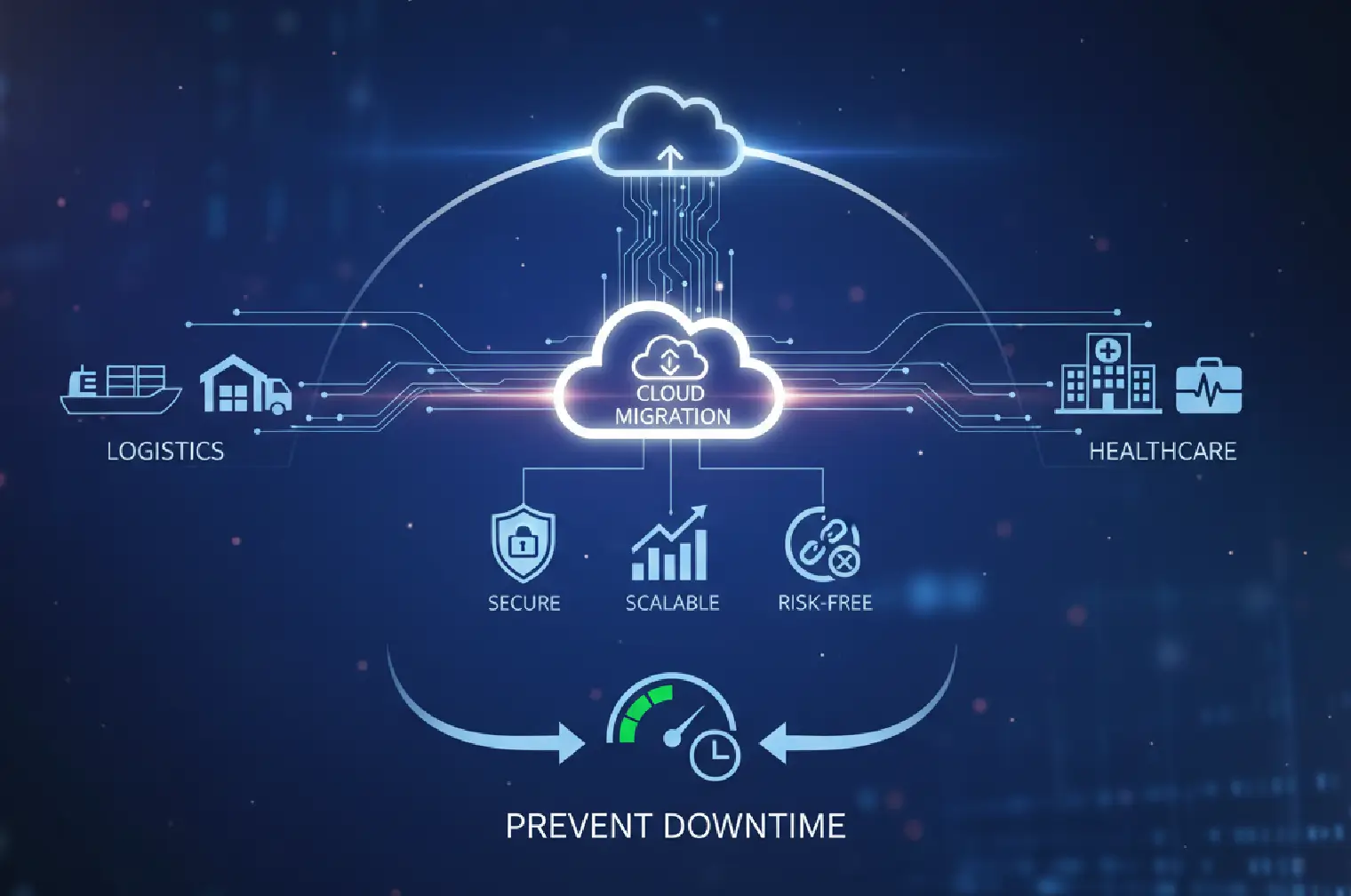
Cloud infrastructure is the primary foundation for digital operations today. For Small and Medium Businesses (SMBs) in logistics and healthcare organizations, moving to the cloud is a requirement for maintaining functional agility.
Strategic cloud migration consulting services provide a structured path to transition from on-premise hardware to secure, high-performance environments.
Let us show you the technical requirements, industry-specific considerations, and modern methodologies necessary for a successful migration.
What is the State of Cloud Infrastructure Today?
Market data indicates that the global cloud computing market will reach $905.33 billion in 2026. Infrastructure leads now prioritize “AI-ready” systems. Simple rehosting is no longer sufficient for organizations that require real-time data processing.
Businesses are shifting toward hybrid and multi-cloud models to avoid vendor lock-in and enhance disaster recovery capabilities.
Organizations currently allocate approximately 45% of their IT budgets to cloud services. This investment supports the need for greater scalability and the integration of advanced technologies like machine learning and IoT.
For infrastructure teams, the primary goal is to reduce operational friction while ensuring data sovereignty across the USA, Europe, and APAC regions.
Primary Aspects of Cloud Migration Consulting Services
A successful transition requires more than moving data. It involves a fundamental change in how applications consume resources. Expert cloud migration consulting services focus on four critical areas:
- Readiness Assessment: Evaluating current workloads, dependencies, and licensing constraints.
- Architecture Design: Building a target environment that supports auto-scaling and high availability.
- Security Integration: Implementing Zero Trust Architecture (ZTA) and identity-centric controls from the start.
- Cost Governance: Establishing FinOps practices to prevent budget overruns after the cutover.
Infrastructure leads often use these pillars to justify the migration ROI. Transitioning to the cloud typically results in 15-35% annual infrastructure savings.
Furthermore, maintenance costs often decrease by 30-50% once an organization moves away from physical server management.
Modernize Legacy Systems with Cloud Migration Consulting Services
Transform outdated infrastructure into scalable, future-ready platforms with ViitorCloud’s Cloud Migration Consulting Services and Legacy System Modernization.
What are the Benefits of Cloud Migration Consulting for a Business?
Engagement with cloud migration consulting professionals helps organizations avoid common pitfalls such as “cloud bill shock” and unexpected downtime.
These services provide technical expertise in selecting the correct compute models, whether they are Virtual Machines (VMs), containers, or serverless functions.
Effective cloud migration consulting also addresses the human element. It provides a roadmap for training internal teams on new DevOps workflows and cloud-native tools. This ensures that the technical transition aligns with the organization’s long-term operational goals.
Comparison of Migration Strategies
| Strategy | Technical Effort | Time to Execute | Scalability Potential | Use Case |
| Rehost (Lift & Shift) | Low | Fast | Limited | Rapid data center exit |
| Replatform | Moderate | Medium | Moderate | Minor optimizations for PaaS |
| Refactor (Modernize) | High | Slow | High | Full cloud-native adoption |
How to Deal with Technical Debt through Legacy System Modernization
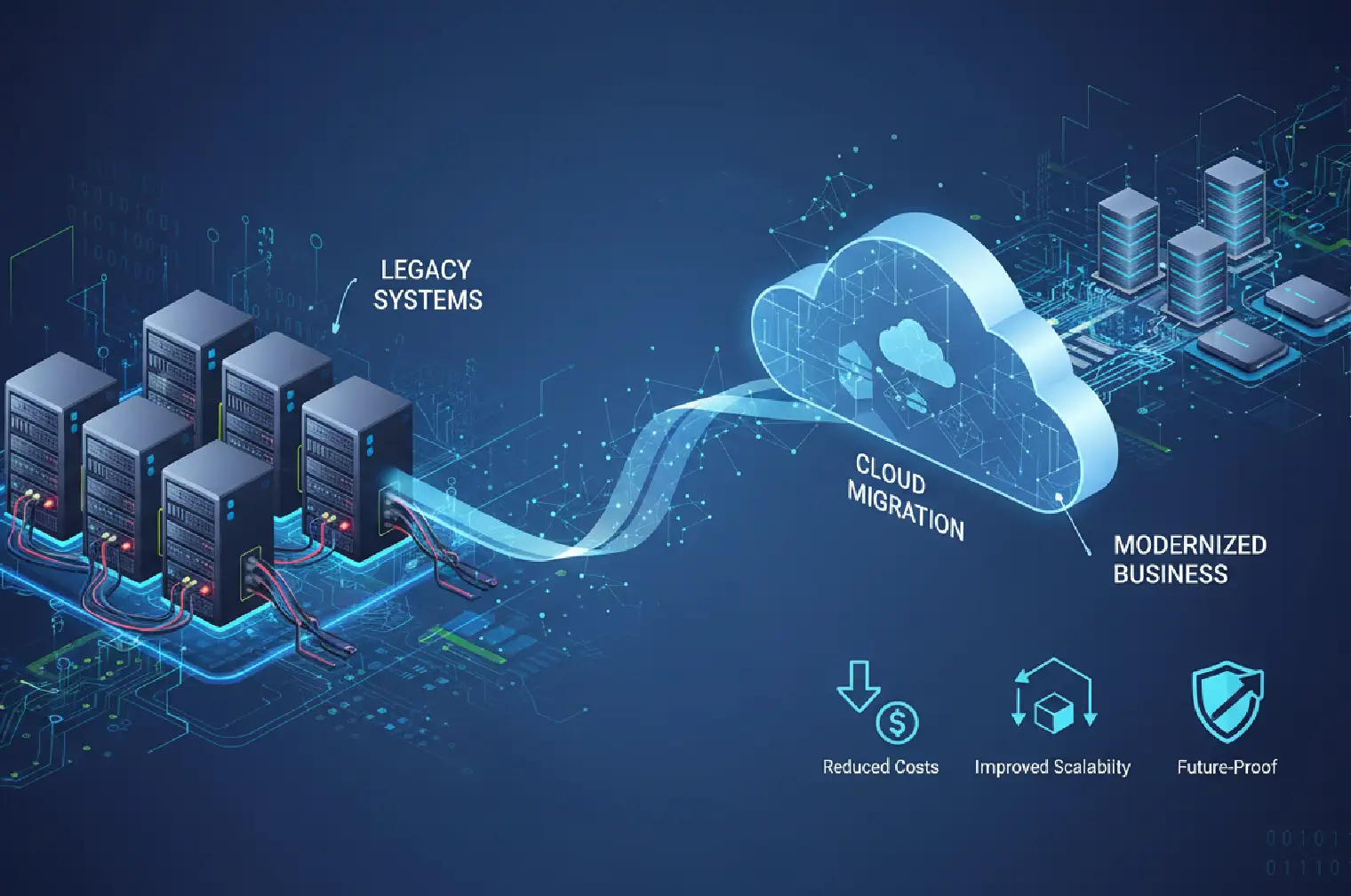
Many SMBs struggle with monolithic applications that are difficult to update. Legacy system modernization is the process of updating these older systems to work with modern cloud architectures. This often involves breaking down monoliths into microservices to improve deployment speed and system resilience.
Implementing legacy system modernization allows businesses to eliminate the “maintenance tax” associated with outdated software. Older systems often consume 60-80% of IT budgets just to remain operational. Modernizing these systems enables the adoption of CI/CD pipelines, which can reduce feature deployment times by up to 35%.
Steps in the Modernization Process
- Decomposition: Separating large applications into smaller, manageable services.
- Containerization: Using tools like Docker and Kubernetes to ensure consistent performance across environments.
- API Enablement: Creating secure interfaces to allow legacy data to interact with modern AI and analytics tools.
- Data Migration: Moving databases to managed cloud services like Amazon RDS or Azure SQL.
Strategic legacy system modernization ensures that infrastructure is not just moved, but improved. This is essential for companies in the logistics and healthcare sectors that rely on high-volume, real-time data exchange.
Industry-Specific Cloud Migration Strategies
Different industries face unique regulatory and operational challenges during migration.
Logistics and Supply Chain
Logistics companies require real-time visibility into fleet and inventory data. Migration strategies in this sector focus on event-driven architectures. By moving to the cloud, logistics firms can reduce operational cycles from 15 days to just 4 days. Our expertise in system integration and modernization helps these firms connect TMS and WMS systems into a unified cloud dashboard.
Healthcare
Healthcare organizations must prioritize HIPAA and HITECH compliance. Migration in this sector requires strictly controlled environments with encryption for data at rest and in transit. According to the U.S. Department of Health & Human Services (HHS), maintaining physical, technical, and administrative safeguards is mandatory. We help providers implement digital transformation in healthcare by building interoperable systems that support FHIR standards.
Accelerate Growth with Cloud Migration Consulting Services
Improve performance, security, and scalability through expert Cloud Migration Consulting Services and strategic Legacy System Modernization.
Financial Impact and ROI of Cloud Migration Consulting
The financial benefits of professional cloud migration consulting are measurable. Organizations typically see a payback period of 6 to 12 months on their migration investment.
For a mid-sized business, the one-time cost of migration ranges from $100,000 to $300,000, depending on the complexity of the legacy system modernization required.
However, the cost of inaction is higher. Organizations that continue to use outdated systems report 25-40% lower productivity compared to those on modern platforms.
Proactive cloud migration consulting services mitigate these risks by identifying high-ROI workloads for early migration.
Enhance Operational Agility
Agility is the ability to respond to market changes quickly. Using cloud migration consulting services allows businesses to adopt “pay-as-you-go” models. This shift from CapEx to OpEx provides financial flexibility. It also allows developers to spin up test environments in minutes rather than weeks, accelerating the pace of innovation.
Continuous legacy system modernization ensures that the technical stack remains current. This prevents the accumulation of future technical debt and allows the business to integrate new AI capabilities as they emerge.
Choose ViitorCloud Advantage for Cloud Consulting Services
ViitorCloud provides end-to-end cloud consulting services that drive measurable results. We focus on delivering high-performance rental management, port automation, and patient care systems.
Our teams use Infrastructure as Code (IaC) to ensure that every environment is secure, repeatable, and scalable across global regions. Whether you are addressing legacy modernization in finance or scaling a SaaS startup, we provide the technical depth required for success.
Professional cloud migration consulting is a strategic necessity for the modern enterprise. By focusing on legacy system modernization and secure architecture, businesses can transform their IT infrastructure into a competitive asset. The transition to the cloud provides the scalability, security, and efficiency needed to lead in a digital-first economy.
Connect with our experts at ViitoCloud via email at [email protected].
Upgrade Your IT Landscape with Legacy System Modernization
Eliminate technical debt and enhance agility using ViitorCloud’s Cloud Migration Consulting Services and Legacy System Modernization solutions.
Frequently Asked Questions
What is the average cost of cloud migration?
Costs vary based on scope. Smaller firms may spend around $40,000, while larger enterprises requiring full legacy system modernization may exceed $600,000. Ongoing operational costs are managed through FinOps to ensure resources are right-sized.
How do we manage compliance during the move?
Compliance is managed through automated guardrails. For European operations, systems must align with GDPR standards regarding data residency and user consent. In the USA, SOC 2 and HIPAA controls are integrated into the cloud architecture during the design phase.
What are the main risks of migration?
The primary risks include data loss, extended downtime, and security misconfigurations. Professional cloud migration consulting mitigates these by using automated migration tools and performing thorough dependency mapping before the cutover.

Vishal Shukla
Vishal Shukla is Vice President of Technology at ViitorCloud Technologies.