Organizations across the USA, Europe, and APAC rely on established technology infrastructure to manage their daily operations. Over time, these aging systems require increasing financial resources to maintain. This accumulated technical debt directly restricts the enterprise pipeline.
When companies allocate most of their IT budget to basic maintenance, they lack the resources to deploy modern AI automation services. The process of legacy system modernization corrects this financial imbalance and restores operational efficiency.
Outdated Technology Consumes Enterprise IT Budgets
Enterprise technology departments consistently spend between 60% and 80% of their annual budgets on maintaining old infrastructure. This expenditure limits new product development and delays service improvements. The accumulated technical debt in the United States alone approaches $1.52 trillion. Companies must prioritize legacy modernization to reallocate these funds toward growth initiatives. Delayed software updates cause security vulnerabilities and increase the risk of data breaches.
Business leaders often overlook these hidden maintenance costs when calculating their enterprise pipeline revenue. Independent research confirms this problem. The IBM Institute for Business Value reports that technical debt directly constrains artificial intelligence success, causing organizations to lose up to 29% of their expected return on investment. The cost of maintaining outdated architecture eventually exceeds the cost of a complete system replacement.
Banking Operations Face High Maintenance Costs
The banking sector allocates approximately 75% of its IT budget to maintaining mainframe systems. These outdated applications lack native API support. This limitation makes proper system integration extremely difficult. Banks require continuous data exchange to comply with financial regulations and process transactions.
Without legacy system modernization, financial institutions struggle to connect with modern payment gateways. Updating these core systems reduces operational risk. You can review how financial institutions handle this transition through legacy system modernization in finance.
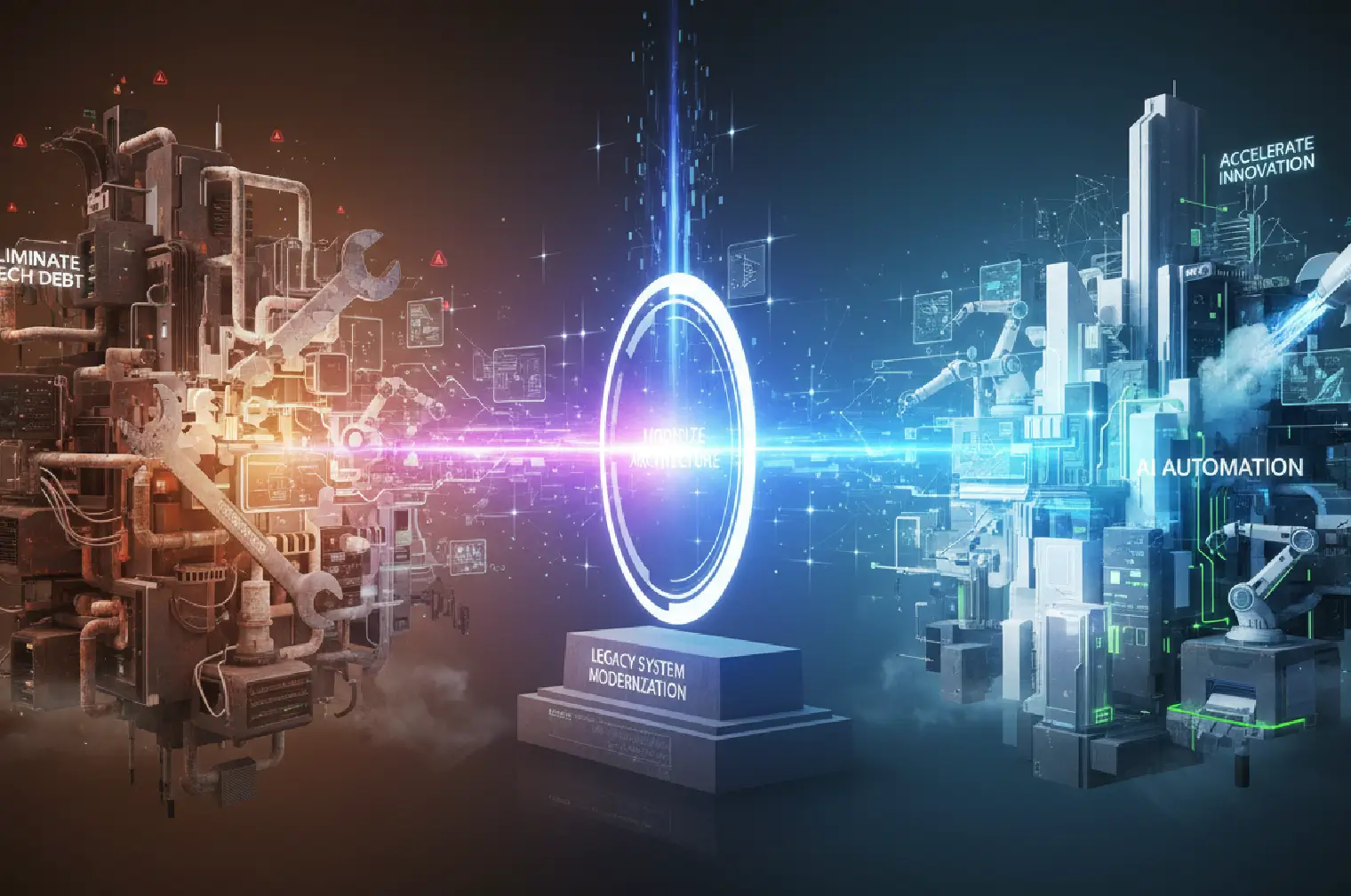
Modernize Legacy Systems to Scale AI Automation
Unlock growth with AI Automation Services and Legacy System Modernization that accelerate Digital Transformation.
System Integration Failures Disrupt Manufacturing Pipelines
Manufacturing companies depend on continuous operational uptime. Outdated software directly causes unplanned factory downtime. This downtime costs manufacturers an average of $125,000 to $260,000 per hour. When production stops, the entire enterprise pipeline stalls. Poor system integration prevents factory managers from monitoring equipment health in real time.
Modernizing the infrastructure allows manufacturers to implement predictive maintenance protocols. These protocols identify equipment failures before they occur. A unified technology ecosystem connects factory floor sensors directly with enterprise resource planning software. You can explore the technical requirements for these connections on our system integration and modernization capabilities page.
Data Silos Block AI Automation Services
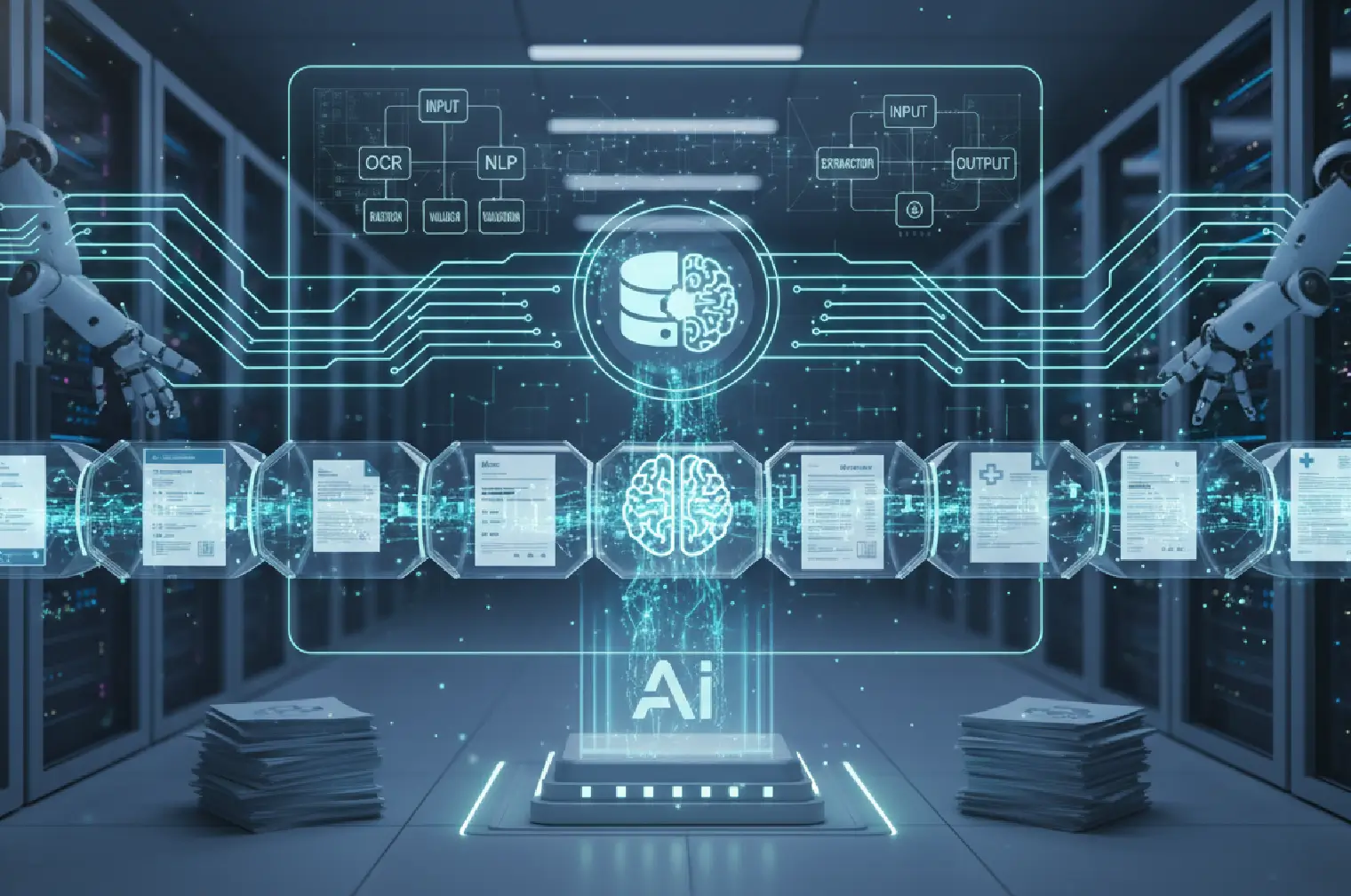
Companies want to deploy artificial intelligence to automate routine tasks. However, outdated infrastructure traps data in isolated databases. AI models require continuous, standardized data feeds to function accurately. A fragmented architecture leads to errors in AI outputs because the models lack a complete data picture. Legacy modernization solves this structural problem by implementing API-first architectures.
According to Deloitte’s analysis on domain-driven design, legacy environments lack the real-time execution capability necessary for true AI integration. Standardized interfaces allow businesses to wrap legacy functions in modern code. This prepares the business for advanced AI automation services. For practical implementation steps, review the guidelines for API-first system integration.
Standard Approaches to Infrastructure Upgrades
IT departments use specific methods to update old software. The chosen method depends on the required system integration depth and the available budget.
- Re-platforming: Engineers move the application to a cloud environment without changing the core code. This reduces physical server costs.
- Refactoring: Developers rewrite sections of the code to function as microservices. This improves processing speed and allows independent component updates.
- Replacement: The organization discards the old software and implements a completely new system. This method requires the most time but eliminates all technical debt.
Scale Faster with AI Automation Services
Transform outdated infrastructure through Legacy System Modernization and drive measurable Digital Transformation.
Clear Indicators That Legacy Modernization Is Necessary
Organizations exhibit specific symptoms when their infrastructure becomes a financial liability. IT directors must monitor these operational metrics to protect the enterprise pipeline. Delaying action increases the final cost of replacement.
- Excessive Maintenance Costs: The IT department spends the majority of its time patching software rather than building new features.
- Security Vulnerabilities: The software vendor no longer provides security patches for the operating system or database.
- Integration Bottlenecks: Connecting a new software application to the central database requires custom middleware and months of manual coding.
- Slow Processing Speeds: Employees experience system latency during peak operational hours, reducing overall productivity.
The following table outlines the direct financial and operational impacts of delaying legacy modernization across different business units:
| Department | Outdated System Indicator | Impact on Enterprise Operations |
| Finance | Manual data reconciliation across databases | Increases audit times and regulatory risk |
| Customer Service | Inability to access real-time user data | Lowers customer satisfaction and retention |
| IT & Security | Frequent system outages and downtime | Disrupts the entire enterprise pipeline |
| Supply Chain | Delayed inventory updates and tracking | Causes stockouts and shipping delays |
Effective system integration requires a complete assessment of all software components. Companies must map dependencies before altering the underlying code. Phased legacy system modernization reduces operational downtime during the transition.
ViitorCloud Delivers Measurable ROI Through Automation
Upgrading enterprise infrastructure requires precision and data security. ViitorCloud functions as an established AI automation agency with 14 years of experience delivering digital transformation services to the BFSI and logistics sectors. We engineer unified digital ecosystems that turn fragmented platforms into adaptive infrastructures. We replace manual effort with intelligent processing to deliver measurable cost reductions.
Our custom AI automation services decrease manual document review times for banking clients and lower fuel consumption through predictive route optimization for logistics companies. We recently implemented an AI-driven detection technology for livestock health monitoring that achieved 90% accuracy in the field.
We ensure your enterprise owns its intelligence and controls its data completely. Our engineering teams build systems based on your proprietary data, keeping sensitive information on-premise or within private enterprise clouds. Before purchasing generic software, consider how custom AI solutions versus off-the-shelf AI impact your long-term security. If your outdated software increases your operational costs, schedule an AI automation consultation with ViitorCloud today.
Build a Future-Ready Enterprise with Digital Transformation
Enable scalable innovation using AI Automation Services supported by strategic Legacy System Modernization.
The Bottom Line
Maintaining outdated software drains capital and prevents technological advancement. Legacy system modernization is a strict financial requirement for companies operating in competitive global markets. By prioritizing proper system integration, organizations eliminate data silos and automate manual workflows. This structural update secures the enterprise pipeline against future disruptions. Legacy modernization transforms a maintenance liability into a measurable operational advantage.

Vishal Shukla
Vishal Shukla is Vice President of Technology at ViitorCloud Technologies.
Frequently Asked Questions
What is legacy system modernization?
It is the process of updating outdated IT platforms to cloud-ready architectures to improve enterprise agility.
Why is legacy modernization important for banking?
How does system integration help in modernization?
What are the hidden costs of legacy systems?
How does outdated software impact manufacturing?