Today, when there are many options available to businesses when they are thinking of upgrading their tech infrastructure, the enterprise operations leaders must choose between traditional software and partnering with an AI automation agency. This choice determines the long-term efficiency and cost structure of the organization. Global enterprises process millions of transactions daily. Relying on outdated processing methods slows down these operations.
Legacy systems create automation confusion. Operations teams deploy basic bots to handle data entry, but these bots break when software interfaces change. An AI automation agency builds systems that adapt to interface updates automatically. The debate of RPA vs AI automation centers on adaptability. Robotic Process Automation executes fixed rules. Artificial intelligence analyzes data variations and continues processing the task without human intervention.
Organizations require an automation strategy that scales across diverse departments. Manual data entry consumes valuable labor hours. Software must process this data instantly. This article provides a literal comparison of both approaches to help enterprise operations leaders select the correct deployment model.
Why Do Standalone Traditional RPA Projects Fail in Global Enterprise Operations?
Traditional programs experience high failure rates during enterprise deployment. Industry data confirms this operational reality. Research from global consulting firm Ernst & Young reports that 30 to 50 percent of initial automation projects fail outright. Bots follow exact screen coordinates. When a software update moves a button by three pixels, the bot stops working immediately.
Operations teams spend excessive capital fixing these broken bots. The constant maintenance requirements eliminate the initial cost savings. This explains why operations leaders shift their focus toward an AI automation agency.
The limitations of basic software include specific technical constraints:
- Structured Data Dependency: The software processes only standard formats like spreadsheets and databases. It cannot read unstructured emails or scanned invoices.
- No Decision Capability: The bot stops and triggers an error alert when it encounters an exception. It cannot determine the next logical step.
- High Maintenance Costs: Information technology staff must manually rewrite the bot script every time a target application changes its visual layout.
- Limited Workflow Scope: Standalone bots only complete isolated tasks. They do not optimize the entire operational workflow.
- Inability to Scale: Deploying more bots multiplies the maintenance requirements. This prevents the enterprise from scaling the technology across new departments.
To resolve these technical debt issues, companies evaluate RPA vs AI automation and deploy hybrid models. Implementing RPA and AI hybrid automation combines fixed task execution with adaptive exception handling.
Stop relying on rigid bots that break when your data changes
The RPA vs AI automation debate ends here. Basic RPA limits your growth, while true AI adapts and scales. Partner with an elite AI automation agency that engineers systems to think, learn, and slash your operational costs instantly.
RPA vs AI Automation: How Do the Technical Architectures Differ?
Operations leaders must understand the structural differences between these two technologies. A direct comparison shows how custom AI solutions process information differently than traditional software.
| Feature | Traditional Software Capability | AI-Driven Automation Capability |
| Trigger Mechanism | Schedule-based or manual execution | Event-driven and context-aware execution |
| Data Processing | Reads only highly structured database formats | Extracts text from unstructured PDFs and emails |
| Exception Handling | Fails and requires human intervention | Applies probability models to resolve the issue |
| Maintenance Need | High; requires manual script updates | Low; applies machine learning to self-correct |
| Output Type | Exact data replication | Predictive analysis and dynamic routing |
| Learning Curve | Static; performs the same action forever | Dynamic; improves accuracy from historical data |
| Integration Method | Surface-level user interface interaction | Deep Application Programming Interface (API) connection |
This table illustrates the core difference in the RPA vs AI automation discussion. Traditional software requires strict environmental control. AI-driven automation tolerates environmental changes.
Read: RPA vs RPA + AI: What Automation Leaders Are Choosing in 2026
What Capabilities Define a Modern AI Automation Agency?
An AI automation agency implements systems that combine task execution with data analysis. They do not sell generic software licenses. They build infrastructure tailored to specific enterprise requirements.
Integration of Machine Learning Models
An AI automation agency deploys machine learning algorithms to classify documents and extract relevant data. This reduces the manual review time for operations teams. The system learns from human corrections and improves its accuracy over time. Algorithms analyze millions of historical records to identify the correct processing category for a new document.
Deployment of Custom AI Solutions
Generic software lacks the specific parameters required by niche industries. Operations teams use custom AI solutions to align the technology with their exact internal workflows. Custom AI development process proprietary company data without exposing it to public models. This strict data isolation protects enterprise intellectual property.
End-to-End Process Engineering
Standalone bots address single steps in a workflow. AI-driven automation connects the entire process. The system receives an incoming request, validates the data, makes an approval decision, and updates the final database record automatically. It routes unresolvable exceptions to specific managers.
Continuous System Optimization
An AI automation agency establishes monitoring protocols for the deployed software. The system tracks its own performance metrics and identifies new workflow bottlenecks. AI-driven automation updates its processing logic as new data types enter the corporate database.
Enterprise leaders rely on an AI automation agency to build these complete pipelines. Developing these custom AI solutions ensures the final architecture matches the exact operational requirements of the organization.
Transform sluggish workflows into a high-speed revenue engine
Manual bottlenecks and outdated software destroy your profit margins. We deliver aggressive AI-driven automation for operations that eliminates human error and accelerates daily output. Implement our proven AI automation for enterprise operations to outpace your competitors effortlessly.
How Does AI-Driven Automation Manage Complex Multi-Regional Operations?
Global operations face strict compliance and routing challenges. Companies manage cross-border payment settlements, navigate multi-currency environments, and comply with diverse regional data privacy laws. Basic software cannot calculate the variables required for global supply chain fragmentation.
AI-driven automation calculates transit delays, currency fluctuations, and localized compliance rules simultaneously. The algorithms optimize delivery paths across different time zones. They flag unauthorized access attempts based on localized user behavior patterns. The system applies specific data masking rules depending on the geographic origin of the user request.
According to global automation research by McKinsey & Company, companies integrating artificial intelligence into their supply chains report a 15 percent reduction in total logistics costs. This cost reduction occurs because AI-driven automation processes complex regional variables without human delay.
Operations leaders use these systems to standardize operations across all corporate locations. Standardized data feeds allow the main headquarters to monitor regional performance accurately. The deployment of AI automation services ensures these global systems operate continuously regardless of time zone differences.
How Do Custom AI Solutions Impact Enterprise Revenue and Efficiency?
Enterprise software upgrades must demonstrate clear financial returns. Implementing custom AI solutions directly impacts the operational budget by eliminating manual verification steps. Departments process higher volumes of transactions without hiring additional staff.
The RPA vs AI automation debate concludes when companies measure the total processing time. Traditional software speeds up data entry, but the workflow still stops for human approvals. Custom AI services complete the approvals using historical data patterns. The software evaluates risk and approves safe transactions instantly.
Operations directors partner with an AI automation agency to identify these high-value automation targets. The agency maps the existing workflows and determines which segments require machine learning models. The resulting AI-driven automation lowers the cost per transaction. Financial operations settle accounts faster. Human resources departments verify applicant credentials immediately.
Integrating an AI-driven automation framework provides long-term operational stability. The technology scales alongside the enterprise without requiring a proportional increase in administrative staff. It processes peak transaction volumes during high-demand periods without slowing down.
Ditch the off-the-shelf tools that limit your potential
Generic platforms force you to compromise on your unique business goals. We design robust custom AI solutions for enterprise that fit your exact complex requirements perfectly. Stop settling for average results and deploy intelligent systems that secure your market advantage.
Are You Ready to Partner with an AI Automation Agency?
Enterprise operations require technology that adapts to changing business conditions. Replacing rigid bots with adaptive systems secures the corporate infrastructure. ViitorCloud acts as a dedicated AI automation agency for organizations modernizing their workflows.
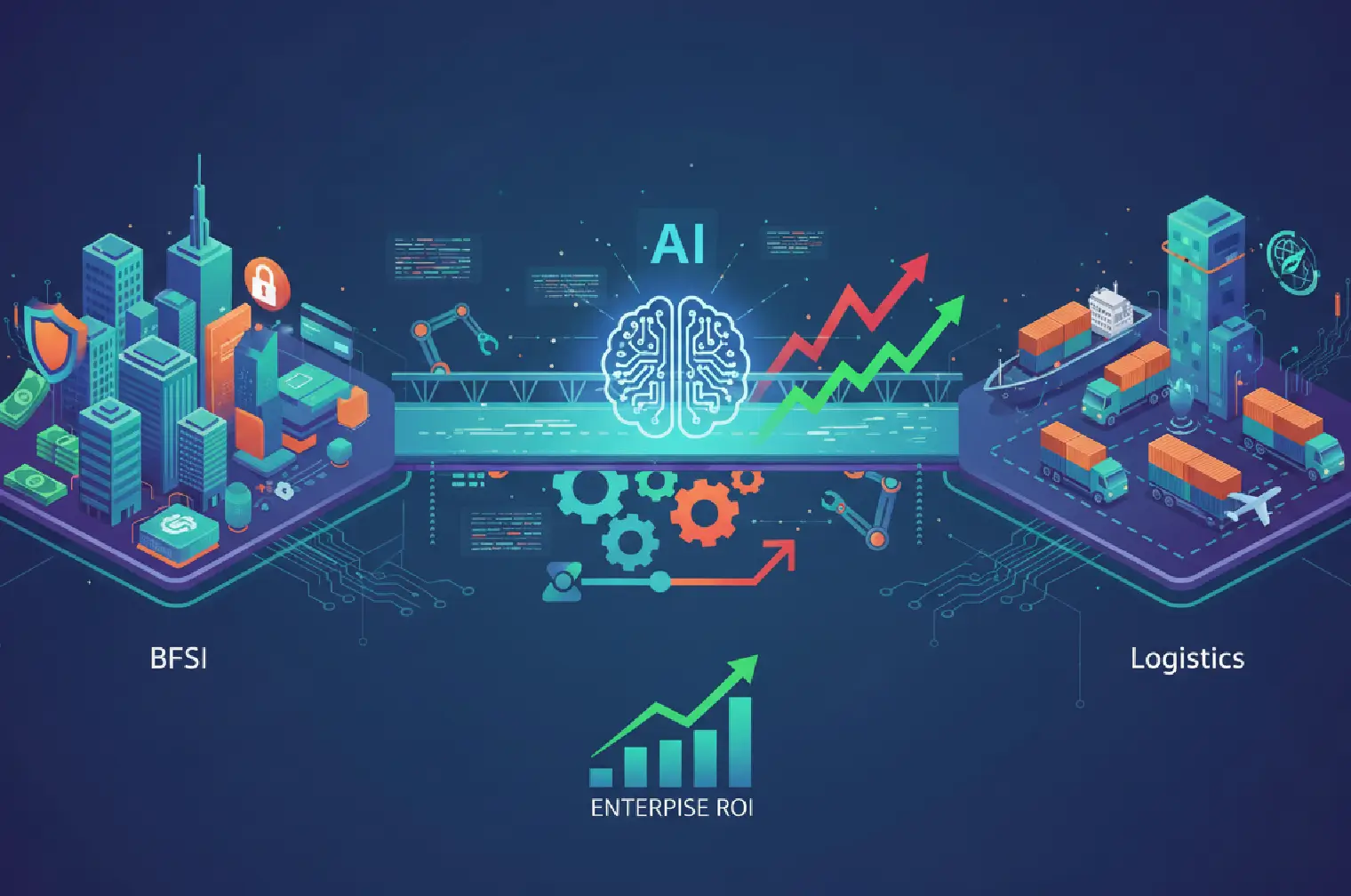
Our teams implement custom solutions that generate measurable results. We recently deployed AI solutions for livestock health monitoring that achieved 90 percent accuracy in the field. Our AI-driven automation frameworks decrease manual document review times for banking clients and lower fuel consumption through predictive route optimization for logistics companies.
Operations leaders comparing RPA vs AI automation find that our technical deployments reduce error rates and accelerate data processing. Contact ViitorCloud to build a reliable automation architecture for your enterprise operations.

Vishal Shukla
Vishal Shukla is Vice President of Technology at ViitorCloud Technologies.
Frequently Asked Questions
What is the main difference between RPA and AI automation?
RPA executes fixed rules for repetitive tasks. AI automation learns from data to make independent decisions.
Why should companies hire an AI automation agency?
Can AI-driven automation handle unstructured data formats?
How do custom AI solutions reduce operational costs?