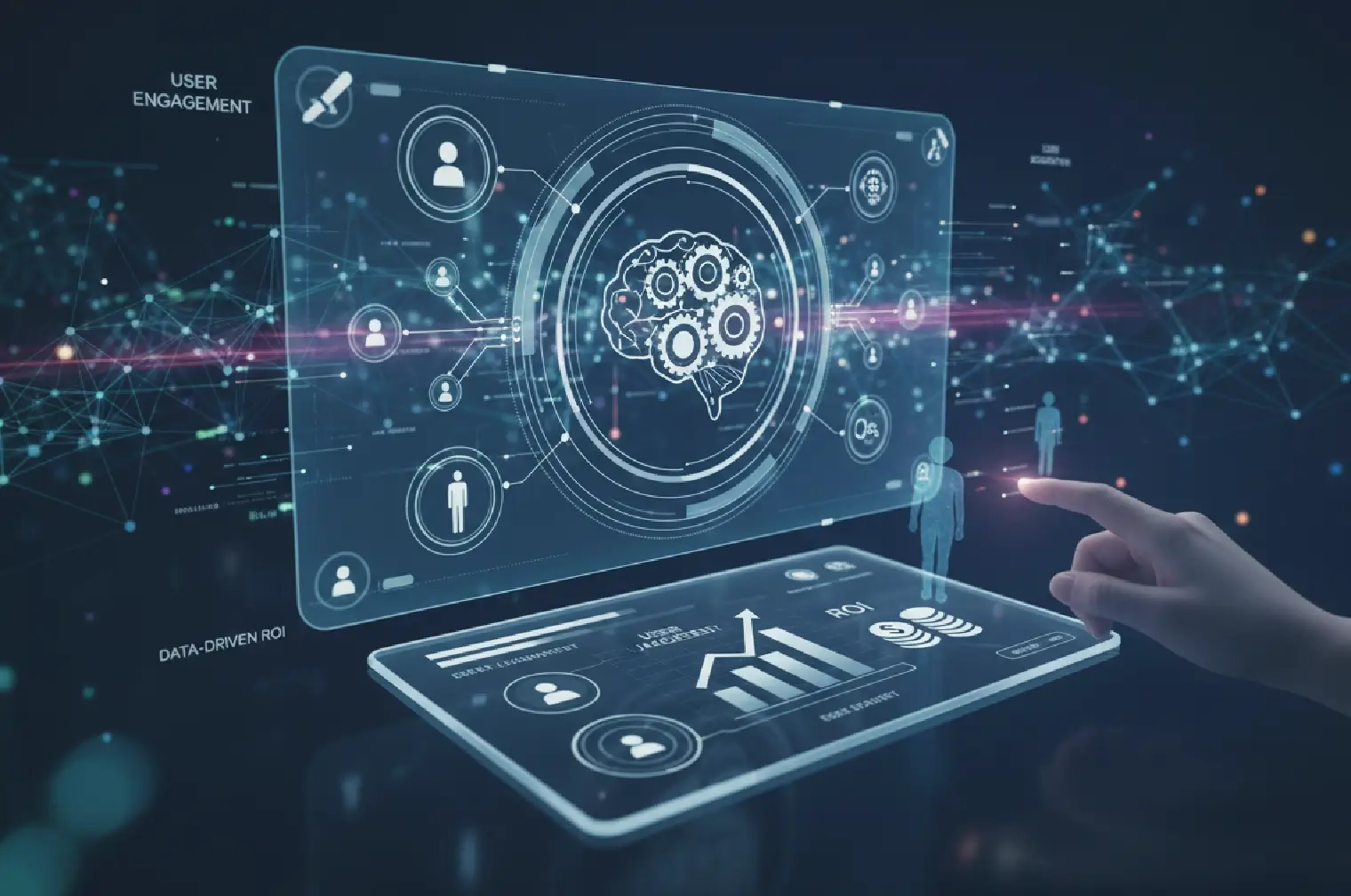
Digital experience design is at a turning point. Product teams in SaaS and FinTech are not competing on features alone anymore. They compete on how a product responds, adapts, and earns user trust at every interaction. With AI now embedded across product layers, the standards for what makes an interface effective have fundamentally changed.
This trend guide covers the most important AI UX trends reshaping how product teams build and deliver digital products in 2026, and what those trends mean for product strategy, design systems, and user expectations.
The UX Your Users Knew Two Years Ago No Longer Works
Most product teams still operate on a design framework built before AI became a standard product layer. Static navigation, identical dashboards for every user type, and manual onboarding flows create friction where there should be none.
The data is clear on what that friction costs:
- 88% of users will not return after a poor digital experience
- 94% of first impressions are directly tied to design
- Users expect platforms to learn and adapt, not require users to do the adapting
Outdated UX is a churn driver, a conversion problem, and an increasingly visible competitive gap for product teams that have not updated their approach.
Generative UI Is Rewriting What a Good Interface Means
One of the most visible shifts in digital experience design is the rise of generative and adaptive interfaces. Traditional UI delivers the same layout to every user. Generative UI delivers a layout shaped by each user’s behavior, role, and session context.
What adaptive interfaces look like in practice:
- A SaaS analytics dashboard that reorganizes itself around the metrics each user accesses most
- A FinTech app that presents different onboarding flows for individual investors versus business account holders
- A product interface that reduces visible modules over time based on usage patterns
Gartner projects that 30% of all new applications will use AI-driven adaptive interfaces. Product teams building with static layouts today face significant rework within 18 months.
Stop losing active users to outdated interfaces
Ignoring rapid AI UX trends hands your market share directly to your competitors. We provide aggressive digital experience consulting that transforms your platform instantly. Rely on our flawless digital experience design and deploy custom AI-powered digital experience solutions to hook your users and scale your revenue right now.
Personalization Is No Longer a Feature, It Is the Infrastructure
In 2026, users treat personalization as a default product behavior. McKinsey research shows that companies using AI-driven personalization generate 40% more revenue than those that do not. That gap reflects product performance for different users, not just marketing outcomes.
For SaaS and FinTech teams, this shifts how personalization is designed:
- Role-based interface customization at the session level
- AI-generated workflow and content recommendations inside the product
- Dynamic feature presentation based on user behavior data
- Adaptive help content calibrated to where each user gets stuck
Modern digital experience services are built around this architecture-first approach. Personalization is an infrastructure decision made at the system design stage, not added at the end of a sprint.
Product teams working on AI-powered SaaS platforms can see how AI-first SaaS product engineering approaches this challenge at the platform level.
Agentic AI Has Entered the Product Interface, And Users Have Noticed
Agentic AI refers to systems that take multi-step actions on a user’s behalf without requiring constant input. These agents are moving from back-end automation into visible product interfaces, and they are changing what users expect a product to do.
According to Gartner, 40% of enterprise applications will include task-specific AI agents by end of 2026, up from fewer than 5% in 2025. For product teams, this is an active design challenge, not a future roadmap item.
What changes when agents enter the interface:
- Users set goals rather than navigate menus
- Error handling requires new design logic, agents must fail gracefully and explain what happened
- Onboarding shifts from teaching the interface to configuring what the AI does on the user’s behalf
Product teams building in this direction will find relevant context in the approach to AI integration for enterprise systems.
Multimodal Inputs Are Becoming the Standard, Not the Experiment
Text input is no longer the primary way users interact with digital products. Voice, visual scanning, and gesture-based inputs are entering enterprise and consumer platforms at scale. The voice interface market is projected to reach $41.8 billion by 2035. In FinTech, voice-enabled account queries and visual document capture are already in active deployment.
Building for multimodal interaction requires:
- Input-agnostic interaction logic where the same task works via text, voice, or image
- Response systems that adapt their output format based on the input type received
- Accessibility standards that treat multimodal as the default, not the edge case
This is a foundational principle of modern digital experience design. Product teams that design for multimodal from the start build products that perform across more users and more use contexts.
Dominate your industry with cutting-edge software
Clunky AI products destroy your actual business value and kill conversions. Capitalize on new AI UX trends with our elite digital experience consulting. We engineer superior digital experience design and robust AI-powered digital experience solutions that turn your frustrated users into loyal, paying customers.
In FinTech, Trust Is Now a Design Problem
FinTech products carry regulatory requirements that most SaaS platforms do not. Compliance, data privacy, and decision transparency are user-facing design decisions, not back-end configurations. AI tools that make decisions around credit, risk, or transactions must surface explanations at the interface level. Users will not act on results they cannot understand.
Key design responses to the trust challenge:
- Explainability modules that show how a decision was reached
- Visible data provenance showing what inputs were used and when
- Human escalation paths that are easy to locate and use
- Consent flows that users can revisit and modify at any point
For a closer look at how trust-first design applies to compliance-heavy products, the guide to AI use cases in finance covers this in practice.
AI Hype Is Fading, and Purposeful Design Is Taking Over
The Nielsen Norman Group’s State of UX 2026 identifies AI fatigue as a measurable user problem. Products that add AI features as novelties, rather than solutions to specific user problems, now damage the experience rather than improve it.
The AI UX trends with staying power in 2026 are not about adding more AI. They are about making the AI already present more useful, more transparent, and less intrusive.
Signs of purposeful AI design:
- The AI performs one function well rather than many functions poorly
- The AI explains its outputs without requiring the user to ask
- The user can observe the AI improving based on their behavior over time
This is the standard separating modern products from those still operating on the previous generation of digital experience design thinking.
How ViitorCloud Builds for These Shifts
ViitorCloud has delivered AI-first software and platforms for 500+ startups, SMBs, and enterprises. The Co4 Cloud energy management platform is a direct example: ViitorCloud built adaptive AI-driven dashboards that simplified complex energy data for non-technical users, delivering real-time operational insights without requiring users to learn a new interface model. The result was a scalable web portal that put actionable data in front of the right users at the right time.
For product teams evaluating whether their current digital experience services match where user expectations are in 2026, ViitorCloud’s approach to building AI-native products covers the full stack.
The Custom AI Solutions and SaaS Product Engineering capabilities are built for product teams that need to move from outdated interfaces to AI-native products without rebuilding from scratch.
If your product team is working through any of the challenges covered in this guide, the conversation starts here.
Turn your complex technology into a massive revenue engine
Poor navigation and friction drain your enterprise budget every single day. Take control with expert digital experience consulting that maps out a highly profitable interface. We implement top AI UX trends into your digital experience design and build seamless AI-powered digital experience solutions that maximize your retention immediately.
Conclusion
Digital experience design in 2026 is defined by how well a product adapts, explains itself, and earns user trust. Product teams in SaaS and FinTech that treat interface design as a surface-level concern will lose users to products that treat it as core infrastructure. The AI UX trends covered in this guide, generative UI, hyper-personalization, agentic interfaces, multimodal inputs, and trust-first design, are active requirements for any product operating in a market where user expectations are high and patience for friction is low.

Mit Shah
Mit Shah has been creating immersive experiences and delivering games for various platforms for over 9 years.
Frequently Asked Questions
What is digital experience design in AI applications?
Designing interfaces and interactions that use AI to deliver personalized, adaptive, and context-aware digital product experiences for each user.
How do AI UX trends affect SaaS product teams?
What are digital experience services?
Why is trust critical in FinTech digital experience design?