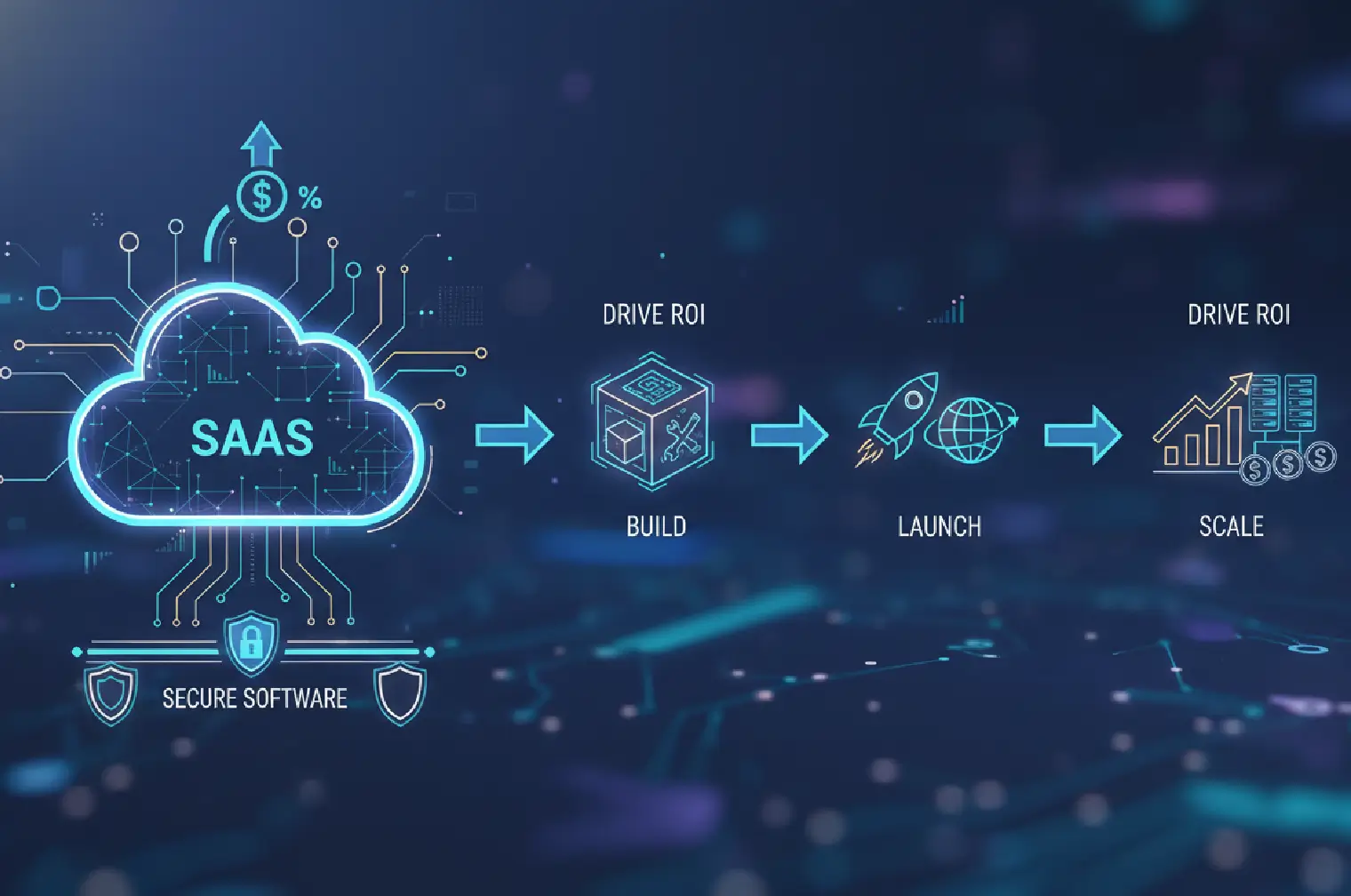
Most startups do not fail because of a bad idea. They fail because they take too long to build, spend budget on the wrong features, and then face a full rebuild six months after launch. Digital product engineering services exist to fix exactly that. The process covers everything from product discovery and architecture to MVP development, testing, and post-launch scaling — structured to get a product to market in 90 days without creating a technical debt problem on the way out.
The global product engineering services market is valued at $1,297.71 billion in 2025 and is projected to reach $1,800.50 billion by 2030, according to MarketsandMarkets. That growth reflects how central this discipline has become for companies that want speed without sacrificing quality.
The Problem That Kills Products Before They Launch
Product teams across technology companies, startups, and scale-ups share three recurring problems:
- Long time-to-market driven by waterfall planning, bloated feature lists, and approval cycles
- Costly rebuilds caused by poor early architecture that cannot support growth
- Low engineering velocity from siloed teams that hand off work instead of collaborating
McKinsey research shows that technical debt can amount to up to 40% of a company’s total technology estate. For startups, that figure translates directly into missed funding rounds, slowed product iterations, and lost customers.
The answer is not to move faster and hope for the best. It is to apply a structured approach to how you build digital product from the start, one that treats architecture, agile methodology, and delivery speed as equal priorities.
Stop waiting years to launch a profitable software platform
Slow timelines kill your competitive edge and drain your capital. Partner with a top-tier product engineering company that guarantees fast, aggressive execution. We deploy proven agile product engineering to accelerate your MVP development. Leverage our elite digital product engineering services to build digital product solutions that capture massive market share in just 90 days.
What Digital Product Engineering Services Actually Deliver
A product engineering company does more than write code. It takes ownership of the entire product lifecycle: discovery, design, architecture, build, quality assurance, deployment, and iteration.
The core service areas include:
- Product discovery and strategy: validating the idea against real market demand before any code is written
- UI/UX design and prototyping: creating interactive prototypes that test user flows early
- MVP development: building a lean, functional product that gathers real user feedback fast
- Scalable architecture: cloud-native, API-first systems designed to handle growth from day one
- Agile product engineering: sprint-based delivery with continuous feedback loops
- QA and DevOps: automated testing and CI/CD pipelines that keep releases stable and frequent
ViitorCloud’s SaaS product engineering services cover this full spectrum, from AI-first SaaS builds to post-launch optimization. The approach is built around dedicated agile engineering pods, small, cross-functional teams where product managers, engineers, designers, and QA specialists work together on a single product without handoff delays.
The 90-Day Sprint: A Practical Breakdown
The 90-day framework is not a shortcut. It is a disciplined structure that forces teams to prioritize validated outcomes over perfect features.
Days 1 to 30: Discover, Define, and Architect
The first month is the most important. Teams that skip this phase almost always rebuild later.
- Define the core problem and the minimum feature set required to solve it
- Interview target users and validate assumptions before committing to a tech stack
- Select a cloud-native architecture, modular, API-ready, and built to scale
- Create wireframes and a clickable prototype for early usability testing
- Set up the development environment, CI/CD pipeline, and sprint cadence
Y Combinator data shows that startups shipping their first version within 90 days are three times more likely to achieve product-market fit than teams that spend six months or more in development.
Days 31 to 60: Build in Sprints, Validate in Real Time
This phase follows a two-week sprint model. Each sprint delivers working, testable features.
- Parallel frontend and backend development keeps delivery timelines tight
- Weekly demos give product owners visibility and allow real-time course corrections
- User testing happens during development, not after, feedback informs the next sprint
- Code quality standards, naming conventions, and modular architecture are enforced from sprint one
Agile engineering teams following this model are approximately 25% more productive and reach market 50% faster than non-agile counterparts, according to industry data on agile adoption trends.
Days 61 to 90: Test, Harden, and Launch
The final phase prepares the MVP for production, not just functional but stable and secure.
- Automated testing covers functional, performance, and security scenarios
- DevOps engineers configure the production environment on cloud infrastructure
- Deployment pipelines are fully automated for one-click future releases
- Post-launch analytics and feedback tools are active from the first day of user access
The result is an MVP that is ready to iterate, not just ready to demo.
Why Agile Engineering Pods Outperform Traditional Team Structures
Siloed teams are the single biggest cause of slow engineering velocity. A designer finishes work and hands it to a developer. A developer finishes and hands it to QA. Each handoff introduces delay, miscommunication, and rework.
Agile engineering pods eliminate that model. A pod is a self-contained, cross-functional unit of four to twelve specialists working together on a single product outcome.
Key advantages of the pod model:
- No handoff delays between design, engineering, QA, and DevOps
- Shared ownership of outcomes, not just individual tasks
- Real-time decision-making without waiting for cross-team alignment
- Measurable delivery tracked through sprint metrics and DORA benchmarks
The pod delivery model can reduce development timelines from three months to approximately three weeks for equivalent complexity. McKinsey analysis indicates agile cross-functional teams cut time-to-market by up to 40%.
ViitorCloud’s end-to-end AI product engineering approach uses this model across every engagement. Each pod is assigned to a specific product scope and operates with dedicated engineering leadership, not shared resources.
Launch a bulletproof platform that crushes your competition
Inexperienced agencies waste your budget on weak code that breaks when your user base scales. You need a proven product engineering company that delivers hard results. We execute flawless agile product engineering to handle your complex MVP development seamlessly. Rely on our comprehensive digital product engineering services to build digital product architecture that handles massive enterprise growth instantly.
Scalable Architecture Is a Day-One Decision, Not an Afterthought
One of the most expensive mistakes in product development is treating scalability as something to address after launch. That assumption leads to a full rebuild at the exact moment a product gains traction.
The right approach to building digital product from the start involves:
Choose Modular Over Monolithic
Monolithic codebases are fast to start and painful to scale. A modular architecture allows individual components to be updated, replaced, or scaled independently. This matters when you need to add a new payment provider, onboard an enterprise client with custom requirements, or handle a traffic spike.
Our work on cloud-native and legacy system modernization shows how businesses that delayed this decision end up spending more on migration than they saved by building fast.
Apply API-First Design from the Start
Every service in a scalable product communicates through well-defined APIs. This makes the system easier to integrate, extend, and maintain. It also future-proofs against team turnover, because the interfaces are documented and enforced, not dependent on individual knowledge.
Automate DevOps Early
CI/CD pipelines feel unnecessary in the first sprint and essential by the tenth. Setting up automated build, test, and deployment processes during the MVP phase saves weeks of manual work as the team scales. System integration and modernization capabilities include cloud-native development, DevOps and GitOps services, and microservices architecture as standard components of product builds.
How ViitorCloud Runs the 90-Day Sprint for Product Teams
ViitorCloud has delivered digital product engineering services to 500+ startups, SMBs, and enterprises since 2011. The pod-based delivery model assigns a dedicated team of engineers, designers, and a product manager to each engagement. Our teams work in two-week sprints with weekly client demos, measurable KPIs, and full transparency on delivery progress.
The “think big, start small” philosophy shapes every engagement: define the full product vision, then execute in structured increments. This approach reduces early-stage risk without limiting long-term ambition.
Results from active product builds include $6.2M in annual revenue enabled for a global eCommerce client through intelligent product recommendations, and a port management platform handling 2.2M+ freight tons through automated scheduling — both built on scalable, AI-first architecture.
If your team is planning a product build or has a backlog that has outgrown its early architecture, explore how ViitorCloud’s agile engineering pods operate and what a 90-day sprint engagement covers.
Turn your raw idea into aggressive recurring revenue fast
Don’t let your brilliant concept stall in endless planning phases. As an elite product engineering company, we utilize relentless agile product engineering to compress your timeline and beat your rivals to the punch. We drive your rapid MVP development from start to finish. Trust our specialized digital product engineering services to build digital product infrastructure that dominates your industry right now.
Conclusion
Digital product engineering services give product teams a structured path from idea to a market-ready, scalable product. The 90-day sprint framework removes ambiguity, the agile pod model removes velocity blockers, and the right architecture decisions at day one remove the need for costly rebuilds at scale. For startups and innovation teams that need to move fast and build right, this is the operating model that delivers both.

Vishal Shukla
Vishal Shukla is Vice President of Technology at ViitorCloud Technologies.
Frequently Asked Questions
What are digital product engineering services?
Digital product engineering services cover the end-to-end process of designing, building, testing, and scaling software products using agile methodologies and modern cloud architecture.
How long does MVP development actually take with an agile team?
How is a product engineering company different from a software development agency?
Why does scalable architecture matter at the MVP stage?