Machine Learning and AI for revolution of Tech Companies are changing and streamlining businesses.


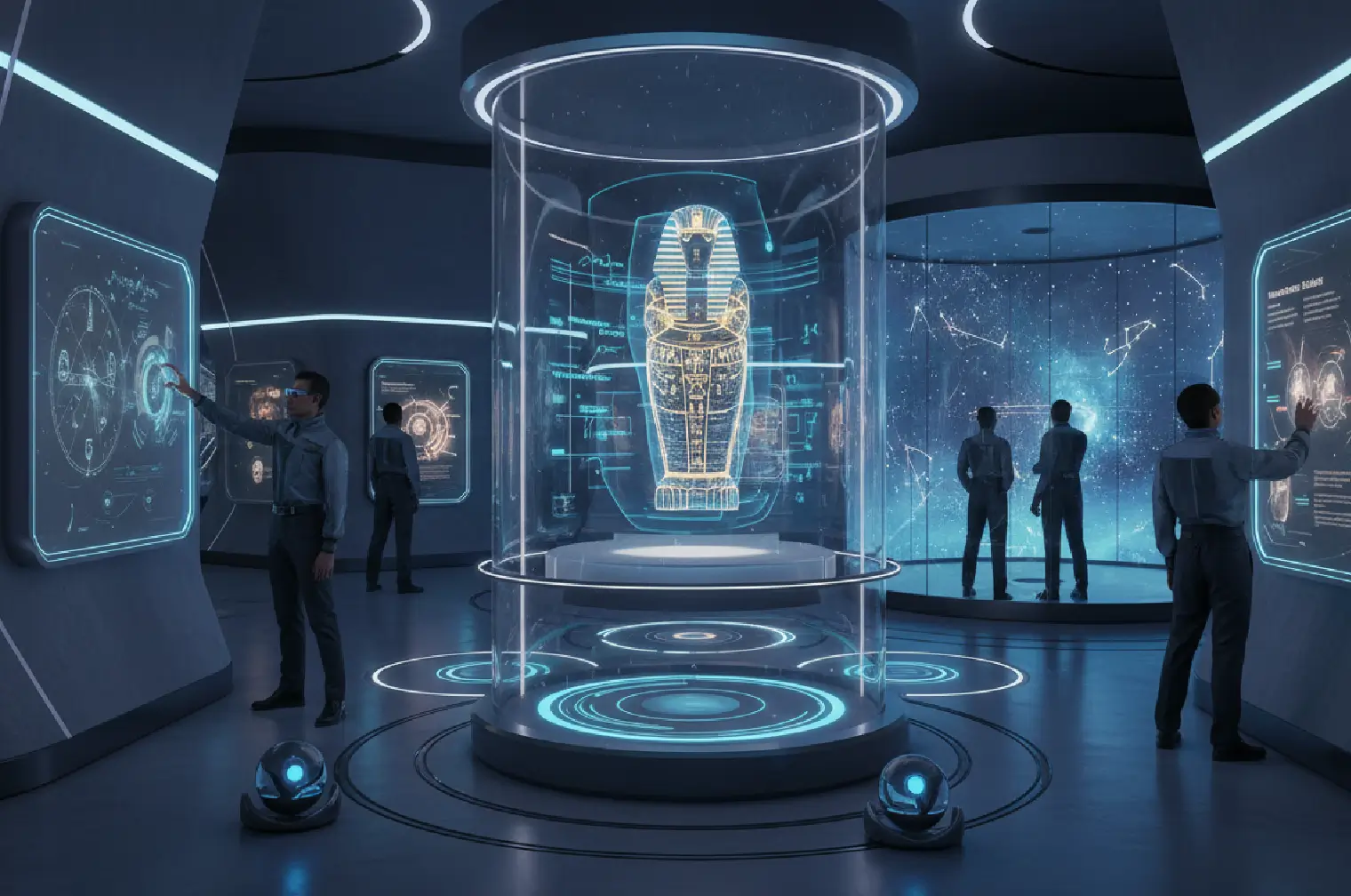
Museums should prioritize digital experience in 2026 because visitors increasingly compare you with high‑production digital attractions and on‑demand content, not with other museums.
At the same time, more than three‑quarters of institutions already use analytics, and those that go further with immersive tools report attendance growth of up to 170%, showing clear upside for leaders who improve the museum’s digital experience strategically.
Visitors describe classic pain points very consistently: fragmented ticketing and membership journeys, static labels that do not adapt to their interests, inaccessible content for people with different abilities, and digital tools that feel like afterthoughts instead of part of the core narrative.
When museum visitor experience technology is poorly integrated, guests juggle multiple apps, QR codes, and underused kiosks, while your team gets data that is siloed and hard to act on. A well‑designed museum’s digital experience strategy flips this by making each interaction (before, during, and after the visit) feel connected and meaningful.
How does a strong museum’s digital experience work in 2026?
A solid museum’s digital experience is built around a few core components that work together rather than as separate projects.
Typically, successful institutions focus on:
- A unified visitor identity spanning web, app, onsite systems, and membership, so every interaction enriches a single profile you can use for personalization and insight.
- A content layer that supports rich media, multilingual narratives, and adaptive storytelling for kids, experts, schools, and remote audiences alike.
- Museums use visitor experience technology such as mobile guides, location‑aware audio, AR overlays, and AI‑powered recommendations to make exhibits feel participatory instead of passive.
- An omnichannel engagement model that connects in‑gallery tools with virtual tours, online programs, and social communities, enabling truly hybrid digital museum experiences.
- A continuous analytics and experimentation loop, where your team uses behavior data, dwell time, and feedback to refine layouts, content, and digital touchpoints.
From an implementation standpoint, leading museums usually start with journey mapping and a north‑star vision, then phase execution to deliver quick wins, often mobile or web, before layering in spatial technologies like AR, VR, and digital twins.
This approach is particularly powerful when supported by partners like ViitorCloud, who bring experience in CX strategy, XR, AI, and IoT while tailoring the roadmap to local realities in India, the Middle East, Europe, and beyond.
Enhance Your Museum’s Digital Experience
Bring visitors closer to culture with ViitorCloud’s tailored Digital Experience Solutions.
Which digital experience features should come first?
Below is a pragmatic view of what to prioritize when you improve a museum’s digital experience in 2026.
| Digital Experience Feature | Benefit | Implementation Priority | Difficulty Score (1–5) |
| Unified ticketing & membership account | Reduces label clutter, supports multilanguage and accessibility, and enables real‑time updates. | High | 3 |
| Mobile web and app guide with rich media | Reduces label clutter, supports multilanguage and accessibility, enables real‑time updates. | High | 2 |
| Location‑aware indoor navigation & audio | Increases dwell time and satisfaction through context‑aware storytelling. | High | 4 |
| AI‑driven personalized recommendations | Suggests routes, exhibits, and content tailored to interests and time constraints. | Medium | 4 |
| AR overlays on key exhibits | Makes invisible stories visible, particularly effective for younger and remote audiences. | Medium | 3 |
| Virtual tours and livestreamed programs | Extends reach globally and supports hybrid digital museum experiences beyond opening hours. | Medium | 2 |
| Digital twins of galleries | Supports conservation, planning, and remote curation while enabling immersive storytelling. | Low–Medium | 5 |
By sequencing in this way, a museum can build a robust digital experience foundation for 2026 quickly, then evolve toward more advanced spatial and AI capabilities without overwhelming teams or budgets.
Read: Immersive Experience Centers: Why Museums Should Adopt Mixed Reality to Stay Relevant
What results can museum visitor experience technology deliver in 2026?
When museum visitor experience technology is thoughtfully deployed, institutions consistently see gains in immersion, presence, and engagement, which in turn drive satisfaction and learning outcomes.
Studies show that interactive and immersive technologies increase perceived value, deepen emotional connection, and positively influence visitors’ intention to return or recommend the museum. Coupled with sector‑wide data on attendance increases of up to 170% in museums that lean into immersive and data‑driven tools, the case for investment in 2026 is compelling.
Even without a named case study, it is realistic for a mid‑sized museum that chooses to improve its museum’s digital experience to aim for measurable outcomes such as 20–40% longer dwell time in priority galleries, 10–20% uplift in membership conversion from digital touchpoints, and higher repeat‑visit rates within 12–18 months.
Hybrid programs that blend onsite visits with virtual content often see higher participation from schools and international audiences, especially when hybrid digital museum experiences are promoted as ongoing “series” instead of one‑off experiments.
For leadership, the real advantage is that every interaction—onsite or remote—becomes part of a measurable, improvable museum’s digital experience 2026 strategy.
Transform Visitor Engagement in 2026
Use innovative Digital Experience Solutions to make every museum interaction meaningful and immersive.
How does ViitorCloud help implement hybrid digital museum experiences?
ViitorCloud’s approach starts with collaborative discovery, where your teams and ours map end‑to‑end journeys from first search to post‑visit follow‑up, identifying high‑impact opportunities to improve the museum’s digital experience instead of just adding more screens.
This includes workshops with curators, educators, operations, and IT to align narratives, operational constraints, and data requirements, ensuring museum visitor experience technology supports people, not the other way around.
From there, ViitorCloud typically co‑creates a CX blueprint for hybrid digital museum experiences, defining how web, mobile, XR, and in‑gallery tools will work together across onsite and remote contexts. Prototyping often involves rapid experiments with AR, VR, spatial computing, and IoT beacons in limited zones, so stakeholders can see, test, and refine the museum’s digital experience before full‑scale rollout.
Implementation is phased through an executable roadmap that includes technical architecture, vendor coordination, content workflows, and staff upskilling, followed by continuous optimization based on analytics and qualitative feedback.
Contact our team at [email protected] to book a meeting to understand what digital experience strategies can work for your museum in 2026 and beyond.
How can museums evaluate vendors and technologies effectively in 2026?
Choosing the right ecosystem of partners is as important as the tools themselves when you improve the museum’s digital experience. The matrix below provides a directional view of which solution types fit which needs, so your team can evaluate options more confidently.
| Solution Type | Best For | Pros | Cons | Implementation Complexity | Ideal Use‑Case |
| CX & digital strategy partner (e.g., ViitorCloud) | A holistic view, aligns tech with narrative and operations. | A holistic view aligns tech with narrative and operations. | Requires time from leadership; not a “quick fix”. | Medium–High | Multi‑year digital transformation, hybrid model design. |
| Experience‑design / XR studio | High‑impact AR/VR exhibits and hybrid digital museum experiences | Strong creative and storytelling; flagship moments. | May underweight data, integration, or scalability. | Medium | Signature immersive gallery or traveling digital exhibition. |
| Faster time‑to‑value, proven templates, and analytics. | Rapid deployment of museum visitor experience technology | Robust integration with POS, CRM, and access control. | Limited customization; platform roadmap controls features. | Low–Medium | Mobile guide, timed entry, self‑guided tours, basic personalization. |
| Systems integrator / IT services | Back‑of‑house systems and data plumbing | End‑to‑end museums’ digital experience 2026 roadmap | Less focus on UX and storytelling. | Medium–High | Connecting ticketing, membership, LMS, and analytics into a single spine. |
| In‑house digital team | Ongoing optimization and content evolution | Deep institutional knowledge; long‑term ownership. | Needs sustained investment and skill development. | Variable | Iterative improvement of the museum’s digital experience in 2026 after initial launch. |
By combining a strategy partner like ViitorCloud with specialized XR studios, SaaS platforms, and strong internal teams, museums can assemble a flexible ecosystem that supports both today’s goals and tomorrow’s hybrid digital museum experiences.
Modernize Your Museum’s Digital Experience
Unlock smarter storytelling and seamless visitor journeys with our expert Digital Experience Solutions.
Frequently Asked Questions
How can smaller institutions improve their museum’s digital experience without huge budgets in 2026?
Smaller museums can improve their museum’s digital experience by starting with a mobile‑friendly web, clear online ticketing, and a simple, browser‑based guide instead of a full custom app. Low‑cost museum visitor experience technology like QR‑linked audio, curated playlists, and social‑media‑ready content can still create hybrid digital museum experiences that extend beyond the visit.
First, map your key visitor journeys and identify 3–5 high‑friction points such as confusing entry, poor wayfinding, or inaccessible content. Second, prioritize quick‑win technologies, often mobile and web, that remove those frictions and support a cohesive museum’s digital experience for 2026. Third, set up basic analytics and feedback loops so your team can see how the museum visitor experience technology is performing and iterate quickly.
Evidence so far suggests that hybrid digital museum experiences do not cannibalize visits; they tend to deepen interest and widen audiences. Virtual and digital touchpoints become feeders into the physical museum by allowing people to preview content, plan visits, and stay connected between trips, strengthening the overall museum’s digital experience.
Core metrics include dwell time in key galleries, app or guide adoption, repeat‑visit and membership conversion, learning or satisfaction scores, and engagement with remote programs. As your museum visitor experience technology matures, you can track how specific digital features influence cross‑selling, donations, and long‑term relationships across hybrid digital museum experiences.
ViitorCloud brings cross‑industry expertise in CX, AI, XR, spatial computing, and IoT, combined with an understanding of cultural‑sector constraints and opportunities in regions like Ahmedabad, wider India, and global hubs. The team focuses on designing the museum’s digital experience 2026 solutions that are technically robust, operationally realistic, and future‑ready, so your investment in museum visitor experience technology compounds over time rather than becoming another legacy system.

Innovative tech solutions aligning with your goals
Transformation starts here
- Strategic consultation
- Collaborative approach
- Agile development