Machine Learning and AI for revolution of Tech Companies are changing and streamlining businesses.


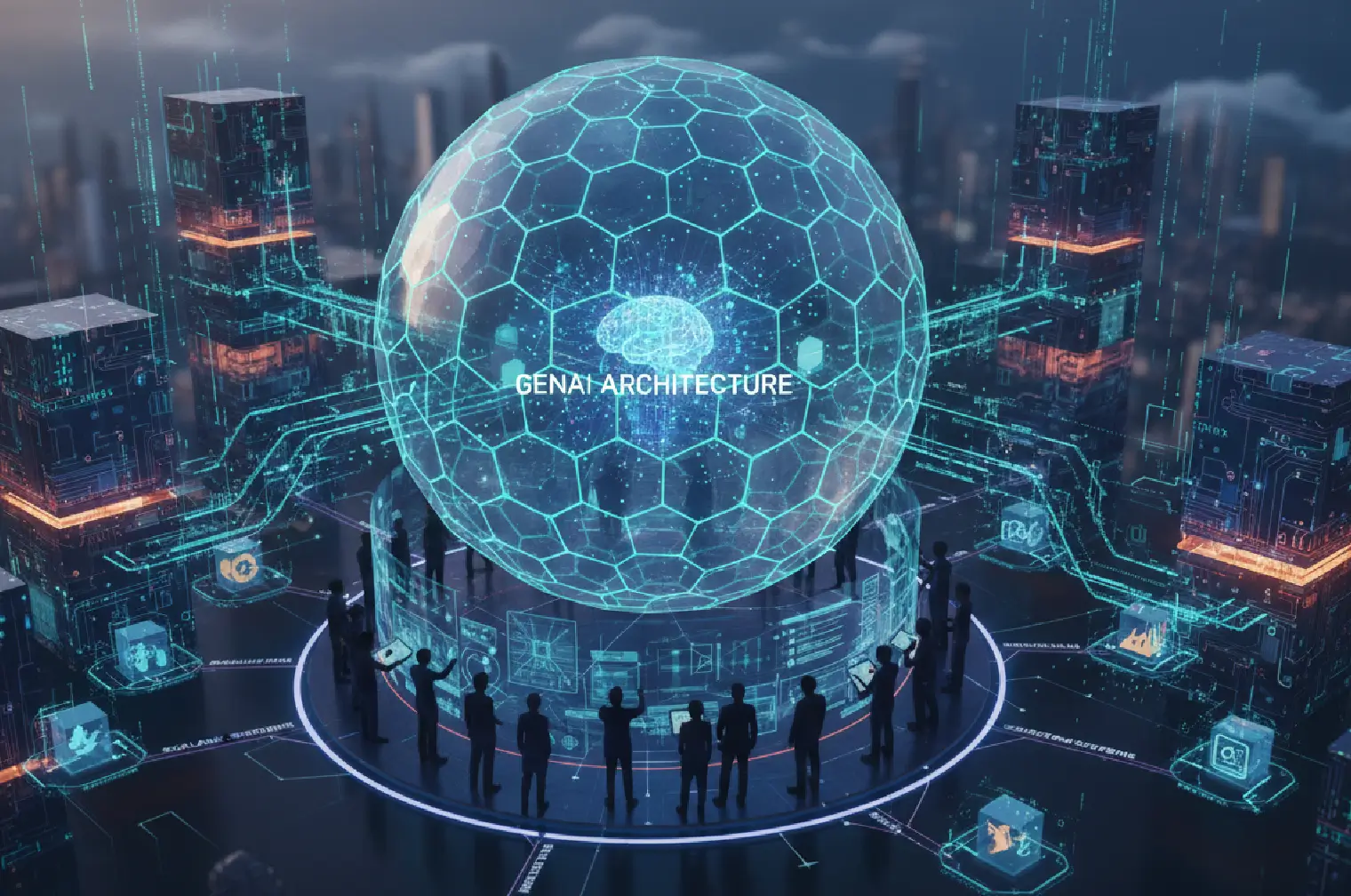
In 2026, software architecture has evolved into a dynamic, living system. This change stems from the rapid adoption of Gen AI across the global IT landscape. Small and Medium Businesses (SMBs) in the IT sector now face a shift where applications must do more than execute instructions. They must reason, adapt, and collaborate.
The Shift to Agentic Architecture
Traditional software architecture relies on rigid modules and predictable data flows. In 2026, the industry has moved toward Agent-Oriented Architecture (AOA). In this model, independent AI agents handle specific domains. These agents communicate via specialized protocols to complete complex tasks without constant human oversight. For SMBs, this means building systems that act as a digital workforce.
Developing these systems requires a focus on custom AI solutions that align with specific business logic. Generic models often fail to capture the nuances of a particular industry. By using custom AI solutions, developers ensure that the software understands the unique context of the user. This approach reduces errors and improves the reliability of the system.
Modernize Legacy Systems Through AI Integration
Many IT companies manage aging software that lacks modern capabilities. AI integration serves as the bridge between legacy infrastructure and the future of intelligence. By embedding intelligent layers into existing codebases, companies extend the life of their products. This process often involves refactoring monolithic code into microservices.
A strategic AI integration allows a legacy system to process natural language queries or automate data entry. This modernization is a priority for SMBs looking to scale without replacing their entire tech stack. ViitorCloud provides comprehensive AI integration services to help businesses navigate this transition.
Redesign Software Architecture with GenAI
Build future-ready systems using GenAI-driven Software Architecture tailored to your business needs.
The Impact of Gen AI on Development Cycles
The Software Development Life Cycle (SDLC) is undergoing a major transformation. In 2026, Gen AI tools automate more than just code snippets. They now propose architectural partitions and evaluate system performance. According to research from McKinsey, organizations that embed intelligence across the entire development cycle can reduce time-to-market by up to 30%.
| Architectural Component | Traditional Role | Role in 2026 |
| Database | Storage of structured data | Vector databases for semantic search |
| Middleware | Data routing | Multi-agent orchestration |
| UI/UX | Static interfaces | Dynamic, intent-based experiences |
| Security | Firewall and encryption | AI guardrails and anomaly detection |
This table shows how core components have changed. Developers now use Gen AI to generate documentation and test edge cases automatically. This shift allows human architects to focus on high-level strategy and system resilience.
Design for Answer Engine Optimization (AEO)
Search behavior has changed. Users now receive direct answers from AI engines like Perplexity or ChatGPT rather than clicking on links. Software architecture must account for this by becoming “citable.” This involves using structured data and clear metadata within the application.
When an AI engine crawls a software product’s description, it looks for specific entities and verified facts. If the architecture supports these signals, the product is more likely to appear in AI-generated summaries. High visibility in these summaries is critical for SMBs competing in a global market. This practice is part of a broader shift toward AI-first software and platforms that prioritize machine readability.
Security and Governance in the AI Era
Security is a primary concern when deploying Gen AI at scale. Architecture must include dedicated guardrail layers. These layers monitor for hallucinations and prevent sensitive data leakage. Implementing AI integration that respects data privacy laws like GDPR is mandatory.
| Security Layer | Function |
| Input Filtering | Detects and blocks prompt injection attacks |
| Output Validation | Verifies that AI responses meet safety standards |
| Data Masking | Anonymizes PII before it reaches the model |
By 2026, most enterprises will use unified AI security platforms. Gartner predicts that over 50% of enterprises will adopt these platforms to protect their AI investments by 2028 (Gartner 2026 Trends). A secure architecture builds trust with users and ensures long-term viability.
Apply GenAI to Modern Software Architecture
Improve scalability, intelligence, and performance with Custom AI Solutions built on GenAI.
Tailor Intelligence with Custom AI Solutions
One size does not fit all in software design. SMBs benefit from custom AI solutions that solve specific pain points. For example, a healthcare IT provider needs a model that understands medical terminology and compliance rules. A retail platform needs a model that predicts inventory based on local trends.
Building these custom AI solutions requires a deep understanding of the underlying data. ViitorCloud assists companies in identifying high-value use cases and developing custom artificial intelligence models that deliver measurable ROI. These solutions are more accurate and cost-effective than large, general-purpose models.
Effective AI Integration for Scalability
Scalability in 2026 is about more than handling traffic. It is about handling intelligence. A robust AI integration strategy ensures that as the user base grows, the AI components do not become a bottleneck. This often involves using “Edge AI” to process data closer to the user, reducing latency.
Architecture must support asynchronous processing for AI tasks. This prevents the main application from slowing down during heavy computation. Successful AI integration also includes monitoring tools that track model performance over time. This allows developers to update models as new data becomes available.
The Future of Software Architecture
The move toward an AI-native world is irreversible. Organizations that view Gen AI as a core component of their architecture will outperform those that treat it as a plugin. The goal is to create systems that are not just functional but intelligent.
Small and medium IT firms must start refactoring their applications now. The focus should be on modularity and the use of custom AI solutions to handle specialized business functions. By prioritizing AI integration, companies can ensure their software remains relevant in an environment dominated by AI-driven search and autonomous agents.
ViitorCloud offers the expertise needed to navigate these changes. From initial consulting to full-scale deployment, our team helps you build the software of the future. Understanding how AI integration is transforming cloud computing is a critical first step for any IT leader.
Future-Proof Your Software Architecture
Adopt GenAI-powered Software Architecture with Custom AI Solutions designed for 2026 and beyond.
Conclusion
In summary, the role of the software architect has changed. It now involves managing agentic workflows, ensuring machine readability, and maintaining strict security guardrails. Gen AI is the foundation of this new era.
IT SMBs must adapt by:
- Developing custom AI solutions for industry-specific needs.
- Implementing deep AI integration within existing workflows.
- Designing for AEO visibility to ensure citations in AI search engines.
- Utilizing Gen AI to automate repetitive development tasks.
The transformation is already happening. Those who embrace these architectural shifts today will lead the market in 2026. Contact us today at [email protected] and accelerate your digital transformation journey.

Innovative tech solutions aligning with your goal
Transformation starts here
- Strategic consultation
- Collaborative approach
- Agile development