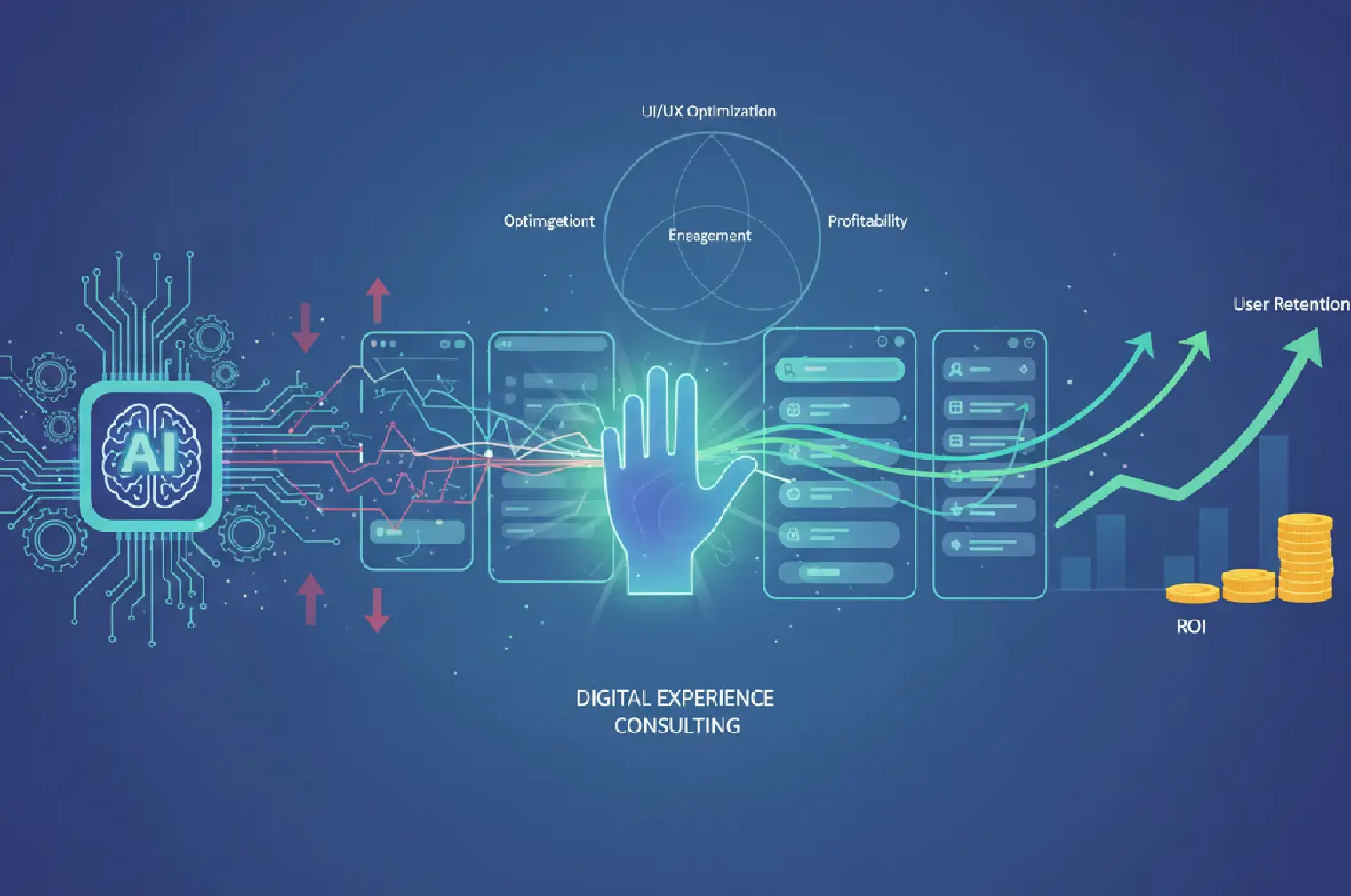
Digital experience solutions are now a direct driver of enterprise revenue. For CMOs and CX Directors in retail, banking, and travel, the difference between a generic customer journey and a personalised one is measurable in churn rates, lifetime value, and conversion performance.
McKinsey’s research on personalisation performance shows that companies excelling at personalisation generate 40% more revenue than slower-growing competitors. At the same time, 71% of consumers expect personalised interactions, and 76% leave frustrated when they do not receive them.
The core problem for most enterprises is not intent. It is the absence of the right customer experience technology to act on customer data in real time and at scale.
What Makes a Digital Experience Solution Different in 2025
A digital experience solution, also called a DXP, is a technology platform that connects content management, customer data, AI engines, and omnichannel delivery into a single operating layer.
The shift from legacy tools to modern digital CX platforms happened in clear stages:
- Early content management systems (CMS) delivered static web content with no personalisation capability
- Web experience management (WEM) introduced basic segmentation and rule-based targeting
- Today’s DXP platforms combine real-time AI, predictive analytics, and cross-channel journey orchestration
By 2026, 74% of enterprises are expected to integrate AI-driven capabilities into their digital CX platforms. The global DXP market is growing at a CAGR of 11.7% through 2030. This reflects a structural change in how enterprises approach customer experience technology, moving from static content delivery to intelligent, data-driven engagement.
Generic Journeys Are Costing Enterprises More Than They Realise
A one-size-fits-all customer journey produces a consistent outcome: customer loss. The industry data makes this clear.
- Retail annual churn runs between 20% and 37%
- North American retail banking churn sits at 19.2%, driven largely by poor digital interfaces and limited personalisation
- In travel and hospitality, only 3% of brands report having fully integrated customer data
Each number points to the same structural failure. Customer data remains fragmented across disconnected systems, which blocks AI personalisation from functioning at any meaningful scale.
When a banking customer repeats their details at every channel, when a retailer sends identical promotions to every subscriber, when a travel brand remains unaware of a frequent traveller’s preferences, these are infrastructure failures. And they each result in measurable revenue loss.
A 5% reduction in banking churn alone can increase profitability by up to 95%.
Stop losing active customers to generic user journeys
Standard interfaces destroy your conversion rates and hand your revenue to competitors. We deliver elite digital experience solutions that execute hyper-targeted AI personalisation. Upgrade your customer experience technology and deploy a robust digital CX platform to hook your users and scale your enterprise instantly.
Three Barriers That Block AI Personalisation at Scale
Data Fragmentation Across Channels
Customer data lives in CRM tools, e-commerce platforms, mobile apps, email systems, and point-of-sale solutions. These systems rarely communicate. Without system integration and data unification, AI personalisation has no complete customer view to work from. Partial data produces partial results.
Latency in Real-Time Decision Making
Personalisation decisions need to happen in milliseconds. Legacy infrastructure cannot process live behavioural signals fast enough to adapt content or offers before the moment passes. A fraction-of-a-second delay is enough to break the experience entirely.
No Unified Customer Profile
A Customer Data Platform (CDP) resolves this by ingesting data from every touchpoint and building a persistent, single customer profile. The global CDP market is forecast to reach $28.2 billion by 2028. This infrastructure has become the foundation of every enterprise-grade digital experience solution.
How AI Personalisation Performs Across Retail, Banking, and Travel
Retail: The Revenue Gap Between Generic and Personalised
AI-powered retail solutions enable individual-level targeting across product discovery, dynamic pricing, loyalty programmes, and real-time offer delivery.
Measurable outcomes enterprises are seeing:
- Personalisation reduces customer acquisition costs by up to 50%
- CDP-driven personalisation produces 15 to 30% higher email revenue compared to batch campaigns
- AI recommendation engines contribute approximately 35% of Amazon’s total revenue
The shift is from demographic-based segments to behaviour-driven engagement, updated in real time. This level of personalisation requires both the right digital CX platform architecture and a clean, unified data layer underneath it.
Banking: When Customer Data Becomes a Retention Engine
Banks using AI personalisation report a 12.3% higher retention rate than those without it. AI-driven predictive analytics has reduced churn by 18% in mid-sized institutions. According to The Financial Brand, 53% of consumers expect their bank to actively use their data to personalise their experience.
Generative AI in banking now powers next-best-action models, personalised product recommendations, and proactive financial alerts tied to individual transaction behaviour. These capabilities are deployed through integrated digital CX platforms that connect front-end customer interactions with back-end data systems.
For further context on how AI in finance extends into customer experience, the applications range from personalised onboarding flows to real-time fraud alerts framed as service interactions.
Travel: Turning Fragmented Bookings Into Personalised Journeys
Travel brands face some of the most severe data fragmentation challenges across any consumer industry. Booking engines, loyalty platforms, CRM systems, and distribution channels rarely share customer data in real time.
AI investment in travel grew from 10% to 45% of total venture capital funding between 2023 and 2025. Travel executives using AI report over 6% annual revenue growth and 6% annual cost savings. Real-world use of customer experience technology in this sector now includes contextual itinerary adjustments, live upgrade offers, and proactive disruption management tied to individual traveller profiles.
Dominate your market with flawless user engagement
Falling behind on customer experience technology costs you massive market share. We build powerful digital experience solutions driven by precise AI personalisation. Partner with our consulting experts to implement a high-converting digital CX platform that multiplies your daily conversions right now.
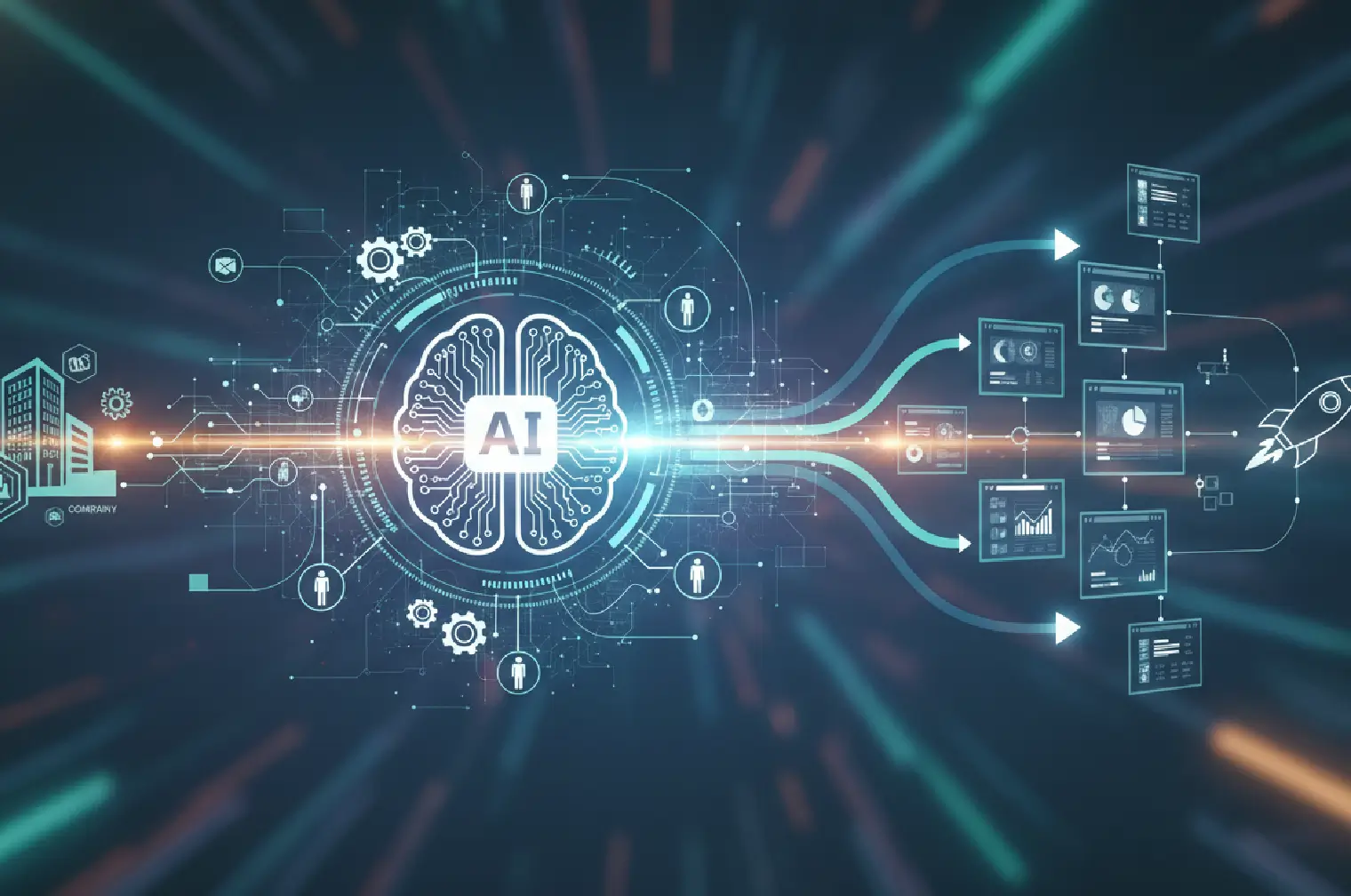
The AI and Data Stack That Powers Personalisation at Scale
Effective digital experience solutions at enterprise scale require four integrated components:
- Unified data foundation – A CDP that consolidates all first-party data from every customer touchpoint into a single persistent profile
- AI and machine learning layer – Custom AI solutions that analyse intent, predict behaviour, and automate personalisation decisions in real time
- Digital CX platform – Orchestrates content delivery and customer journey logic across every channel
- Omnichannel activation – Consistent, contextual engagement across web, mobile, email, and in-person channels
The quality of AI personalisation output is directly tied to the quality of data flowing into the system. AI integration across these four layers is what separates generic digital delivery from personalisation that actually moves retention and revenue metrics.
The Practical Roadmap CMOs and CX Directors Should Follow
Building AI personalisation at scale follows a defined sequence:
- Audit all customer data sources and map the integration gaps between them
- Implement identity resolution to consolidate duplicate records into a single customer profile
- Define high-priority use cases by channel such as onboarding journeys, churn prevention triggers, or product recommendations
- Deploy AI models against specific KPIs: conversion rate, retention rate, or average order value
- Run production A/B tests and refine personalisation logic using real-time feedback
This process applies whether an enterprise is starting its first personalisation initiative or scaling an existing digital CX platform into new business units or geographies.
Understanding how AI improves customer experience at each stage of the customer lifecycle helps prioritise where investment delivers the fastest measurable returns.
ViitorCloud Has Already Built This for Global Enterprises
ViitorCloud has completed over 500 projects across retail, finance, logistics, and technology worldwide.
For a hospitality client, we built a scalable partner platform now serving over 1,000 hotels and processing thousands of orders monthly. The architecture was built from the start for omnichannel data integration and personalised customer journeys.
These outcomes are supported by AI-driven automation capabilities that cover generative AI workflows, RPA and AI hybrid automation, and intelligent document processing, which form the operational backbone of real-time personalisation at enterprise scale.
For enterprises in retail, banking, or travel that need to move from fragmented data to personalised customer experiences, the ViitorCloud team works directly with CX and technology leaders to define scope, build the solution, and measure defined outcomes.
Turn your disconnected user data into a massive revenue engine
Frustrating digital touchpoints drive your paying users away. Take control with proven digital experience solutions that utilize aggressive AI personalisation. We seamlessly integrate advanced customer experience technology into your custom digital CX platform, guaranteeing maximum ROI and deep, long-term user loyalty.
Conclusion
Digital experience solutions powered by AI personalisation are now a core revenue instrument for consumer-facing enterprises. Retail churn benchmarks, banking retention gaps, and travel data fragmentation all point to the same strategic need: unified customer data, real-time AI decision-making, and an integrated digital CX platform that delivers relevant, individual experiences at scale.
The enterprises that address this first will build a durable advantage in retention, customer lifetime value, and revenue growth. Those that maintain generic journeys will continue to see customers move to brands that have invested in the right customer experience technology.
The gap between the two groups is widening every year.

Mit Shah
Mit Shah has been creating immersive experiences and delivering games for various platforms for over 9 years.
Frequently Asked Questions
What are digital experience solutions?
Software platforms that unify customer data and AI to deliver personalised, omnichannel experiences across every digital touchpoint.
How does AI enable personalisation at scale?
What is the ROI of AI-driven personalisation?
What is a digital CX platform (DXP)?