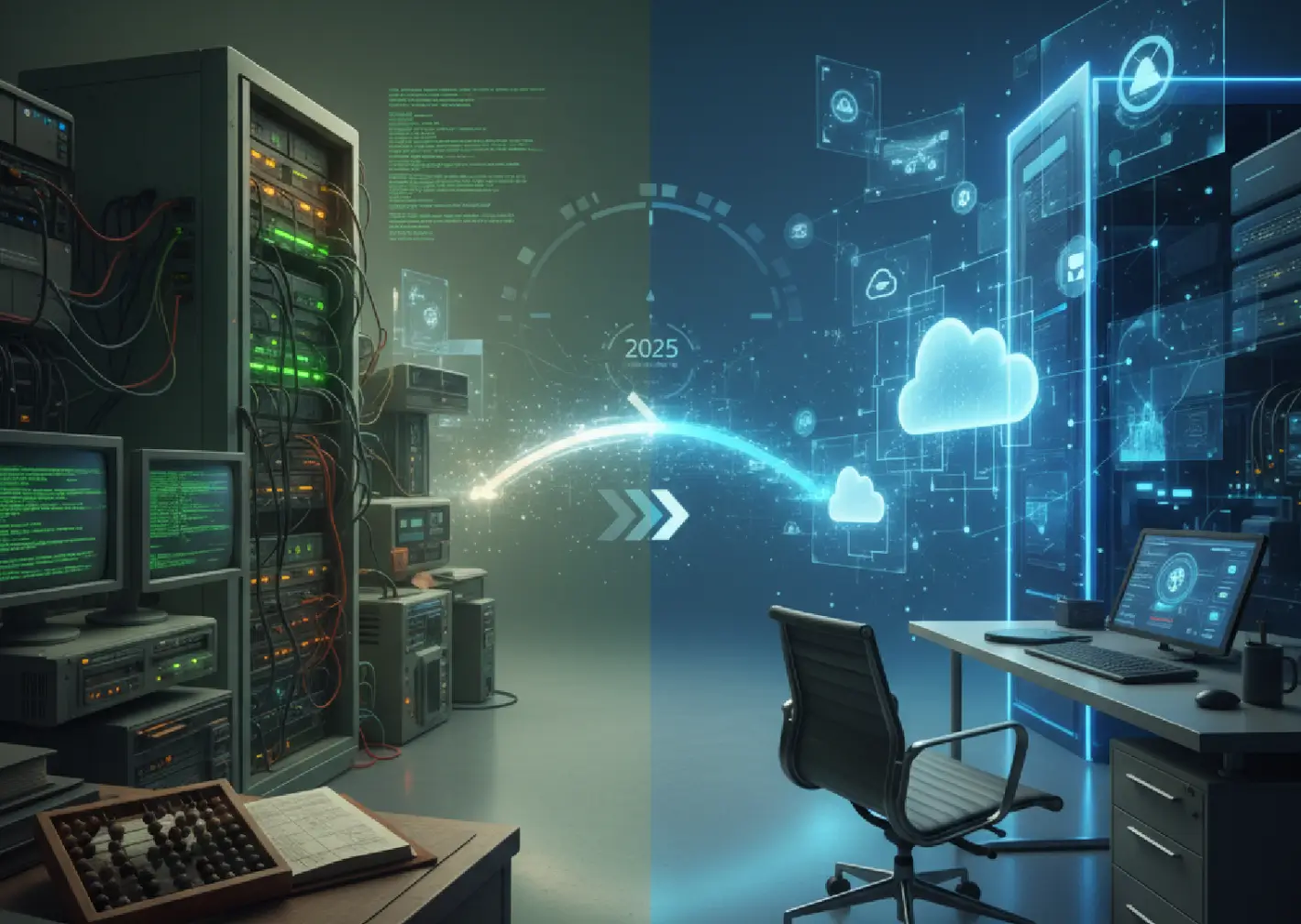
Legacy system modernization and cloud migration solve different problems. Most organizations that get this sequencing wrong discover the error 18 months into a migration program, when they are paying to fix what a structured assessment would have caught before a dollar was committed.
The short answer is to assess before you sequence. Digital transformation services that skip the assessment phase routinely generate double remediation costs, because the problems you migrate are the problems you will rebuild once the migration is complete.
Let us walk you through the four factors that determine correct sequencing, the scenarios where each path applies, and the three-track roadmap that handles most enterprise portfolio realities.
Key Takeaways
- Migrating without a pre-migration assessment is the leading cause of cloud program cost overruns in enterprise IT programs
- Four factors determine correct sequencing: architecture complexity, data quality, compliance requirements, and operational dependency mapping
- Legacy app modernization should precede migration when systems carry significant technical debt, compliance gaps, or data integrity issues
- Cloud migration can come first when architecture is modular, data quality is adequate, and compliance requirements are already satisfied in the current state
- Digital transformation services built on correct sequencing consistently reduce total program cost compared to programs that migrate first and remediate after
- Most large enterprise environments use a three-track model: modernize-first, migrate-first, or parallel execution based on system-level assessment results
Why Getting the Order Wrong Is the Most Expensive IT Mistake
I have seen this specific pattern repeatedly. A financial services firm migrates its core transaction system to cloud infrastructure without prior legacy system modernization. The migration completes on schedule. The bill arrives 14 months later, when the team discovers that the monolithic data architecture they moved is incompatible with the event-driven processing the cloud environment requires. Rebuilding that architecture in the cloud costs 40% more than addressing it on-premise would have.
McKinsey research on cloud migration economics puts the average post-migration remediation spend at 25-35% above original program estimates for organizations that migrate without pre-migration architectural assessment. The overspend is predictable, and it traces back to sequencing decisions made before the first workload moved.
Gartner’s analysis of cloud adoption failure patterns identifies the same root cause: programs that treat cloud migration as an infrastructure project, separate from application architecture, consistently miss their ROI targets by wide margins. The failure is not technical. It is a sequencing and assessment failure.
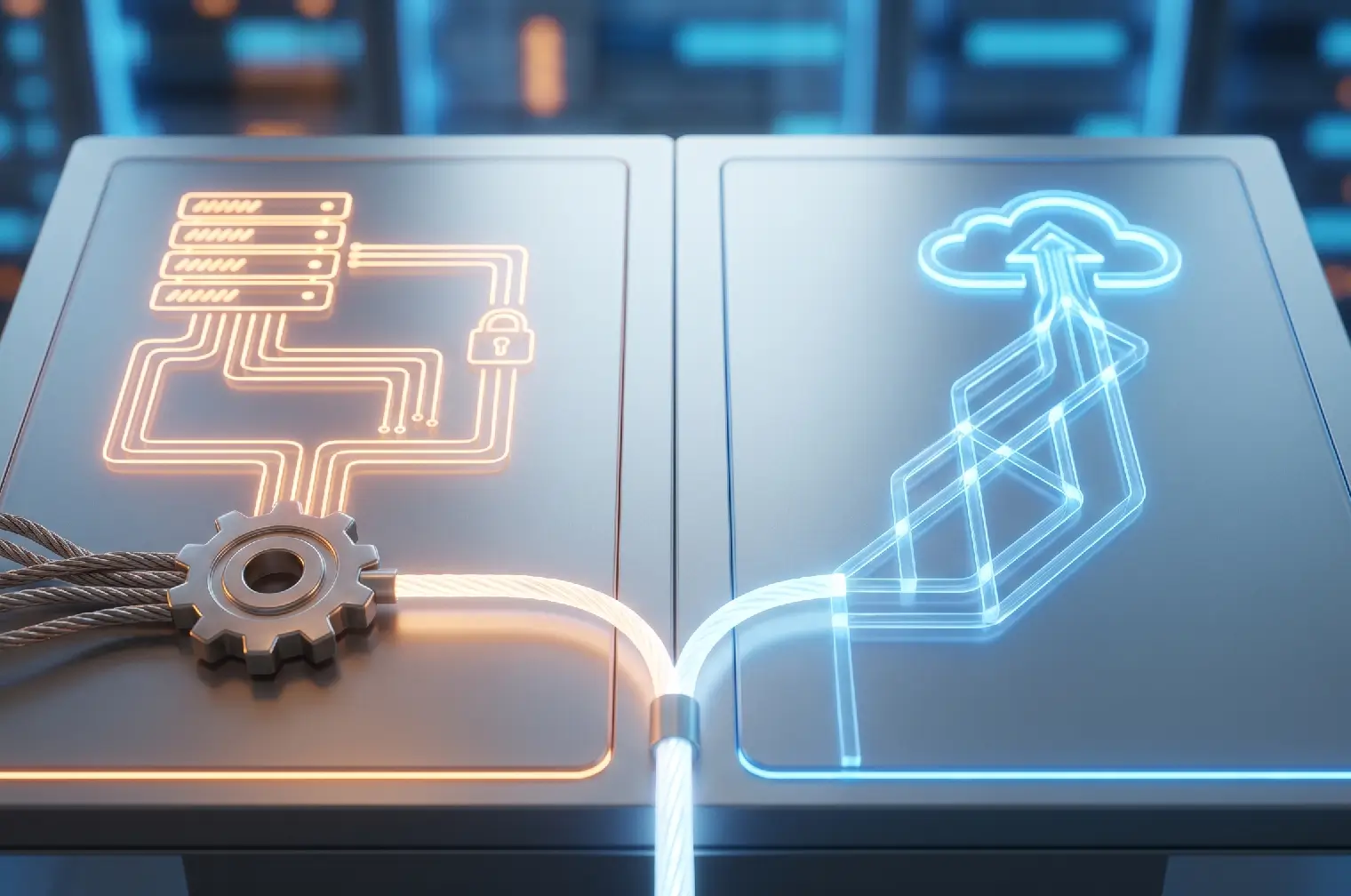
The underlying principle is direct. A poorly architected system does not improve when you change which data center it runs in. Legacy system modernization addresses the architecture. Cloud migration addresses the operating environment. Sequence them incorrectly and you pay for both twice.
Stop Guessing Your Next Tech Move
Choosing the wrong path delays your enterprise growth by years. We execute precise legacy system modernization that eliminates technical debt. Partner with us for elite digital transformation services and build an architecture that scales your revenue instantly.
What Legacy System Modernization and Legacy App Modernization Actually Cover
Legacy system modernization and legacy app modernization are related but distinct interventions. Understanding the distinction determines where the sequencing work needs to happen.
Legacy system modernization addresses the full environment: integration architecture, data pipelines, middleware, API layers, and the operational infrastructure connecting them. It is the broader program that determines whether a technology estate can support modern cloud-native operations.
Legacy app modernization addresses individual applications within that estate: refactoring tightly coupled code, re-platforming monolithic applications, and rebuilding components where technical debt makes refactoring impractical.
The typical scope of legacy app modernization includes:
- Refactoring monolithic applications into loosely coupled services
- Re-platforming applications for containerized or cloud-native environments
- Replacing hardcoded data access layers with API-driven integration
- Retiring applications with functional cloud-native replacements
- Rebuilding data schemas that cannot migrate as-is
Legacy modernization services that address both the system-level integration architecture and the application layer are the programs that avoid double remediation. Addressing only the application layer without the integration architecture underneath creates a different version of the same problem.
The Four-Factor Assessment for Sequencing Legacy System Modernization
The sequencing question is answered by a structured assessment of four factors. Each factor either clears the path for migration or flags modernization work that must happen first.
System Architecture Complexity
Can the system be decomposed without rebuilding it? Monolithic applications with embedded business logic, shared database tables across modules, and hardcoded integration points require legacy app modernization before migration. Systems that are already service-oriented with clear interface boundaries typically can migrate first.
A practical test: map the dependencies for one module and count the touch points. More than 10 internal dependencies is a signal that architecture complexity warrants pre-migration work.
Data Quality and Format
Migrating data with quality issues does not resolve those issues. It relocates them to a more expensive environment.
I assess data quality across four dimensions before recommending migration: completeness, consistency, format standardization, and lineage documentation. When a system fails this assessment, data remediation becomes the first phase of legacy system modernization, and it precedes migration planning, not the other way around.
Compliance and Regulatory Requirements
BFSI, healthcare, manufacturing, and government environments carry data subject to PCI-DSS, HIPAA, SOX, data residency, or sector-specific regulatory requirements. These requirements cannot be retrofitted after migration. They must be engineered into the system before it moves.
When the current system does not meet the compliance baseline required in the target cloud environment, legacy modernization services must address the compliance layer as a pre-migration activity. Cloud migration consulting programs that treat compliance as a post-migration task consistently generate scope changes and budget overruns after go-live.
Operational Dependency Mapping
Every system sits in a web of dependencies. It receives data from upstream systems and sends data to downstream consumers. Dependency mapping determines the blast radius of a migration.
A core ERP system that feeds 15 downstream processes is not a lift-and-shift candidate. The dependencies need to be assessed, and in most cases, the integration layer requires legacy system modernization before the core system can migrate without disrupting downstream consumers.
When Legacy App Modernization Should Come First
Based on the four-factor assessment, legacy app modernization should precede cloud migration in the following scenarios:
- Architecture complexity above the modular threshold (more than 10 internal dependencies per module)
- Data quality failures on completeness or consistency
- Compliance gaps relative to the target cloud environment
- A central position in the operational dependency map, with 5 or more downstream consumers
- Technical debt estimated at more than 40% of active development capacity
In BFSI and healthcare environments specifically, pre-migration modernization requirements appear in approximately 70% of first-time cloud programs. The legacy app modernization phase is not optional in these environments. It is what makes the migration work.
Comprehensive legacy modernization services cover each layer before migration begins: application refactoring, compliance readiness, data pipeline rebuilds, and API layer development. Our legacy application modernization capability addresses all of these scenarios as pre-migration work.
Modernize Before Your Competitors Do
Outdated software drains your budget and slows your team daily. We deliver flawless legacy app modernization that supercharges your performance. Leverage our expert cloud migration consulting to transition your enterprise data without a single drop in uptime.
When Cloud Migration Should Come First
Cloud migration should precede legacy app modernization when the following conditions are met:
- The architecture is already modular and cloud-compatible with minimal refactoring required
- Data quality passes completeness and consistency thresholds
- Compliance requirements are satisfied in the current system state
- The dependency map shows fewer than 5 downstream consumers
- The primary driver is infrastructure cost reduction, not application capability improvement
Cloud migration consulting programs built around this profile typically reach positive ROI within 12-18 months. Programs that migrate first when the four-factor assessment indicated modernization-first requirements see ROI delayed by 12-24 months beyond initial projections.
The decision is technical, not philosophical. Cloud migration consulting that begins with the four-factor assessment gives you a defensible answer. Cloud migration consulting that begins with a migration schedule gives you a plan that will require revision.
A Three-Track Legacy System Modernization and Migration Roadmap
Most enterprise portfolios contain multiple systems, each with different assessment results. The three-track model handles this reality by assigning each system to the appropriate track based on the four-factor assessment.
Track 1: Modernize Then Migrate
Applies to systems with high architecture complexity, data quality issues, or compliance gaps. Legacy system modernization (6-18 months depending on scope) precedes cloud migration (3-9 months). Total program duration: 9-27 months.
Track 2: Migrate Then Modernize
Applies to systems that are cloud-compatible in current state. Cloud migration (3-6 months) runs first, followed by legacy app modernization in the cloud environment. Total program duration: 6-18 months. Lower upfront cost, faster infrastructure ROI.
Track 3: Parallel Execution with Sequenced Handoffs
Applies to large portfolios where Track 1 and Track 2 systems are worked simultaneously, with structured handoffs at each phase boundary. This is the track most large enterprises follow once the full portfolio is mapped.
Digital transformation services programs built on the three-track model consistently outperform single-track programs because the intervention matches the system condition. Digital transformation services that apply a uniform approach across a mixed portfolio routinely hit sequencing problems at the midpoint of execution, when the mismatch between approach and system reality becomes visible.
How ViitorCloud Handles This Sequence Decision
The sequence decision is where programs gain or lose 12 months. I have seen organizations spend 18 months on a migration that needed legacy system modernization first, then spend 12 months remediating what the migration revealed. A sequencing assessment at the start would have set a 20-month roadmap.
At ViitorCloud, every system integration and modernization engagement begins with the four-factor assessment before any sequencing recommendation is made. We map every system against architecture complexity, data quality, compliance requirements, and dependency structure, then assign each system to the appropriate track. Our cloud migration consulting work starts with this assessment regardless of where a client expects the program to go.
Across 300+ global client engagements, including $192.2M in healthcare revenue processed and programs serving 70M+ end-users, the pattern is consistent: organizations that get sequencing right at the outset are the ones whose programs finish on time and inside budget.
If your organization is evaluating a legacy system modernization or cloud migration program, the right starting point is a structured assessment of what you actually have, not a schedule built on assumptions.
Talk to our team to request a free modernization assessment. We will map your environment against the four factors and deliver a system-level sequencing recommendation before any commercial engagement begins.
Turn Your Technical Debt Into Profit
Broken legacy systems hold your enterprise operations hostage. We provide robust legacy modernization services that unlock immediate value. Let us handle your digital transformation services so you dominate your market without the infrastructure headaches.
The Right Sequence Starts with What You Actually Have
Legacy system modernization and cloud migration are sequential phases of the same program. Getting the sequence wrong is expensive, and it is preventable with a structured assessment before the program begins.
The four-factor framework tells you which systems need modernization first and which can migrate now. The three-track roadmap tells you how to run both in parallel across a mixed portfolio. Digital transformation services that begin with assessment consistently deliver on schedule, because the work matches the actual condition of the environment.
The organizations that skip assessment and commit to a sequence based on preference or vendor recommendation are the ones rebuilding in the cloud what they should have fixed before they migrated.

Vishal Shukla
Vishal Shukla is Vice President of Technology at ViitorCloud Technologies.
Frequently Asked Questions
Should I modernize legacy systems before migrating to the cloud?
Modernize first when systems carry architecture debt, data quality issues, or compliance gaps that cloud migration will not resolve.
What is the difference between legacy app modernization and cloud migration?
How long does legacy system modernization take before cloud migration?
Which industries need legacy modernization services before cloud migration?