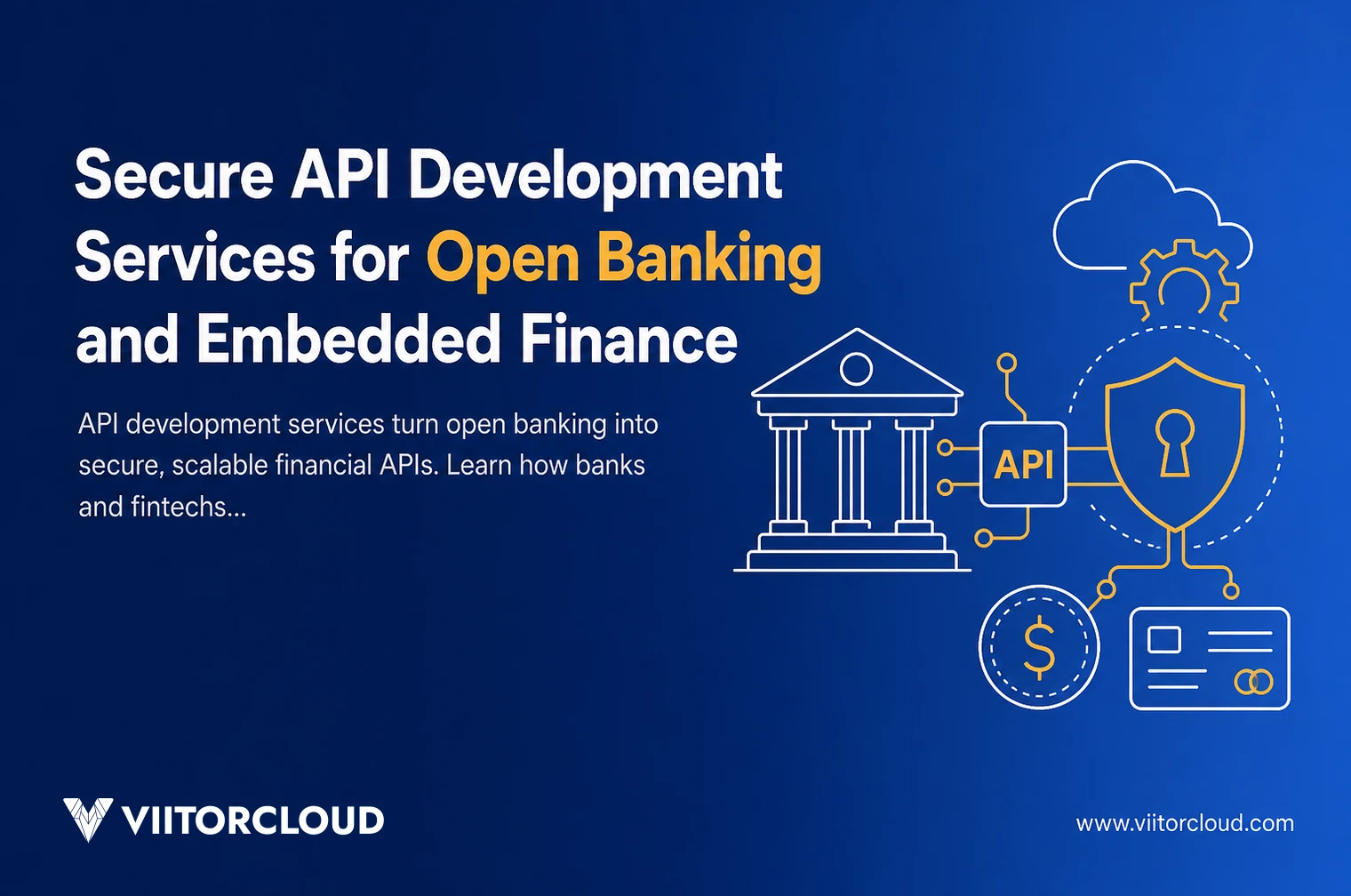
Building secure open banking APIs takes more than exposing a few endpoints to partners. It takes API development services that combine an API gateway, strong authentication, consent management, and careful integration with core systems that were never designed to be public.
I have watched banks treat open banking as a compliance checkbox, then struggle when a payments partner needs to go live in weeks and the core platform was built to stay behind a firewall. The distance between an API that works and one that is safe, governed, and ready to scale is where most projects stall.
If you lead digital banking or own an API platform, you already feel the pressure. Regulators want open access, partners want speed, and your security team wants the core protected. This guide explains how the right API development services close that gap, from gateway security to governance, so you can support open banking and embedded finance without adding risk.
Key Takeaways
- Secure open banking APIs depend on an API gateway, strong authentication, consent management, and encryption, not just published endpoints.
- A legacy core can support open banking through an integration layer, so you expose data safely without rebuilding the core first.
- Consistent API governance is what lets a bank onboard partners in weeks instead of months.
- Embedded finance runs on the same well-designed APIs that power open banking, so one platform can serve both.
- Choosing an API development company with financial compliance experience lowers your security and regulatory exposure.
Why Open Banking Changes What Banks Expect From Their APIs
An open banking API is a secure interface that lets authorized third parties access account data or initiate payments, always with customer consent. That shift, from closed systems to controlled external access, changes how banks build and expose software.
For most banks, lenders, and financial services firms, the core was built for stability and control, not open access. Adding public APIs onto that core without a plan creates exactly the risk security teams fear.
Consider a digital banking lead I worked with whose team had three fintech partners waiting to integrate. Each API was built in a different style, with different authentication and no shared documentation. Partners that should have launched in weeks were stuck for months.
That is the real cost of treating APIs as one-off projects. Open banking and embedded finance reward banks that treat APIs as a governed product. The right API development services make that shift manageable.
Planning an Open Banking API Program
Map your API architecture, gateway security, and core integration with engineers who have delivered for regulated enterprises for over 14 years.
What Strong API Development Services Deliver for Finance
Good API development services give you more than code. They give you a consistent, secure, and documented way to expose financial data and functions to partners and internal teams.
In a financial setting, a complete engagement usually covers these building blocks:
- API design and standards so every endpoint behaves predictably and follows one contract.
- An API gateway to centralize authentication, routing, rate limiting, and logging.
- Security and consent built in from the first line of code, not added later.
- Core system integration so the API reflects real account and transaction data.
- A developer portal and documentation that let partners self-serve and onboard faster.
- Monitoring and versioning so you can change APIs without breaking partner integrations.
This is where the difference between API development services and API integration services matters. Development builds the APIs themselves. Reliable API integration services connect those endpoints to core banking systems, payment rails, and existing applications. Most banking programs need both, delivered together.
A capable API development company plans for both from the start. When teams treat them as separate phases, integration work often exposes design gaps that force expensive rework. ViitorCloud handles API design and API development and integration as one connected effort for that reason.
Building Secure Financial APIs Without Exposing the Core
Security is the first question every banking API program has to answer. The goal is to open data and payment functions to partners while keeping the core protected and every request accountable.
Strong API gateway security sits at the center of that goal. The gateway is the single controlled entry point where you enforce authentication, authorization, encryption, and rate limits before any request reaches a core system.
A practical security baseline for financial APIs includes:
- OAuth 2.0 and token-based access so partners never handle raw credentials.
- Encryption in transit and at rest for all account and payment data.
- Rate limiting and throttling to contain abuse and protect core capacity.
- Consent and scope controls so each token does only what the customer approved.
- Logging and monitoring that make every call traceable for audit and fraud review.
I map these controls against the OWASP API Security Top 10, which catalogs the most common ways APIs get breached. One integration architect told me an audit failed because tokens were over-scoped, and a partner could read data it never needed. Better API gateway security would have caught that before launch.
The core question worries most banks with older estates. You do not have to rebuild the core before you offer open banking. An integration layer and gateway can expose a legacy system safely, which is often the first step when we modernize a legacy banking core in phases.
Expose Your Core Without the Risk
See how ViitorCloud builds secure, governed financial APIs and connects them to legacy core systems through API-first integration.
Why API Governance Decides How Fast You Onboard Partners
Partner onboarding speed rarely comes down to raw engineering effort. It comes down to governance. When every API follows one standard, a new partner can read the documentation, request a token, and test within days.
Weak governance produces the opposite. The lender with three stalled partners had no shared standard, so every integration became a custom project. Strong API integration services fix this by putting a common contract, versioning policy, and developer portal in place before partners arrive.
An API-first system integration approach treats the API as the product from day one. You design the interface, publish it, and build the implementation behind it. Partners integrate against a stable contract, and internal teams reuse the same APIs instead of building parallel ones. The right API development company puts these standards in place before the first partner arrives.
Governance and API gateway security work together as you scale. Versioning lets you improve an API without breaking existing partners. Consistent standards mean the tenth partner is as simple to onboard as the first, which is what open banking and embedded finance demand.
Powering Embedded Finance Through Well Designed APIs
Embedded finance places banking services like payments, lending, and accounts directly inside non-financial apps. A retailer offering checkout credit or a software platform paying its sellers both rely on financial APIs underneath.
Here is the useful part for banks. The same well-designed APIs that satisfy open banking rules also power embedded finance. One secure, governed API platform can serve regulated open banking access and commercial embedded finance products at once. Reliable API integration services tie those products back to the core ledger so balances and payments stay accurate.
Because these flows move real money and sensitive data, they should follow a hardened security profile. I point teams to the Financial-grade API (FAPI) profile, which defines how to secure high-value financial APIs beyond standard OAuth. Many open banking programs already align to it.
Getting this right is as much about compliance as engineering. Handling compliance and risk in financial integrations early makes audits more predictable and gives partners confidence. Data protection obligations, data residency, and consent tracking all shape how the APIs are built.
Ready to Onboard Partners Faster
Standardize your APIs and developer experience so new fintech and embedded finance partners can integrate in days, not months.
How ViitorCloud Approaches Open Banking API Work
ViitorCloud is an API development company with over 14 years of delivery. We have worked with more than 300 clients, from startups to large enterprises, including KPMG, DP World, and Royal Navy. That range matters here, because open banking depends on legacy systems, security, and partner delivery at the same time.
Our teams build systems that meet GDPR and HIPAA requirements, and we treat API design, API gateway security, and core integration as one program rather than separate contracts. We also follow a think big, start small model, so you can validate an open banking API with one partner before scaling to many.
If open banking or embedded finance is on your roadmap, map the API architecture and security model before you commit to a full build. You can talk through your open banking API roadmap with our engineers to review the approach early.
Getting Open Banking APIs Right
Open banking is now a baseline expectation, and embedded finance is turning APIs into a revenue channel. Both depend on the same foundation, which is secure, governed, and well-documented financial APIs.
The banks that move fastest treat APIs as a product, protect the core with strong API gateway security, and standardize governance so partners onboard quickly. Dependable API development services make that foundation possible without adding new risk. Choosing an API development company with financial compliance experience keeps you ahead of audit and regulatory demands.
Start with one clear use case, build it to standard, and expand from there. Get the first open banking API right, and the tenth becomes routine.

Vishal Shukla
Vishal Shukla is Vice President of Technology at ViitorCloud Technologies.
Frequently Asked Questions
What is an open banking API?
An open banking API is a secure interface that lets authorized third parties access account data and initiate payments with customer consent.
What is embedded finance?
How do you secure financial APIs?
How are API development and API integration services different?