Summary
AI-powered digital experience solutions in 2026 utilize agentic AI workflows to execute autonomous tasks instead of merely responding to text prompts. These systems integrate Phygital UX and multi-modal digital experiences to bridge physical and digital touchpoints. Implementation requires a cloud-native AI infrastructure and hyper-personalization engines to deliver real-time, individualized customer outcomes across retail, healthcare, and logistics sectors.
Introduction
Digital interaction is changing from passive assistance to autonomous execution. In 2026, organizations are moving beyond basic chatbots to deploy AI-powered digital experience solutions that manage entire workflows. This shift involves the use of agentic AI workflows where software entities plan, use tools, and complete multi-step objectives without constant human intervention. For enterprises, this means a transition toward systems that do not just talk but perform.
The Shift to Agentic AI Workflows
The primary difference in 2026 is the emergence of agency. Traditional conversational AI required a user to provide a prompt for every single step. Modern AI-powered digital experience solutions now use agentic AI workflows to handle complex processes like supply chain rerouting or insurance claim processing. According to Gartner, 40% of enterprise applications will feature task-specific agents by the end of 2026. These agents operate within the software ecosystem to achieve specific business goals.
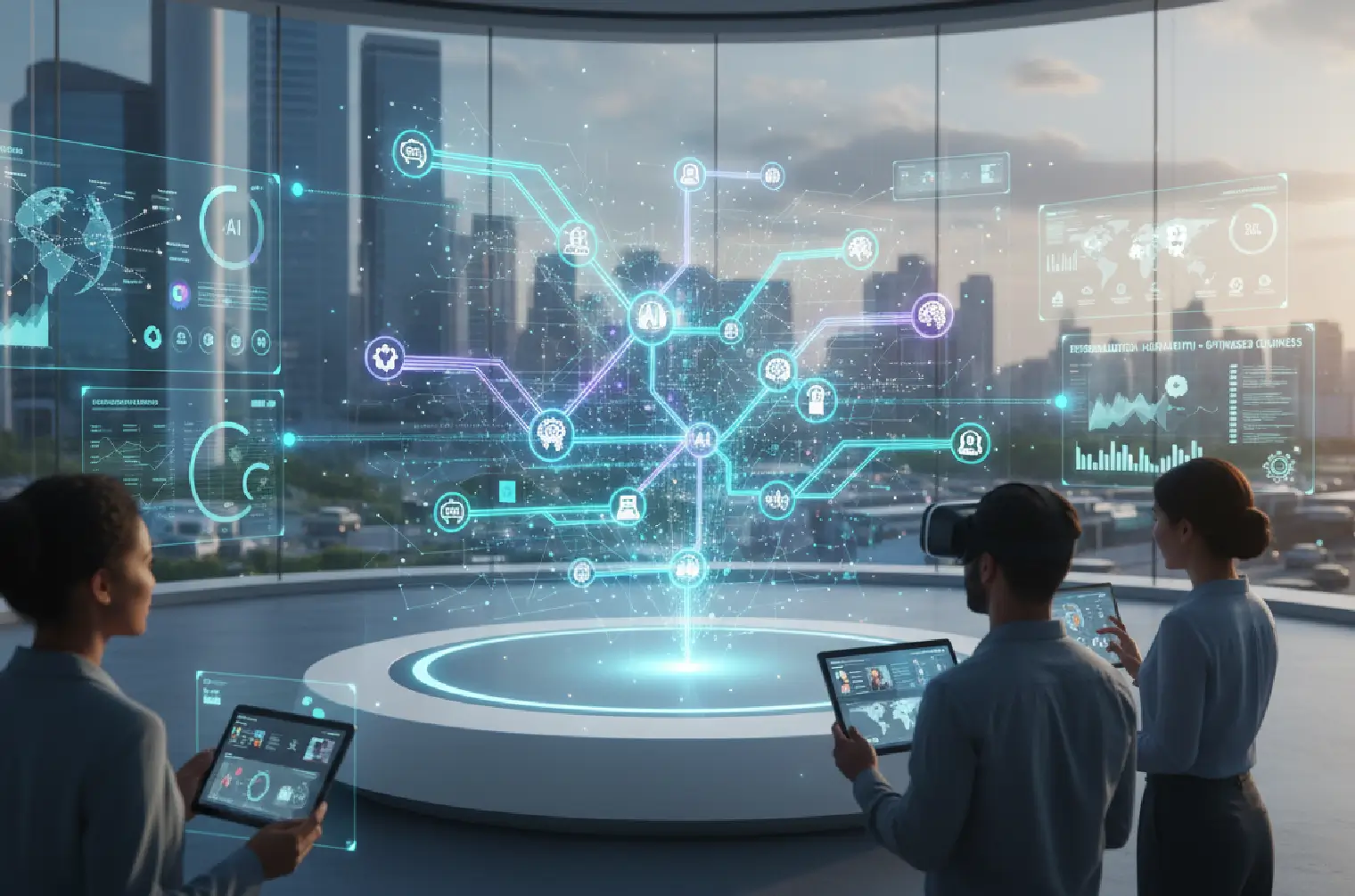
Enterprises achieve this by integrating AI integration services that connect Large Action Models (LAMs) to internal databases. This connectivity allows agentic AI workflows to access real-time data and take actions such as updating a CRM or triggering a logistics dispatch. These AI-powered digital experience solutions reduce the manual workload for human operators by handling the “low-value” repetitive tasks.
Redefine Customer Journeys with AI-Powered Digital Experience Solutions
Deliver intelligent, personalized, and seamless experiences across every touchpoint with AI-Powered Digital Experience Solutions.
Implement Phygital UX and Multi-modal Experiences
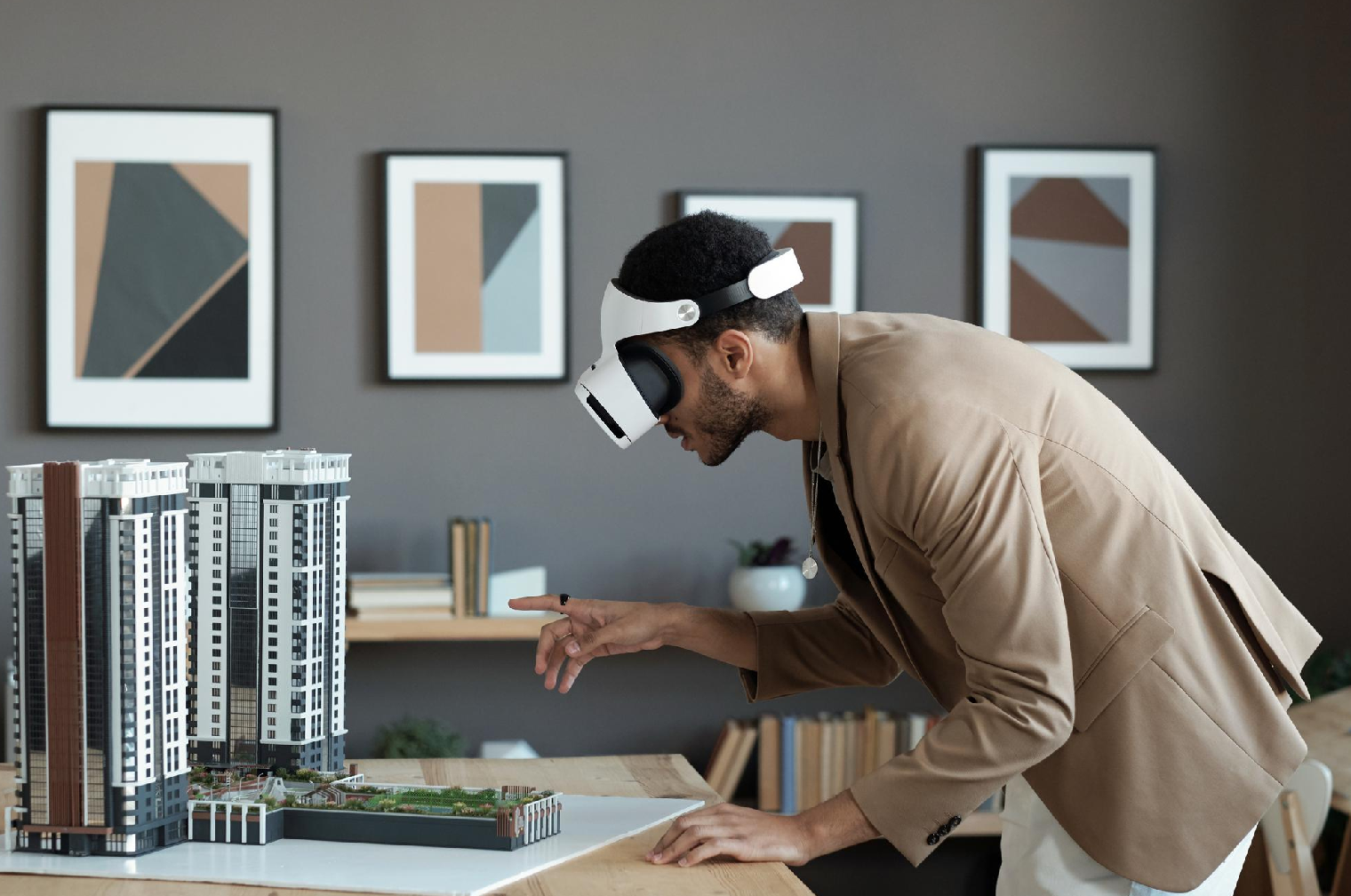
Digital experiences are no longer confined to 2D screens. The rise of Phygital UX—the blending of physical and digital environments—allows brands to interact with customers in the real world. By using AR/VR/MR development services, companies create multi-modal digital experiences where users interact via voice, gesture, and vision.
Phygital UX relies on computer vision to recognize physical objects or customer presence in a store. When a customer enters a retail space, AI-powered digital experience solutions recognize them and push individualized data to their mobile device or a smart mirror. These multi-modal digital experiences ensure that the interaction is seamless across different sensory inputs. For instance, a warehouse worker might use a voice command to query an agent while seeing the relevant data overlaid on their vision via AR glasses.
In 2026, Phygital UX is a core component of modern digital experience consulting. It removes the friction between a digital intent and a physical action. Companies that deploy multi-modal digital experiences report higher engagement levels because the technology adapts to the user’s immediate physical context rather than forcing the user to adapt to a specific interface.
The Infrastructure Backbone: Cloud-native AI
Scaling these systems requires a robust technical foundation. A cloud-native AI infrastructure provides the necessary elasticity to handle the intensive computational demands of generative models and agentic reasoning. This infrastructure uses serverless computing and specialized GPU clusters to process agentic AI workflows at scale.
A cloud-native AI infrastructure allows for “Agent Orchestration,” where multiple specialized agents collaborate on a single task. For example, a “Billing Agent” and a “Shipping Agent” work together within the same cloud consulting framework to resolve a customer’s order discrepancy. Without a cloud-native AI infrastructure, the latency involved in these interactions would make the experience unusable.
Furthermore, the integration of hyper-personalization engines into this infrastructure ensures that every interaction is grounded in relevant user data. These hyper-personalization engines analyze historical behavior, real-time context, and predictive trends to tailor the digital journey.
In 2026, hyper-personalization engines are not just for product recommendations; they determine the actual structure and tone of the multi-modal digital experiences provided to the user.
Build Smarter Experiences Using AI-Powered Digital Experience Solutions
Transform engagement, improve conversions, and create future-ready journeys with AI-Powered Digital Experience Solutions.
Data-Driven Outcomes Across Industries
The deployment of AI-powered digital experience solutions results in measurable business impact. McKinsey research indicates that agentic systems are most advanced in technology and healthcare sectors.
| Feature | Legacy Digital Experience (Pre-2025) | Agentic Digital Experience (2026) |
| Primary Driver | User Prompts (Reactive) | Autonomous Goals (Proactive) |
| UX Type | Screen-based / Static | Phygital UX / Generative |
| Infrastructure | Standard Cloud Hosting | Cloud-native AI infrastructure |
| Personalization | Rule-based Segments | Hyper-personalization engines |
| Interaction Mode | Single-mode (Text or Touch) | Multi-modal digital experiences |
In retail, hyper-personalization engines drive a “Segment-of-One” strategy. Instead of broad categories, the AI-powered digital experience solutions create a unique storefront for every visitor. This is supported by multi-modal digital experiences where a user can search via an image or a voice description. The agentic AI workflows then manage the purchase, from inventory verification to delivery scheduling.
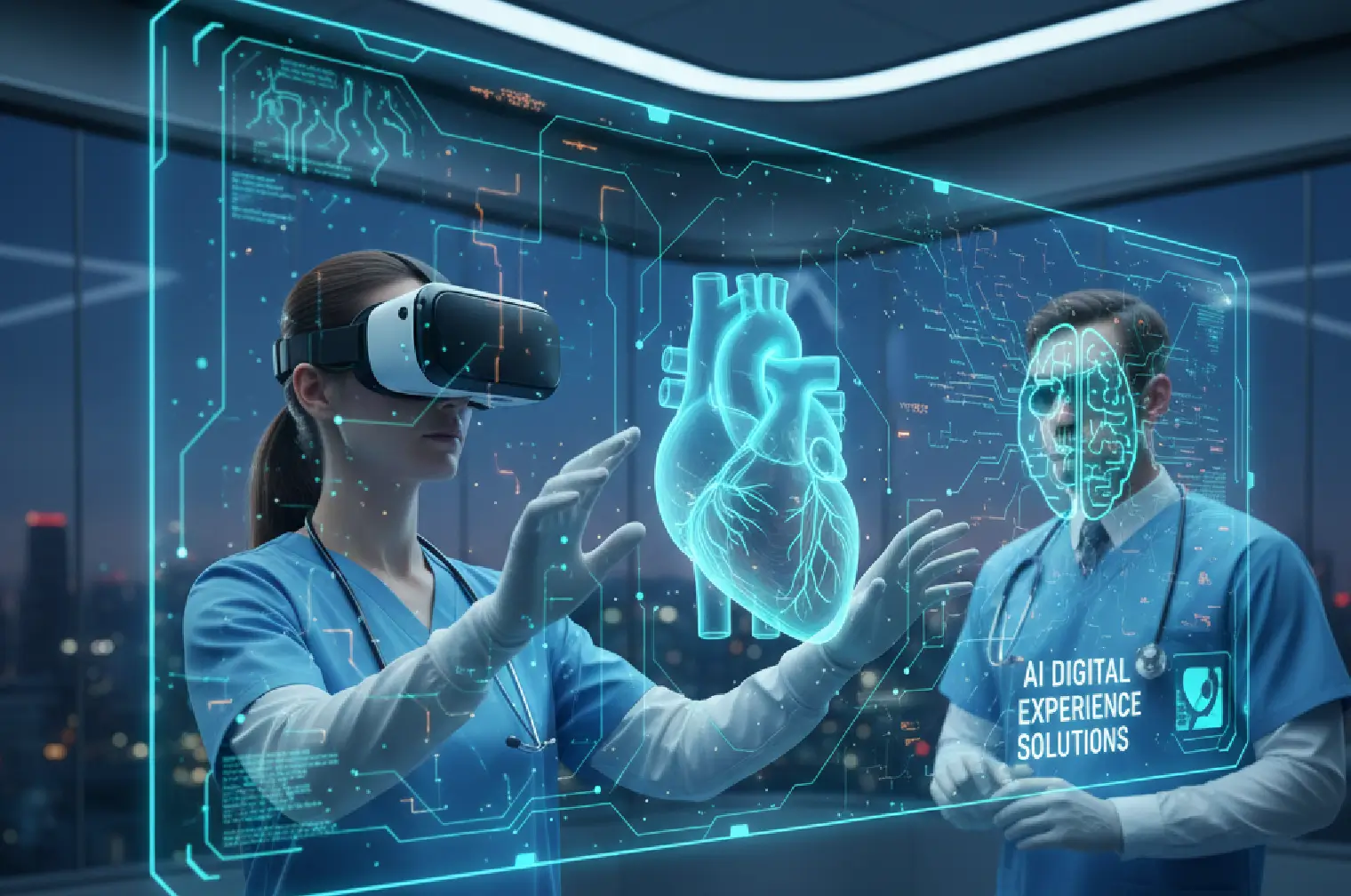
In healthcare, Phygital UX enables remote patient monitoring where agents analyze data from wearable devices. If a threshold is met, the agentic AI workflows autonomously book a follow-up appointment and update the electronic health record. This level of automation is only possible through a dedicated cloud-native AI infrastructure that ensures data security and low latency.
ViitorCloud Is Your Implementation Partner
ViitorCloud specializes in building AI-powered digital experience solutions that align with specific enterprise goals. Our approach involves setting up the cloud-native AI infrastructure required to host agentic coworkers and automated workflows. We focus on the practical application of AI-first software and platforms to solve complex integration challenges.
By deploying hyper-personalization engines, we help businesses increase conversion rates and customer loyalty. Our expertise in Phygital UX ensures that your digital products are not limited to traditional screens. We design multi-modal digital experiences that incorporate AR, VR, and voice to reach users wherever they are.
The transition to agentic AI workflows is an architectural shift. ViitorCloud provides the engineering expertise to move from experimental pilots to production-grade systems. We ensure that your AI-powered digital experience solutions are auditable, secure, and capable of delivering autonomous value.
Scale Engagement with AI-Powered Digital Experience Solutions
Enable data-driven, adaptive customer journeys in 2026 with AI-Powered Digital Experience Solutions built for growth.
Conclusion
The era of reactive digital tools is ending. In 2026, AI-powered digital experience solutions are the standard for enterprises seeking operational efficiency and superior customer engagement. By combining agentic AI workflows with a solid cloud-native AI infrastructure, organizations can automate complex tasks. The use of Phygital UX and multi-modal digital experiences creates a more intuitive and immersive brand presence. Finally, hyper-personalization engines ensure that every digital touchpoint is relevant to the individual user.
Frequently Asked Questions
1. What defines AI-powered digital experience solutions in 2026?
These solutions are integrated systems that use autonomous agents to manage customer journeys across physical and digital channels. They rely on real-time data and multi-modal digital experiences to provide proactive service.
2. How do agentic AI workflows differ from traditional automation?
Traditional automation follows fixed “if-then” rules. Agentic AI workflows use reasoning to plan and execute multi-step tasks. They can adapt to new information and use various digital tools to reach a defined goal.
3. Why is a cloud-native AI infrastructure necessary?
These systems require high-performance computing and real-time data processing. A cloud-native AI infrastructure provides the scalability and low latency needed to run complex agentic AI workflows without performance degradation.
4. How does Phygital UX benefit the retail industry?
Phygital UX merges online data with in-store experiences. It allows retailers to use hyper-personalization engines to recognize customers physically and provide them with digital assistance, such as AR-based product information or automated checkout.
5. Can multi-modal digital experiences improve accessibility?
Yes. By supporting voice, touch, gesture, and visual inputs, these experiences allow users to interact with technology in the way that best suits their needs or environment.

Mit Shah
Mit Shah has been creating immersive experiences and delivering games for various platforms for over 9 years.