Machine Learning and AI for revolution of Tech Companies are changing and streamlining businesses.



If the first half of this decade was the time everyone “adopted AI,” 2026 is the year you either operationalize it or you get stuck watching your competitors automate what you’re still debating.
The biggest trap we see is Pilot Purgatory: you’ve got prototypes, disconnected tools, and excited stakeholders… but no durable business transformation.
That’s why the real differentiator isn’t the software you buy; it’s the digital transformation partner you choose to design outcomes, de-risk change, and make value measurable.
What Has Changed in the Digital Transformation Landscape for 2026?
The shift is simple: AI must do work, cloud must handle complexity, and every initiative must prove value fast. In practical terms, we’re moving from chat-style AI experiments to Agentic AI—task-specific agents that can execute workflows, resolve incidents, and orchestrate actions across systems (not just answer questions).
And because budgets are tighter and scrutiny is higher, CFOs increasingly demand “proof of value” milestones instead of open-ended transformation roadmaps, which changes how programs are funded, governed, and evaluated.
Cloud is changing too. In 2026, many enterprises are operating in what teams loosely call “Cloud 3.0”: multi-cloud, hybrid, and sovereign constraints layered on top of security, latency, regulatory requirements, and data residency.
That means your partner can’t just “move workloads”—they need to engineer reliability, compliance, and cost transparency into the operating model from day one.
Choose the Right Digital Transformation Partner with Confidence
Strengthen your strategy and unlock growth with ViitorCloud’s trusted Digital Transformation Solutions.
Which Partner Archetype Does Your Business Actually Need?
You don’t need “more delivery”; you need the right transformation architecture and the right partner behavior to match. Most partner options fall into four archetypes, and recognizing them early prevents expensive rework later.
- The Body Shop: You get extra hands for tasks, tickets, and time-bound execution—but not the strategic ownership required to connect AI, cloud, and business outcomes.
- The Theorist: You get impressive decks and frameworks, but the plan struggles when it hits real systems, real data, and real change resistance.
- The Legacy Giant: You get perceived safety and scale, but you often pay for process overhead, slower iteration cycles, and higher total cost to reach measurable outcomes.
- The Value Architect (ViitorCloud): You get an agile, tech-agnostic, outcome-obsessed partner that can bridge legacy constraints and future-ready capabilities—so transformation becomes operational, not aspirational.
| Partner Type | Best For | The Risk |
| The Body Shop | Staff augmentation, well-defined tasks | Busy teams, shallow ownership, “done” work that doesn’t compound into business value |
| The Theorist | Early-stage strategy conversations | Slideware, unclear accountability, weak follow-through under real constraints |
| The Legacy Giant | Large, highly standardized enterprises | Slow time-to-value, high cost, transformation fatigue from heavy governance |
| The Value Architect | Outcome-led modernization, AI + cloud execution | Requires shared transparency and willingness to measure impact continuously |
How Has ViitorCloud Solved Real-World Transformation Challenges?
ViitorCloud helps clients move from “AI idea” to operational capability by aligning roadmap, integration, and scalability early.
ViitorCloud supported an AI-driven platform by shaping a future-proof roadmap, developing open APIs for integration, and expanding capabilities like prompt management and extension-oriented features to stay competitive.
The engagement emphasizes building adaptability into the product foundation so new features can evolve without breaking compatibility with the existing system.
Simplify Your Digital Transformation Journey
Work with experts who align technology with your business goals using scalable Digital Transformation Solutions.
How Does ViitorCloud Deliver Value as a Modern Partner?
A modern digital transformation partner earns trust by combining governance, modernization depth, and radical delivery transparency, while actively avoiding common failure patterns. Here’s the checklist that matters in digital transformation trends 2026, and how we approach it at ViitorCloud in a future-ready way.
AI Governance (safety, guardrails, and control)
In 2026, “AI integration partner” can’t just mean model access—it must include governance that protects your data, your customers, and your brand. That means clear policies for data handling, role-based access, auditability, evaluation criteria, and guardrails that prevent unsafe actions when agents are introduced into real workflows. It also means designing human-in-the-loop controls where needed, so autonomy scales responsibly instead of becoming an operational risk.
Legacy Modernization (without breaking the business)
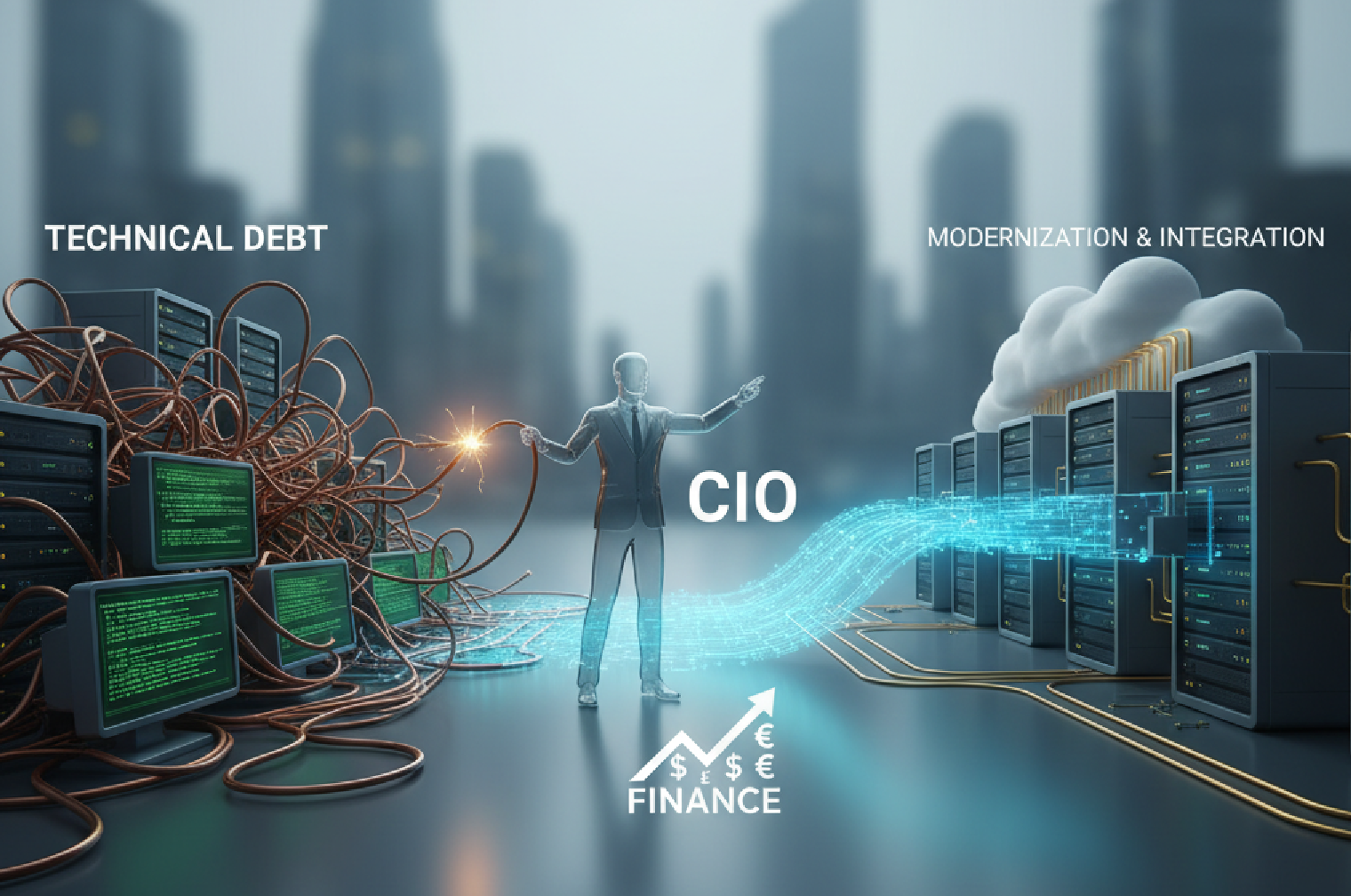
Legacy modernization services live or die on how well the partner respects reality: your ERP, your integrations, your data quality, and your uptime commitments. Modernization in 2026 is less about “rip and replace” and more about decoupling strategically—building APIs, migrating in slices, and enabling new AI and cloud capabilities alongside legacy systems until it’s safe to retire what’s outdated. This is exactly where a Value Architect mindset outperforms a vendor mindset: you modernize to unlock growth, not to chase shiny tech.
Radical Transparency (so value is visible)
You should never have to guess where your budget went, what shipped, what’s blocked, or what value is expected next. A future-ready partner makes delivery observable: clear milestones, measurable KPIs, shared dashboards, and honest trade-offs. That transparency is what turns transformation from an act of faith into a managed business program.
Post-deployment Observability (because “go-live” isn’t the finish line)
Agentic systems and modern cloud environments need continuous monitoring, feedback loops, and operational readiness—so performance, cost, reliability, and model behavior are measurable in production. When observability is built into the delivery approach, you catch drift, failures, and inefficiencies early—and you keep outcomes stable as systems scale.
Red flags (and what ViitorCloud avoids)
“Yes” partners who never challenge assumptions create expensive surprises later—so a strong partner should push back with evidence and options when risk is hidden. Proprietary lock-in is another common trap in 2026, especially when AI and cloud decisions compound over time; modern partnerships prioritize portability and open integration patterns. And if change management is absent, adoption stalls—so transformation must include stakeholder alignment, rollout planning, and operational enablement, not just engineering output.
What Should You Do Next to Choose the Right Partner?
Treat your partner like a compass, not a map, because the 2026 transformation requires constant course-correction, not one perfect plan. Choose a digital transformation partner that can operationalize agentic workflows responsibly, modernize without disruption, and prove value in measurable increments your business leaders can stand behind.
If you want a partner built for that reality, ViitorCloud is positioned to act as your Value Architect—bridging today’s constraints and tomorrow’s capabilities.
Book a free discovery call or chat now with our ViitorCloud AI expert to see real results. Your transformation starts here.
Accelerate Digital Transformation the Right Way
Ensure long-term success with ViitorCloud’s proven Digital Transformation Solutions tailored for your business.
Frequently Asked Questions
The cheapest option often optimizes for short-term output, not long-term business outcomes—so you may pay less per hour but more per result. In 2026, the costliest failures come from weak governance, brittle integrations, and AI pilots that never reach production, all of which create rework and delayed ROI. A digital transformation partner should reduce total risk and accelerate measurable value, not just ship tickets.
Safety starts with governance: define what data agents can access, what actions they can take, and how every step is logged and auditable. Then enforce controls through architecture—segmented permissions, secure APIs, monitoring, and human approvals where autonomy isn’t appropriate. The goal is to make agents useful in production without turning them into uncontrolled operators.
Yes—modern transformation assumes legacy is part of the landscape, not a problem to ignore. The right approach is to modernize around the ERP with integration layers, APIs, and incremental migration paths so you unlock new capabilities while protecting business continuity. This is a core requirement for enterprise modernization services in 2026, because few enterprises can pause operations to rebuild from scratch.
You should expect early “proof of value” within weeks—not years—when scope is structured around measurable outcomes and production realities. Many organizations target ROI in phases: quick wins that fund the next tranche, followed by deeper modernization that compounds benefits across teams and workflows. The timeline depends on data readiness, integration complexity, and change adoption, but the partner’s delivery discipline is the biggest accelerator you can control.


Innovative tech solutions aligning with your goals
Transformation starts here
- Strategic consultation
- Collaborative approach
- Agile development