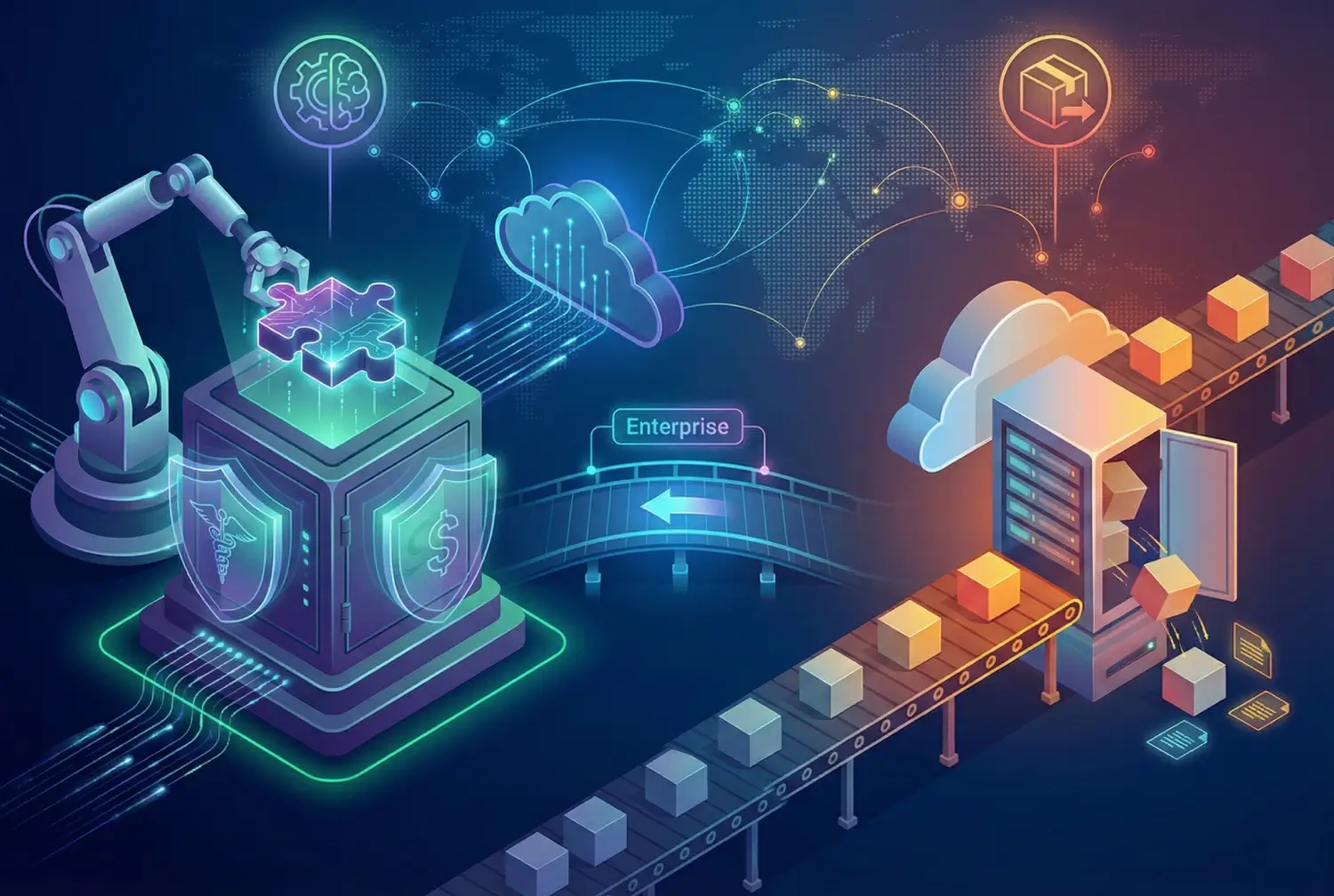
Custom AI solutions form the core of modern business operations. Enterprise leaders face a transition period. They must move from scattered experiments to a structured plan. Boards require a clear vision for the next fiscal year. Executives need a coherent path to secure funding and show returns. This document serves as your foundation. We detail the necessary steps to build a reliable infrastructure.
Many organizations lack a centralized approach. Departments buy different tools. Data remains trapped in silos. This fragmentation increases costs and security risks. You need a unified framework. Our approach addresses these exact issues. We provide a structured method to evaluate, build, and deploy intelligent systems across global operations.
The End of Scattered Experiments in Boardrooms
The era of random software purchases is over. C Suite executives demand measurable results. You must prove how technology impacts revenue and efficiency. A scattered approach fails to meet these demands.
- Fragmented tools create security vulnerabilities.
- Isolated data prevents accurate analytics.
- Overlapping software licenses drain budgets.
- Uncoordinated projects confuse employees.
To solve this, you need an enterprise AI strategy. This strategy aligns technology goals with business objectives. Global research supports this shift. McKinsey notes that artificial intelligence consumes up to a third of enterprise change budgets, forcing technology officers to recalibrate technology budgets entirely. You must optimize your existing infrastructure before adding new layers.
Leaders must prepare your business for the future by consolidating resources. A unified enterprise AI strategy provides control and visibility. It allows the board to approve budgets with confidence.
Stop letting competitors steal your market share
Falling behind on critical enterprise AI trends destroys your growth. We deliver robust custom AI solutions for enterprise that actually drive measurable profit. Partner with us for aggressive enterprise AI roadmap planning. Build a flawless enterprise AI strategy and launch your enterprise AI roadmap using our proven custom AI solutions right now.
AI Roadmap Planning for the Next Fiscal Year
Proper AI roadmap planning requires specific phases. You cannot skip steps without risking project failure. A phased approach ensures stability and clear communication with stakeholders.
Phase 1: Audit Existing Data and Infrastructure
Your systems require clean data to function properly. You must evaluate your current data storage and quality.
- Identify all data sources across the company.
- Assess data accuracy and completeness.
- Upgrade outdated storage systems.
- Implement strict data governance policies.
Phase 2: Design the Architecture
The next step involves technical design. You must select the right models and frameworks for your specific needs. Companies often utilize AI ML development services to establish robust architectures.
- Choose between cloud or on premise deployment.
- Select appropriate large language models.
- Design secure application programming interfaces.
- Plan for system scalability.
Phase 3: Deploy the Systems
Deployment requires careful execution. You must train staff and monitor the systems closely. Successful AI roadmap planning always includes user adoption metrics.
- Run pilot programs in specific departments.
- Gather user feedback and adjust the tools.
- Roll out the software to the entire organization.
- Establish continuous monitoring protocols.
Key AI 2026 Trends Shaping Global Business
You must understand the technology landscape to make informed decisions. We track several AI 2026 trends that directly impact business operations globally.
- Agentic Systems: Software now acts autonomously to complete complex workflows. It moves beyond simple text generation to actual task execution.
- Unified Data Fabrics: Companies use interconnected data environments. This allows different departments to share information seamlessly.
- Predictive Operations: Systems forecast supply chain disruptions and maintenance needs before they happen.
- Strict Security Protocols: Regulations require enhanced privacy measures. Systems must include automated compliance checks.
These AI 2026 trends require businesses to adapt quickly. You must shift from basic automation to intelligent operations. Organizations achieve this by adopting AI-first software and platforms.
Gartner validates this necessity, advising leaders to shift from isolated projects to a product centric mindset to successfully scale their systems across the organization.
The Executive AI Investment Guide for 2026
Capital allocation requires precision. You need an AI investment guide to distribute funds effectively. A structured AI investment guide prevents overspending and ensures targeted growth.
- Allocate for Infrastructure: Dedicate 40 percent of your budget to secure cloud environments and data processing capabilities.
- Fund Custom AI Solutions: Spend 30 percent on proprietary models. These models use your specific company data to generate unique insights.
- Invest in Talent: Assign 20 percent to employee training and hiring specialized engineers.
- Reserve for Maintenance: Keep 10 percent for ongoing monitoring and system updates.
Following this AI investment guide helps you present a solid business case to the board. It shows a clear understanding of the total cost of ownership. Efficient capital deployment often involves modernizing legacy applications through AI-first SaaS engineering to speed up product launches and reduce overhead.
Turn your 2026 tech vision into a massive revenue engine
Blind investments in generic tools kill your profit margins. Take control with expert enterprise AI roadmap planning that targets rapid ROI. We leverage the latest enterprise AI trends to engineer powerful custom AI solutions. Deploy an unstoppable enterprise AI strategy and secure your enterprise AI roadmap with elite custom AI solutions for enterprise today.
How to Build a Coherent Enterprise AI Strategy
A cohesive enterprise AI strategy demands alignment across all departments. The Chief Executive Officer, Chief Technology Officer, and Chief Data Officer must work together.
Establish Governance
You need rules for system usage. Governance prevents data leaks and ensures ethical technology application. Create a central committee to review all software requests.
Identify High Value Use Cases
Do not deploy technology for the sake of it. Find specific problems that software can solve. Focus on areas with high operational costs. Look for processes that require manual data entry. You can innovate your businesses through AI development services by targeting these bottlenecks first.
Integrate with Core Processes
The new tools must connect with your existing workflow. Employees should not need to switch between five different applications. The technology must sit inside their daily workspace. Seamless integration drives AI business process automation forward and accelerates user adoption.
Realize ROI with ViitorCloud
ViitorCloud delivers structured engineering for global enterprises. We build custom AI solutions that replace scattered experiments with unified systems. Our teams focus on your specific operational bottlenecks and deploy secure architecture.
We help Chief Technology Officers launch products up to 40 percent faster through targeted system modernization. Our engineers establish centralized data fabrics and build autonomous agents that execute complex workflows.
We provide the technical execution required to support your strategic goals. We document every phase of the build to ensure the board sees clear, measurable returns on the technology investment.
Connect with our experts for assessment and roadmap at [email protected].
Stop guessing how to scale your business with artificial intelligence
Uncertainty ruins your enterprise AI strategy and drains your capital budget. We cut through the hype of new enterprise AI trends to deliver targeted custom AI solutions for enterprise. Master your enterprise AI roadmap planning with our elite experts. Execute a clear enterprise AI roadmap and implement scalable custom AI solutions that crush your competition immediately.
Conclusion
The next fiscal year requires decisive action. You must transition from isolated software testing to a full enterprise AI strategy. This requires auditing your data, designing secure architecture, and funding proprietary tools. Use the AI investment guide to allocate capital efficiently. Understand the AI 2026 trends to stay ahead of operational demands. Proper AI roadmap planning guarantees a secure and profitable infrastructure. There are many ways AI is transforming business, but only a structured approach yields long term success. You must secure your custom AI solutions now to maintain your operational advantage.

Vishal Shukla
Vishal Shukla is Vice President of Technology at ViitorCloud Technologies.
Frequently Asked Questions
What are custom AI solutions?
They are proprietary technology systems built specifically for your company using your unique internal data and operational rules.
Why do we need an enterprise AI strategy?
How do we start AI roadmap planning?
What is the most important AI investment guide rule?