


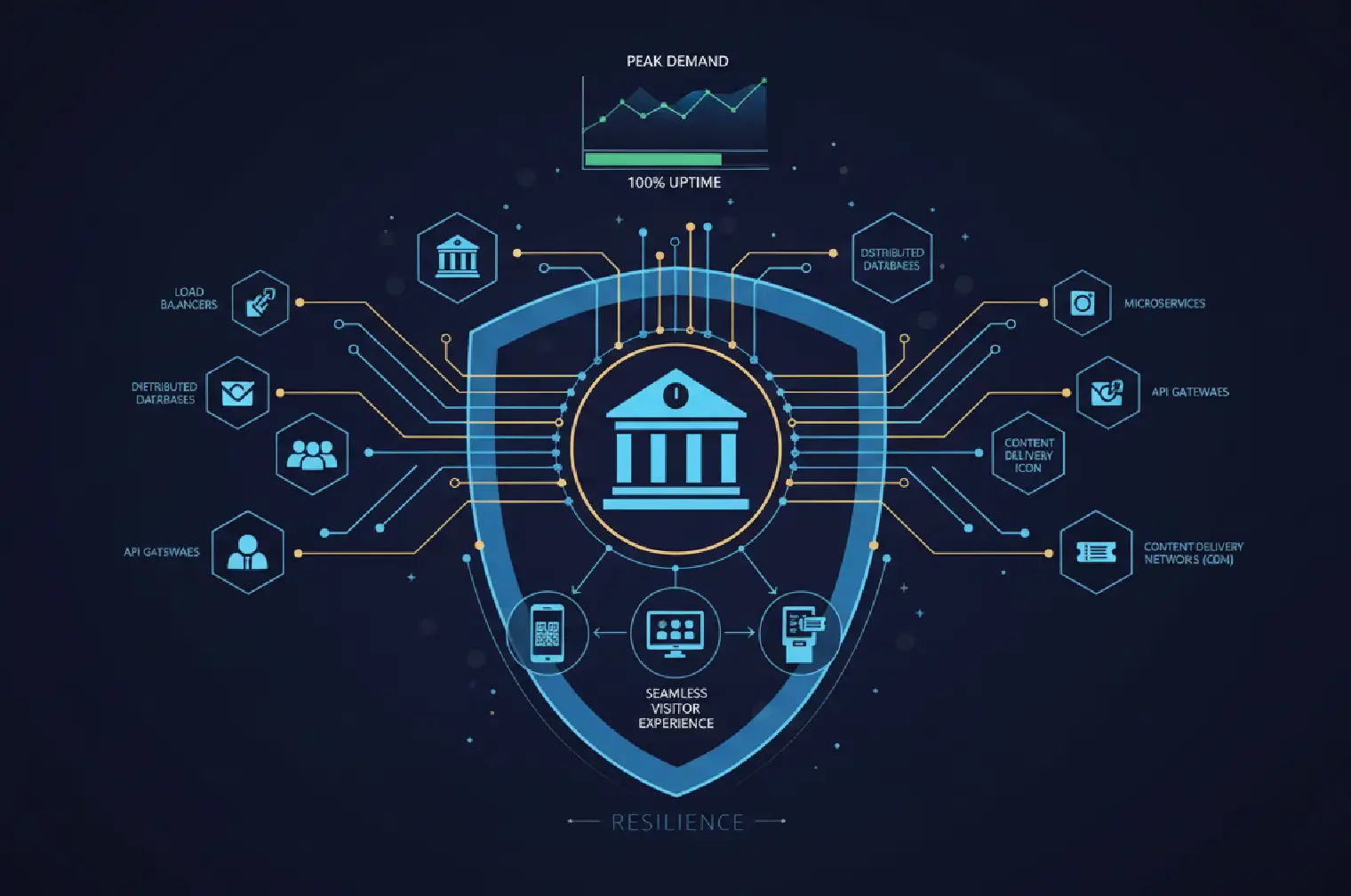
High demand for limited-run exhibitions causes legacy systems to crash. Visitors wait in digital queues for hours. They encounter timeout errors during the payment process. This creates a poor event digital experience. Museums lose revenue when systems fail. Technical teams must build a reliable high-volume ticketing platform. This infrastructure requires cloud-native architecture. It must process thousands of concurrent transactions. Museums also need an omnichannel ticketing solution to unify sales data across websites, mobile devices, and on-site kiosks.
Legacy databases process transactions synchronously. In this model, the system handles one request at a time. When ten thousand users attempt to purchase tickets for a new gallery opening simultaneously, the database locks. The server CPU usage reaches maximum capacity. The system stops responding to new requests. Users receive error messages. They abandon the transaction entirely.
Modern museum patrons expect continuous connectivity. According to a 2024 report by the American Alliance of Museums, digital engagement remains a top priority, with millions of users accessing online collections and ticketing portals annually. This massive digital interaction demonstrates the constant connection users have with their devices. Museums must deploy reliable customer engagement apps to meet this demand. These applications deliver real-time gallery maps, digital access passes, and audio guides. When the backend infrastructure fails, these frontend applications stop working.
Blueprint for Scale: Architectural Standards for Ticket Platforms
An effective omnichannel ticketing solution relies on event-driven architecture.
An event-driven high-volume ticketing platform uses asynchronous processing. It utilizes message brokers to queue requests. The frontend application accepts the visitor’s request immediately. The message broker places this request in a secure queue. The backend database processes the queue sequentially. This method prevents database overloads during major exhibition announcements.
IT teams integrate AI-driven cloud scalability to manage traffic spikes automatically. When ticket sales open, the system provisions additional servers instantly. Load balancers distribute the incoming traffic evenly across the new servers. This prevents downtime. Visitors complete their purchases without interruption. This technical stability forms the foundation of a positive event digital experience. Museums combine this backend strength with intuitive customer engagement apps to guide users through the checkout process.
Developers utilize microservices architecture to build these platforms. They separate the user authentication service from the payment processing service. If the payment gateway experiences a delay, the user authentication service remains online. This isolation contains errors and prevents system-wide failures.
Build a Zero-Downtime Museum Ticketing Platform
Ensure uninterrupted sales and seamless visitor flow with ViitorCloud’s high-performance Ticketing Platform and Digital Experience Solutions.
Measure the Complete Event Digital Experience
Museums evaluate system performance using specific metrics. A functional high-volume ticketing platform maintains uptime during peak sales. It also processes payments securely. A comprehensive omnichannel ticketing solution tracks user behavior across all digital touchpoints. This data allows museums to optimize the checkout flow.
| Metric | Definition | Target Benchmark |
| System Uptime | The percentage of time the platform remains operational. | 99.99% or higher. |
| Transaction Speed | The time required to process a single ticket purchase. | Under 2 seconds. |
| Cart Abandonment Rate | The percentage of users who add items to the cart but do not purchase. | Below 60%. |
| API Response Time | The delay between an application request and the server response. | Under 200 milliseconds. |
| Concurrent Users | The number of users active on the platform simultaneously. | Variable based on exhibition size. |
System administrators use these metrics to identify friction points. They adjust the high-volume ticketing platform to improve load times. They update customer engagement apps to simplify navigation.
A data-driven approach guarantees a seamless event digital experience. Industry research highlights the importance of frictionless entry. A recent study on museum technology trends indicates a significant shift toward digital ticketing and mobile authentication to eliminate physical queues in lobbies.
Continuous Connection with Mobile Applications for User Engagement
Customer engagement apps extend functionality beyond the initial ticket purchase. These applications serve as the primary interface for visitors. Users access digital tickets, view interactive gallery maps, and listen to exhibit audio tours through their devices.
A well-designed application improves the overall event digital experience.
Developers build these applications using responsive frameworks. They connect the frontend interface to the backend omnichannel ticketing solution via secure APIs. This ensures data consistency. When a visitor updates their membership profile on the website, the changes reflect immediately in the application. Museums rely on robust customer engagement apps to deliver targeted information. They send push notifications regarding exhibition schedules or exclusive member hours.
Digital transformation in customer experience requires precise engineering. Mobile applications must operate efficiently in dense environments. Large museums contain thousands of active cellular devices. Thick stone walls and network congestion cause slow load times. Developers optimize application code to minimize data payloads. They implement offline modes. The application caches the digital ticket and audio guide locally on the device. The visitor accesses the content even when the cellular network fails.
Launch a High-Volume Ticketing Platform for Museums
Handle peak demand confidently with a scalable Museum Ticketing Platform powered by advanced Digital Experience Solutions.
Platform Expansion by Integrating Third-Party Services
Payment Gateways and CRM Synchronization
Museums integrate third-party services to expand platform capabilities. A robust high-volume ticketing platform connects directly with external payment gateways. These gateways handle credit card processing, digital wallets, and bank transfers. Developers use secure APIs to transmit transaction data. They configure webhooks to receive real-time payment confirmations. Developers configure the system to connect with specific third-party tools:
- Payment processing gateways for secure transactions.
- Marketing automation software for email campaigns.
- Identity verification services for membership logins.
- Inventory management systems for gift shop tracking.
Data synchronization remains a critical technical requirement. An omnichannel ticketing solution must transfer visitor data to the museum’s Customer Relationship Management (CRM) system. When a user buys a ticket or membership, the platform creates a new profile in the CRM. The marketing team uses this profile to deploy targeted campaigns. They analyze purchase histories to determine visitor preferences.
This data integration improves the event digital experience. Returning members do not enter their billing information repeatedly. The system recalls their preferences automatically. Museums deploy customer engagement apps that access this CRM data. The applications display personalized exhibition recommendations based on previous visits.
Secure Data Within Ticketing Platforms
Security remains a primary requirement for any high-volume ticketing platform. These systems process massive amounts of financial and personal data, including donor information. Museums must comply with data protection regulations. Technical teams implement encryption for data at rest and data in transit. They utilize tokenization to secure credit card numbers. The system replaces the actual credit card number with a random string of characters. Hackers cannot use the tokenized data.
An omnichannel ticketing solution requires unified security protocols across all channels. If a museum updates security on the website, they must apply the same standards to their mobile platforms and on-site kiosks. Consistent security measures protect the event digital experience. Users abandon platforms when they detect security flaws.
Developers implement multi-factor authentication for administrative accounts. This prevents unauthorized access to the backend systems. They configure automated monitoring tools to scan for suspicious activity. When the system detects a potential breach, it blocks the IP address automatically.
Modernize Visitor Journeys with a Museum Ticketing Platform
Deliver fast, frictionless entry and immersive engagement using ViitorCloud’s Ticketing Platform and Digital Experience Solutions.
Maintain System Reliability During Peak Usage
Technical teams must test infrastructure limits before deploying a high-volume ticketing platform. They utilize load testing software to simulate thousands of concurrent users accessing the platform for a major exhibition announcement. These simulations reveal database bottlenecks. Engineers analyze the test results to identify weak points in the omnichannel ticketing solution. They upgrade server resources accordingly.
Performance monitoring operates continuously. System administrators install monitoring agents on all servers. These agents track CPU usage, memory consumption, and network traffic. When a server approaches its capacity, the system triggers an alert. The technical team investigates the issue immediately. They prevent minor errors from causing major outages.
Proactive monitoring protects the event digital experience. Visitors expect flawless interactions. System delays cause frustration and lost ticket sales. Museums monitor their customer engagement apps for crash reports. If an application crashes on a specific device model, developers release a patch quickly. They maintain clear communication with users during technical updates.
Choose ViitorCloud for High-Volume Ticketing Platform
Museums require expert engineering to deploy these systems. ViitorCloud provides comprehensive digital experience services. The engineering team designs custom cloud infrastructure on AWS. They build Node.js backends to handle concurrent API requests.
For example, we developed the end-to-end platform for the Digital Sikh History Museum (DSHM). The team built a fully responsive website, an Ionic-based mobile application, a custom CMS, and the complete AWS cloud infrastructure.
This deployment ensures a seamless, cross-platform flow for global users engaging with complex digital media and historical exhibits. Museums utilize our services to stress-test existing systems. The engineering team identifies database bottlenecks and migrates legacy databases to scalable cloud environments.
Our team implements load balancing and automated resource provisioning. They write efficient database queries to reduce server load. They configure caching layers using Redis to serve frequently requested data instantly. These technical improvements stabilize the platform during peak traffic events.
Architect a Reliable Ticketing Platform for Museums
Design resilient infrastructure and scale operations with ViitorCloud’s Museum Ticketing Platform and Digital Experience Solutions.
Final Thoughts
The ticketing industry requires robust technical infrastructure. Museums must abandon synchronous processing systems. They need asynchronous, cloud-native architectures to manage traffic spikes. Technical teams build these systems to process payments instantly. They integrate secure APIs to connect web interfaces with mobile platforms. A reliable infrastructure eliminates system crashes. It secures visitor data. Museums focus on system uptime, transaction speed, and data consistency to maintain functionality. Implementing these technical standards ensures an efficient checkout process.

Mit Shah
Mit Shah has been creating immersive experiences and delivering games for various platforms for over 9 years.