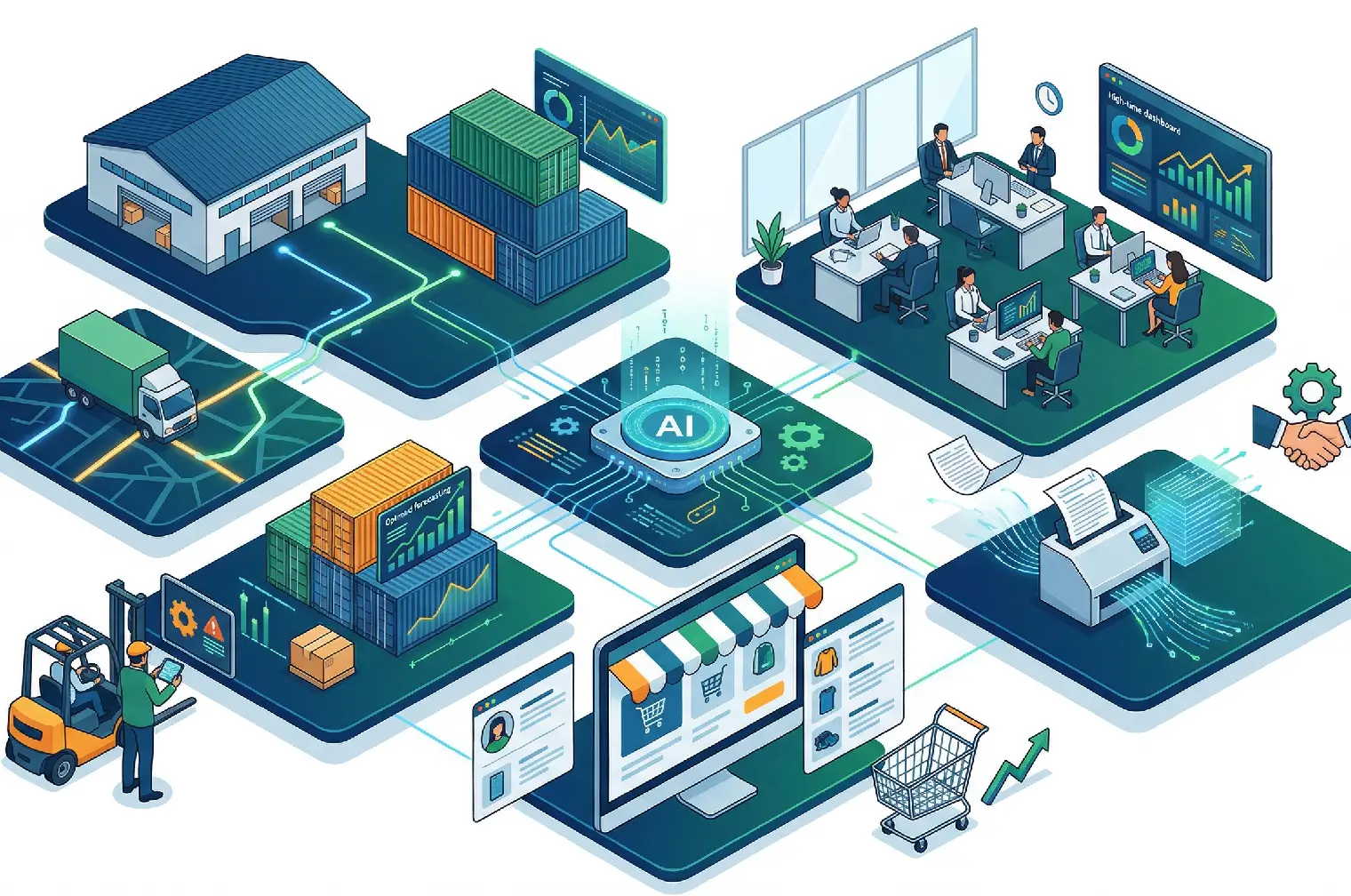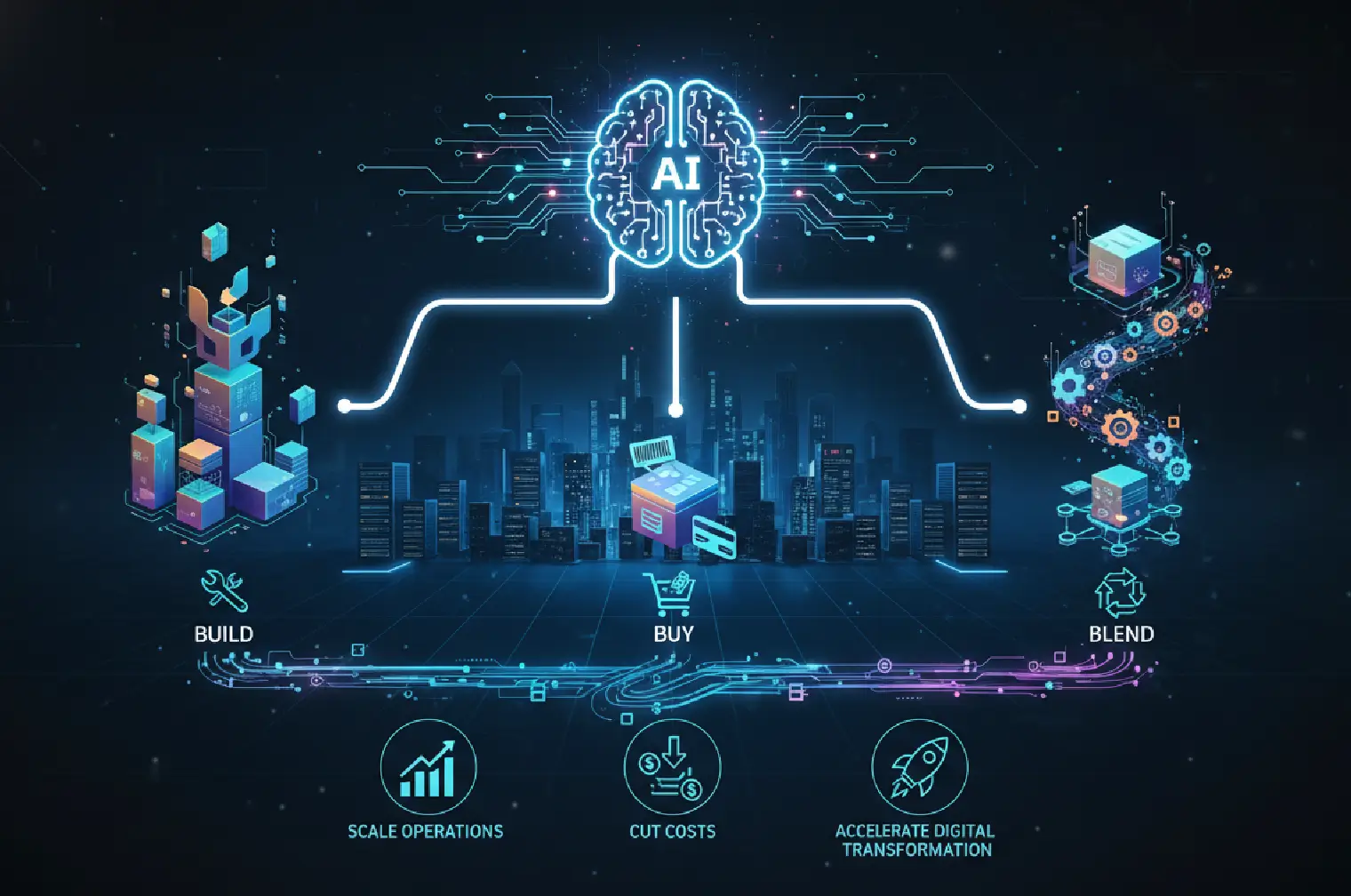
In 2026, the definition of an AI copilot has changed to autonomous execution (from basic text generation). Businesses no longer view these systems as simple chat interfaces. Instead, an AI copilot serves as a coordination layer across enterprise software.
Modern AI Copilot development now focuses on creating agentic systems that observe, plan, and execute multi-step workflows. This transition enables small and medium-sized businesses (SMBs) to automate complex operations that previously required manual oversight.
The Technical Shift: From Assistance to Autonomy
Traditional assistants required a human to initiate every step. In 2026, AI agents operate with higher levels of independence. These systems monitor data streams like ERP updates, email traffic, and IoT sensor signals. They identify a need for action and proceed based on predefined business rules. Gartner predicts that by the end of 2026, 40% of enterprise applications will feature task-specific AI agents, a significant increase from less than 5% in 2025 (Gartner, 2025).
The core of this evolution is AI Copilot development that utilizes Multi-Agent Systems (MAS). In this architecture, different specialized agents collaborate. For example, a “Billing Agent” communicates with a “Contract Agent” to verify terms before a “Payment Agent” executes a transaction. This modular approach ensures that custom AI solutions remain scalable and easy to audit.
Build a Smarter AI Copilot for Your Business
Design an AI Copilot tailored to your workflows with ViitorCloud’s Custom AI Solutions.
Real Business Use Cases by Industry
1. SaaS and Software Development
SaaS companies use an AI copilot to manage the entire product lifecycle. AI agents now handle backlog grooming, draft technical specifications from meeting transcripts, and generate unit tests. This reduces the time senior developers spend on administrative tasks.
ViitorCloud provides specialized AI Copilots in SaaS to help CTOs accelerate roadmaps. These systems analyze historical codebases to suggest architectural improvements and automate documentation. By integrating custom AI into the development pipeline, teams maintain consistent coding standards while increasing deployment frequency.
2. Logistics and Supply Chain Management
Logistics firms face volatile fuel prices and unpredictable route delays. An AI copilot in this sector monitors global shipping data and weather patterns in real-time. When the system detects a potential delay, it reroutes shipments without human intervention.
Key applications include:
- Predictive Inventory Self-Healing: Agents detect low stock levels and initiate purchase orders based on demand forecasts.
- Dynamic Route Optimization: Systems adjust delivery paths based on live traffic and port congestion.
- Warehouse Automation: AI agents coordinate robotic picking systems to prioritize high-urgency orders.
Effective custom AI solutions for logistics enable companies to reduce operational costs by up to 30%. These systems eliminate the data silos that typically slow down supply chain responses.
3. Healthcare and Life Sciences
In healthcare, AI copilot development focuses on reducing the administrative burden on clinicians. Ambient clinical assistants listen to patient-doctor consultations and generate structured notes for Electronic Health Records (EHR). This process ensures high data accuracy and compliance with HIPAA standards.
Beyond administration, custom AI assists in diagnostics and personalized medicine. These platforms analyze X-rays and MRIs to highlight anomalies for radiologists. According to McKinsey, high-performing organizations use AI agents to redesign entire patient care workflows rather than just automating single tasks (McKinsey, 2025).
ViitorCloud’s AI-first platforms for healthcare support hospitals in managing patient readmission risks. By processing historical health records, the system identifies high-risk patients and suggests preventive care plans.
4. Finance and BFSI
The financial sector requires high security and real-time processing. An AI copilot in finance automates fraud detection by analyzing hundreds of transaction attributes per second. These systems identify novel fraud patterns that traditional rule-based software misses.
| Feature | Traditional Financial Software | 2026 AI Copilot (Agentic) |
| Fraud Detection | Static rules and manual reviews | Real-time pattern recognition and autonomous blocking |
| Compliance | Periodic manual audits | Continuous, automated monitoring and reporting |
| Customer Support | Scripted chatbots | AI agents that resolve complex billing disputes |
| Loan Processing | Days of manual verification | Immediate assessment of creditworthiness |
For organizations in the BFSI industry, AI Copilot development involves building secure data pipelines. These pipelines ensure that custom AI models have access to the latest market data while maintaining strict data privacy.
Why Custom AI Copilot Development Is Necessary
Off-the-shelf AI models often lack the specific context of a unique business. AI Copilot development tailored to a specific organization provides better accuracy and security. Generic models can hallucinate or leak sensitive data if not properly constrained.
Data Sovereignty and Security
Businesses in regulated industries like finance and healthcare must keep their data within private environments. Custom AI allows for on-premises or private cloud deployment. This ensures that the AI copilot only learns from authorized internal documents and does not share proprietary information with external third-party models.
Integration with Legacy Systems
Most SMBs rely on a mix of modern and legacy software. Effective AI agents must interact with old databases and specialized industry tools. A custom AI agent uses custom-built connectors to bridge these gaps, ensuring that the AI copilot has a complete view of the company’s operations.
Turn Real Use Cases into an AI Copilot
Apply proven business use cases with an AI Copilot powered by Custom AI Solutions.
Impact on SEO and AEO (Answer Engine Optimization)
The rise of an AI copilot also changes how customers find information. In 2026, users often ask their personal AI agents for business recommendations instead of using traditional search engines. This shift is known as Answer Engine Optimization (AEO).
To remain visible, brands must establish authority. When an AI copilot searches for a solution, it cites sources that provide factual, structured, and deep technical data. ViitorCloud helps businesses optimize their digital presence so that AI agents cite them as a primary source of truth. Implementing AI Copilot development within your own brand’s platform increases user engagement and data capture, which further fuels the brand’s AI-readiness.
Our team’s approach to artificial intelligence capabilities focuses on creating “citeable” content and data structures. This strategy ensures that when an AI copilot answers a query about logistics or healthcare, it pulls from your specific data moats.
Build a Strategy for AI Adoption
Starting with a massive AI project often leads to failure.
Successful SMBs follow a phased approach:
- AI MVP Development: Identify one high-frequency, low-risk task for automation.
- Pilot Testing: Deploy a task-specific AI copilot to a single department.
- Refinement: Use the data from the pilot to improve model accuracy.
- Scaling: Integrate AI agents across multiple departments to create a collaborative ecosystem.
ViitorCloud assists companies in navigating this transition from experimental pilots to scaled impact. Whether you require a SaaS growth assistant or a logistics coordinator, our AI Copilot development services provide the necessary infrastructure.
Scale Decisions with Custom AI Solutions
Deploy an enterprise-ready AI Copilot that improves speed, accuracy, and decision-making.
Conclusion
In 2026, the competitive advantage belongs to businesses that move beyond passive AI tools. An AI copilot is now an active member of the workforce that manages complex, multi-step tasks autonomously. By investing in AI Copilot development, SMBs in healthcare, finance, and logistics can scale their operations without significantly increasing their headcount.
AI agents and custom AI systems provide the precision and speed required to navigate modern market volatility. Transitioning to an agentic organization is a technical necessity for maintaining market relevance in a world where AI drives both back-office efficiency and front-end customer discovery.
Contact us at [email protected] and set a complimentary consultation call with our AI experts.

Vishal Shukla
Vishal Shukla is Vice President of Technology at ViitorCloud Technologies.