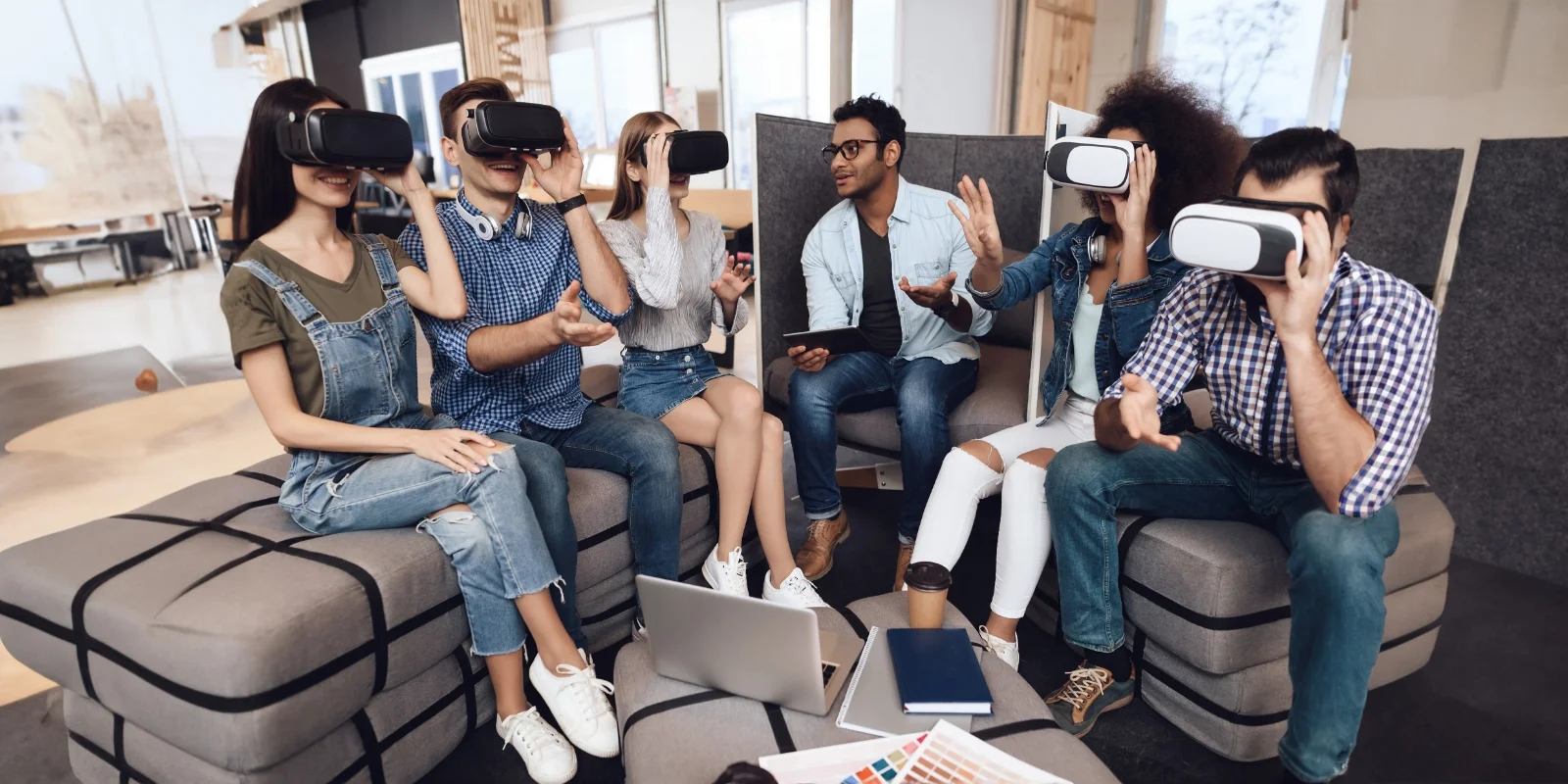
AR ecommerce logistics development: the future is now

The eCommerce industry is growing exponentially, presenting challenges and opportunities for the logistics industry. In the digital world where speed and convenience are the two most important things, logistic companies constantly seek more efficient and innovative solutions to streamline their operations and enhance customer experiences. Here is when VR and AR eCommerce Logistics development comes into the picture.

Rise of virtual and augmented reality in e-commerce logistics

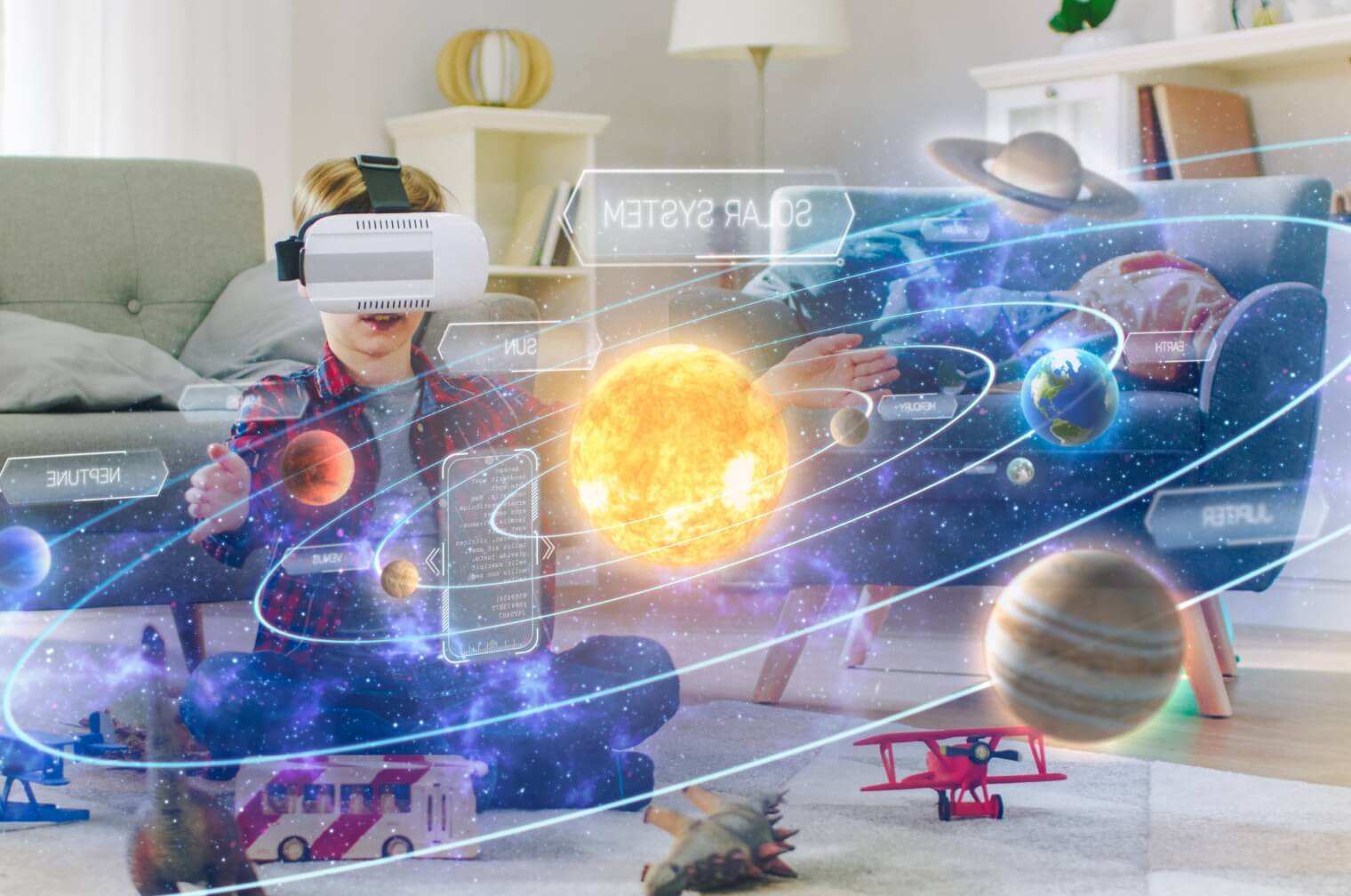
Virtual reality (VR) technology generates a computer-simulated environment, immersing users in a virtual realm usually via headsets or goggles. By substituting the physical world with a digital environment, VR endeavors to deliver a complete immersion digital experience service.

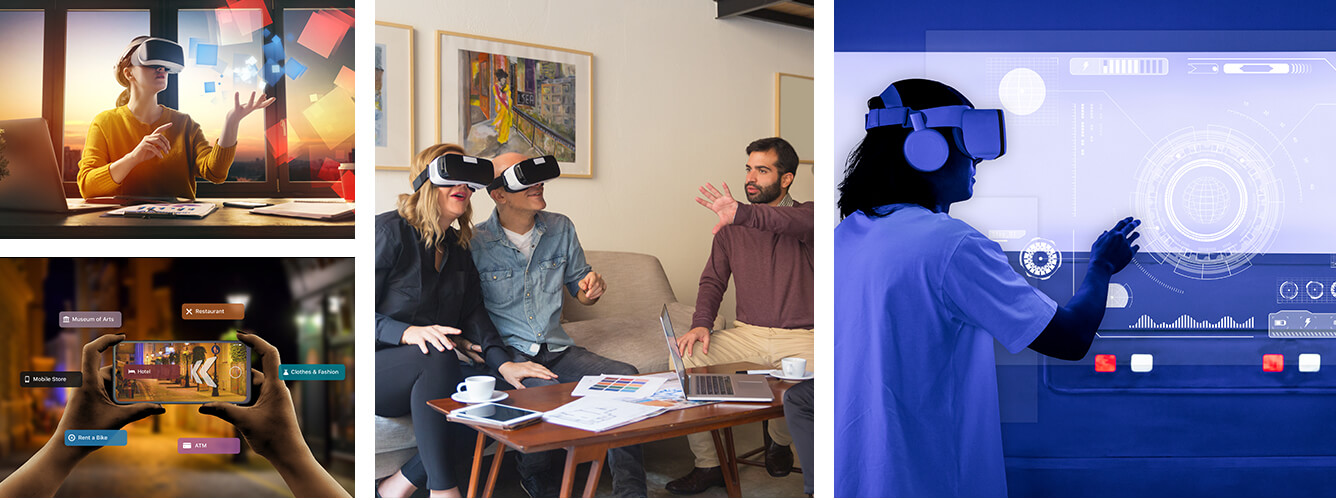
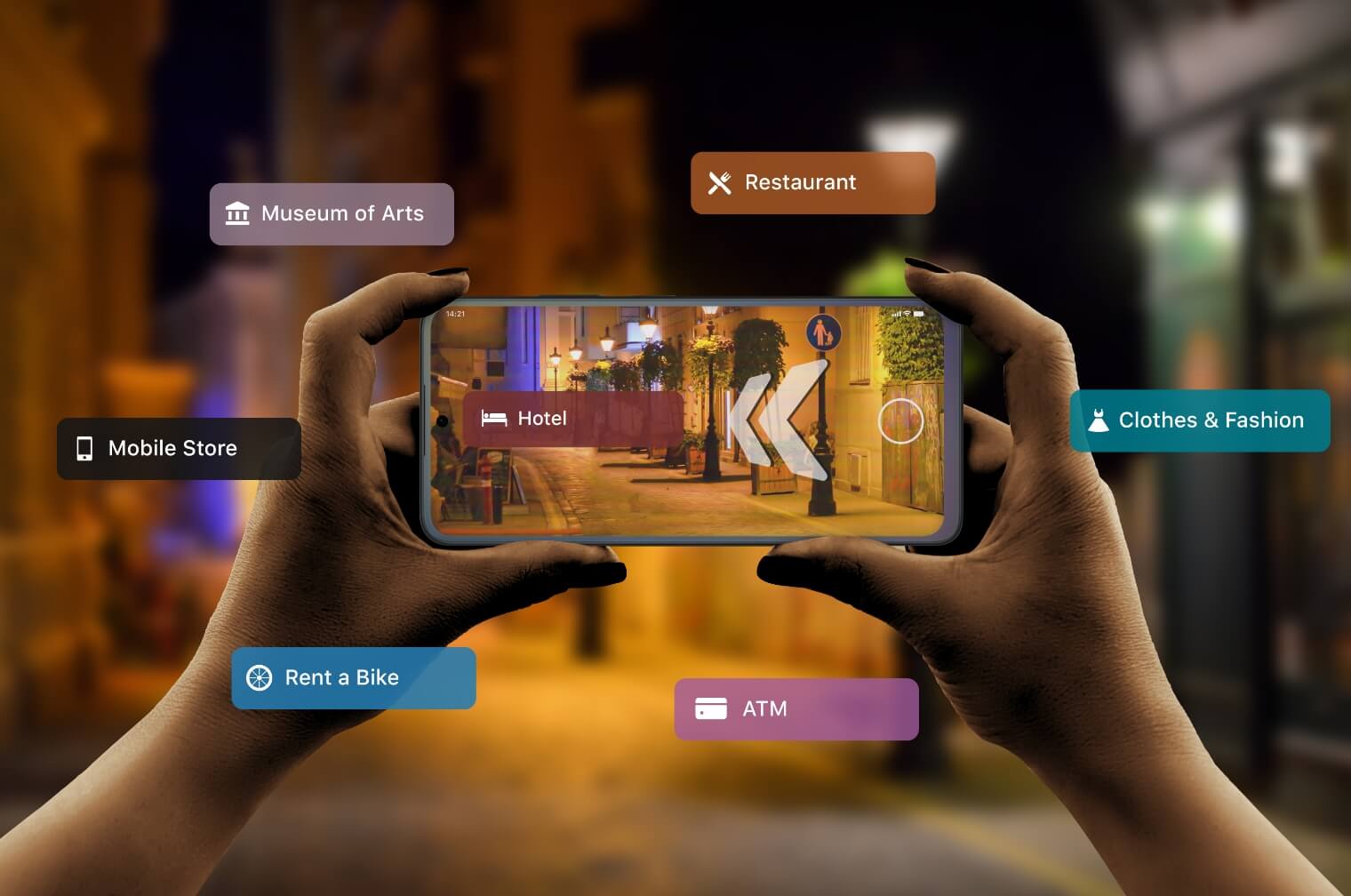
Augmented Reality (AR), on the other hand, overlays digital information onto the real-world environment. It enhances the physical world by adding a layer of virtual objects, images, or information onto the user’s view of the actual world. Simply put, AR does not replace the real world, as VR does, but it adds digital elements, offering a mix of the physical and virtual worlds.

Applications of Virtual Reality (VR) and Augmented Reality (AR) are no longer limited to the gaming and entertainment sector. These breakthrough technologies are making waves in almost every sector, and eCommerce logistics is no exception.

Both AR and VR have gained significant popularity in recent years. They can potentially address some of the key challenges witnessed in the eCommerce logistics sector. In this blog post, you will explore how AR and VR technology is benefiting the eCommerce logistics industry in a number of ways. Continue reading!

Applications of AR solutions for eCommerce logistics

AR technology is increasingly being adopted in eCommerce logistics for various benefits. Let’s explore what these 3d eCommerce development are.

Efficient order picking and packing

AR solutions can help optimize the process of order picking and packing in warehouses. AR-enabled smart glasses or mobile devices can overlay digital information onto the workers’ field of view and guide them on which items must be picked, in what quantity, and from which location.

So, basically, AR technology helps reduce picking time, enable fast shipment, and enhance the overall accuracy of the process. It can also be used to identify misplaced items in the warehouse, which ultimately helps in efficient inventory management.

Real-time inventory visualization and tracking

Warehouse managers can leverage AR interfaces to get real-time insights into inventory location, movement patterns and levels. AR can help you overlay digital labels onto all physical items, enabling you to track all product information easily and accurately.

Leveraging augmented reality in logistics will help you monitor stock movement and identify low stock levels more effectively. If there is any discrepancy in inventory management, the AR solution will help you spot it more quickly.

Improving last-mile delivery

Last-mile delivery us a significant part of eCommerce logistics, and AR assistance can help improve it in a number of ways, including:

Route optimization: Augment reality logistics can help delivery drivers find the most efficient routes to their destinations, considering factors such as traffic conditions, weather, and delivery windows. This can help save a good amount of time and fuel.

Navigation: AR navigation solutions provide turn-by-turn directions and highlight potential hazards or obstacles on the road. This helps drivers make informed decisions and choose the best routes to optimize delivery time and minimize fuel consumption. This helps reduce the chances of missed or failed deliveries.

Proof of delivery: AR devices can be used to capture digital signatures and photos of deliveries, proving that the package was delivered to the correct person at the correct time. This provides an indisputable record of successful delivery and assists in resolving any delivery-related disputes.

Customer communication: The AR interface can be used to communicate with customers about the delivery status, tracking information, and estimated delivery time of products. This can help to improve customer satisfaction and reduce the number of customer service inquiries.

AR eCommerce Logistics development is playing a vital role in streamlining supply chain management processes in this industry. By providing real-time information and enhancing navigation capabilities, AR solutions optimize route planning, navigation, and last-mile delivery.

Virtual try-on and product visualization

Investing in AR application development enables customers to try on products virtually and visualize them in real life. By using AR applications on their mobile devices, customers can overlay virtual images of products onto themselves and visualize how they would look or fit.

This virtual try-on feature is more valuable for industries such as fashion, eyewear, and cosmetics, where customers can visualize how clothing items, eyeglasses, or makeup products would appear on them before making a purchase. This feature reduces the need for physical try-ons, increases customer confidence, and reduces the possibility of product returns.

AR-enabled product information and reviews

This AR-enabled product information and reviews enhance the overall customer experience, reduce information asymmetry, and increase customer satisfaction. Customers can access detailed product specifications, user reviews, and ratings by scanning product labels or codes using AR applications.

AR overlays this information onto the physical product or displays it through the AR interface, allowing customers to make more informed purchasing decisions. They can learn about product features, compare different options, and read reviews without the need to search for information on separate websites or platforms.

VR advancements in AR eCommerce logistics development

There are several ways VR technology is reshaping the realm of ecommerce logistics. Let’s understand it in detail.

VR-based training and simulation for warehouse operations

One of the key applications of VR in e-commerce logistics is providing warehouse workers with immersive training and simulation experiences. With VR-based training, warehouse employees can practice order picking, packing, and inventory management tasks within a safe and controlled setting of the virtual world. Such training sessions help improve their skills, reduce errors, and enhance overall productivity.

Additionally, VR-driven simulations enable employees to familiarize themselves with complex machinery and equipment. They can learn how to operate forklifts, automated picking systems, and other warehouse technologies without the risk of accidents or damage to inventory.

Virtual layout planning and optimization

This is another application of VR in warehousing and fulfillment centers. Designing an efficient and ergonomic warehouse layout can involve factors such as product placement, picking routes, and storage capacity.

Using VR for eCommerce logistics enables businesses to visualize and simulate different layout configurations before implementing them physically. Warehouse managers can create virtual representations of their facilities and test various layouts to identify the most optimal arrangement.

VR solutions for supply chain visualization and analysis

In addition to its applications in warehousing, Virtual reality logistics is also harnessed to enhance supply chain visualization and analysis. Ecommerce businesses can leverage immersive VR environments to represent various supply chain metrics, such as inventory levels, transportation routes, and demand patterns.

VR for supply chain management facilitates a deeper understanding of the data, enabling decision-makers to identify trends, bottlenecks, and opportunities in the supply chain network.

By visualizing data more intuitively and interactively, organizations can make data-driven decisions more effectively, improving operational efficiency and responsiveness.

VR-based predictive analytics for demand forecasting

One of the biggest challenges for eCommerce businesses is accurately forecasting demand. This helps in inventory management as well as in supply chain optimization. VR-based predictive analytics leverages advanced AI algorithms and machine learning techniques to analyze historical data, market trends, and other relevant factors to forecast future demand patterns of the stocks.

VR for eCommerce logistics enables decision-makers to interact with demand forecasts more intuitive and immersive. They can explore different scenarios, simulate the impact of various factors on demand, and make informed decisions based on the insights provided by VR solutions.

Virtual showrooms and immersive shopping experiences

Virtual showrooms enable customers to explore and interact with products in a virtual environment, providing a more engaging and realistic shopping experience. Customers can visualize products in 3D, examine them from different angles, and even try them virtually before purchasing. VR-powered virtual showrooms help bridge the gap between online and offline shopping experiences, enhancing customer satisfaction and reducing the likelihood of returns.

Moreover, virtual showrooms can be customized based on individual customer preferences. By collecting and analyzing customer data, businesses can create virtual environments that showcase relevant products, recommend complementary items, and tailor the shopping experience to each customer’s preferences and needs.

Intelligent virtual assistants and chatbots

VR-driven virtual assistants and chatbots offer a new level of customer support and engagement. By integrating VR technology into chatbot interfaces, businesses can create virtual assistants capable of guiding customers through their shopping journey, answering queries, and providing personalized recommendations.

These virtual assistants can offer more interactive and immersive interactions with customers. They can showcase product features, provide demonstrations, and even simulate how products look and function in real-world settings. This enhances customer engagement and improves overall customer satisfaction.

Real-world examples: AR and VR-powered e-commerce logistics

In recent years, many companies have successfully implemented AR and VR solutions to revolutionize various aspects of their supply chain operations and enhance the overall customer experience. Let’s explore some real-world examples of how AR and VR are powering e-commerce logistics:

  • Amazon: One of the world’s largest e-commerce giants, Amazon, has implemented AR in its warehouses to improve order-picking efficiency. Workers wear AR glasses that display information about the items they need to pick, helping them locate and pack items more quickly and accurately. The company also uses AR to help its delivery drivers find the correct addresses in dense urban areas. They also use VR to train their warehouse workers to pick and pack orders.
  • IKEA: They have embraced both VR and AR solutions for eCommerce logistics. The IKEA Place app allows users to visualize how furniture will look in their homes before purchasing. And their VR experience app allows users to browse product catalogs and explore a virtual home in 3D where they can see how different products will look. These applications enhance the customer experience and reduce the likelihood of returns.
  • Walmart: The company’s AR app helps product delivery drivers navigate dense city areas; it provides directions to the specific apartment unit where they need to deliver the package.
  • FedEx: They use VR to train their employees for various tasks, including package handling, customer service, and safety. The company’s VR training program helps employees learn new skills and procedures in a safe and immersive environment.
  • L’Oreal: This global cosmetics brand has integrated AR into its e-commerce strategy. They offer virtual try-on experiences, allowing customers to test makeup products through their smartphones or computers before purchasing. This not only boosts customer engagement but also reduces the number of returns.
  • Lowe’s: The home improvement retailer employs AR in its stores to assist customers in finding products. The Lowe’s Vision app uses AR to guide customers to the location of items on their shopping lists, making the shopping experience more convenient.
  • UPS: They use AR to help their delivery drivers capture digital signatures and photos of deliveries. The company’s AR app allows drivers to scan a QR code on the customer’s smartphone to capture their signature and then take a photo of the package at the delivery location.

Future trends and innovations in AR and VR for eCommerce logistics

As augmented reality (AR) and virtual reality (VR) technologies continue to evolve, the potential for their application in eCommerce logistics is expanding. Looking ahead, here are some future trends that we can expect to see in this domain:

  • More immersive experiences: As AR and VR hardware and software continue to improve, we can expect to see more immersive and lifelike experiences for eCommerce logistics. This will allow customers to have a more accurate understanding of products and services before they buy them.
  • Wider adoption: We can expect to see more eCommerce businesses adopt these technologies. This will lead to a wider range of AR/VR applications in eCommerce logistics, such as virtual showrooms, AR-guided picking and packing, and VR-powered delivery drones.
  • More innovative solutions: As these immersive technologies continue to develop, we can expect to see new applications emerge in this space. For example, we may see AR/VR used to create virtual warehouses that can be used to store and manage inventory more efficiently. VR can be used to develop autonomous delivery drones that can navigate and deliver packages without the need for a human driver. This could revolutionize last-mile delivery.

Final thoughts

All the real-world examples and applications of AR and VR in the eCommerce logistics sector make it evident that these immersive technologies are transforming this niche from warehouse management and order fulfillment to customer experience and last-mile delivery.

These eCommerce AR advancements and VR-powered logistics will continue to redefine how the supply chain operates, making them more efficient, cost-effective, and customer-centric. Want to harness the power of VR and AR eCommerce Logistics development? Book a free consultation with our tech experts NOW!

Frequently asked questions

What are the future trends in AR for e-commerce logistics?

Future trends in the niche of AR eCommerce Logistics development include more immersive AR experiences, innovative AR applications, and wider adoption of this groundbreaking technology by eCommerce businesses.

How is AR being used in e-commerce logistics today?

Ecommerce businesses primarily use AR to improve customer experiences, optimize supply chain operations, and train workers.

How to use AR in eCommerce?

To use AR solutions for eCommerce logistics, integrate AR technology into product visualization, allow customers to virtually try products, and implement AR overlays for real-time product information and interactive shopping experiences.
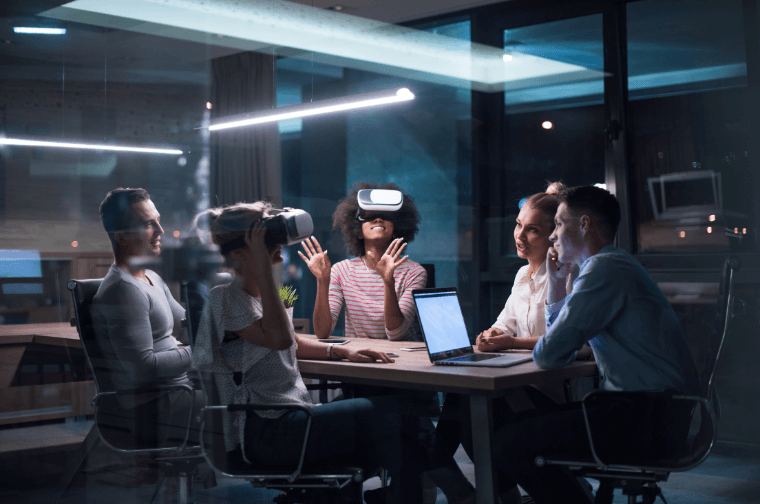

Immersive Technology solution: The future of business

In the era of innovations, immersive technology is leading this with a promise of transformational experience.

At the very core, 3D immersive technology solution. Which is often referred to as Extended Reality (XR), includes Virtual Reality (VR), Augmented Reality (AR), and Mixed Reality (MR).

These technologies are blurring the lines between physical reality and virtual reality, as they provide us with a rich experience that once was only imaginable and not achievable.

Understanding Immersive Technology

Immersive technology XR (Extended Reality), offers a wide range of experiences, each with its unique blend of virtual and real-world elements. It includes three different categories:

Virtual Reality (VR): VR allows users to be completely transported in a digitally created environment, distancing themselves from the physical world completely.

This technology is usually accessed through a headset or goggles to be immersed in 360-degree digital experiences.

Augmented Reality (AR): AR overlays digital content onto the physical world, enhancing the user’s perception of reality.

It’s commonly experienced through smartphones, tablets, and AR glasses, enriching real-world environments with virtual elements.

Mixed Reality (MR): MR combines the best of both VR and AR, allowing users to interact with digital objects while still being aware of their physical surroundings.

This technology finds applications in industries where seamless integration of the virtual and real worlds is crucial.

History and evolution of Immersive Tech

The roots of immersive technology trace back to pioneering experiments in the mid-20th century, but it wasn’t until the late 20th and early 21st centuries that these technologies began to mature.

VR, for instance, emerged in the gaming and entertainment sectors before finding applications in fields like education, healthcare, and military training.

AR gained prominence with mobile apps and is now an integral part of navigation, gaming, and advertising. MR, on the other hand, is finding its stride in industries that demand intricate interaction between digital and physical elements.

Current and potential future applications in various industries

Immersive technology’s applications span across industries. In healthcare, surgeons use AR to guide complex procedures, while VR aids in pain management and therapy.

Education leverages these technologies for immersive learning experiences.

The gaming industry continuously pushes the boundaries of VR and AR. In architecture and real estate, prospective buyers can tour properties in 3D immersive environments.

Training and simulations are another fertile ground; industries like aviation and manufacturing use VR to train personnel for high-risk tasks.

3D Immersive Technology solution for business

In today’s rapidly evolving business landscape, staying ahead of the curve is imperative for survival and success.

One of the most revolutionary developments in recent years has been the integration of 3D immersive technology into various aspects of business operations.

From virtual reality (VR) to augmented reality (AR) and mixed reality (MR), these immersive technologies are reshaping the way companies engage with their customers, train their employees, and execute various business processes.

How businesses are integrating Immersive Technology?

Immersive technology is no longer a novelty but a strategic tool for businesses looking to thrive in the digital age.

Customer Engagement: Immersive technology has taken customer engagement to a whole new level.

Companies are using VR and AR to create immersive shopping experiences, allowing customers to visualize products before purchasing, leading to increased sales and reduced return rates.

Employee Training: Gone are the days of dull, text-heavy training manuals.

Businesses are using VR simulations for employee training, enabling them to practice real-world scenarios safely and effectively, ultimately improving performance and reducing training time.

Remote Collaboration: With the rise of remote work, MR technologies have become instrumental in enhancing remote collaboration.

Companies are leveraging MR headsets to conduct virtual meetings, collaborate on projects, and even conduct product design sessions with team members scattered across the globe.

Case studies of 3D Immersive Technology success

From virtual reality to augmented reality, these technologies have proven to be incredibly effective in a variety of industries.

Here are some case studies of 3D immersive technology success:

IKEA’s AR Furniture Shopping: IKEA’s mobile app allows customers to place virtual furniture items in their homes using AR, offering a realistic preview.

This has resulted in a significant increase in online sales and reduced returns due to mismatched expectations.

Ford’s VR Design Studio: Ford utilizes VR technology to design and refine new car models.

This has accelerated the design process and enabled engineers and designers to collaborate seamlessly in a virtual environment, saving time and resources.

University of Nebraska: The University of Nebraska Medical Center used virtual reality to train medical students on how to diagnose and treat sepsis, a life-threatening condition.

3D Immersive technology has been used to improve patient outcomes by allowing doctors and nurses to practice complex procedures in a safe and controlled environment.

Google’s Expedition Program: Google’s Expeditions program allows students to take virtual field trips to locations all over the world.

3D Immersive technology has been used to enhance the learning experience for students.

Advantages of Immersive Technology

Its application across industries is expanding rapidly, offering benefits that range from enhancing customer experiences to revolutionizing employee training.

  • Enhanced Customer Experience: Immersive technology offers customers a more engaging and interactive experience, boosting brand loyalty and increasing sales.
  • Improved Employee Training: VR and AR-based training programs are more effective, leading to quicker onboarding and better-skilled employees.
  • Increased accessibility: Immersive technology can make content more accessible to people with disabilities. For example, virtual reality (VR) can be used to simulate experiences for people with mobility impairments or other disabilities.
  • Cost-effective: Immersive technology can be a cost-effective way to create engaging content. For example, VR can be used to create virtual tours of real-world locations, which can be used for marketing or educational purposes.
  • Enhanced creativity: Immersive technology allows creators to explore new ways of storytelling and content creation. It provides a platform for experimentation and innovation, which can lead to new and exciting forms of media.

Areas of application in business

Companies that embrace these technologies are poised to lead the way in their respective sectors, offering a glimpse into the exciting future of business operations.

  • Retail: Virtual trial rooms, interactive displays, and immersive shopping experiences are transforming the retail sector.
  • Manufacturing: VR simulations and MR tools are improving product design, prototyping, and quality control processes.
  • Healthcare: Surgeons use VR for surgical planning, and medical professionals use AR for patient data visualization.
  • Real Estate: Virtual property tours and AR apps for property visualization are changing the way real estate is marketed.

Future of Immersive Technology in business

In the fast-paced world of technology, staying ahead of the curve is essential for businesses.

As we step into the future, the landscape of immersive technology in business is set to undergo groundbreaking changes.

Predictions for the future of Immersive Tech

Below are the listed predictions for the foreseeable future of immersive technology.

  1. Mainstream Adoption: Immersive technologies like augmented reality (AR) and virtual reality (VR) are poised to become household names, integrating seamlessly into our daily lives. This includes everything from shopping experiences to remote collaboration.
  2. Enhanced Customer Engagement: Businesses will increasingly leverage immersive tech to create unique and interactive customer experiences, enhancing engagement and brand loyalty.
  3. Education and Training: Immersive technology will revolutionize education and training, offering realistic simulations for hands-on learning, from medical procedures to flight training.

Emerging trends and technologies in the immersive space

Below are some of the top Immersive Tech Trends:

  1. Metaverse: The concept of the metaverse, a shared digital universe, is gaining momentum. Companies are investing heavily in creating interconnected virtual worlds that offer limitless possibilities for work, play, and socializing.
  2. 5G Connectivity: The rollout of 5G networks will provide the high-speed, low-latency connection required for seamless immersive experiences, enabling more widespread adoption.
  3. AI Integration: Artificial intelligence (AI) will play a pivotal role in personalizing immersive experiences, and adapting content in real-time to user preferences.
  4. Haptic Feedback: Innovations in haptic feedback technology will make virtual experiences feel even more real by providing tactile sensations.

How businesses can prepare for the next wave of innovation

To prepare for the next wave of the Immersive Tech Trends, Businesses should keep the following points in mind.

  1. Stay Informed: Keeping your head wrapped around emerging technologies and trends in the immersive space is crucial. Stay informed with regular updates and network with experts in the field.
  2. Experiment and Adapt: experiment with different immersive technology solutions. Pilot projects and prototypes can help you understand how these tools can benefit your business.
  3. Invest Wisely: Allocate resources strategically to develop or implement immersive solutions that align with your business goals.
  4. User-Centric Approach: Prioritize user experience. Ensure that immersive experiences add value and are intuitive for customers and employees alike.
  5. Security and Privacy: As immersive tech collects more data, prioritize security and privacy to maintain trust among users.

Conclusion

The future of immersive technology in business is filled with exciting possibilities.

As it becomes more integrated into our lives, businesses that embrace and adapt to these changes will be better positioned to thrive in the digital frontier.

Keep your eyes on the horizon and be ready to immerse yourself in the future of business technology.

Frequently asked questions

Immersive Technology includes different technologies such as Virtual Reality (VR), Augmented Reality (AR), and Mixed Reality (MR).

The future of immersive technology solutions offers multiple benefits such as enhancing customer experience, revolutionizing employee training and development, remote collaboration and communication.

Immersive technologies like AR and VR are offering virtual tours for product exploration, reducing risks with VR simulations, boosting engagements, and improving decision-making.

There are several types of immersive technology solutions. Some of the different types include Virtual Reality (VR), Augmented Reality (AR), Mixed Reality (MR), 360-degree Video, Haptic Feedback, Spatial Computing, etc.

To implement 3D immersive technology in your business, you can follow these steps:

  • Identify your business needs
  • Research available technologies
  • Set clear goals
  • Develop a strategy
  • Collaborate with experts
  • Pilot projects
  • Train employees
  • Monitor and evaluate
  • Scale up
  • Stay updated

Immersive experiences meets success: a showcase of our immersive solutions projects

Game Engine has gained immense popularity in recent years. With its user-friendly interface and extensive features, Game Engine has become the go-to choice for both professional game developers and aspiring enthusiasts.

Basic overview of a game engine

It allows developers to create interactive and immersive experiences across various platforms, including PC, console, mobile, and virtual reality. With its user-friendly interface and extensive library of pre-built assets, Immersive Solutions simplifies the process of designing and prototyping games.

Its robust scripting language, C#, enables developers to create complex gameplay mechanics and AI systems.

Additionally, Immersive Solutions offers a range of tools for graphics rendering, physics simulation, and audio implementation, making it a comprehensive solution for game development.

Latest trends in immersive solutions

During 2022, the game development industry demonstrated “resilience and strength” by focusing on efficiency, optimization, and post-launch efforts. Efficiency proved to be critical, with smaller studios shipping games quickly and working fewer hours.

In fact, 62% of indie studios shipped games in less than a year. Additionally, smaller studios worked an average of 1.2% fewer hours, which amounts to a total of five years of work hours.

There are several trends shaping the gaming industry.

  • Firstly, indies are shipping games quickly and developers are working fewer hours.
  • Secondly, studios are starting more mobile-only games compared to 2021.
  • Thirdly, large studios are increasing the number of multiplatform games. Furthermore, more people are playing mobile games than in 2021

The report draws on data from over 230,000 Game Engine developers and adds data spanning over 423,000 developers on multiple platforms.

Team leader quote

We understand the importance of transparent and efficient communication channels among team members and stakeholders. Over the past few months, we have undertaken numerous projects, each with its own unique set of challenges and complexities. Despite the hurdles, our Immersive Solutions Development team displayed unwavering resilience, adaptability, and an unrelenting commitment to delivering exceptional results. By creating a collaborative and supportive environment, we are aligning efforts, and knowledge, and leveraging each other’s strengths, which is driving productivity to new heights.

Mit Shah, Immersive Solutions and Python Team Leader

Some of the top immersive solutions projects we’ve worked on

Some of the Top projects that our team has worked on with Immersive Solutions.

Real Assist

Real Assist is an AR-based Remote Assistance Application

ViitorCloud provided an AR-based Remote Assistant Application. Real Assist connects on-site engineers and subject matter experts from their devices and subject matter experts can easily guide site engineers using 3D AR annotations to resolve their problems.

This solution from ViitorCloud was provided so that when any machines break down while the engineers are working on remote sites; subject matter experts don’t have to travel physically to the location to provide support and can easily guide virtually.

This eventually saves Travelling costs, saving time by not waiting for experts to arrive at the locations.

  • Industry: Architecture, Healthcare, Manufacturing, Automotive, Construction, Education
  • Country: India
  • Technology: Immersive Technology, Node, React

Sutra

Sutra is a Geo Dataset-based immersive and interactive platform which is used for defense and high-risk industries for planning and motoring, and it also allows real-time communications.

Sutra offers various use cases such as;

  • Virtual Sand Models for Defense Planning
  • Integrated Planning and Decision Making
  • Disaster Response
  • Training and Simulations
  • Terrain Analysis
  • Advance Tagging Control

Sutra can Host online multiuser VR meetings sessions, voice-enabled multi-user and interactive brainstorming sessions and seminars for collaboration and decision-making in VR, Multiuser Interactive geo referencing for VR, and also can Configure and Load Geo reference 3D models to interact in multi-user environments.

Sutra was presented and validated during defense expo 2020 – it received good response and feedback from end users

  • Industry: Defense
  • Country: India
  • Technology: Immersive Technology

AI Pattern Search

The Interactive Pattern Search project aims to revolutionize the way users explore paintings in a museum. This innovative project harnesses the power of artificial intelligence and interactive technology to provide a unique search experience for museum visitors.

The project centers around an interactive TV screen placed within the museum. Users are invited to engage with the artwork in an entirely new way by drawing shapes directly on the screen. These shapes serve as search queries, enabling users to uncover paintings that match their artistic preferences and interests.

Key Features of this project are Shape-Based Search, AI-powered detection, Customized Experience, Real-Time Response, and Enhanced Museum Engagement.

  • Industry: Museum
  • Country: India
  • Technology: Immersive Technology, AI, ML, Node

SoReal

SoReal is a game-changing digital platform for real estate agents. It offers an immersive view of properties through 3D models and Virtual Reality. It allows users to explore all the sides of properties from various angles and customize the property according to the changes they want in wall colors, furniture styles, and more.

SoReal is designed in such a way that it provides a seamless viewing experience on different platforms such as Tablet, TV, and CRM/API platforms. And it also allows side-by-side property comparisons, to help users in choosing their ideal property.

SoReal will transform the real estate market, helping homebuyers and agents make informed decisions and create their desired living spaces.

  • Industry: Real Estate
  • Country: India
  • Technology: Immersive Technology, NodeJS

Real Immerse

Real Immerse is an immersive platform that allows seamless online collaboration, interaction, and offline experiences.

Users can sign up, create avatars, and interact with others with its 3D immersion which creates realistic environments. It also facilitates product demonstrations, sales, and customer support on a single platform.

Additionally, the platform incorporates interactive games and storytelling to improve creativity and problem-solving skills. Features include real-time simulations, chat and reactions, user and role management, personalized avatars, seamless navigation, and audio/video calls for enhanced team engagement. The platform’s focus is on providing an immersive and interactive digital experience for users.

  • Industry: Education, Learning and Development, Automotive, Healthcare, Real Estate, Tourism, Entertainment, Events, Conferences and Meetings
  • Country: India
  • Technology: Immersive Technology, Node, React

Viitorcloud in collaboration with immersive solutions

ViitorCloud has been in the global market for 11 years and it offers high-quality digital solutions for various projects.

Immersive Solution team

ViitorCloud has worked with different clients across a range of industries, including Fortune 50 companies, startups, and governments, and delivered innovative technology solutions. The company has offices in India, the US, and Mauritius and serves customers around the world.

With its user-friendly interface and extensive library of tools, Immersive Solutions enables the creation of games, simulations, and visualizations with ease. It supports a wide range of platforms, including desktop, mobile, and virtual reality, making it accessible to developers and users alike.

Immersive solutions portfolio in the quarterly meet-up

In the recent Quarterly Meet Up Event, our Immersive Solutions Team made sure to drop the charm of an immersive world and showcase their best skills to everyone.

The event also provided an opportunity for our artists to interact with the audience and share their insights and experiences about Immersive Solutions Portfolio. They generously shared their creative process, the challenges they faced, and the techniques they employed to bring their ideas to life.

The Quarterly Meet Up Event not only showcased the incredible talent within our team but also served as a platform to celebrate the power of Immersive Solutions Projects in various industries.

Hawkeye archer takes the spotlight: jiodive featured games in august

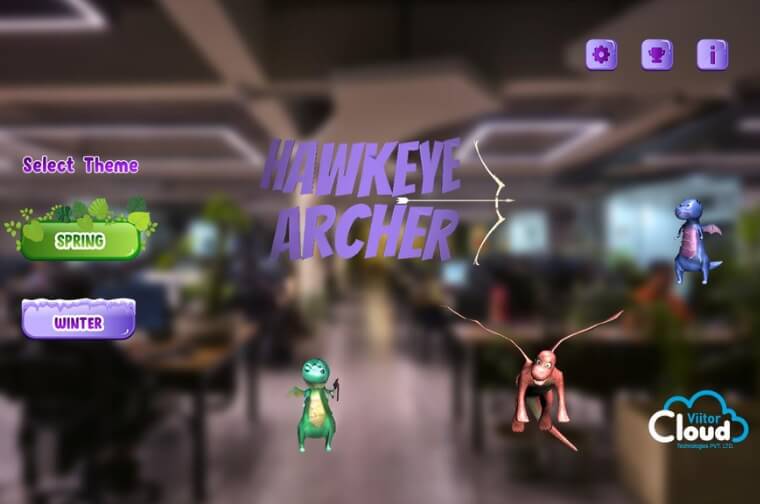
We are absolutely thrilled to reveal this incredible news that our game, Hawkeye Archer, has been honored as one of the JioDive featured games In August month! This recognition proves the dedication and unwavering passion of our talented 3D game development team. It also underscores the exceptional and unforgettable experience that Hawkeye Archer delivered.

What is jiodive?

It is a smartphone-based virtual reality (VR) headset developed by Jio Platforms. This headset allows users to step into the immersive world of VR. With Android and iOS devices compatibility, this VR headset by Jio can transform your smartphone into a powerful VR gateway.

The headset seamlessly pairs with the JioImmerse app, a vast library of VR content offering you 6,000 movies, 1,000 TV shows, and a treasure trove of 100+ Jio immersive games. Together, JioDive and JioImmerse create a seamless ecosystem that brings the virtual world to life, making it an attractive choice for those looking to delve into the world of VR content, whether for leisure, learning, or skill development.

How our game made it to jiodive featured games

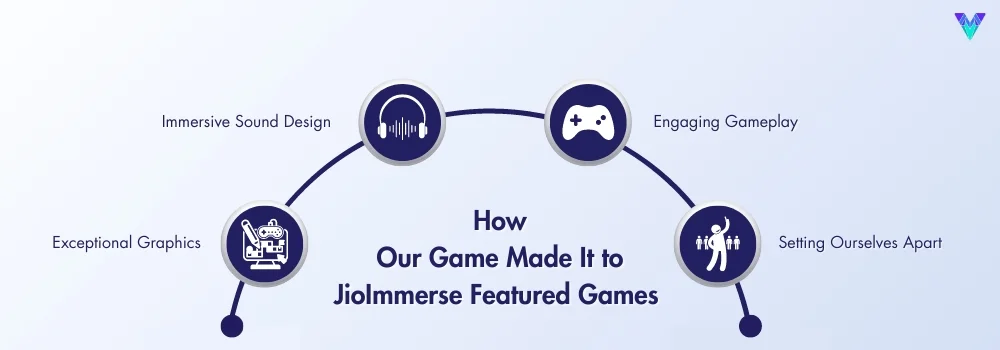
Now, let’s get to the heart of the matter. Earning a coveted spot among JioDive’s top VR games for August was no stroke of luck; it was the result of meticulous planning and unwavering dedication of the ViitorCloud games development team.

Here’s how we improved our chances of featuring Hawkeye Archer XR on JioDive:

  1. Exceptional Graphics: We left no stone unturned in ensuring that our app’s graphics were nothing short of spectacular. Each visual element was carefully crafted to provide a visually stunning and immersive experience that would captivate users.
  2. Immersive Sound Design: Sound is a crucial part of any VR experience, and we recognized its significance. Our sound design was not just an afterthought; it was a carefully orchestrated symphony that complemented the visuals and heightened the overall immersion.
  3. Engaging Gameplay: Gameplay is the heart of any game, and ours was designed to be engaging, addictive, and memorable. We invested significant effort into creating gameplay that would keep players coming back for more.
  4. Setting Ourselves Apart: In a world where excellence is the norm on JioDive, we knew our app had to stand out. It had to be more than just good; it had to be exceptional. Our team’s dedication and expertise were channeled into crafting an app that would shine brightly amid the competition.

Once you’ve ensured that your game meets the highest standards and has gathered positive reviews, it’s time to submit it to JioDive for consideration. JioDive provides a submission process outlined on its website.

Hawkeye archer XR game – what you must know

Imagine stepping into a 360° virtual world, bow in hand, adrenaline pumping through your veins. HawkEye Archer XR offers precisely that. Hawkeye Archer is a game that combines the fast-paced action of a first-person shooter with the immersive experience of mixed-reality competitive archery.

In the game, players take on the role of an archer and must use their virtual bows and arrows to defend themselves against waves of monsters. The objective is to defeat the monsters before they reach and harm the player. As the game progresses, the monsters become stronger and more challenging to defeat, requiring the player to improve their skills.

Features

Our game Hawkeye Archer XR boasts a range of exciting features, including diverse game modes, mixed reality gameplay, and global leaderboards. Some key features of the game include:

  • Two Thrilling Game Modes: Conquer waves and race against time. Test your accuracy and speed as relentless enemies challenge you in waves mode. Or showcase your precision under pressure in the time-based mode.
  • Point & Shoot Experience: Players engage in a point-and-shoot gameplay style, where they aim and shoot arrows at the approaching monsters.
  • Mixed Reality First-Person Shooter: The game combines elements of mixed reality, allowing players to experience archery in a virtual environment with stunning graphics and animations.
  • Varied Difficulty Levels: Find your perfect challenge as you progress through different difficulty levels. Enhance your weapons inventory to stay ahead of the game.
  • Easy to Play, Hard to Master: The game has intuitive controls that make it easy to pick up and play. However, as the difficulty increases, it becomes challenging to master the game and achieve high scores.
  • Global Leaderboard: Engage in intense archery battles with friends and players worldwide. Hawkeye Archer features a global leaderboard that allows players to compete against others worldwide and compare their scores.
  • Endless Gameplay: Hawkeye Archer offers an endless gameplay experience, where waves of monsters keep coming, and players attempt to survive and achieve high scores.

Benefits

Unlock a world of immersive entertainment with HawkEye Archer XR. Following are some primary benefits of our VR game:

  • Experience unparalleled immersion.
  • Improve your aiming skills and concentration.
  • Engage in an action-packed adventure from the comfort of your home.
  • Sharpen your strategic thinking as you tackle waves of enemies.
  • Immerse yourself in a world of stunning graphics and captivating animations.

Requirements

To embark on this archery adventure, you’ll need the JioDive VR device and a touch of gaming spirit. It’s that simple – no special skills required.

Get ready to aim and fire: hawkeye archer xr is free!

The best part? HawkEye Archer XR is available for your gaming pleasure absolutely free of charge! Dive in, experience the thrill, and conquer your targets without breaking the bank.

Ready to Experience Hawkeye Archer?

Download for Free Now!

Explore our VR gaming universe

While HawkEye Archer XR takes center stage, we have a treasure chest of other VR and AR games waiting for you to explore. Dive into a world of possibilities with Viitorcloud Games, where innovation and entertainment go hand in hand.

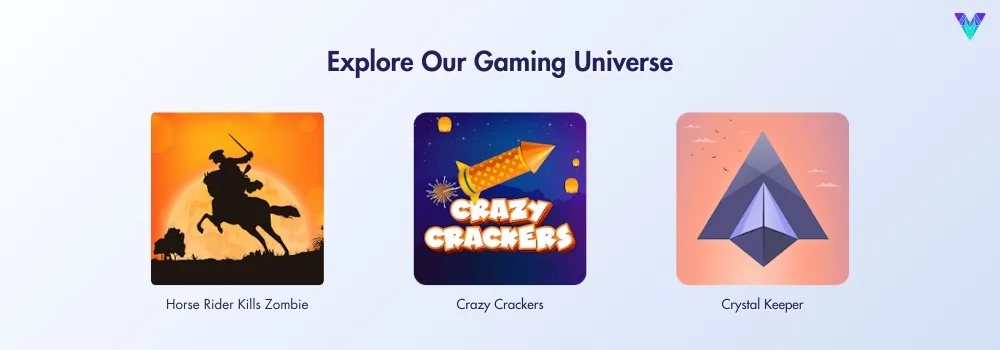
Explore Our Gaming Universe

Here are our top recommendations for immersive games to download and try today:

Crystal Keeper

In this thrilling adventure, you’ll pilot a spaceship through a dangerous asteroid belt, dodging obstacles and collecting precious crystals along the way. Are you ready to test your skills and claim the title of the ultimate cosmic champion? Let’s dive in and explore the wonders of Crystal Keeper!

Download for Free Now!

Crazy Crackers

Experience an endless flight game set in a vibrant Diwali theme. Fly your crackers across the sky, avoiding obstacles and soaring atop skyscrapers. Tap the screen to control your rocket fireworks and collect power-ups for a longer run. Challenge yourself to achieve the highest score possible and make your Diwali celebrations even more thrilling. With fantastic visuals and addictive gameplay, Crazy Crackers will keep you hooked for hours.

Download for Free Now!

Horse Rider Kills Zombie

Become a fearless horse rider and take on hordes of zombies in an intense battle. Armed with various weapons, including guns, bows, hammers, axes, and swords, ride through the hilly terrain and annihilate the undead. Survival is your only goal in this action-packed combat game. Choose your rider and horse and unleash your skills to save humanity from the zombie apocalypse. Prepare for an adrenaline-pumping adventure like no other!

Download for Free Now!

Explore these captivating games developed by Viitorcloud and get ready for an unforgettable gaming experience filled with excitement, challenges, and endless fun.

Welcome to the world of Viitorcloud Games and start your own game!

Have a Game Idea but Not Sure How to Make It a Reality?

Get a FREE call with our game development experts! We’ll help you mature your idea, estimate the cost, discuss the tech stack, and assess the technical feasibility.
Book a FREE Quote Now!

In closing, embrace VR gaming and step into the future now!

In the realm of immersive VR gaming, our journey with Hawkeye Archer XR serves as a testament to our commitment to excellence, innovation, and the boundless possibilities that VR gaming offers. As we proudly secure our spot among JioDive’s featured games in August, we invite you to join us in this thrilling adventure.

But the Hawkeye Archer XR is just the beginning. Our gaming universe at ViitorCloud holds treasures yet to be explored. Don’t forget to check out our other games and embark on journeys that redefine gaming as you know it. Our commitment to delivering top-notch gaming experiences is unwavering.

The VR gaming revolution is here, and it’s time to be a part of it. Dive in, aim high, and let the games begin!

Viitorcloud is committed to enabling business transformation with our python web development services

ViitorCloud is dedicated to facilitating business transformation through our specialized services in Python web development. Python has become increasingly popular for artificial intelligence (AI) and machine learning (ML) application development due to its ease of use, flexibility, and extensive libraries. New libraries such as TensorFlow 2.0 and PyTorch have made Python even more attractive for these fields.

The release of new frameworks like FastAPI and Quart has made Python even more powerful for web development, offering improved performance and support for asynchronous programming. In data science too, Python has become the go-to language, with libraries like NumPy, Pandas, and Matplotlib becoming essential tools for professionals in the field.

Overall, choosing Python for your web development needs ensures that you have access to a powerful and evolving language that is widely used across various industries and sectors.

Our python-powered success stories

ViitorCloud is a leading provider of Python-based solutions with clientele & partners in USA and Europe demographics. Our Python development team has a wealth of experience in implementing Python-based solutions for a variety of industries, including healthcare, finance, and e-commerce.

Our Python solutions are designed to be scalable, secure, and efficient, and we are committed to delivering high-quality solutions that meet the unique needs of our clients. With a focus on innovation and cutting-edge technology, ViitorCloud is a trusted partner for companies looking to leverage the power of Python for their specific business needs.

At ViitorCloud, we are passionate about using Python to solve complex business problems. Our team of experienced developers has delivered many successful projects, leveraging the power of Python to build innovative solutions for our clients. With Python’s vast ecosystem of libraries and frameworks, we have the flexibility to tailor our solutions to meet our clients’ & partners’ unique needs and deliver real value to their businesses.

Mit Shah, Python Team Lead

ViitorCloud’s python-driven innovation

Here are five of our most significant Python projects, showcasing our commitment to innovation and excellence:

  1. EveryTicket: A SaaS-based ticketing platform that allows businesses to sell tickets to their events seamlessly. The platform offers multiple channels for ticket sales and a powerful admin panel and mobile application for business owners to monitor their operations in real time.
  2. EveryCred: It is an IT project that creates a secure blockchain network for storing tamper-proof certificates. Users can customize fields and wording, and a verification mechanism allows third-party authentication.
  3. Cow Monitor: Farmers can now experience the power of data-driven farming with Cow Monitor, bringing better health and efficiency to their livestock management. Leveraging IoT-based Bolus Sensors and advanced technologies, our cutting-edge Python solution provides real-time health and temperature data for cows enabling farmers to track their animals’ well-being.
  4. CO4: It is a platform that is designed to optimize energy consumption and reduce CO2 emissions. The platform offers features to manage energy consumption costs while improving comfort in buildings and industries. Overall, it provides intelligent energy management solutions for sustainability and efficiency.
  5. Newspicking: It is a news web app that fetches the latest news from various sources and categorizes it into different categories like currency, fashion, education, etc. Our app uses customized algorithms to give users the type of news they expect to see.

Python team showcases prowess at our Q2 meetup

At the recently held Q2 meetup hosted by our company, the Python team took center stage with a unique video presentation highlighting their Python portfolio and innovative minds.

VittorCloud Python Developers

At ViitorCloud, we take pride in our Python web development services, which are divided into three specialized subdomains including AI, blockchain, and backend development. Now, let’s find out how Python plays a key role in each of these domains.

The backbone of our backend and cloud services

Using Python, we have built scalable web applications for clients in the backend and cloud services domain, including a real-time messaging application, a cloud-based HR management system, and a customized e-commerce platform.

Harnessing the power of artificial intelligence

We possess a deep understanding of AI and ML. We have utilized Python’s powerful libraries and packages to create systems that use AI to generate 3D models, analyze data, and more.

Building the future with python and blockchain

We have extensive experience in utilizing Python for blockchain development and have delivered successful projects in this domain. We leverage Python’s advanced features and libraries to develop secure, scalable, and efficient blockchain solutions that meet the unique requirements of each client.

Python web development at ViitorCloud

We are committed to enabling business transformation with our Python development services. Our team of expert Python developers has extensive experience working with the latest libraries and frameworks, making us the go-to choice for businesses looking to leverage the power of Python for AI and machine learning (ML), web development, and data science.

Whether you’re looking to build complex AI models, develop high-performance web applications, or perform data analysis, ViitorCloud has the expertise to deliver high-quality Python solutions that meet your business needs.

With Python’s ongoing evolution and improvement, we remain committed to staying at the forefront of the latest trends and developments in the language, ensuring that our clients receive the best possible web solutions.

5 tips every unity 3d developer should know

Unity3d is one of the most renowned video game development systems. It works to enhance game performance and manage different demands of advanced game development. Video game designers worldwide prefer Unity3d to develop highly functional and imaginable games, ranging from the first-rate RPG to the widely used augmented truth video game such as Rust, Ghost of a Tale, Hearthstone and globally used Pokemon Go.

Unity game development is widely known among 2D and 3D mobile game developers. Using Unity3d for cross-platform game development saves a lot of time and offer high-quality game experiences.

As an app developer, you must know that game development is different from normal app development. It needs a virtual game environment with virtual objects and virtual background.

Indeed in today’s era, there is nothing better than Unity to start game development. It provides lots of tools and a suitable game development environment to create stunning and interactive 3D games for smartphones, tablets, the web and computers.

Unity3D help you with in-game app development with beginner-level programming skills and help you turn yourself into a professional and full-fledged game developer having capabilities of creating apps for different mobile app platforms such as Android, iPhone, X-box, PS4, Windows Mobile, Windows desktop, Linux, and Mac OS etc.

Hire Unity3d developer India to ensure the success of your game. From Unity3d modelling to creating robust modules and test cases, developers must know all required aspects of games and their scope.

So, it needs dedicated technologies and tools to infuse excitement, fun and real gaming experiences and indulges other elements in engaging and lures the players to your game. Whether you are a new or an experienced Unity3d developer, everyone should be aware of the coding standards and tips.

Here are most important tips:

  1. Know the value of assetsIrrespective of game size, game assets are much more valuable. Every professional developer always keeps care of these assets. Game developers maintain the quality of game assets.To start with, Unity3d assets offer great support to overall game development and theme. An asset that is not is invaluable with the game theme is of no use,irrespective of its design.Expert developers must know the cost of developing assets to support game development and budget. In turn, they must analyse everything related to assets and be attentive to other alternatives available for assets no matter what is their brand.Moreover, game developers should be aware of creating Unity3D assets with slight or big changes, shadow effects, shading here and there and a touch-up here.
  2. Keep users in mindDeveloping an app is not a big deal; however, the developers should design with users in mind. Without users, there is no benefit to building an app. By offering a seamless and unique gaming experience to the users is vital to ensure its success.Your game should be playful and enjoyable. Interfaces, menus, characters, colour schemes, and other factors should be attractive and eye-catching. Navigation of the app should be easy to use and designed well to facilitate players.The best bet to make a game successful is to keep things consistent, intuitive and simple with the attractive look and feel of the game.
  3. Emphasis on the game flowWhen you a Unity3d developer, always check how they analyze and design the game flow. The skills of developers assist them in framing a technical competence with great game flow design.Experienced game developers work well with Unity3D modelling and understand its flow, process, and motive of creating the game. Developers need to test the app at every development stage, starting from requirement analysis and prototyping to designing, development and execution.With every development stage, you will get valuable inputs and modifications to improve the app’s functionality. For the long run of the app, the game flow should be very relevant and designed perfectly.
  4. Build SettingsGame settings are used to define required app credentials such as app sign, company name, app name and much more. Publish setups are utilized to publish the game on different stores such as Google Play Store, iTunes, etc.With proper build setting set up, you can assist users in transforming splash screen by using sprinkle image options in-app setups. Perfect build settings can also help you share video games on different platforms.
  5. Balance the gameplayWhat is the worst situation you face while playing a game? Isn’t it when the players feel disconnected from the game? Components and app features they want to use that are not available or disconnected from the use may ruin the whole development process and objective.Confusing game levels, poor dealing with game elements – these are all issues that show that your game has poor gameplay balance. Indeed gameplay balance is one of the biggest tasks for game designers; however, the balancing varies from game to game you develop. To sustain the players with your game for a long time, the gameplay balancing should be perfect.It also relies on the project needs and the type of game you are building. Conceivably the best way to test your gameplay balance is to let people play it, find the loopholes and give their reviews.

Unity3d comes with lots of documentation that assists developers at all development stages. As a cross-platform game engineUnity3d also helps developers to create cross-platform mobile apps.

Therefore, it needs less time to develop a game app for the players. This writing has elaborated top 5 tips for Unity3d developers. Follow these tips to achieve the desired success and sustainability in today’s competitive market.

How extended reality has reshaped the modern world

Based on the exponential rate at which technology advances, it is not difficult to picture what life will be like in ten years. Compared to the previous ten years, the globe would be radically different. All were owing to the smartphone applications, AI, and AR/VR technology that has emerged in the last ten years. But what is more recent and can transform current businesses? Extended Reality Technology (XR) is the solution. Extended Reality (XR) encompasses various distinct sorts of technological breakthroughs.

What is extended reality?

Extended Reality is a brave new frontier in technology and human connection. Augmented Reality, Virtual Reality, and Mixed Reality are all examples of extended Reality. Extended Reality is abbreviated as XR, where X is a variable that can be replaced with any of the letters A, V, or M. Extended Reality is defined as the use of immersive technology to expand Reality and merge the virtual and physical worlds.

Augmented reality: (AR)

AR app creation integrates the user’s physical environment with the digital world, enriching the real world with digital features such as words, photos, and animation. AR glasses, smartphones, and tablets might be used to experience it. For example, Pokemon Go is a game that overlays digital animals into the actual environment, while Snapchat filters add digital overlays to your photos, such as a hat or a drink.

Virtual reality (VR):

app creation integrates the user’s physical environment with the digital world, enriching the real world with digital features such as words, photos, and animation. AR glasses, smartphones, and tablets might be used to experience it. For example, Pokemon Go is a game that overlays digital animals into the actual environment, while Snapchat filters add digital overlays to your photos, such as a hat or a drink.

Mixed reality (MR):

MR Merges the real and digital worlds to create a single environment where individuals can communicate and interact in real-time. This was sensed using MR headsets. For example, Microsoft HoloLens, an MR headset, allows us to position a digital item and interact with it in an organized manner.

image

How did augmented reality change the world?

Let us analyze sector-wise as they benefit from XR.

Education and training:

This sector utilizes XR solutions most beneficially. NASA is vigorously trying to experiment with XR to train its employees in space station repair & maintenance.

Retail sector:

This industry is becoming more innovative by allowing people to test products before purchasing them. One of the leading watchmakers globally, Rolex, has embraced AR tech to deliver its clients the luxury of trying out virtual watches on their wrists.

Marketing:

This is another industry impacted by VR technology. Thanks to highly developed immersive marketing methods, customers may try out items and services in the virtual world.

Real estate:

XR technologies let realtors send property purchasers on virtual tours, allowing them to explore the properties without physically visiting the location. Prospective tenants or purchasers may virtually explore multiple sites in a matter of hours and decide which ones are worth seeing in person.

Entertainment:

This sector benefits XR technology by engaging with the audience by providing almost real experiences. For example, Tread water comic book series owners released an AR mobile app that enables readers to engage with characters on pages of the Tread water graphic novel in hard copies.

What are the advantages of extended reality?

Many businesses have tested extended reality, from healthcare to on-the-job training. In-person visits and telehealth exchanges that take place through an internet connection and virtual reality can assist foster a stronger physician-patient relationship. Firefighters, cops, and soldiers are all employees that may benefit from virtual reality training to rehearse emergency procedures and learn the pros and cons in a risk-free virtual environment. The entertainment environment as we know it is shifting, and producers, engineers, and film studios are taking notice. 66% of customers are interested in VR for TV, movies, and video, indicating the potential for commercial VR growth as the technology becomes more affordable.

Conclusion

As XR technology becomes more sophisticated and prevalent, it will undoubtedly influence many more sectors. How virtual reality has changed the world can be measured by the fact that the XR industry is predicted to grow to more than $9 billion by 2025, with HP leading the way. You might only think about extended reality (XR) as it applies to games. While it is true that this novel technology provides a tremendously immersive digital experience that pushes the boundaries of the gaming medium, XR has enormous promise in a variety of other sectors.

Beyond imagination: How Augmented Reality is reshaping our world?

Augmented Reality is a technology that enhances reality by weaving real world with computer-generated perception and gives user an interactive experience by augmenting reality. Once installed it requires near zero guidance. Today, it’s being used in varied fields- advertisement, entertainment, consumer-friendly business frameworks and exercise etc. Augmented Reality start-ups are projected to touch more than a billion in a few years.

Ever sent a snap using filters on your photo? Yes! Congratulations you have successfully used Augmented Reality. Everyone’s talking about Augmented Reality today. It seems like some rocket science but it is not. Snapchat filters, Pokemon Go etc have all used AR to enhance user digital experience. Let’s understand AR further:

Evolution of Augmented Reality

It was developed by the “Father of Graphics”, Sutherland in the year 1968 and since then it has made its presence in every possible field. Augmented Reality became popular amongst advertising agencies specifically in Germany. Gradually the technology was adopted by companies like National Geography and Disney. In its next phase, AR brought revolution in customer’s experience by introducing the concept of “Try-On”. From watch to jewellery to house architecture, it provides “real” feel and hence definitely enhances user-experience. Now, it’s also being used in museums to bring alive the streets that are 1000s years old. Augmented reality thus, brings alive the past, enhances the present and shows the future!

Working of Augmented Reality

  1. Capturing the reality: First of all, one needs to have equipment like camera or sensors to capture the reality. Better quality camera provides better Augmented Reality as there is better depth information.
  2. Processing of data: As actual reality is being enhanced in AR therefore, one needs to process a lot of parameters such as depth, speed, position etc. With the advancement of technology this has become an easy task for our existing hardware structures such as- our smart phones.
  3. Layering: After capturing and processing of data. Layers of information are added to create an immersive experience.
image

Applications of Augmented Reality

Industries today have realised that the opportunities provided by AR are difficult to achieve using other technologies. AR is steadily forming roots in different industries today.

  1. Healthcare: AR is proving to be a life-saving and life-easing technology for patients and doctors. It is being used to train new doctors. It helps nurses find veins easily for inserting IV. A company NuEyes has developed AR glasses to help blind children see well enough to read and recognise people.
  2. Education: Augmented Reality can revolutionise education by making it an interactive experience for students. For example, in subjects like Geography– explaining core of the Earth or vastness of the space becomes interesting. It also improves retention of knowledge in students. Not only this but AR Flash Cards can be used for younger kids to show them “A for Aeroplane”. This is definitely the future of education.
  3. Training: AR has become an important tool for Human Resource Managers for onboarding and training of employees. It not only increases efficiency of training but also reduces its duration. It can help to practice tasks, re-skill, up-skill and guide employees so that they learn at their own pace.
  4. Tours and travel: It is increasingly being used to provide additional authentic information about the landmarks, paintings in a museum, historic buildings etc in one’s own language. It also provides guidance at places like Airports.
  5. Entertainment: Before buying tickets for a stadium or a theatre you can have a 3D view of actual seat position vis-a-vis stadium or theatre, Thanks to AR. Many sports leagues are using this technique for enhancing their user-experience and also to show statistics of the game, parameters such as speed of the ball etc in real time.

Real world examples of Augmented Reality

  1. Ikea Place app: It allows user to scan the room or the house for which furniture is to be bought and hence aids in the choice of color and design using this new interactive environment.
  2. Sephora’s Virtual Artist / Lenskart: It uses AR technology to help users try the product without actually buying them and making an informed choice. Starbucks is set to open an immersive coffee wonderland.
  3. Pokemon Go: An AR game wherein there is imposition of digital pokemon in the real world gained immense popularity.

What is the difference between AR and VR?

The fundamental difference between the two is that Virtual reality is set in a virtual world whereas Augmented reality is set in the real world, enhancing the actual events. Virtual reality requires specific equipment such as VR headsets, glasses, controllers etc whereas Augmented Reality requires simple hardware such as a smart phone. Virtual reality fabricates entire world using heavy graphics and giving out of the world experiences to the user whereas Augmented Reality only adds new information to the existing real world.

Future of AR

The industry of Augmented Reality and the Virtual Reality are a high yielding industry set to reach $25 Billion in the coming years. No sector will remain untouched by these technologies. Healthcare sector alone will gain more than $5 billion by the year 2025. It will also boom the employment sector providing millions of jobs in these fields. According to Statista, the AR market size will touch over 198 billion U.S. dollars by the year 2025. AR is the future and it is here to stay.

Conclusion

Looking at the applications of Augmented Reality in today’s world, it can be said that it is still in the stage of “infancy” because of the enormous potential that is yet to be explored. It is definitely a tool to improve standard of living, enhance entertainment experience and revolutionise work places and consumer-experience. With the advancement in technology and more research in the field we will see the true potential of Augmented Reality but at the same time we need to strengthen our privacy framework so that the “boon” provided by AR does not turn into “bane”.

What is unity3d? Everything you need to know

Everything you need to know is an ultimate guide that provides a detailed overview of Unity 3d, with its features, components, advantages, disadvantages, pricing structure, and how to use the software. Additionally, the guide covers Unity3D’s interface, key features like graphics rendering, physics simulation, and networking capabilities. Concluding with a comprehensive perspective, this guide highlights the significance of Unity3D in the gaming industry and its appeal to both professional studios and beginners.

Unity3D is a powerful gaming engine with cross-platform features and an IDE which make it a popular choice among programmers and artists alike.

What is unity3d used for?

Unity3D is perfect for beginners and experts who want to create 3D games and applications for desktop, mobile, web or even consoles. Some famous games made using Unity are Temple run, Pokémon Go, Lara Croft Go, Cuphead and Hearthstone.

What do you need to know about unity3d?

Mentioned below are the multifarious features of Unity which anyone interested must know:

Asset store

The Asset Store provides a wide collection of designs made by developers and uploaded for use of the community. It reduces time and effort needed by eliminating the need to create everything from scratch. Due to its wide user base, community support and massive library resource inclusive of videos and tutorials, amateurs begin with Unity

Integrated development environment

Unity 3D is an IDE which provides all required tools and elements for development under one roof. It also makes editing and manipulation easier through its Visual Editor, as a part of the software. Its integrated and centralized nature is what makes using Unity hassle-free and faster.

Language used- do you need to learn c#?

The ease of using C# scripting API (Application Programming Interface) makes it a preferred option for beginners to learn. It is famous industry-wide due to its commonality with Java and C as well. It is not necessary to learn C# to use Unity but knowing it makes it easier and gives an added advantage by increasing market value.

Components

It allows both 2D and 3D development and 2D physics is handled by the Box2D engine whereas, it utilizes Prefabs to build components and objects efficiently, enabling quicker scaling. It provides excellent graphics using physics-based materials, fast processing and high-resolution systems.

Why use Uunity3d?

It can not only handle 3D development but has also evolved to be used as a 2D development tool. It has enabled graphical portability to lower hardware making it more diverse and enhancing its usability. Thus, the Google Play Store has a major chunk of titles developed using Unity. Even artists prefer it due to a plethora of animation tools and endless possibilities to create 2D or 3D animations.

It is great for prototyping games, Reuse of codes and editing from other projects makes the entire process smoother. Complex games can be made easily with minimum assembly. Monetizing your games and adding multiplayer capabilities becomes efficient with an array of cloud-based tools.

It is supported with a number of other tools such as Unity Ads, Unity Collaborate and Unity Analytics which aid in creating games holistically.

Also, by using Unity’s editor tools, one can simultaneously navigate and manage inputs from a mouse, game controllers and keyboards.

Disadvantages of unity3d

Compared to its competitors like CryEngine or Unreal, Graphical capabilities are not extraordinary. It falls behind them in advanced graphics and creation on PC which may be a requirement for big AAA studios. It can get cumbersome to use due to its multi-pronged approach. 2D games can be created more easily on Godot or Gamemaker and lighting, rendering systems are also less efficient on Unity3D. Certain features are also available only to premium users which can be a roadblock as one might miss out on using some great features.

The licensing system and tiered pricing system is also a bit complicated to understand as the program is free in the beginning but post $1,00,000 in sales, a subscription plan needs to be purchased. Unity has a flatter learning curve as it is beginner friendly.

Is unity3d free?

Free versions of Unity3D are made available such that Unity personnel can be used by developers to publish games without paying for the software, as long as they earn beneath an established threshold. Additional features, licensing plans, support, and source codes are provided under a subscription model for those willing to shell out some more money.

How to download unity 3d?

One can download the Unity Hub which is a download manager that will provide ease of managing different versions of the software. The latest versions then can be downloaded according to your choice. Android developers must check Android SDK, NDK tools, and Open JDK.

Navigating the interface

The interface includes a number of icons, windows and options such as Hierarchy- which gives a long list of Game Objects that are elements in the game; Scene- where you can manipulate the Game Objects; Asset Store; Inspector- which aids in editing; Project- that displays all the folders and files which are part of the game and lastly, the console- which helps in detecting any errors or software issues. Thus, these are some of the important options of the Unity3D interface.

Unity3d features

Unity3D provides a wide range of features, making it an ideal game development tool. Here are some of its key features:

Graphics and rendering capabilities

Unity3D provides a powerful graphics engine that supports high-quality rendering of 2D and 3D graphics. It supports advanced features such as dynamic lighting, shadows, reflections, and post-processing effects.

Physics and collision detection

Unity3D provides a powerful physics engine that allows developers to simulate realistic physical interactions between game objects. It supports rigid body dynamics, collision detection, and raycasting.

Scripting and programming capabilities

Unity3D supports multiple programming languages, including C#, JavaScript, and Boo. This makes it easy for developers to write scripts for their games and customize game behavior.

Audio and video support

Unity3D supports audio and video playback, including spatial audio, audio mixing, and video playback features.

Networking capabilities

Unity3D’s networking capabilities provide developers with the tools they need to create complex multiplayer games that people can play worldwide.

What a unity developer should know?

A Unity3D Developer must first have knowledge about Unity and use the software efficiently. They must have Unity 3D game development experience such as creating Xbox and PlayStation graphics. They must be familiar with integrated game physics, coding, scripting and animation.

How long does it take to learn unity?

It can take anywhere from three to six months to learn and master Unity3D from scratch. Having prior knowledge and coding experience in C# and JavaScript can reduce the time needed to learn considerably.

Licensing system

Developers can upgrade their subscription of Unity3D to Pro or Plus which would provide access to many features which can aid in monetizing their game and improve its performance. The pro tier is specially designed for professional game studios who require in-house support and earn more than $2,00,000 from their creations.

How much does it cost to hire a unity 3d developer?

Hiring a Unity 3D developer varies on several factors such as experience level, location, and the complexity of the project. On average, the hourly rate of an expert unity developer ranges from $30 to 150 and it can also extend as per the project requirements. Some developers offer a fixed cost which ranges from $5000 to $100,000 or more.

Looking to Hire a Unity 3D Developer?

We can help! Our team of experienced developers has a proven track record of success in creating engaging and immersive Unity 3D games, applications, and simulations.
Get a FREE Quote Now!

Conclusion

Unity3D is a holistic, multi-dimensional game engine that simplifies Unity 3D game development to a great extent. It is the most used software for mobile development and due to an emerging gaming industry, it is gaining the trust of developers. Many professional studios and starters go for Unity3D, and it is probably due to being packed with features for all.

Frequently asked questions

Unity 3D is a popular game engine for developing 2D and 3D games for various platforms such as PC, mobile, and consoles.

Unity 3D has a free version known as Unity Personal. However, there are also paid versions with additional features and support.

The primary language used in Unity is C#. It also supports other programming languages, JavaScript and Boo.

The amount of time it takes to learn Unity varies depending on your current skill set and the complexity of the project you want to create. However, with dedicated effort and practice, you can become proficient in Unity within a few months.

Unity is used for various applications, including video games, architectural visualizations, educational simulations, and more. Its features, like versatility and ease of use, have made it a popular choice for developers of all levels.

What is virtual reality and how does it work?

Virtual Reality is the future of technology with widespread applications. In simple terms, it is an immersive, simulated, real-life visual experience which utilizes a 3D environment so that the user can interact and explore the computer-generated world. It uses electronic devices such as a Virtual Reality headset or helmet to make the user feel that the objects in his or her vision is real.

Types of virtual reality:

They are mainly: non-immersive- where the user is still in control of the physical environment, semi-immersive- which provides a partially virtual environment, and fully-immersive simulations- which is the most realistic with the entire sound and sight package.

Applications of VR

The first VR head-mounted display in history emerged in the 1960s called the Sensorama by Morton Heilig which gave a bike ride digital experience on the Brooklyn streets. Jaron Lanier, founder of the Visual Programming Lab coined the term ‘Virtual Reality’.

Since then, VR has expanded its horizons to find usage in varying industries such as entertainment for immersive games, medical- for pain management and treatment of PTSD, advertising and even the military to simulate training situations for soldiers.

Advantages

It creates a realistic world, enables exploring places, makes education easier, can be used for corporate trainings and business marketing. Examples- Try before you buy such as Lacoste shoe trials and Volvo test drives.

image

How does VR work?

The working of Virtual Reality depends on its VR headsets, a set of controllers and other components as extrapolated below:

  1. Technology: The devices use the computer vision technology to interpret videos and images using the surrounding visuals and location, such as those used in computing devices and mobile phones. Cameras utilize blob and edge detection or a combination of scale and template matching to make the user visualize the environment. Along with advanced cameras, high-end technologies such as Big Data, Artificial Intelligence and processing units are also used. It does not always require the internet but you need to be online to set up the VR headset, update the system or play games.
  2. Lenses:Different elements and devices serve important purposes such as the VR headset which puts a screen in front of the eyes of the user which blocks the connect with the real world and makes the experience more immersive. The screen and each eye are separated with an autofocus lens which are adjusted according to the eye positioning and movements which aids in movement tracking with respect to the display. These devices are connected to a CPU or mobile unit which transmit the visuals to the eyes via the headset lenses. The lenses play an important role as they convert the image from the flat screen into a 3D picture which is based on the type and angle of lenses within the headset. These lenses merge the two individual images into the perfect shape for our eyes to perceive it like the actual world. In reality, one can see the objects moving back and forth upon closing an eye. This makes the 3D experience more realistic and multi-dimensional.
  3. 6DOF: A sensory system – 6DOF or also known as six degrees of freedom enables the process of head tracking in VR headsets which have embedded sensors in them. This technique plots one’s head in an XYZ plane and analyses the varied possible head movements. Accelerometers, gyroscopes and magnetometers are the sensors which make 6DOF effective.
  4. Audio-system: Along with VR hardware and software devices, the audio system also becomes an essential aspect where integrated headphones are used to provide positional audio which provides a multi-dimensional sound effect by also blocking the outside noise.
  5. Types of VR Headsets: The computer can be connected to the headset using an HDMI cable but latest technology has eliminated the need for connecting cables such as in VR gaming arenas. Thus, there are tethered and wireless options today with both cheap- Google carboard and expensive options. Playstation VR, HTC Vive and Oculus Rift are the most common personal computer based options whereas Samsung Gear VR and Google Cardboard both work by utilizing a smartphone. Oculus Go and the Daydream headset are the Standalone VR options which means that only a headset is required and no additional computer or mobile phone is needed.

Other components

A number of components are involved in improving the visual quality and upgradation of technology such as frame rate, screen refresh rate and field on view. The FOV or field of view is the extent of area which can be seen by the user. A human’s normal visual angle is around 220° and the display supports movement of the eyes and head up to this natural degree. Thus, the feeding of accurate information becomes important as an incorrect FOV can cause dizziness. The impressive aspect is that it allows you to feel and look around 360 degrees which is possible due to a combination of sensors and software.

The speed of displaying the images depends on the screen refresh rate whereas the rate at which the GPU processes images per second is called the frame rate. Minimum latency or lag is desirable depending on the refresh rate such that the visuals seem real with changes in the head movements. Thus, all these components balanced together create a near-perfect VR experience. A field of view of around 200, frame rate of 90 fps, a refresh rate of 90 Hz and maximum lag of 10 milliseconds provides the best virtual reality environment with minimum disorientation, nausea and side effects.

Conclusion

Virtual reality has been projected to be the technology with the highest growth potential in the coming years. Getting into VR is definitely worth it. Almost all countries are devising a VR and AR technology and investment in it is predicted to multiply with the global virtual reality market reaching $34 billion by 2023. VR has varied applications and now, Metaverse is no longer just fiction, thanks to VR.