SaaS Optimization Checklist for 2026: Performance, Cost & AI Readiness

As we enter 2026, the software-as-a-service landscape has shifted from a “growth-at-all-costs” mentality to a refined focus on operational excellence and intelligent automation.  

For modern enterprises, staying competitive no longer depends solely on feature richness; it depends on how lean, fast, and AI-integrated your platform is.  

A comprehensive SaaS optimization checklist is now a survival manual for CTOs and product owners who want to maintain high margins while delivering superior user experiences. 

At ViitorCloud, we have observed that the most successful platforms are those that treat SaaS optimization as a continuous engineering discipline rather than a one-time event.  

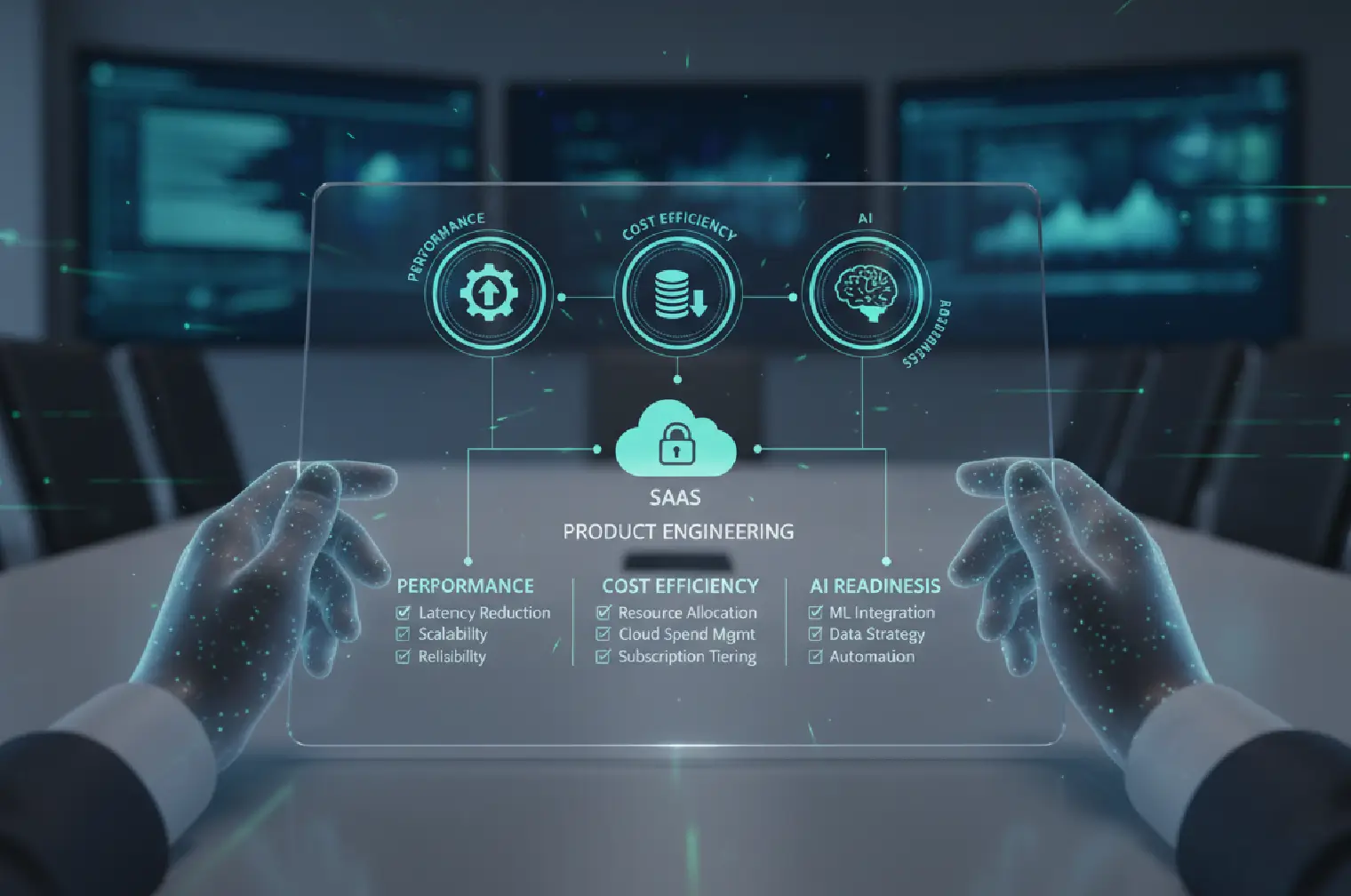
This year, the focus is squarely on three pillars:  

  1. technical performance,  
  1. financial sustainability (FinOps),  
  1. “Agentic” AI readiness.  

By prioritizing SaaS product engineering that aligns with these trends, businesses can ensure their platforms remain resilient in an increasingly crowded global market. 

Optimize Your SaaS for 2026 Growth

Apply our SaaS Optimization Checklist to improve performance, control costs, and strengthen AI readiness with expert SaaS Product Engineering.

The 2026 Paradigm Shift in SaaS Engineering 

The year 2026 marks the end of the “AI hype” cycle and the beginning of the “AI ROI” era. Customers are no longer impressed by a simple chatbot integrated into a dashboard.  

They expect agentic workflows where the software anticipates needs and executes complex tasks autonomously.  

This shift requires a fundamental rethink of SaaS product engineering to support high-frequency data processing and low-latency AI inferences. 

When we look at SaaS optimization, we must consider the underlying architecture. Modern platforms are moving away from bloated microservices toward “composable” architectures.  

This allows for specific modules to be scaled or updated without affecting the entire ecosystem. For companies looking to lead their niche, following a structured SaaS optimization checklist ensures that no stone is left unturned in the pursuit of a high-performance product. 

Pillar 1: High-Velocity Performance Optimization 

In 2026, performance is measured in milliseconds of “time-to-insight.” Users expect AI-driven features to respond as quickly as static data.  

According to Gartner’s 2026 Strategic Trends, enterprises are increasingly prioritizing “Sovereign AI” and localized data processing to reduce latency.  

This is where specialized SaaS product engineering becomes critical. 

To achieve this, your team should focus on: 

  • Edge Inference: Moving AI model execution closer to the user to eliminate round-trip delays to central servers. 
  • Database Refactoring: Transitioning to vector databases that can handle the massive unstructured data loads required for modern RAG (Retrieval-Augmented Generation) systems. 
  • API Efficiency: Implementing GraphQL or specialized gRPC protocols to ensure that data transfer between the front-end and back-end is as lean as possible. 

Integrating these elements into your SaaS product engineering roadmap allows for a platform that doesn’t just work but excels under heavy load. 

Pillar 2: Cost Management and Unit Economics (FinOps 2.0) 

Effective SaaS optimization in 2026 requires a deep dive into “Unit Economics.” It is no longer enough to track your total AWS or Azure bill.  

You must understand the “Cost per AI Inference” or the “Cost per Active User Feature.”  

Without this visibility, the overhead of running advanced LLMs can quickly erode your profit margins. 

Many businesses are now adopting usage-based pricing models, which require the backend to be incredibly efficient.  

You can explore more about these financial transitions in our guide on SaaS optimization strategies for business

A key item on your SaaS optimization checklist should be the implementation of “Scale-to-Zero” architecture. By utilizing serverless functions and ARM-based processors (like AWS Graviton), engineering teams can reduce compute costs by up to 40%.  

Automated “Zombie Hunting” agents should also be deployed to identify and terminate idle resources or unattached storage volumes that contribute to “cloud sprawl.” 

Optimization Category Traditional Approach (2023-2024) 2026 Optimized Approach 
Compute Always-on Microservices Serverless & Scale-to-Zero 
AI Integration Third-party API wrappers Native Agentic Workflows 
Cost Tracking Monthly Cloud Bill Review Real-time Cost-per-Token Tracking 
Data Storage Standard Relational DBs Vector-hybrid Databases 
Latency Centralized Data Centers Global Edge Distribution 

Pillar 3: AI Readiness and Agentic Workflows 

AI readiness is the most significant addition to the SaaS optimization checklist for 2026. We are moving beyond “Co-pilots” that assist users to “Agents” that work on behalf of users.  

To support this, your SaaS optimization efforts must focus on data hygiene and model governance. 

If your data is siloed or messy, your AI agents will be ineffective. Engineering teams must build robust data pipelines that include real-time PII (Personally Identifiable Information) masking and data cleaning.  

This ensures that the information being fed into your models is both safe and accurate. For a deeper look at how this integration is evolving, see our insights on AI Co-pilots in SaaS product roadmaps

Furthermore, SaaS product engineering now involves “Model Observability.” This means having tools in place to detect “model drift,” where an AI’s performance degrades over time, and “hallucination rates.”  

Ensuring your infrastructure can handle the orchestration of multiple AI agents working in tandem is a vital competitive advantage. 

Build AI-Ready SaaS with Confidence

Drive Digital Transformation with modern SaaS Product Engineering aligned to the SaaS Optimization Checklist for 2026.

The Definitive SaaS Optimization Checklist for 2026 

To help your team stay on track, we have compiled the essential tasks for the coming year. This checklist should be reviewed quarterly to ensure alignment with evolving market demands. 

  1. Audit AI Unit Economics: Calculate the exact cost of every AI-driven interaction to ensure your pricing tiers remain profitable. 
  1. Transition to Composable Architecture: Break down any remaining monoliths into interchangeable services to improve agility. 
  1. Implement Post-Quantum Cryptography: Start the migration to quantum-resistant encryption to protect sensitive B2B data. 
  1. Deploy GreenOps Protocols: Optimize code and resource usage to meet new 2026 sustainability reporting requirements. 
  1. Enable Multi-Agent Orchestration: Ensure your backend can support multiple AI agents collaborating on a single user request. 
  1. Optimize for Global Sovereignty: Ensure data residency compliance by architecting regional stacks for different geographic markets. 
  1. Refine Vector Search Capabilities: Tune your databases to provide lightning-fast retrieval for RAG-based AI features. 

As predicted in Forrester’s 2026 Outlook, the winners in the SaaS space will be those who prioritize “Trust-as-a-Service.” This means your SaaS optimization must include transparent AI logging, so users know exactly why an AI agent made a specific decision. 

Strategic SaaS Product Engineering for Long-Term Success 

At its core, SaaS product engineering is about building for the future while solving today’s problems.  

In 2026, this means creating a platform that is elastic enough to adopt new AI models as they emerge without requiring a total rewrite of the codebase. It’s about building a foundation where SaaS optimization is baked into the CI/CD pipeline. 

By focusing on SaaS product engineering for business success, companies can move away from reactive bug-fixing and toward proactive innovation. This involves adopting “low-code” internal tools to speed up feature deployment and using AI-assisted coding to maintain high-quality documentation. 

The role of the developer has changed. In 2026, SaaS product engineering is as much about managing data flows and AI tokens as it is about writing logic. This evolution is detailed in our recent research on the top 8 AI trends for 2026, which highlights how “Agentic AI” is becoming the standard for B2B platforms. 

Scale Smarter with SaaS Product Engineering

Modernize your platform using a proven SaaS Optimization Checklist and accelerate Digital Transformation with ViitorCloud.

Conclusion: Master the 2026 SaaS Landscape 

The journey toward a fully optimized platform is ongoing. By following this SaaS optimization checklist, you position your company to handle the technical and financial rigors of the modern era. Whether it is through reducing latency, slashing unnecessary cloud costs, or ensuring your data is ready for the next generation of AI agents, SaaS optimization is the key to maintaining a competitive edge. 

The complexity of modern SaaS product engineering requires a partner who understands the nuances of 2026’s technological landscape. At ViitorCloud, we specialize in transforming legacy SaaS platforms into lean, AI-first powerhouses. By integrating these optimization strategies today, you are future-proofing your business. 

Contact ViitorCloud today for a comprehensive performance and AI readiness audit to see how we can elevate your SaaS offerings. 
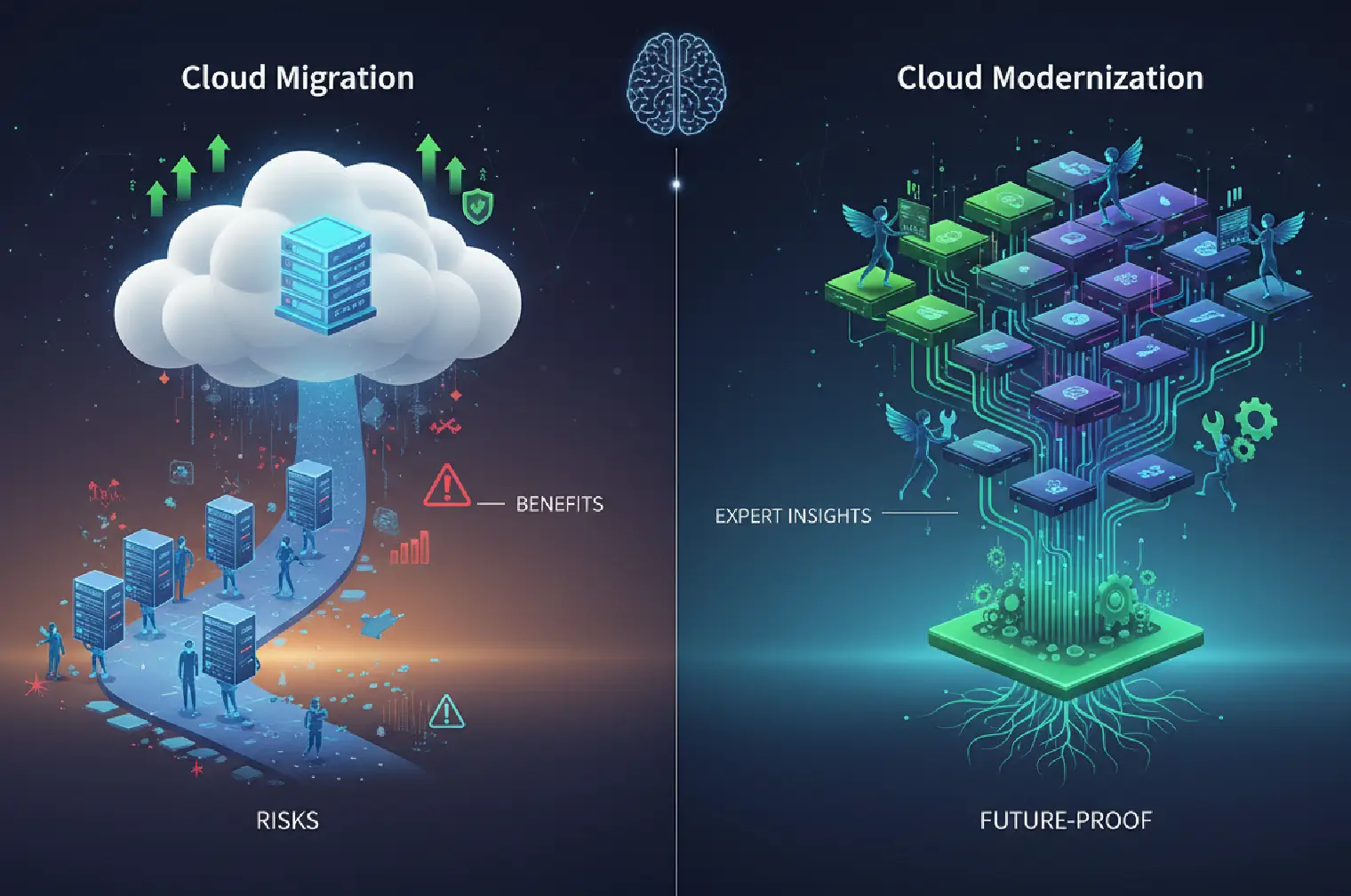
Cloud Migration vs Cloud Modernization: What to Choose in 2026

Today, small and medium-sized businesses (SMBs) in the US and UK have shifted from “digital exploration” to “digital dominance.” 

For organizations in healthcare, logistics, finance, and IT, the cloud is now the foundation of survival.  

However, a critical question remains for decision-makers: should you simply move your existing workloads, or should you transform them entirely? 

The debate of cloud modernization vs migration has evolved. In 2026, with the rise of Agentic AI and hyper-automated supply chains, the choice you make today will determine your operational elasticity for the next decade.  

While many companies initially sought out cloud migration services to escape the high maintenance of on-premise servers, they are now realizing that a “lift and shift” approach might not be enough to leverage modern AI capabilities.  

This is where cloud modernization services come into play, offering a path to true digital agility. 

Migration vs. Modernization 101 

Before choosing a path, it is essential to understand the fundamental differences. Cloud migration is primarily about the “where,” moving data and applications from local servers to a cloud provider like AWS, Azure, or Google Cloud.  

Conversely, modernization is about the “how,” changing the architecture of the application to take full advantage of cloud-native features. 

When evaluating cloud modernization vs migration, think of migration as moving your office to a new building, while modernization is redesigning the entire workflow of your office to be automated and paperless.  

Many SMBs start with cloud migration services to achieve immediate cost savings, but eventually require legacy system modernization to stay competitive in a market that demands real-time data processing. 

ViitorCloud helps businesses navigate this transition through our comprehensive cloud computing services, ensuring that the infrastructure aligns with long-term business goals rather than just immediate IT needs. 

Plan the Right Cloud Migration Strategy for 2026

Assess your applications, risks, and ROI with ViitorCloud’s expert-led Cloud Migration approach.

Why 2026 is the Year of Modernization for SMBs 

By 2026, the maturity of cloud-native technologies will have made modernization more accessible for SMBs. In previous years, only enterprises could afford to re-architect their systems.  

Today, the democratization of microservices and serverless computing means that legacy system modernization is within reach for mid-market players in logistics and healthcare. 

According to research by Gartner, more than 85% of organizations will embrace a cloud-first principle by 2025, and by 2026, the focus will have shifted entirely toward cloud-native platforms that provide higher scalability.  

For an SMB, choosing cloud modernization vs migration is a strategic decision. If your goal is to integrate AI-driven diagnostics in healthcare or real-time route optimization in logistics, a simple migration won’t suffice. You need the modularity provided by cloud modernization services. 

Comparison: Cloud Migration vs. Cloud Modernization 

Feature Cloud Migration (Rehosting) Cloud Modernization (Refactoring) 
Speed to Cloud Very Fast Moderate to Slow 
Upfront Cost Lower Higher 
Long-term ROI Moderate Very High 
Scalability Limited by original architecture Virtually Unlimited 
AI Readiness Low High 
Operational Effort High (Manual patching) Low (Automated/Serverless) 
Cloud Migration vs. Cloud Modernization

The Industry-Specific Impact 

1. Healthcare: Security and Interoperability 

In the US and UK, healthcare providers are under immense pressure to provide seamless patient experiences while maintaining HIPAA and GDPR compliance. Cloud migration services can help move patient records to a secure cloud environment, but legacy system modernization allows these systems to communicate with wearable devices and AI diagnostic tools. Modernizing your healthcare suite ensures that data is not just stored, but is “active” and accessible. 

2. Logistics: Real-time Agility 

Logistics firms in 2026 deal with massive volatility in global trade. A standard migration might move your tracking software to the cloud, but it won’t help you process millions of IoT sensor inputs per second. By utilizing cloud modernization services, logistics companies can adopt event-driven architectures that respond to delays or fuel price changes instantly. 

3. Finance: Compliance and FinOps 

For finance SMBs, the transition involves moving away from monolithic banking cores. Legacy system modernization is critical here to meet the stringent requirements of PCI DSS 4.0. When comparing cloud modernization vs migration, finance leaders often find that modernization allows for better “FinOps”—the ability to track and optimize cloud spend at a granular level.  

You can learn more about these shifts in our blog on Legacy Modernization to Cloud-Native Architecture

Modernize Your Cloud for Agility and Scale

Upgrade legacy systems with Cloud Modernization to improve performance, security, and scalability.

When to Choose Cloud Migration Services 

Despite the benefits of modernization, cloud migration services remain a vital tool for many SMBs.

Migration is the ideal choice when: 

  • Data Center Leases are Expiring: If you need to exit a physical facility within weeks, a “lift and shift” migration is the only viable path. 
  • Budget Constraints: If immediate capital is limited, migrating allows you to shift from CapEx to OpEx without the heavy engineering costs of a rebuild. 
  • Low-Complexity Apps: Not every application needs to be modernized. Internal tools that perform basic tasks are perfect candidates for simple migration. 

However, even after a successful migration, the technical debt of a legacy system remains. This is why many of our clients at ViitorCloud eventually transition from rehosting to legacy application modernization to unlock the full performance potential of the cloud. 

When to Invest in Cloud Modernization Services 

Investment in cloud modernization services is no longer optional for businesses aiming for high-value growth in 2026.

You should choose modernization if: 

  • Your Software is Slowing Down Innovation: If it takes months to deploy a new feature because the code is “spaghetti,” you need legacy system modernization. 
  • Competitive Pressure: If your competitors are using AI agents to handle customer service or supply chain forecasting, you cannot compete using a migrated legacy app. 
  • Scalability Issues: If your application crashes every time traffic spikes, the monolithic architecture is the bottleneck. 

The debate of cloud modernization vs migration often resolves itself when companies look at their 3-year growth targets. Modernization builds a “future-proof” foundation that supports the latest innovations in AI and Data Analytics

Choose Between Cloud Migration and Cloud Modernization

Get clear guidance on what fits your business goals with ViitorCloud’s Digital Transformation expertise.

The Strategic Roadmap for 2026 

For SMBs in the UK and the US, the roadmap to the cloud should be a hybrid approach. It is rarely an “all or nothing” scenario.

A well-researched strategy often involves: 

  1. Assessment: Identifying which workloads are business-critical and which are supporting. 
  1. Migration: Moving non-critical or stable legacy apps using cloud migration services to reduce immediate overhead. 
  1. Modernization: Prioritizing customer-facing or data-heavy applications for cloud modernization services. 

Deloitte’s analysis on digital transformation highlights that companies that prioritize modernizing their core systems see a significantly higher return on investment compared to those that only focus on incremental infrastructure shifts. This supports the argument that legacy system modernization is the primary driver of value in the current economic climate. 

Total Cost of Ownership (TCO) in 2026 

When SMBs evaluate cloud modernization vs migration, they often focus on the initial price tag. However, the Total Cost of Ownership (TCO) tells a different story. A migrated application requires constant patching, manual scaling, and higher consumption of cloud resources because it wasn’t “built” for the cloud. 

By contrast, legacy system modernization utilizes serverless and containerized environments. This means you only pay for the exact milliseconds of computing power you use. Over a 5-year period, the cost of cloud modernization services is often lower than the cumulative cost of maintaining a poorly optimized migrated system. 

Unify Systems with Modern Cloud Architecture

Eliminate silos and streamline operations using our System Integration and Modernization Services.

Conclusion: Making the “Cloud-Right” Choice 

As we look toward the remainder of 2026, the distinction between cloud modernization vs migration will become even more pronounced. For SMBs in logistics, healthcare, and finance, the cloud is the engine of innovation. 

If your priority is speed and immediate cost relief, cloud migration services will get you to the starting line. However, if your goal is to lead your industry, reduce technical debt, and harness the power of AI, then cloud modernization services and a commitment to legacy system modernization are your only paths forward. 

At ViitorCloud, we specialize in helping SMBs make this transition seamlessly. Whether you are looking to move your first workload or re-architect a complex legacy environment, our team is here to ensure your cloud journey delivers high-value outcomes.  

Don’t let your legacy systems hold back your future growth; choose the “cloud-right” strategy today. 

How to Choose the Right Partner for Secure Healthcare Data Migration in 2026

In 2026, healthcare data migration stops being a “move-and-hope” infrastructure project and becomes a clinical capability: if data can’t travel safely, it can’t power coordinated care, AI, or real-time decision support. Deloitte’s research frames this urgency through forces like “data liquidity” and the accelerating shift toward platform-enabled ecosystems, which raise expectations for how quickly healthcare organizations can mobilize trusted data across settings.

Why is 2026 the year “Data Liquidity” becomes a clinical necessity?

Data liquidity is the practical ability to find, access, standardize, and use clinical data across systems without delays or manual workarounds, and Deloitte explicitly calls out “data liquidity” as a core factor reshaping health care investments.

In parallel, Deloitte’s 2026 outlook emphasizes digital platforms as central hubs connecting tools like EHRs, virtual care, and monitoring apps—because a unified data foundation enables advanced analytics and AI-driven models at scale.

This is why healthcare data migration in 2026 has to be designed for both continuity and velocity: continuity so patient care never loses context, and velocity so new data products (care gaps, readmission risk, denials prevention, operational command centers) can launch faster within your digital transformation roadmap.

If your migration approach can’t support interoperability and governed reuse, it limits the very outcomes digital transformation leaders are accountable for in 2026.

Read: AI-Powered Healthcare Transformation: Practical Strategies for Scalable Success

Why is Legacy System Modernization the foundation of the “AI-First” hospital?

Legacy platforms weren’t built for today’s integration patterns, security models, or AI consumption, which is why legacy system modernization increasingly becomes the hidden prerequisite for successful healthcare data migration.

Deloitte describes how unified datasets can enable predictive models and gen AI recommendations, but that only works when data is accessible, standardized, and operationally trusted.

In practical terms, legacy system modernization is how organizations retire brittle point-to-point interfaces, reduce “data gravity” trapped in departmental silos, and establish interoperability layers that make healthcare data migration repeatable instead of heroic. This is also where “AI-first” becomes tangible: modern pipelines, standardized clinical data models, and near-real-time APIs that let AI move from pilots to production without constant rework.

ViitorCloud approaches this as an engineering problem, not a procurement checklist: as an AI-First Engineering Partner with 14+ years of delivery experience, we align legacy system modernization to AI readiness by combining Intelligent Document Processing (IDP) for unstructured data, FHIR/HL7 interoperability design, and secure data pipelines that can be audited end-to-end.

Modernize Legacy Healthcare Systems with Confidence

Enable secure Healthcare Data Migration and Legacy System Modernization with a technology partner built for complex healthcare environments.

What are the Non-Negotiable Security Standards for 2026 Healthcare Data Migration?

In 2026, cybersecurity risk is no longer an abstract IT concern because healthcare breaches are both frequent and financially severe, with IBM reporting the healthcare industry’s average breach cost at $10.93M. That economic reality forces healthcare data migration programs to treat security architecture as a primary design input, not a post-migration “hardening” phase.

A practical 2026 baseline starts with Zero Trust: HIMSS 2025 takeaways explicitly highlight the move toward “Zero Trust” frameworks, including end-to-end encryption and role-based access, as healthcare organizations respond to escalating breaches. Deloitte also reinforces Zero Trust as a modern security model for today’s cloud environments, emphasizing continuous verification and robust protection patterns.

To make this operational (not aspirational), three non-negotiables should be built into your healthcare data migration plan from day zero: Zero Trust-by-design (identity-first controls, least privilege, continuous verification), HIPAA-by-design (controls mapped to PHI flows, not just policies), and automated governance (classification, lineage, and auditability embedded in pipelines rather than managed in spreadsheets). HIMSS’s emphasis on encryption and role-based access supports this direction, especially when migration expands data movement across more tools and endpoints during digital transformation.

Read: How ViitorCloud is Pioneering Digital Transformation in Healthcare

How do Cloud Consulting experts compare the “Big Three” (AWS, Azure, Google) for 2026?

At a high level, all three hyperscalers can support regulated workloads, but the choice should be driven by which managed healthcare primitives best match your interoperability, analytics, and security operating model in 2026.

AWS positions Amazon HealthLake as a fully managed, HIPAA-eligible service built on a unified FHIR-based repository for healthcare data. Microsoft positions Azure Health Data Services around managed healthcare data services, including a FHIR service with RBAC via Microsoft Entra and a DICOM service designed for PHI compliance. Google Cloud positions the Cloud Healthcare API as a secure, compliant managed service supporting FHIR, HL7v2, and DICOM, plus de-identification capabilities.

Below is a healthcare-specific comparison that cloud consulting teams typically use when designing a 2026-ready target architecture for healthcare data migration and legacy system modernization.

Healthcare cloud capability (2026 lens)AWSAzureGoogle Cloud
Managed FHIR data store / APIAmazon HealthLake provides a FHIR-based repository and is described as HIPAA-eligible.Azure Health Data Services includes a managed FHIR service with role-based access control using Microsoft Entra.Cloud Healthcare API supports FHIR as a managed interface for healthcare data standards.
HL7v2 supportHealthLake is centered on FHIR; HL7v2 handling is typically implemented via integration services around the FHIR repository.Azure Health Data Services focuses on managed FHIR/DICOM/MedTech services for health data; HL7v2 patterns are commonly mapped into FHIR-centric workflows.Cloud Healthcare API explicitly supports HL7v2 alongside FHIR and DICOM.
DICOM imaging data servicesHealthLake is positioned for unified FHIR data; imaging often integrates via complementary services outside HealthLake.Azure provides a DICOM service designed for PHI compliance, including HIPAA.Cloud Healthcare API supports DICOM as a modality for ingesting and storing imaging data.
De-identification supportHealthLake messaging emphasizes compliant storage and unified FHIR infrastructure; de-identification is generally implemented via pipeline controls and surrounding services.Azure FHIR service notes de-identification capabilities used to prepare HIPAA-compliant data for secondary use.Cloud Healthcare API explicitly lists de-identification to meet compliance needs for research and analytics sharing.
Security control alignment (healthcare-ready primitives)HealthLake is described as HIPAA-eligible and positioned for enterprise-grade security for healthcare workloads.Azure FHIR service emphasizes layered defense, RBAC, and audit/alert mechanisms for health data.Cloud Healthcare API is positioned as secure and compliant for healthcare standards-based ingestion and storage.
Healthcare Cloud Capability (2026 Lens)

The key is choosing the cloud pattern that best supports your interoperability roadmap, your security operating model, and how your teams will run data products after the migration completes. That’s also why mature digital transformation programs treat cloud selection, healthcare data migration, and legacy system modernization as one integrated decision rather than three separate workstreams.

Choose the Right Partner for Healthcare Data Migration

Protect sensitive data and ensure compliance with secure, scalable Healthcare Data Migration powered by ViitorCloud.

Why does the “Partner Choice” determine your Digital Transformation success?

A migration partner can either accelerate your digital transformation or quietly amplify risk, especially when they treat healthcare data migration like generic database relocation instead of domain-aware engineering. HIMSS’s emphasis on role-based access and end-to-end encryption under a Zero Trust approach is a reminder that healthcare security is deeply operational: it touches identity, workflows, clinical integrations, and ongoing compliance.

A 2026-ready partner should bring healthcare-specific engineering depth across three areas that directly shape outcomes: interoperability (FHIR/HL7 patterns, mapping strategy, validation), automation (repeatable pipelines, testing, rollback), and governance (auditability, PHI handling, evidence for compliance). This is where

We, ViitorCloud, positioning as an AI-First Engineering Partner, matter: healthcare data migration becomes the foundation for AI-enabled workflows only when the data layer is reliable, interoperable, and secure by design.

What are the 5 critical KPIs for measuring migration ROI?

KPI #1: Time-to-interoperability (how quickly new sources can be onboarded into FHIR/HL7-aligned pipelines after the initial healthcare data migration).

KPI #2: Security exposure reduction (measured through Zero Trust control adoption, such as least privilege coverage and encryption coverage, aligning to the industry’s push toward Zero Trust frameworks).

KPI #3: Data quality lift (reduction in duplicates, null-critical fields, and terminology mismatches that block analytics and clinical decision support).

KPI #4: Release velocity for data products (how many governed datasets, dashboards, or AI features can be deployed per quarter because legacy system modernization removed technical bottlenecks).

KPI #5: Cost-to-operate per interface (change in support hours and incidents after replacing fragile point integrations with standardized, monitored pipelines—an efficiency lever central to digital transformation platforms).

Accelerate Healthcare Digital Transformation in 2026

Build future-ready applications through Digital Transformation, modern tech stacks, and secure healthcare platforms.

How does ViitorCloud bridge legacy silos and future-ready care?

The most effective 2026 programs treat digital transformation as a data engineering discipline: modernize what blocks interoperability, migrate what unlocks clinical value, and govern what reduces risk. Deloitte’s 2026 view of digital platforms as hubs connecting systems and enabling AI underscores why healthcare data migration and legacy system modernization must converge into a single, security-first execution plan.

If 2026 goals include AI-assisted operations, connected care, and measurable ROI, a practical next step is a consultation with ViitorCloud’s experts for a 2026-ready data audit—focused on where your current integration patterns, security controls, and legacy constraints will limit outcomes before they limit patient experience.

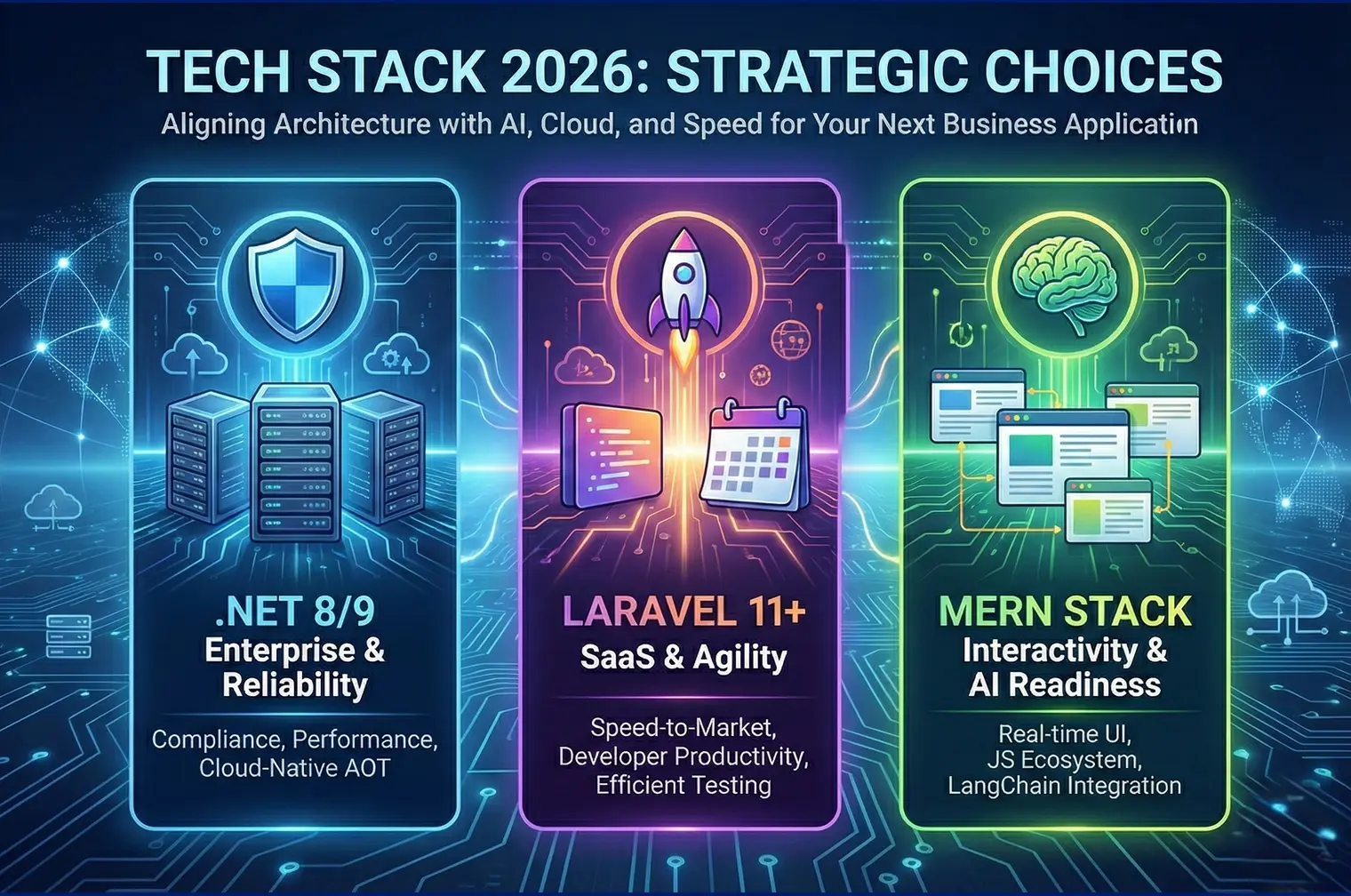
.NET vs Laravel vs MERN in 2026: Which Technology Should You Choose for Your Next Business Application?

Choosing between .NET vs Laravel vs MERN in 2026 is less about chasing a “best” stack and more about aligning architecture with AI readiness, cloud economics, and delivery speed under real-world constraints. The 2025 Stack Overflow Developer Survey (49,000+ respondents) reinforces what most CTOs already feel: the talent market is broad, but the “right” skills mix depends heavily on your product shape and operating model.

In 2026, the pressure is higher because LLM features are moving from “nice-to-have” to default expectations in search, support, analytics, and internal ops, while scalability and compliance demands keep tightening. There is no universal winner—only the right technology choice for specific business goals and risk profiles.

What are the key selection criteria for 2026?

Cloud spend is no longer a back-office concern; it is a product decision, and infrastructure efficiency can be a competitive advantage when usage spikes. AWS continues to position Arm-based Graviton instances as a cost lever, citing up to 40% better price-performance versus equivalent non-Graviton EC2 instances for cloud workloads.

Beyond cost, selection in 2026 typically comes down to a few repeatable decision axes. The strongest outcomes come when these criteria are evaluated together rather than in isolation.

  • Economics: Compute efficiency (runtime + hosting model) directly affects scaling cost, and Graviton guidance emphasizes price-performance improvements as a core optimization path.
  • Availability: Generalist hiring is easier when your stack matches mainstream developer preferences captured in large surveys like Stack Overflow’s annual report.
  • Readiness: Mature AI tooling matters; Microsoft positions Semantic Kernel as a lightweight, open-source kit to integrate AI models into C#, Python, or Java applications.
  • Assurance: Regulated industries often need a predictable security posture and maintainability, which is strongly influenced by framework maturity and platform governance.
  • Velocity: Your “idea-to-prod” time is constrained by scaffolding, conventions, and integration ecosystem—not just raw coding speed.

Choose the Right Technology Stack for Your Business Application

Compare .NET, Laravel, and MERN with expert guidance and select a future-ready Technology Stack for scalable Business App Development.

How do .NET, Laravel, and MERN differ in practice?

Microsoft .NET for enterprise buildouts

.NET 8/9 is a strong fit when reliability, maintainability, and deep platform support matter as much as feature speed, particularly for multi-service backends and high-traffic APIs. Microsoft’s own release performance notes highlight the scale of ongoing optimization work, with “Performance Improvements in .NET 8” covering 500+ PRs and “Performance Improvements in .NET 9” covering 350+ PRs.

For cloud-native architectures, AOT can shift the cost-and-latency curve in serverless and container environments because native AOT deployments are explicitly documented as having faster startup and smaller memory footprints.

In our experience at ViitorCloud, regulated programs (FinTech workflows, healthcare data processing, audit-heavy systems) often choose .NET when they want a stable long-term platform story plus strong engineering guardrails for compliance-driven delivery.

Laravel can really power modern SaaS in 2026

Laravel 11+ remains a practical choice when speed-to-market and developer productivity are the center of gravity, especially for SaaS platforms where the domain evolves weekly. Laravel’s official 11.x release notes emphasize a streamlined application structure and platform-level improvements (for example, reusing PDO connections to speed up SQLite in-memory testing), often cutting total test run time in half in that testing scenario.

AI enablement in Laravel is also straightforward because established integration packages exist; for example, openai-php/laravel documents PHP 8.2+ support and provides a Laravel facade for calling OpenAI APIs.

In our experience at ViitorCloud, Laravel is frequently the fastest path to a credible MVP when startups need to validate pricing, onboarding, and billing flows before investing in deeper platform engineering.

MERN is still the best choice for interactivity

MERN (MongoDB, Express, React, Node.js) stays compelling when product value is tied to real-time UI behavior, rich dashboards, and “always-on” collaboration patterns. Stack Overflow’s 2025 technology survey is a useful signal here because it continues to track strong usage across the JavaScript ecosystem that MERN depends on.

For LLM features, MERN benefits from fast-moving JS-first orchestration libraries; LangChain’s JavaScript docs position it as a low-friction way to build LLM-powered apps and agents, with quickstarts that get teams from setup to working agents rapidly.

This is why MERN is often favored for customer-facing SPAs, interactive admin portals, and event-driven products where JSON-native data flow reduces translation overhead across tiers.

How do they stack up against each other?

The most “correct” answer depends on your constraints, but a structured comparison helps prevent decisions based only on familiarity. TechEmpower’s Web Framework Benchmarks remain a widely referenced place to sanity-check raw framework performance discussions (they publish recurring benchmark rounds, including Round 23 dated 2025-02-24).

Dimension.NET 8/9Laravel 11+MERN
Speed to marketStrong for large teams with stable patterns; great tooling depth.Often fastest for CRUD-heavy SaaS and MVPs with strong conventions.Fast for UI-heavy products due to shared JS and rich frontend ecosystem.
Performance postureContinuous runtime optimization work across releases; AOT can improve startup/memory in some deployments.Solid for many SaaS workloads; performance tuning is usually app + DB + caching discipline.Great for IO-heavy and real-time use cases; performance depends heavily on architecture and Node patterns.
AI integrationSemantic Kernel supports integrating AI models into .NET apps and provides connectors (including OpenAI connectors).OpenAI integration is well-supported via community packages (e.g., openai-php/laravel).LangChain JS ecosystem accelerates agent workflows and LLM integrations in Node/React.
Cost controlStrong levers via AOT + efficient hosting; Graviton guidance includes optimizing Microsoft workloads on Arm for cost/perf.Often cost-efficient for early-stage scale; biggest wins come from caching/queues and DB tuning.Cost-effective when you consolidate skills and runtime; cloud cost still tied to traffic + architecture.
.NET vs Laravel vs MERN

Build a High-Performance Business Application in 2026

Turn the right Technology Stack into real results with ViitorCloud’s end-to-end Business App Development expertise.

Which stack is best for AI & legacy modernization?

For custom AI development, the “best” stack is the one that makes model orchestration, tool calling, evaluation, and secure deployment easy for your team—not just the one with the most hype. Semantic Kernel is explicitly designed to help teams build AI agents and integrate models into applications, which can be a strong fit when your core platform is already C#-centric or your governance favors Microsoft-aligned tooling.

For JavaScript-heavy organizations, LangChain’s JS ecosystem can reduce time-to-first-agent and keep AI logic close to the product surface area (e.g., dashboards, copilots, and workflow automation UIs).

For legacy system modernization, .NET is often chosen when modernization includes rewriting critical services with strict contracts and long-lived maintainability, while Laravel can modernize internal portals and line-of-business systems quickly when the main need is cleaner workflows, better UX, and faster iteration. Microsoft and AWS also publish explicit guidance on using Graviton and containers to optimize Microsoft workloads, which matters if modernization is paired with cloud cost reduction goals.

Final verdict: what should you choose?

Pick .NET 8/9 when the application is mission-critical, compliance-heavy, or built to run for years with evolving teams, and when you want a platform with deep investment in performance and runtime capabilities. Microsoft’s ongoing .NET 8 and .NET 9 performance work is documented in official posts that reflect the maturity and momentum of the ecosystem.

Pick Laravel 11+ when speed-to-market and total delivery cost dominate early decision-making, especially for SaaS MVPs that need fast iteration and strong developer ergonomics, with official 11.x notes showing continued framework streamlining and productivity wins (including faster in-memory testing scenarios).

Pick MERN when interactivity is the product, you want a unified JavaScript mental model, and your roadmap includes real-time experiences plus rapid AI feature experimentation supported by mature JS libraries like LangChain.

Plan Your Business Application with the Right Technology Stack

Align performance, scalability, and cost by choosing the best Technology Stack for long-term Business App Development.

Conclusion

We recommend treating the stack decision as a strategic architecture choice, not a popularity contest, because the “right” technology in 2026 is the one that keeps delivery fast while protecting reliability, security, and cloud economics. At ViitorCloud, we architect futures. Whether you need the security of .NET or the agility of MERN, our team is ready to help you build for 2026. Contact us today at [email protected].

How AI + Cloud + Data Will Drive ROI for SMBs in 2026 (With Real-World Use Cases)

2026 is the year AI stops being “interesting” and starts being accountable—because leadership teams are demanding measurable P&L outcomes, not more pilots. Legacy system modernization is the prerequisite for AI ROI because agentic and ML systems need trusted, connected, real-time data plus modern APIs to take action inside your workflows; without that foundation, AI stays trapped in chat windows and slide decks. 

Why is 2026 the “reality check” year for AI? 

If your business invested in AI experimentation and didn’t see impact, you’re not alone—MIT SMR and BCG reported that seven out of 10 companies surveyed saw minimal or no impact from AI at the time of their study.  

What’s changing now is the push toward production-grade delivery: Deloitte notes organizations are hitting obstacles translating agentic pilots into production-ready solutions, and it ties those obstacles directly to legacy integration and data architecture constraints.  

For SMB and mid-market leaders, this is good news: once you treat modernization as a revenue program (not an IT cleanup), AI integration services and data engineering for SMBs become the shortest path from “AI curiosity” to “AI profit engine.” 

Why do 70% of AI initiatives fail because of legacy data silos? 

Because siloed systems block the one thing AI can’t fake: clean, connected context—so models and agents can’t reliably retrieve the right facts or execute the right action inside core applications. MIT SMR’s research highlights that many AI initiatives struggle to generate value, and it explicitly calls out the need to source and integrate AI-dependent data across organizational silos for many applications. 

The practical shift to make is “Maintenance to Momentum.” Instead of spending your best people on patching brittle integrations and manual reconciliations, you modernize the foundation so your teams can ship improvements weekly—then AI/ML development compounds that delivery speed.  

Deloitte also flags legacy system integration as a core obstacle for agentic AI, noting that traditional systems weren’t designed for agentic interactions and that legacy bottlenecks limit autonomy. 

Drive ROI with Custom AI Development

Turn data into measurable growth using Custom AI Development designed to boost efficiency and profitability for SMBs.

How does cloud-native modernization unlock Agentic AI workflows? 

Cloud-native modernization unlocks Agentic AI workflows by refactoring your systems so agents can safely call real tools—APIs, services, queues, data products—instead of only generating text.  

Deloitte summarizes the core constraint plainly: legacy environments often lack the real-time execution capability, modern APIs, modular architectures, and identity controls needed for true agentic integration. 

In real terms, refactoring turns “AI suggestions” into “AI execution.” A production agentic workflow can read an order exception, validate inventory, open a ticket, draft the customer message, and post updates back to ERP/CRM—with approvals and guardrails—because the architecture finally supports it.  

Salesforce’s Connectivity Benchmark findings also reinforce the integration reality for agents: most respondents struggle to integrate data across systems, and disconnected applications reduce agent usefulness. 

Is your data “AI-ready gold” or just digital clutter? 

Your data is “AI-ready gold” when it’s governed, discoverable, and reusable—so AI can retrieve the right entity, at the right time, with the right permissions, and your business can trust the output. If data isn’t searchable, reusable, and positioned to be consumed by automation, Deloitte notes it becomes friction for agent deployment and a direct constraint on AI automation strategy. 

Below is the difference data engineering for SMBs makes—especially when paired with legacy system modernization and cloud-native patterns. 

What you have today Raw legacy data AI-optimized data 
Structure Mixed formats across ERP/CRM/spreadsheets and PDFs, with inconsistent keys and duplicates. Standardized entities, consistent IDs, and clear definitions (customer, SKU, shipment, invoice) across domains. 
Availability Hard to access in real time because apps aren’t connected and data is trapped in silos. Connected via APIs/events and governed access, so systems and agents can retrieve what they need quickly. 
Trust Business teams debate “whose number is right,” slowing decisions and blocking automation. Versioned metrics, lineage, and ownership so stakeholders can audit and trust outputs. 
Agent readiness Agents hallucinate or stall because they can’t reliably find authoritative context. Agents can ground responses in approved sources and take action through approved tools and workflows. 
The Difference Data Engineering for SMBS Makes

Scale Faster with Smart Cloud Solutions

Improve agility, control costs, and accelerate ROI with secure and scalable Cloud Solutions built for SMB growth.

What do real-world AI ROI results look like in 2026? 

In 2026, the clearest AI ROI shows up when AI is embedded into revenue-critical workflows (not separated into a “cool AI app”) and when you measure outcomes like cycle time, exception rate, cost-to-serve, and conversion—not just model accuracy.  

MIT SMR’s findings emphasize that many firms struggle to generate AI value, which is why tying AI to business impact and execution discipline matters. Deloitte also describes leading organizations pushing beyond pilots and focusing on ROI discipline for production deployments rather than “science projects.” 

Here are three ROI-shaped use cases that map cleanly to mid-market priorities in 2026 (and that become dramatically easier after cloud-native legacy system modernization): 

Logistics (route optimization): AI/ML development can reduce cost-to-serve by continuously re-optimizing routes based on constraints like delivery windows, capacity, traffic, and service-level penalties, while agents trigger replans automatically when exceptions occur (late pickup, missed scan, inventory mismatch). 

Retail / SaaS (GenAI agents): Agentic AI workflows can handle high-volume, repeatable interactions—order status, returns, subscription changes, tier upgrades, invoice explanations—by grounding answers in connected systems and then executing approved actions via APIs. Salesforce’s research underscores why integration is central here: disconnected apps and data reduce the accuracy and usefulness of AI agents. 

Finance (fraud detection): AI ML development can flag anomalous behavior in payments, refunds, account changes, or claims, while agents can automatically collect evidence, openFIs, and route cases to the right approver—so your team spends time on judgment, not data gathering. 

How does ViitorCloud accelerate your transition from legacy debt to AI profit? 

ViitorCloud accelerates your move from legacy debt to AI profit by treating legacy system modernization, AI integration services, and data engineering for SMBs as one connected delivery program—so every sprint produces something your business can measure (faster cycle time, fewer exceptions, higher throughput). 

This matters even more in the agentic era: Deloitte warns that legacy system integration can prevent organizations from realizing agentic value, and it cites the execution demands, real-time capability, modular architecture, modern APIs, and secure identity that modernization must deliver. 

In practice, ViitorCloud’s approach typically blends (1) cloud-native modernization (rehost where it makes sense, refactor where it counts, rebuild only where it pays), (2) data engineering that turns “digital clutter” into trusted data products, and (3) custom AI development that embeds models and agents directly into your operational workflows. 

Unlock ROI with Data Analytics Services

Make confident business decisions using Data Analytics Services that transform insights into real revenue impact.

Case study: What happens when you modernize first (and then deploy AI)? 

A mid-market distribution business (anonymized) had a classic constraint: order exceptions lived in email threads, ERP notes, and spreadsheets, so every “simple” delay turned into hours of manual coordination. After legacy system modernization (API-enablement, event-driven exception signals, and a cloud data layer), the business implemented AI integration services to  

(a) summarize exceptions with grounded context 

(b) recommend resolution steps 

(c) trigger approvals and updates back into ERP/CRM 

The measurable outcome wasn’t “better AI,” it was fewer escalations, faster resolution time, and a clear operational dashboard that leadership could tie to cost-to-serve. 

Frequently Asked Questions

ROI varies widely by use case maturity and data readiness, and MIT SMR’s research shows many organizations have historically reported minimal or no AI impact—so ROI is rarely automatic. The most reliable ROI pattern is when custom AI development is attached to one measurable workflow (quote-to-cash, exception handling, support deflection, fraud ops) and supported by strong data foundations and integration.

It depends on whether you’re doing targeted modernization (API-enable and refactor a few workflows) or full platform re-architecture, but Deloitte’s analysis makes the dependency clear: agentic execution often fails when legacy systems can’t support modern AI execution demands. Many mid-market teams start with one “profit line” workflow, modernize just enough to connect data and actions, then expand once the first AI integration services deployment proves ROI.

Some AI can run on-prem, but agentic and integration-heavy systems still require connected data, strong identity controls, and reliable orchestration—capabilities that are often easier to implement with cloud-native architecture patterns. Salesforce’s findings also show how common cross-system integration struggles are, which is why architecture and connectivity decisions matter as much as model selection. 

2026 Guide to Choosing a Digital Transformation Partner

If the first half of this decade was the time everyone “adopted AI,” 2026 is the year you either operationalize it or you get stuck watching your competitors automate what you’re still debating.  

The biggest trap we see is Pilot Purgatory: you’ve got prototypes, disconnected tools, and excited stakeholders… but no durable business transformation.  

That’s why the real differentiator isn’t the software you buy; it’s the digital transformation partner you choose to design outcomes, de-risk change, and make value measurable. 

What Has Changed in the Digital Transformation Landscape for 2026?

The shift is simple: AI must do work, cloud must handle complexity, and every initiative must prove value fast. In practical terms, we’re moving from chat-style AI experiments to Agentic AI—task-specific agents that can execute workflows, resolve incidents, and orchestrate actions across systems (not just answer questions).  

And because budgets are tighter and scrutiny is higher, CFOs increasingly demand “proof of value” milestones instead of open-ended transformation roadmaps, which changes how programs are funded, governed, and evaluated. 

Cloud is changing too. In 2026, many enterprises are operating in what teams loosely call “Cloud 3.0”: multi-cloud, hybrid, and sovereign constraints layered on top of security, latency, regulatory requirements, and data residency.  

That means your partner can’t just “move workloads”—they need to engineer reliability, compliance, and cost transparency into the operating model from day one. 

Choose the Right Digital Transformation Partner with Confidence

Strengthen your strategy and unlock growth with ViitorCloud’s trusted Digital Transformation Solutions.

Which Partner Archetype Does Your Business Actually Need?

You don’t need “more delivery”; you need the right transformation architecture and the right partner behavior to match. Most partner options fall into four archetypes, and recognizing them early prevents expensive rework later. 

  • The Body Shop: You get extra hands for tasks, tickets, and time-bound execution—but not the strategic ownership required to connect AI, cloud, and business outcomes. 
  • The Theorist: You get impressive decks and frameworks, but the plan struggles when it hits real systems, real data, and real change resistance. 
  • The Legacy Giant: You get perceived safety and scale, but you often pay for process overhead, slower iteration cycles, and higher total cost to reach measurable outcomes. 
  • The Value Architect (ViitorCloud): You get an agile, tech-agnostic, outcome-obsessed partner that can bridge legacy constraints and future-ready capabilities—so transformation becomes operational, not aspirational. 
Partner Type Best For The Risk 
The Body Shop Staff augmentation, well-defined tasks Busy teams, shallow ownership, “done” work that doesn’t compound into business value 
The Theorist Early-stage strategy conversations Slideware, unclear accountability, weak follow-through under real constraints 
The Legacy Giant Large, highly standardized enterprises Slow time-to-value, high cost, transformation fatigue from heavy governance 
The Value Architect Outcome-led modernization, AI + cloud execution Requires shared transparency and willingness to measure impact continuously 

How Has ViitorCloud Solved Real-World Transformation Challenges?

ViitorCloud helps clients move from “AI idea” to operational capability by aligning roadmap, integration, and scalability early.  

ViitorCloud supported an AI-driven platform by shaping a future-proof roadmap, developing open APIs for integration, and expanding capabilities like prompt management and extension-oriented features to stay competitive.  

The engagement emphasizes building adaptability into the product foundation so new features can evolve without breaking compatibility with the existing system. 

Simplify Your Digital Transformation Journey

Work with experts who align technology with your business goals using scalable Digital Transformation Solutions.

How Does ViitorCloud Deliver Value as a Modern Partner? 

A modern digital transformation partner earns trust by combining governance, modernization depth, and radical delivery transparency, while actively avoiding common failure patterns. Here’s the checklist that matters in digital transformation trends 2026, and how we approach it at ViitorCloud in a future-ready way. 

AI Governance (safety, guardrails, and control) 

In 2026, “AI integration partner” can’t just mean model access—it must include governance that protects your data, your customers, and your brand. That means clear policies for data handling, role-based access, auditability, evaluation criteria, and guardrails that prevent unsafe actions when agents are introduced into real workflows. It also means designing human-in-the-loop controls where needed, so autonomy scales responsibly instead of becoming an operational risk. 

Legacy Modernization (without breaking the business) 

Legacy modernization services live or die on how well the partner respects reality: your ERP, your integrations, your data quality, and your uptime commitments. Modernization in 2026 is less about “rip and replace” and more about decoupling strategically—building APIs, migrating in slices, and enabling new AI and cloud capabilities alongside legacy systems until it’s safe to retire what’s outdated. This is exactly where a Value Architect mindset outperforms a vendor mindset: you modernize to unlock growth, not to chase shiny tech. 

Radical Transparency (so value is visible) 

You should never have to guess where your budget went, what shipped, what’s blocked, or what value is expected next. A future-ready partner makes delivery observable: clear milestones, measurable KPIs, shared dashboards, and honest trade-offs. That transparency is what turns transformation from an act of faith into a managed business program. 

Post-deployment Observability (because “go-live” isn’t the finish line) 

Agentic systems and modern cloud environments need continuous monitoring, feedback loops, and operational readiness—so performance, cost, reliability, and model behavior are measurable in production. When observability is built into the delivery approach, you catch drift, failures, and inefficiencies early—and you keep outcomes stable as systems scale. 

Red flags (and what ViitorCloud avoids) 

“Yes” partners who never challenge assumptions create expensive surprises later—so a strong partner should push back with evidence and options when risk is hidden. Proprietary lock-in is another common trap in 2026, especially when AI and cloud decisions compound over time; modern partnerships prioritize portability and open integration patterns. And if change management is absent, adoption stalls—so transformation must include stakeholder alignment, rollout planning, and operational enablement, not just engineering output. 

What Should You Do Next to Choose the Right Partner? 

Treat your partner like a compass, not a map, because the 2026 transformation requires constant course-correction, not one perfect plan. Choose a digital transformation partner that can operationalize agentic workflows responsibly, modernize without disruption, and prove value in measurable increments your business leaders can stand behind.  

If you want a partner built for that reality, ViitorCloud is positioned to act as your Value Architect—bridging today’s constraints and tomorrow’s capabilities. 

Book a free discovery call or chat now with our ViitorCloud AI expert to see real results. Your transformation starts here. 

Accelerate Digital Transformation the Right Way

Ensure long-term success with ViitorCloud’s proven Digital Transformation Solutions tailored for your business.

Frequently Asked Questions

The cheapest option often optimizes for short-term output, not long-term business outcomes—so you may pay less per hour but more per result. In 2026, the costliest failures come from weak governance, brittle integrations, and AI pilots that never reach production, all of which create rework and delayed ROI. A digital transformation partner should reduce total risk and accelerate measurable value, not just ship tickets.

Safety starts with governance: define what data agents can access, what actions they can take, and how every step is logged and auditable. Then enforce controls through architecture—segmented permissions, secure APIs, monitoring, and human approvals where autonomy isn’t appropriate. The goal is to make agents useful in production without turning them into uncontrolled operators.

Yes—modern transformation assumes legacy is part of the landscape, not a problem to ignore. The right approach is to modernize around the ERP with integration layers, APIs, and incremental migration paths so you unlock new capabilities while protecting business continuity. This is a core requirement for enterprise modernization services in 2026, because few enterprises can pause operations to rebuild from scratch.

You should expect early “proof of value” within weeks—not years—when scope is structured around measurable outcomes and production realities. Many organizations target ROI in phases: quick wins that fund the next tranche, followed by deeper modernization that compounds benefits across teams and workflows. The timeline depends on data readiness, integration complexity, and change adoption, but the partner’s delivery discipline is the biggest accelerator you can control.

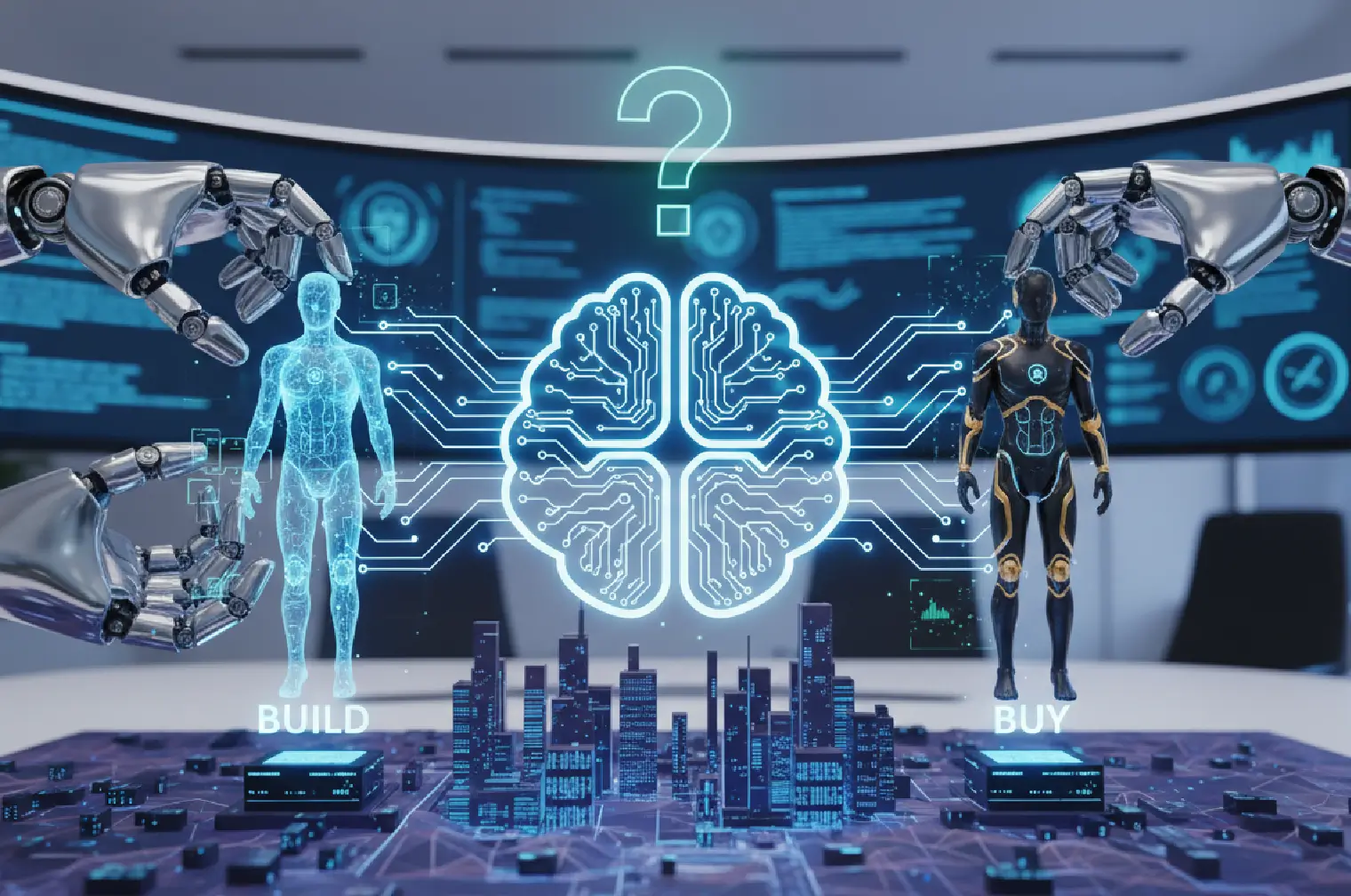
Should Founders Build or Buy AI Co-Pilot Assistants in 2026?

For most SaaS founders in 2026, integrating a white-label AI solution is the superior choice over building from scratch. While building offers total control, the technical debt and maintenance costs often outweigh the benefits unless you are developing core proprietary algorithms. Integrating with a partner like ViitorCloud allows you to deploy agentic AI workflow automation rapidly, keeping your roadmap focused on product growth rather than infrastructure maintenance.

Why Is This Decision For a SaaS Founder Critical in 2026?

The landscape of artificial intelligence has shifted dramatically. We are no longer in the era of simple chatbots that answer basic questions; we have entered the age of agentic AI, where digital assistants act as a coordination fabric for the entire enterprise.

These agents don’t just talk—they execute complex workflows, plan tasks, and reason through problems.

For a SaaS founder, the decision to build or buy is more than just about code. We believe it is about whether you want to spend the next 18 months acting as an AI infrastructure company or a product leader.

In 2026, speed and reliability are the currencies of success, and the “build vs. buy” choice defines your time-to-market.

Can You Afford the Hidden Costs of Building from Scratch?

The appeal of owning your entire stack is strong, but the reality of building a custom AI assistant often leads to “integration hell”. While the initial development of a prototype might seem manageable, the long-term costs of fine-tuning LLMs for enterprise use are staggering.

You are signing up for a lifetime of model maintenance, API updates, and infrastructure debugging that can consume 50-60% of your total project budget.

Founders frequently underestimate the complexity of connecting these models to existing data warehouses and customer applications. A “free” open-source model quickly becomes a six-figure liability when you factor in the specialized talent required to manage data pipelines and authentication flows.

Instead of building value for your customers, your best engineers end up wrestling with vector databases and context windows.

Empower SaaS Products with Custom AI Co-Pilot Assistants

Give your SaaS users smarter experiences with AI Co-Pilot Assistants built for real-world workflow automation and scale.

Is a Hybrid Approach the Smartest Move for SaaS Leaders?

A binary choice between “build” and “buy” is often a false dichotomy; the most successful founders in 2026 are adopting a hybrid model. This strategy involves buying the robust, underlying “engine” (the LLM and orchestration layer) while building the specific context that makes your product unique. This allows you to leverage advanced agentic AI workflow automation without reinventing the wheel.

By partnering with an integrator, you focus on RAG for SaaS applications (Retrieval-Augmented Generation), ensuring your AI understands your specific business data while the partner handles the heavy lifting of retrieval architecture. This approach delivers the best of both worlds:

  • Speed: You deploy agentic capabilities in weeks, not years.
  • Relevance: Your specific data creates a competitive moat via RAG.
  • Reliability: You rely on tested infrastructure rather than experimental code.
FeatureBuild from ScratchPartner/Integrate (ViitorCloud)
Time-to-MarketSlow (6–18 Months)Rapid (4–8 Weeks)
Cost StructureHigh CapEx (Talent + Compute)Predictable OpEx
Technical DebtAccumulates RapidlyMinimal (Managed by Partner)
Control & IPFull Ownership (High Maintenance)Strategic Control (Core Logic)
AI MaturityLimited by Internal TalentEnterprise-Grade Day One

What Happens When You Ignore Compliance and Safety?

Consider the scenario of a hypothetical HealthTech SaaS founder who decided to build her own AI co-pilot to save money. Their team spent eight months fine-tuning an open-source model, only to face a critical hurdle: AI safety and compliance for SaaS. Their custom model began hallucinating medical advice because the team lacked the resources to implement robust guardrails.

Its launch was delayed by another six months as they scrambled to build a compliance layer from scratch. Eventually, they pivoted to integrating a managed solution that came pre-certified for data privacy and safety.

The lesson is clear that AI safety and compliance for SaaS is not a feature you add at the end; it is a foundational requirement that is incredibly difficult to self-police without specialized expertise.

Help SaaS Founders Accelerate Digital Transformation

Modernize your product roadmap with AI-driven automation that supports faster releases, better decisions, and improved customer value.

How Can ViitorCloud Accelerate Your AI Roadmap?

We view AI adoption not as a product purchase, but as a system integration challenge. ViitorCloud AI integration services are designed to provide the “chassis” for your AI strategy, allowing you to install your own “engine” of proprietary data and logic without worrying about the wheels falling off.

  • Custom Integration: We connect advanced AI agents directly into your existing software ecosystem, avoiding the “silo” problem.
  • Agentic Workflows: We build the orchestration layer that allows your AI to perform tasks, not just chat.
  • Future-Proofing: Our architecture adapts to new models, so you aren’t locked into 2025 technology in 2026 and later.

Conclusion

The race to deploy AI agents is not about who can write the most code, but who can deliver the most value to customers in the shortest time. By choosing to integrate rather than build, you secure a competitive advantage in speed, safety, and scalability.

ViitorCloud empowers you to harness the full potential of agentic AI workflow automation without becoming distracted by infrastructure, ensuring your business remains the pilot of its own destiny.

If you are ready to take the next step, book a free discovery call, download our resource, or chat now with our ViitorCloud AI expert to see real results for your business.

Scale Smarter with AI Co-Pilot Assistants for SaaS

Enhance product capabilities and reduce development time with AI Co-Pilot Assistants tailored to your SaaS vision.

Frequently Asked Questions

No, modern integration strategies allow you to retain full ownership of your proprietary data and the unique “RAG” context you build, while the underlying model infrastructure remains a utility you simply access.

RAG for SaaS applications drastically reduces hallucinations by grounding the AI’s answers in your actual business documents and real-time data, improving answer accuracy to over 90% compared to standard models.

Rarely, for most B2B applications, a well-architected RAG system using ViitorCloud AI integration services delivers superior results to fine-tuning LLMs for enterprise without the massive cost and maintenance burden.

Modernizing Legacy Systems: How AI-Ready Cloud Migration Boosts ROI

Summary

Legacy system modernization through AI-ready cloud migration and modernization delivers measurable business value for SMBs across technology, logistics, and healthcare sectors. Organizations implementing strategic modernization achieve 15-35% annual infrastructure savings, 30-50% reduction in maintenance costs, and 206% ROI over three years with payback periods under six months. With the legacy modernization market projected to reach $56.87 billion by 2030, SMBs that embrace cloud migration consulting services today position themselves for competitive advantage, operational efficiency, and AI-driven innovation.

Introduction

The pressure to modernize has never been more urgent for small and medium-sized businesses. Sixty-two percent of organizations still rely on legacy software systems that drain budgets, create security vulnerabilities, and block AI adoption. In healthcare, 73% of provider organizations operate on outdated platforms that prevent interoperability and real-time data exchange.

For SMBs in technology, logistics, and healthcare, the cost of inaction compounds annually. Legacy systems cost approximately $337 million per year to operate and maintain at the enterprise level, with SMBs facing proportional burdens that impact competitiveness. Strategic cloud migration and modernization transforms this liability into opportunity, unlocking AI capabilities, reducing operational expenses, and creating sustainable growth pathways that legacy-constrained competitors cannot match.

What Are the Biggest Challenges SMBs Face With Legacy Systems Today?

SMBs wrestling with outdated infrastructure encounter three critical barriers: escalating maintenance costs, security vulnerabilities, and the inability to adopt transformative technologies like AI and machine learning.

Healthcare organizations struggle with systems that prevent seamless data flow between departments, delaying patient care and limiting telemedicine adoption. A significant percentage of IT leaders cite integration difficulties as major hurdles, preventing implementation of AI-driven diagnostics and real-time patient monitoring that modern care demands. With HIPAA Security Rule updates requiring stronger protections against legacy vulnerabilities, healthcare SMBs face compliance risks alongside operational inefficiencies.

Technology and logistics firms experience different pain points. A logistics company can reduce operational cycles from 15 days to just 4 days after modernization. This can improve client satisfaction scores and reduce overall cost in fleet management through AI-enhanced scheduling. Before modernization, these organizations operated with manual processes, limited visibility, and infrastructure that cannot scale with growth demands.

The hidden costs extend beyond direct expenses. Legacy system modernization delays mean missed opportunities for automation, data analytics, and customer experience improvements that drive revenue growth. Organizations maintaining outdated systems report 25-40% lower productivity compared to those using modern platforms, as employees struggle with inefficient workflows and incompatible tools.

Modernize Legacy Systems with Confidence

Strengthen your ROI with expert cloud migration and modernization built for long-term scalability.

How Does AI-Ready Cloud Migration Actually Work?

AI-ready cloud migration consulting follows a structured, risk-mitigated approach that prioritizes business continuity while enabling advanced capabilities.

The process begins with comprehensive infrastructure assessment, where cloud migration consulting services evaluate current systems, identify dependencies, and map integration requirements. This discovery phase catalogs resources, benchmarks performance, and establishes migration priorities based on ROI potential and operational impact. Organizations gain clear visibility into which applications require refactoring, replatforming, or straightforward rehosting strategies.

Planning and execution phases leverage automation and proven methodologies to minimize disruption. Expert teams develop detailed migration roadmaps with contingency measures, testing protocols, and rollback procedures that protect against downtime. Using orchestrated workflows and automated replication, cloud migration and modernization specialists ensure data integrity while maintaining operational continuity.

Post-migration optimization transforms infrastructure into AI-ready environments. Cloud-native architectures enable microservices deployment, API integrations, and scalable data processing that legacy systems cannot support. Organizations access advanced analytics, machine learning tools, and automation capabilities without massive capital investments in specialized hardware.

Why Does This Approach Matter for ROI?

Strategic legacy system modernization delivers quantifiable returns across multiple dimensions that compound over time.

Financial impact manifests immediately through infrastructure consolidation and operational efficiency gains. Organizations typically achieve 6-12 month payback periods on migration investments, with 15-35% annual infrastructure savings and 30-50% reduction in application maintenance costs. One manufacturing enterprise realized 180% ROI over three years, with positive cash flow beginning in month 14 through systematic modernization.

Operational advantages accelerate competitive positioning. Modern cloud platforms reduce feature deployment times, with some organizations achieving 35% improvement in deployment speed and 45% reduction in debugging time through enhanced observability. SMBs report 25-40% productivity gains as employees transition from managing outdated systems to focusing on strategic initiatives.

AI enablement creates entirely new value streams. Cloud environments provide immediate access to machine learning frameworks, predictive analytics, and automation tools that transform customer experiences and operational intelligence.

Healthcare organizations deploying AI-powered scheduling and diagnostics improve patient outcomes while reducing administrative overhead, whereas logistics firms optimize routing, inventory management, and demand forecasting.

Migration PhaseDescriptionBusiness Impact
Assessment & PlanningComprehensive infrastructure evaluation, dependency mapping, and migration roadmap developmentRisk reduction, accurate budgeting, prioritized execution based on ROI potential
Execution & MigrationAutomated data transfer, application rehosting/refactoring, orchestrated cutover with rollback protectionMinimal downtime, preserved data integrity, business continuity maintained
Optimization & AI IntegrationCloud-native architecture implementation, performance tuning, AI/ML capability enablementMinimal downtime, preserved data integrity, and business continuity maintained
Continuous ImprovementOngoing monitoring, cost optimization, feature adoption, security enhancementSustained ROI growth, operational agility, future-ready technology foundation

Unlock Growth with Cloud Migration Consulting

Eliminate technical debt and transition smoothly with our expert-led cloud migration consulting.

How Does ViitorCloud Deliver AI-Ready Cloud Migration and Modernization?

ViitorCloud approaches legacy system modernization with industry-specific expertise that addresses the unique challenges SMBs face in technology, logistics, and healthcare sectors.

Comprehensive Assessment and Strategy Development

Our team begins every engagement with a thorough infrastructure analysis that identifies dependencies, security vulnerabilities, and optimization opportunities specific to your industry requirements. This discovery process establishes clear migration priorities based on ROI potential, compliance needs, and operational impact, ensuring resources focus on the highest-value transformations.

Risk-Mitigated Execution with Business Continuity Protection

Leveraging proven methodologies and automation tools, we execute migrations with minimal disruption to daily operations. The team develops detailed testing protocols, implements automated replication strategies, and maintains rollback capabilities that protect against downtime while ensuring data integrity throughout the transition process.

AI Enablement and Cloud-Native Optimization

Post-migration, we transform infrastructure into platforms ready for artificial intelligence, machine learning, and advanced analytics adoption. Organizations gain access to scalable architectures, microservices capabilities, and API integrations that enable innovation without the constraints of legacy technology.

Ongoing Optimization and Strategic Support

We provide continuous monitoring, cost optimization, and performance tuning that maximizes cloud investment returns. The partnership approach ensures SMBs benefit from evolving cloud capabilities, security enhancements, and emerging technologies that drive sustained competitive advantage.

Industry-Specific Expertise Across Healthcare, Logistics, and Technology

Understanding that each sector faces distinct modernization challenges, we tailor cloud migration consulting strategies to address regulatory requirements, integration complexities, and operational priorities unique to your industry context.

Contact our team at [email protected] now to book a complimentary consultation for your organization.

Conclusion

The competitive market demands that SMBs modernize legacy infrastructure to remain viable in increasingly digital, AI-driven markets. Organizations that execute strategic legacy system modernization unlock 15-35% infrastructure savings, 30-50% maintenance cost reductions, and 206% ROI over three years while positioning themselves for artificial intelligence adoption and operational transformation.

The window for competitive advantage narrows as cloud migration and modernization become table stakes rather than differentiators. SMBs that act now benefit from proven methodologies, mature cloud platforms, and cloud migration consulting services that dramatically reduce implementation risks compared to early adopters who navigated uncharted territory.

Whether you operate in healthcare, logistics, or technology sectors, the path forward requires expert guidance that understands your industry challenges and delivers measurable business outcomes. Modern infrastructure is not a technology project but a business transformation that touches every aspect of operations, customer experience, and growth potential.

Boost ROI Through Legacy System Modernization

Upgrade outdated systems and accelerate digital transformation with secure, AI-ready cloud solutions.

Predictive Analytics Healthcare: Using AI & SaaS to Deliver Smarter Patient Care

Health systems face a convergence of cost pressures, clinician burnout, and exploding data volumes, making timely, data-driven decisions a strategic imperative rather than a nice-to-have. AI adoption continues to accelerate, with recent surveys indicating that more than 70% of healthcare organizations report at least one generative AI use case in motion, underscoring market readiness for predictive transformation at scale.

The core question is how predictive analytics and healthcare SaaS can fuse into a pragmatic, compliant architecture that enables smarter, faster, and more personalized care from triage to follow-up without adding workflow friction for clinicians.

What Is Predictive Healthcare and Why Is It Important

Predictive healthcare applies statistical modeling and machine learning to historical and real-time clinical, operational, and patient-generated data to forecast outcomes such as deterioration risk, readmission likelihood, and resource demand before they manifest at the bedside.

In practice, models inform clinical decision support, continuous remote monitoring, and operations—e.g., flagging rising-risk patients for proactive outreach, prioritizing care pathways, or forecasting bed capacity to reduce bottlenecks and delays.

Systems have achieved meaningful reductions in 30-day readmissions when predictive risk scores are embedded in redesigned discharge workflows and care coordination.

Yet CIOs and CTOs must navigate data silos, regulatory obligations (HIPAA/GDPR), and integration complexity across EHRs and third-party systems—making interoperability standards like FHIR essential to safe, enterprise-grade deployment.

Drive Innovation with Predictive Analytics in Healthcare

Leverage AI and data-driven insights to improve patient outcomes with ViitorCloud’s intelligent Predictive Analytics Healthcare solutions.

The Power of SaaS in Healthcare Transformation

Cloud-native healthcare SaaS platforms are the engine that operationalizes predictive models in production, delivering elastic scalability, real-time insights routing, and cross-enterprise data sharing to unify care teams and pathways.

With a market projected to grow from $25.13 billion in 2024 to $74.74 billion by 2030 (20% CAGR), SaaS has become the preferred operating model for accelerating innovation while reducing maintenance overhead.

  • Centralized patient data for better insights via standards-based FHIR APIs and secure authorization, enabling unified longitudinal views across providers and payers.
  • Continuous model updates via the cloud with managed services that support rapid iteration, governance, and deployment of algorithm improvements system-wide.
  • Lower IT maintenance costs and faster innovation cycles by leveraging cloud-native services that abstract infrastructure, streamline upgrades, and reduce on-premises operational burdens.
  • Seamless integration with existing EHR/EMR systems through FHIR resources, OAuth2, and TLS, supporting near real-time read/write scenarios across care settings.

The momentum is unmistakable: healthcare SaaS adoption is expanding rapidly as providers embrace the cloud to improve access, collaboration, and cost efficiency while unlocking predictive and prescriptive analytics.

FeatureTraditional SystemsSaaS-Enabled Predictive Systems
DeploymentOn-premise, manual setupCloud-native, rapid deployment
Data ManagementIsolated silosUnified real-time access
UpdatesPeriodic, manualContinuous, automatic
InsightsReactive reportingPredictive & prescriptive analytics

Empower Your Systems with AI in SaaS

Integrate advanced AI capabilities into your SaaS solutions and redefine efficiency, scalability, and patient engagement.

What ViitorCloud Offers

We design robust data pipelines, standardize interoperability via FHIR, and embed AI-driven dashboards into clinical and operational workflows to convert risk scores into timely actions clinicians trust. This approach aligns with field-proven results where systems have cut readmissions and realized multimillion-dollar savings by pairing predictive stratification with redesigned care processes at discharge and follow-up.

ViitorCloud delivers this end-to-end by engineering domain-specific models, building HIPAA-aligned SaaS applications, and operationalizing MLOps for continuous model refinement, targeting double-digit improvements in clinical and operational KPIs consistent with industry benchmarks for AI-enabled digital transformation.

How ViitorCloud Delivers This Solution

  • Expertise in AI + SaaS for regulated industries, unifying ML engineering, FHIR-based integration, and secure cloud operations for hospital and payer environments.
  • Proven custom healthcare application design across telemedicine, diagnostics enablement, and patient engagement, built for interoperability and enterprise procurement.
  • Data security, compliance, and cloud integration as first principles, aligning to HIPAA Security Rule safeguards and modern encryption and transmission controls.
  • Scalable architectures and MLOps that sustain analytics evolution—continuous retraining, monitoring, and rollout management across multi-entity deployments.

Build a Smarter Healthcare SaaS Platform

Accelerate digital health transformation with ViitorCloud’s AI and SaaS Solutions tailored for predictive and proactive patient care.

Conclusion and Next Steps

The window to harness predictive analytics healthcare with SaaS is now, as AI adoption accelerates and cloud maturity enables safer, faster scaling across complex provider ecosystems.

Organizations that operationalize predictive models through secure, interoperable SaaS architectures will elevate patient outcomes, streamline operations, and institutionalize data-driven decision-making.

ViitorCloud is a trusted partner to design, build, and scale healthcare AI, from concept to enterprise-grade production, grounded in compliance and measurable value. Connect with us at [email protected].

Frequently Asked Questions

By analyzing historical and real-time signals, predictive models surface early-risk patients for targeted interventions, enabling proactive care that has been linked to fewer readmissions when coupled with redesigned workflows.

Healthcare SaaS accelerates access to advanced analytics at scale, reducing maintenance overhead while enabling unified data, real-time insights, and rapid model updates across the enterprise.

Yes, modern platforms implement administrative, physical, and technical safeguards aligned to the HIPAA Security Rule, with standardized APIs, OAuth2, and TLS supporting secure, auditable data exchange.

ViitorCloud builds custom, interoperable SaaS platforms that integrate AI models with FHIR data flows and MLOps, delivering real-time insights within clinician workflows for predictive decision-making at scale.

Why CTOs Are Incorporating AI in SaaS Products as the New Competitive Edge

In 2025, AI in SaaS products is the new competitive edge. AI budgets and SaaS adoption are converging as enterprises standardize on platforms that compound value across teams, products, and data. Analysts indicate worldwide AI spending will near $1.5 trillion in 2025, while SaaS spend is set to hit roughly $300 billion, reflecting the move to cloud-native, intelligent services. The strategic question for CTOs is clear: why prioritize AI-powered SaaS as the next growth engine over incremental IT modernization

Let’s discuss the shift from traditional upgrades to platform-driven innovation and how embedding AI into SaaS architectures builds a durable advantage, and how ViitorCloud partners with leadership teams to deliver it. 

What’s Driving the Shift Toward AI-Infused SaaS? 

AI in SaaS helps to deliver scalable intelligence: models learn from operational data, automation improves continuously, and product velocity compounds over time. CTOs are moving beyond isolated AI pilots toward platform architectures that industrialize AI, reduce TCO, and drive measurable business outcomes. 

The convergence of cloud elasticity, ubiquitous data pipelines, and production-grade AI is now central to product strategy. McKinsey reports 65% of organizations use generative AI as of early 2024, underscoring normalized adoption across functions. Gartner projects global AI spending will approach $1.5 trillion in 2025, signaling sustained investment in AI infrastructure, applications, and services powering SaaS in AI roadmaps. 

The push accelerates because legacy systems strain under rapid demand shifts, multi-tenant scale, and real-time decision needs. Leaders cite agility gaps, underutilized data, and extended release cycles as constraints that AI-driven SaaS platforms are built to overcome. 

Build Your Competitive Edge with AI in SaaS

Enhance product capabilities and deliver smarter user experiences with ViitorCloud’s AI-driven SaaS innovation.

How Is AI + SaaS Redefining Digital Transformation for CTOs? 

  • Continuous learning and automation: Artificial intelligence models embedded in SaaS workflows improve with each interaction, compressing manual effort and elevating quality. 
  • Lower total cost of ownership: Cloud-native architectures, multi-tenancy, and MLOps/LLMOps reduce operational overhead while improving reliability. 
  • Faster go-to-market cycles: Modular services, reusable model components, and CI/CD for data and models accelerate iteration. 
  • Data-driven decision ecosystems: Unified data layers, vector search, and governed feature stores convert operational exhaust into compounding intelligence. 

This matters now because technology and markets are volatile, and platforms that learn faster win sooner. Three-quarters of leaders expect generative AI in SaaS to drive significant or disruptive change in their industries, making platform choice a strategic bet, not a tooling decision. 

Legacy vs AI-Driven SaaS Platforms 

Dimension Legacy systems AI-driven SaaS platforms 
Adaptability Static releases Continuous learning and feature velocity 
TCO High infra/ops burden Cloud-native efficiency and shared services 
Data use Siloed analytics Real-time, governed decisioning 
Personalization Rules-based Predictive, context-aware 
Resilience Monolith and downtime risk Distributed, multi-tenant, automated rollback 
Legacy vs AI-Driven SaaS Platforms

Accelerate Growth by Integrating AI in SaaS

Empower your platform with predictive intelligence, automation, and data-led decision systems.

What ViitorCloud Can Do 

ViitorCloud helps leadership teams turn strategy into software with AI-first SaaS engineering, cloud-native modernization, and embedded intelligence in enterprise applications. The focus is to build platform foundations—data pipelines, feature stores, model registries, and inference gateways—then layer domain-specific AI to deliver business outcomes. 

Expect tangible impact: faster product iteration with CI/CD for data and models, elastic scalability under variable loads, and 30–40% efficiency improvements through automation, right-sizing, and platform consolidation.  

Teams also see quality gains from AI/ML-driven QA, anomaly detection, and AIOps. ViitorCloud brings the architectural rigor, domain-aware modeling, and production-grade MLOps to move from prototype to dependable, scalable product. 

How ViitorCloud Helps CTOs Accelerate AI + SaaS Transformation 

  • Proven success across BFSI, Healthcare, Manufacturing, and Public Sector, aligning AI outcomes to compliance, SLAs, and risk controls. 
  • Strategic partnerships with leading cloud and AI ecosystems to accelerate build, security, and observability with best-in-class components. 
  • End-to-end delivery from strategy and architecture to data engineering, MLOps, platform build, and ongoing optimization tied to KPIs. 

ViitorCloud partners at the strategy layer to co-own outcomes, embeds with engineering to manage delivery risk, and establishes productized platform capabilities to scale innovation. As a strategic technology partner, ViitorCloud helps CTOs operationalize digital transformation with AI in SaaS as the operating model. Contact us at [email protected] and discuss with experts how our expertise can empower you.

Upgrade Your SaaS Product with AI Integration

Stay ahead of market demands by embedding intelligent automation and adaptive workflows.

Frequently Asked Questions

By merging scalability and intelligence, SaaS and AI enable rapid innovation, agile business models, and data-driven operations.

Integration complexity, data governance, security, talent readiness, and aligning AI outcomes with measurable business value.

65% of organizations now use generative AI, and global AI spending is projected to reach $1.5 trillion in 2025.

Through custom SaaS platforms, AI-powered data engineering, cloud-native modernization, and production-grade MLOps.

Platform-first moves compound; organizations expecting significant disruption from AI are already building AI-native capabilities into core systems.