How to Build Data Pipelines for Retail: Turning Disjointed Data Sources into Real-Time Insights

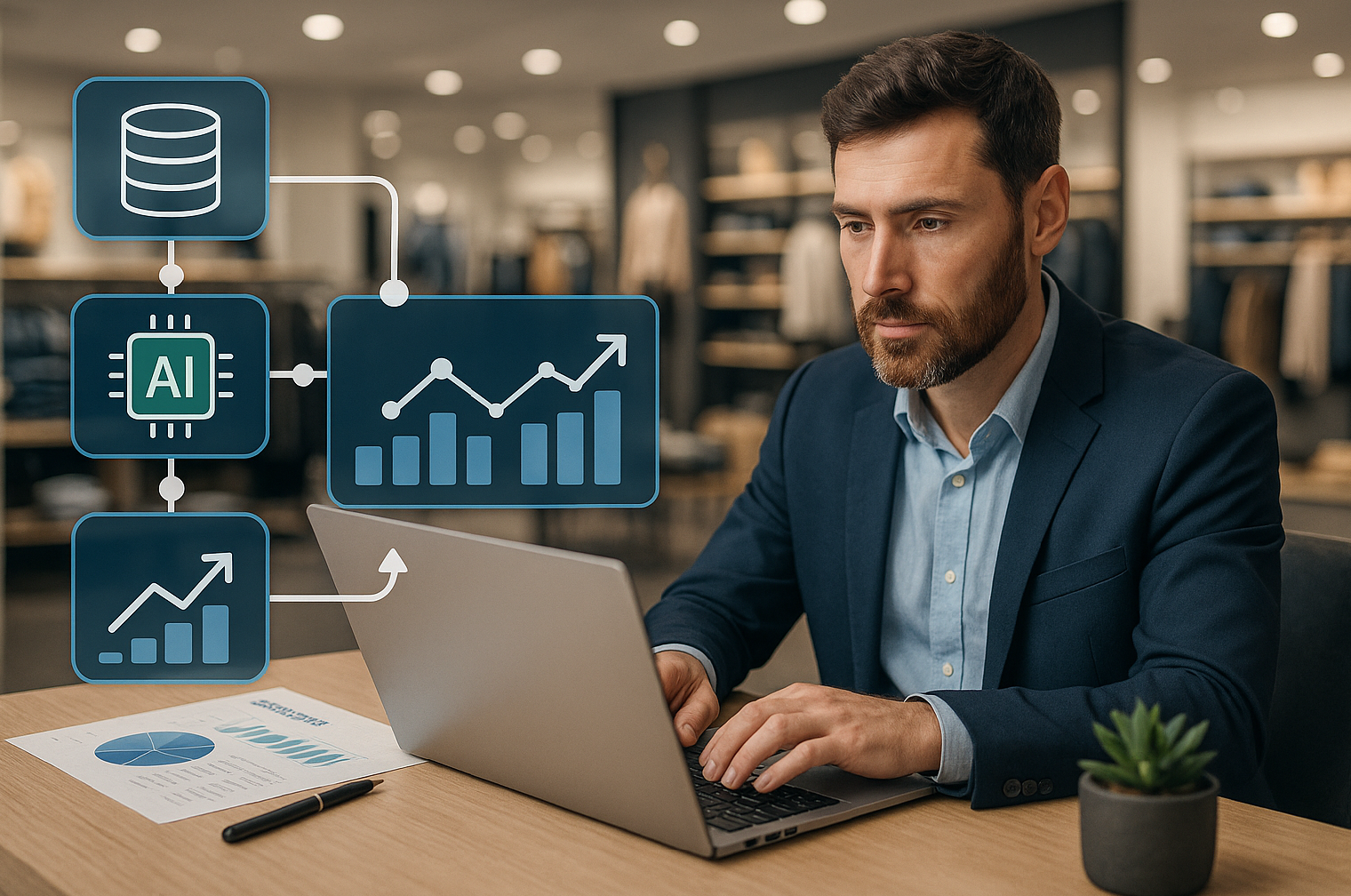
The retail winners now unify disjointed data into a single, fast, and reliable stream that fuels decisions in the moment, not next week. Data pipeline development for retail turns siloed POS logs, loyalty events, eCommerce clicks, inventory movements, and supply signals into trustworthy, real-time insights that cut costs, lift revenue, improve service, and reduce risk.  

Retail AI adoption has increased recently. 42% of retailers already use AI, 34% are piloting, and over 60% plan to increase AI infrastructure investment in the next 18 months, which elevates the urgency for robust data integration and quality foundations. Generative AI alone could unlock $240B–$390B in retail value.  

Meanwhile, the data pipeline market is projected to grow to $31B by 2032, a signal that organizations invest in speed, governance, and scale. In India, 71% of retailers plan to adopt GenAI within 12 months; AI investment could rise from $5B to $31B by 2028, and profitability could improve by 20% by 2025, provided data is integrated, accurate, and timely.  

Why does every modern retailer need a real-time, unified data backbone now? 

Retailers cite four priorities:  

  • faster decisions 
  • lower operating costs 
  • higher conversion 
  • fewer stockouts.  

AI’s benefits already show up: executives report positive impact on revenue and operating costs, with store analytics, personalization, and loss prevention among top outcomes when pipelines deliver clean, governed, and timely data.  

Generative AI pilots span marketing, distribution, and back-office tasks; two-thirds of leaders plan to increase spending on AI, which only returns value when data flows reliably from source to model to action.  

With market growth near 20% CAGR for data pipelines, laggards risk capability gaps that compound over time, or force costly replatforming later. 

What makes data pipeline development for retail uniquely challenging? 

Four realities define retail data, i.e., high-velocity events, heterogeneous sources, seasonality shocks, and strict privacy. Transaction and telemetry patterns spike with promotions or disruptions, which break brittle batch jobs unless the architecture supports streaming and backpressure.  

Data quality issues cascade into poor recommendations or misallocated stock if identity resolution and schema governance fall short. GenAI increases data appetite, images, text, and logs, but also raises questions about consent, lineage, and model traceability that only disciplined pipelines can answer.  

Leaders address these with event-driven designs, incremental processing, and robust observability that detect anomalies before they hit downstream analytics or AI experiences. 

Check: Custom AI Solutions in SaaS: Applications, Use Cases, and Trends 

Accelerate Growth with Data Pipeline Development for Retail

Integrate disjointed data sources into real-time insights using ViitorCloud’s Custom AI Solutions.

How do real-time pipelines translate into measurable retail outcomes? 

Real-time integration turns operational signals into actions: dynamic pricing, inventory balancing, next-best-offer, and proactive service.  

McKinsey estimates $240B–$390B in potential genAI value for retail when use cases scale, which depends on consistent data ingestion, standardization, and feedback loops into models and staff workflows. Surveyed retailers report AI’s positive impact on revenue and operating costs; more than 60% plan increased infrastructure investment, which implies confidence in ROI when foundations are solid.  

In India’s market, 71% adoption intent underscores how competitive advantage hinges on data readiness plus AI capability, with profitability uplift potential of 20% by 2025 when programs execute well. 

Which design patterns reduce latency, improve trust, and lower TCO? 

Retail pipelines that perform in production share four traits: event-first ingestion, layered storage, active data quality, and secure MLOps.  

Event-driven architectures capture streams from POS, eCommerce, apps, and IoT with low latency, then route by business priority for speed where it matters most.  

A layered data strategy—raw, curated, and serving—keeps history, applies governance, and accelerates consumption by analytics and AI services without rework. 

Data contracts, lineage, and SLA-based observability protect downstream models from schema drift or late arrivals, which prevents bad decisions at scale.  

Finally, MLOps with feature stores, bias checks, and rollback paths ensure models stay fresh, responsible, and reliable as demand patterns shift daily or hourly. 

Unlock Retail Potential with AI Solutions

Transform fragmented retail data into actionable insights with our expert Data Pipeline Development for Retail.

How should leaders phase their roadmap to de-risk and deliver value fast? 

Executives win by sequencing initiatives: prove value in weeks, then scale domains. Start with four high-yield use cases: real-time stock visibility, demand sensing for replenishment, cart abandonment recovery, and store ops insights for labor and shrink. Tie each to a minimal viable data bundle: a handful of sources, a gold dataset, and clear KPIs like fill rate, conversion, or OOS minutes. Expand horizontally once telemetry, identity resolution, and governance prove dependable.  

Align teams to one operating model that treats data as a product, with shared standards for quality, access, and change management, so each new use case accelerates rather than fragments the stack. 

Read: Why SaaS and Small Businesses Must Embrace Custom AI Solutions 

Where does generative AI fit, and what data prerequisites matter? 

GenAI amplifies content, service, and knowledge work, but it only scales when retailers solve data access, freshness, and policy enforcement.  

Leaders focus on constrained, high-impact domains—assisted service, item enrichment, promotion planning, or store playbooks—fed by curated, permissioned datasets that trace back to source systems for audit and compliance.  

With 90% of surveyed executives exploring genAI and two-thirds planning more data and analytics investment, the gating factor is no longer ambition, but the quality and reliability of the underlying data pipeline. 

What risks should CTOs and CXOs expect, and how to govern them? 

Data drift, cost creep, privacy exposure, and organizational friction are four risks that dominate. Data drift erodes model accuracy unless pipelines measure distribution changes and trigger retraining or feature recalibration.  

Cost creep emerges when teams duplicate ingestion and storage; governing reuse through shared data products reduces spend as adoption grows. Privacy risk rises with clickstreams and loyalty data; enforce least-privilege access, PII tokenization, and audit trails across ingestion, storage, and AI endpoints.  

Organizational friction fades when domain owners co-steward data quality SLAs and share a transparent backlog that links pipeline improvements to business KPIs, which builds trust and funding momentum. 

Streamline Retail Operations with Smart Data Pipelines

Leverage AI Solutions to connect, process, and analyze retail data in real time for faster decisions.

How does ViitorCloud align custom AI solutions for the retail industry with this blueprint? 

ViitorCloud designs and builds domain-centric, event-driven pipelines that unify retail data across POS, eCommerce, marketing, supply chain, and stores, then operationalizes analytics and AI where they create outsized value. Our approach centers on four pillars: data product thinking, real-time readiness, measurable AI impact, and responsible governance, so programs scale predictably or pivot quickly without rework.  

Speak with ViitorCloud’s retail AI specialists to create a production-grade, event-driven data pipeline that powers demand sensing, inventory accuracy, personalization, and service automation—with measurable ROI in weeks, not quarters. Our team delivers custom AI solutions for the retail industry that integrate seamlessly with your ecosystem and governance standards, so stakeholders gain trust, speed, and clarity from day one. 

AI-First SaaS Engineering: How CTOs Can Launch Products 40% Faster

The AI-first SaaS engineering revolution is completely transforming how technology leaders approach product development. Recent industry data reveals that organizations that implement Agile methodologies combined with AI-driven automation achieve a 30-40% reduction in project delivery times, while companies leveraging advanced CI/CD pipelines report a 50%+ increase in release frequency.

As the SaaS market rapidly approaches $299.1 billion by 2025, CTOs face unprecedented pressure to accelerate innovation while maintaining enterprise-grade security standards.

The convergence of artificial intelligence and SaaS product engineering has created new possibilities for development acceleration. Organizations utilizing AI and machine learning technologies experience a 50% decrease in manual errors, enabling teams to focus on strategic innovation rather than repetitive tasks.

This transformation signifies a shift toward intelligent, responsive development ecosystems that adapt to market demands in real-time.

Why Are CTOs Struggling with Traditional Product Engineering Approaches?

Legacy product engineering methodologies often create bottlenecks that significantly impact time-to-market performance. Traditional waterfall development cycles require extensive planning phases, lengthy testing periods, and sequential approval processes that delay product launches by months or even years.

CTOs frequently encounter challenges, including fragmented development workflows, manual testing procedures, and isolated security implementations that occur late in the development cycle. These approaches result in costly rework cycles, delayed feature releases, and increased vulnerability exposure during critical launch phases.

The shift toward distributed teams and cloud-native architectures has exposed additional limitations in conventional development practices. Teams struggle with coordination across multiple time zones, inconsistent development environments, and complex integration challenges that traditional methodologies cannot effectively address.

Accelerate Launches with AI-First SaaS Engineering

Cut product timelines by up to 40% with our intelligent SaaS Product Engineering strategies.

How Does AI-First SaaS Engineering Transform Development Speed?

AI-first SaaS engineering introduces intelligent automation at every development stage, from initial code generation to deployment optimization. Machine learning algorithms analyze code patterns, predict potential issues, and suggest improvements before problems manifest in production environments.

Automated code review systems powered by artificial intelligence can identify security vulnerabilities, performance bottlenecks, and coding standard violations within minutes rather than hours or days. This acceleration enables development teams to maintain high code quality while significantly reducing manual review overhead.

Predictive analytics capabilities help development teams anticipate user requirements, infrastructure scaling needs, and feature adoption patterns. These insights enable proactive development decisions that align with market demands and user expectations, reducing the likelihood of extensive post-launch modifications.

AI-driven testing frameworks execute comprehensive test suites automatically, identifying edge cases and performance issues that manual testing might overlook. This comprehensive approach ensures product reliability while accelerating the overall development timeline.

What Security Challenges Must CTOs Address in AI-Driven Development?

Security considerations become increasingly complex in AI-driven development environments. 93% of security leaders have boosted their SaaS security budgets following recent industry breaches, highlighting the critical importance of embedded security practices.

CTOs must address data privacy concerns, algorithm bias risks, and AI model security vulnerabilities while maintaining development velocity. These challenges require sophisticated security frameworks that integrate seamlessly with AI-powered development tools and processes.

Compliance requirements for industries like healthcare and finance add additional complexity layers. Organizations must ensure that AI-driven development practices meet regulatory standards, including GDPR, HIPAA, and SOC 2 compliance, without compromising innovation speed.

The shared responsibility model in cloud environments requires a clear understanding of security boundaries between AI service providers and internal development teams. CTOs must establish comprehensive security governance frameworks that address these distributed responsibilities effectively.

Which Technologies Enable Faster Time-to-Market Without Security Compromise?

Modern SaaS product engineering platforms leverage containerization, microservices architectures, and cloud-native security solutions to achieve both speed and security objectives simultaneously. These technologies enable independent service scaling, rapid deployment cycles, and granular security control implementation.

Key Enabling Technologies

  • Container orchestration platforms that provide automated scaling and security isolation 
  • API-first development frameworks that enable rapid integration and feature deployment 
  • Zero-trust security architectures that secure every transaction without impeding development velocity 
  • Infrastructure-as-code solutions that ensure a consistent, secure environment for provisioning 

Advanced monitoring and observability tools provide real-time insights into application performance, security posture, and user behavior patterns. These capabilities enable proactive issue resolution and continuous optimization without manual intervention.

Lead Smarter with AI-First SaaS Engineering

Empower your product teams with tailored AI solutions that align with your SaaS goals.

What Role Does Automation Play in Modern SaaS Product Engineering?

Automation serves as the foundation for accelerated product engineering workflows. Intelligent automation systems handle routine tasks, including code compilation, testing execution, deployment orchestration, and infrastructure provisioning without human intervention.

Machine learning algorithms continuously optimize development processes based on historical performance data and current project requirements. These systems identify patterns that human teams might miss, suggesting workflow improvements that enhance both speed and quality.

Automated monitoring and alerting systems provide immediate feedback on application performance, user experience, and security incidents. This real-time visibility enables rapid response to issues that could impact user satisfaction or business operations.

ViitorCloud’s SaaS product engineering services leverage advanced automation frameworks that reduce manual overhead while maintaining strict quality standards.

How ViitorCloud Can Accelerate Your AI-First SaaS Journey

ViitorCloud brings over 14 years of experience in delivering exceptional SaaS product engineering solutions that combine AI innovation with enterprise security requirements. Our team has completed hundreds of projects across multiple industries.

Our artificial intelligence services enable organizations to implement AI-driven development practices that accelerate time-to-market while maintaining a comprehensive security posture. We specialize in creating intelligent automation frameworks, predictive analytics solutions, and AI-powered testing environments.

For logistics companies, our AI-powered solutions automate warehouse operations, optimize supply chains, and enhance operational efficiency. In healthcare, we deliver digital transformation through telemedicine platforms, AI-powered diagnostic tools, and IoT-enabled monitoring solutions that improve patient outcomes

Our finance sector expertise includes secure, compliant SaaS solutions that streamline operations while enhancing customer experiences through cutting-edge technologies. We understand the unique challenges that CTOs face in balancing innovation speed with regulatory compliance requirements.

Our approach includes digital product engineering services that integrate generative AI, cloud services, and advanced security frameworks. Our proven methodologies ensure that your organization can achieve  40% faster development cycles while maintaining enterprise-grade security standards.

Launch SaaS Products Faster and Smarter

Discover how our AI-First SaaS Engineering approach transforms product delivery and ROI.

The Bottomline 

AI-first SaaS engineering represents the future of product development, enabling CTOs to achieve unprecedented development acceleration without compromising security integrity. Organizations that embrace intelligent automation, DevSecOps practices, and AI-driven development frameworks position themselves for sustained competitive advantage in rapidly evolving markets. The convergence of artificial intelligence and SaaS product engineering creates opportunities for innovation that seemed impossible just years ago, making this transformation essential for forward-thinking technology leaders.

AI Co-Pilots in Healthcare: Reducing Administrative Burden and Improving Patient Outcomes

The healthcare industry is experiencing a digital transformation as AI co-pilots in healthcare emerge as powerful solutions to combat administrative inefficiencies and enhance patient care quality.

With healthcare providers spending over 30 billion on AI implementation in the last three years, custom AI solutions are becoming essential tools for addressing the critical workforce shortage of 10 million health workers projected by 2030.

These intelligent systems are revolutionizing how medical professionals manage documentation, clinical decision-making, and operational workflows, ultimately reducing the 53% physician burnout rate that has plagued the industry.

What Are AI Co-Pilots Transforming Healthcare Administration Today?

AI co-pilots in healthcare function as intelligent digital assistants that seamlessly integrate into existing clinical workflows, automating time-consuming administrative tasks that traditionally consume up to 40% of healthcare workers’ time. These sophisticated systems leverage advanced machine learning algorithms and natural language processing to handle documentation, data collection, and decision support in real-time.

The latest developments in 2025 showcase remarkable capabilities. Microsoft’s Dragon Copilot, launched in March 2025, represents the first unified voice AI assistant that combines proven dictation capabilities with ambient listening technology. This breakthrough solution enables clinicians to streamline documentation through multilingual ambient note creation, automated tasks, and personalized formatting within a singular interface.

Similarly, Navina’s AI Copilot earned the #1 ranking in the 2025 Best in KLAS Awards, demonstrating the technology’s proven effectiveness in clinical settings. These platforms are fundamentally changing how healthcare professionals interact with electronic health records and patient data management systems.

Check: How AI MVP Development for Healthcare Leads Digital Transformation

Streamline Healthcare Admin with AI Co-Pilots

Reduce manual tasks and increase staff efficiency using ViitorCloud’s AI Co-Pilots in Healthcare.

How Are Leading Healthcare Systems Implementing AI Co-Pilots Successfully?

Healthcare organizations worldwide are witnessing transformative results through strategic AI co-pilot implementation. Over 96,000 providers, including six of the top ten U.S. healthcare systems, currently utilize Provider Copilot from Innovaccer. This widespread adoption demonstrates the technology’s reliability and effectiveness in diverse clinical environments.

WellSpan Health’s implementation of Dragon Copilot exemplifies successful organizational transformation. Dr. R. Hal Baker, their chief digital and information officer, reports that the system enhances patient experiences while streamlining clinician workflows through Microsoft-powered ecosystem integration. The technology delivers consistent, intelligent assistance across their entire organization, extending beyond traditional EHR interactions.

In Germany, breast cancer screening programs utilizing AI-assisted mammograms achieved a 17.6% increase in cancer detection rates without increasing false positives. This real-world implementation involving 461,818 women demonstrates how AI co-pilots enhance diagnostic accuracy while maintaining efficiency standards.

Why Do Healthcare Professionals Experience Reduced Burnout with AI Automation?

The impact of AI co-pilots in healthcare on professional wellness extends far beyond simple task automation. Clinical data reveals that 70% of clinicians report reduced feelings of burnout and fatigue when utilizing AI-powered systems. Additionally, 62% of clinicians express decreased likelihood of leaving their organizations, addressing the critical retention challenges facing healthcare institutions.

These improvements stem from AI co-pilots’ ability to eliminate repetitive, time-consuming administrative duties that contribute significantly to professional stress. Clinicians report saving five minutes per patient encounter, which accumulates to substantial time savings throughout busy clinical days. This efficiency gain allows healthcare professionals to redirect their focus toward direct patient care and clinical decision-making.

The technology also reduces cognitive load through intelligent information retrieval and automated documentation processes. Rather than manually searching through extensive patient records or spending hours on paperwork, clinicians can leverage AI assistance for instant access to relevant medical information and automated note generation.

Read: This is How AI and Automation in Healthcare Heal Medical Systems

What Measurable Outcomes Can Organizations Expect from AI Co-Pilot Implementation?

Healthcare organizations implementing AI co-pilots in healthcare report substantial quantifiable benefits across multiple operational areas. Financial impact includes potential savings of USD 150 billion annually through administrative task automation, error reduction, and streamlined workflows. Additional cost reductions of USD 60 to USD 120 billion annually result from optimized clinical operations and improved resource allocation.

Patient satisfaction metrics also demonstrate significant improvement, with 93% of patients reporting better overall experiences when their healthcare providers utilize AI-powered systems. This enhanced satisfaction stems from increased clinician availability and more focused, personalized interactions during appointments.

Remote patient monitoring enhanced by AI demonstrates remarkable clinical outcomes. AI models predict heart failure incidents with 87% accuracy, while RPM devices decrease hospitalizations by 38% and emergency department visits by 51%. Healthcare claims for AI-supported RPM procedures have increased by 1300%, indicating rapid adoption and proven value delivery.

Improve Patient Outcomes with AI Co-Pilots in Healthcare

Deliver faster, more personalized care with custom AI solutions designed for real healthcare impact.

How Do Custom AI Solutions Address Unique Healthcare Challenges?

Custom AI solutions provide tailored approaches to specific healthcare organizational needs, unlike one-size-fits-all platforms that may not align with unique operational requirements. These bespoke systems integrate seamlessly with existing infrastructure while addressing particular workflow challenges, specialty requirements, and regulatory compliance needs.

Qure.ai’s AIRA platform exemplifies customized AI co-pilot development for resource-constrained primary care settings. This solution specifically targets community health workers in low and middle-income countries, addressing the unique challenges of high patient volume with limited resources. The platform automates patient data collection, aggregates population-level insights, and supports clinical protocol adherence through specialized training data from relevant health systems.

The global AI in remote patient monitoring market demonstrates sustained growth and is projected to reach $8,438.5 billion by 2030. This expansion reflects healthcare organizations’ recognition that custom AI solutions provide superior value through targeted functionality and specialized integration capabilities.

Read: How AI Agents in Healthcare Are Transforming Medical Services

What Makes ViitorCloud’s AI Automation the Right Choice for Healthcare Innovation?

ViitorCloud’s comprehensive custom AI solutions address the complex technological landscape facing modern healthcare organizations. Our artificial intelligence capabilities combine deep healthcare domain expertise with cutting-edge AI development methodologies to deliver transformative results for medical institutions.

Our approach encompasses three critical areas that distinguish our healthcare AI automation services:

Intelligent Clinical Workflow Integration: We develop AI co-pilots that seamlessly integrate with existing electronic health record systems, practice management platforms, and clinical documentation workflows. Our solutions reduce implementation friction while maximizing operational efficiency gains.

Predictive Analytics and Decision Support: Our custom AI solutions leverage advanced machine learning algorithms to provide clinicians with intelligent insights for early disease detection, risk stratification, and personalized treatment recommendations. These capabilities enhance clinical decision-making while maintaining physician autonomy and expertise.

Comprehensive Administrative Automation: Beyond clinical applications, our AI automation solutions address billing processes, appointment scheduling, inventory management, and regulatory compliance monitoring. This holistic approach ensures organizations experience system-wide efficiency improvements rather than isolated point solutions.

Healthcare organizations partnering with ViitorCloud benefit from our extensive experience in healthcare technology solutions and our commitment to delivering custom AI implementations that scale with organizational growth and evolving industry requirements.

Unlock Efficiency with AI Co-Pilots in Healthcare

Partner with ViitorCloud to deploy intelligent AI co-pilots that transform your healthcare workflows.

Final Thoughts

AI co-pilots in healthcare represent a transformative force addressing critical industry challenges through intelligent automation and enhanced clinical decision support. The documented benefits include reduced physician burnout, improved patient outcomes, and substantial cost savings across healthcare organizations. 

Custom AI solutions provide the flexibility and specificity required for successful implementation in diverse healthcare environments, making them essential tools for forward-thinking medical institutions seeking operational excellence and improved patient care delivery.

Build Custom AI Agents for Business: Transform Your Operations

All kinds of businesses are now moving towards intelligent automation. According to recent research, 93% of software executives are already developing or planning to develop custom AI agents for businesses. This shows that it is a fundamental transformation of how organizations operate, compete, and deliver value. 

The global AI agent market is projected to grow explosively from $5.1 billion in 2024 to $47.1 billion by 2030. Meanwhile, Gartner predicts that over 80% of enterprises will adopt AI-driven automation by the end of 2025. Hence, we can say that the custom AI agents for businesses are essential for survival as well as for thriving today. 

Unlike generic automation tools, custom AI agents development creates intelligent systems that understand your unique business processes, industry-specific challenges, and organizational culture. These digital teammates work around the clock, handle complex multi-step processes, and continuously learn from your data to deliver increasingly sophisticated results. 

Why Custom AI Agents Beat One-Size-Fits-All Solutions? 

The fundamental difference between generic AI tools and custom AI agents lies in their ability to adapt to your specific business environment. While off-the-shelf solutions offer broad functionality, they often fall short when addressing industry-specific challenges or integrating with existing workflows. 

Custom AI agents for businesses deliver several critical advantages that generic solutions simply cannot match. They integrate seamlessly with your current databases, applications, and processes without disrupting established procedures. This tailored approach minimizes operational disruption while maximizing automation returns. 

Security represents another crucial differentiator. Custom solutions implement enterprise-grade security capabilities including role-based access control, advanced identity management, and industry-specific compliance frameworks. This level of security customization ensures regulatory compliance and protects sensitive business data in ways that generic solutions often cannot achieve. 

Custom AI Agents vs Generic Solutions 

Feature Custom AI Agents Generic AI Solutions 
Business Adaptation Tailored to specific industry requirements and organizational workflows One-size-fits-all approach with limited customization options 
System Integration Seamless integration with existing databases, CRM, ERP, and proprietary systems Limited integration capabilities, often requiring workarounds 
Security Framework Enterprise-grade security with role-based access control and industry-specific compliance Standard security protocols that may not meet specific regulatory requirements 
Learning Capability Learns from your unique business data and processes continuously Generic learning models not optimized for your specific use cases 
Scalability Scales according to your business growth and changing requirements Fixed scaling limitations based on predefined parameters 
Compliance Management Built-in compliance for industry regulations (HIPAA, GDPR, SOX, etc.) Basic compliance features that may require additional configuration 
Implementation Time Longer initial setup but faster long-term deployment for complex processes Quick initial setup but limited effectiveness for complex business needs 
Cost Structure Higher upfront investment with better long-term ROI and reduced operational costs Lower initial cost but potentially higher long-term expenses due to limitations 
Support & Maintenance Dedicated support with deep understanding of your business context Generic support without specific business process knowledge 
Performance Optimization Continuously optimized based on your specific performance metrics and KPIs Standard optimization not aligned with your unique business objectives 
Custom AI Agents vs Generic Solutions

Read: Autonomous Software Agents: Business Impact 

Transform Operations with Custom AI Solutions

Empower your business with tailored AI agents designed to automate and scale efficiently.

How Do Custom AI Agents Transform Daily Operations? 

Modern custom AI agents development creates intelligent systems that revolutionize how teams approach routine tasks and complex decision-making. These agents automate mundane activities like data entry, follow-ups, and report generation, freeing your team to focus on strategic initiatives that drive growth. 

The transformation extends beyond simple task automation. Custom agents analyze patterns across your organization’s data, identifying opportunities and risks that might occur across departmental boundaries. They maintain data integrity while providing cross-functional insights that enable better decision-making. 

Companies implementing effective custom AI agents for businesses report significant operational improvements. Customer service teams see response times drop dramatically while maintaining personalized interactions. Finance departments experience enhanced fraud detection and risk management capabilities. Sales teams benefit from intelligent lead scoring and automated follow-up sequences that convert prospects more effectively. 

What Industries Benefit Most from Custom AI Agent Implementation? 

Healthcare 

Healthcare organizations leverage custom AI agents development services to streamline patient interactions, automate appointment scheduling, and manage medical records while maintaining strict compliance standards. These systems reduce administrative burden on medical staff while improving patient experience through faster response times. 

Finance 

Financial institutions utilize custom AI agents for sophisticated risk detection, automated compliance monitoring, and intelligent customer support. These systems process vast amounts of transaction data in real-time, identifying suspicious patterns and ensuring regulatory compliance while providing customers with instant, accurate responses. 

Retail 

Retail businesses deploy custom agents as virtual shopping assistants that personalize recommendations based on browsing history, purchase patterns, and customer preferences. These intelligent systems increase average order values while enhancing customer retention through more relevant product suggestions. 

Small and medium enterprises across various sectors find custom agents particularly valuable for managing multiple business functions simultaneously. These AI-powered office managers handle customer inquiries, process orders, manage inventory, and generate reports, effectively providing SMEs with enterprise-level operational capabilities. 

Check: Vertical AI Agents in Logistics: Enhancing Supply Chain 

Build AI Agents That Fit Your Business

Leverage ViitorCloud’s Custom AI Solutions to streamline operations and enhance decision-making.

How Does the Development Process Ensure Business Alignment? 

Successful custom AI agents development begins with comprehensive strategic planning and assessment. This process involves working closely with AI experts to identify specific business challenges and develop tailored roadmaps aligned with organizational objectives. 

The development methodology emphasizes seamless system integration to maximize data flow and impact while minimizing disruption to ongoing operations. This approach ensures that new AI capabilities enhance rather than complicate existing workflows. 

Continuous performance monitoring through MLOps pipelines enables ongoing improvement and scalability. This means your custom AI agents for businesses evolve with changing business needs, becoming more effective over time rather than becoming obsolete. 

Quality data preparation forms the foundation of effective agent development. Custom solutions leverage your organization’s unique datasets, creating AI systems that understand your business language, customer patterns, and operational nuances in ways that generic solutions cannot replicate. 

Businesses Can Expect High ROI from Custom AI Implementation 

Organizations implementing custom AI agents development services consistently report measurable returns on investment across multiple metrics. Labor cost reductions represent the most immediate benefit, with agents handling routine tasks that previously required human intervention. 

Customer acquisition costs drop significantly for companies leveraging personalized AI experiences. Research indicates that businesses implementing effective personalization strategies through custom AI can reduce customer acquisition costs by up to 50%. This dramatic improvement stems from AI’s ability to deliver highly relevant, timely interactions that convert prospects more effectively. 

Operational efficiency gains compound over time as custom AI agents learn from organizational data and processes. These systems identify optimization opportunities, predict potential issues, and automate complex workflows that previously required manual coordination across multiple departments. 

Revenue growth acceleration occurs through enhanced customer experiences, faster decision-making, and improved operational scalability. Custom agents enable businesses to handle increased demand without proportional increases in staffing costs, creating sustainable competitive advantages. 

Also Read: Custom AI Solutions for Logistics that Drive Efficiency 

How Can SMEs and SaaS Companies Get Started with Custom AI? 

Small and medium enterprises often face unique challenges when considering the development of custom AI agents. Limited technical resources and budget constraints can make implementation seem daunting. However, partnering with experienced providers offers a practical pathway to AI adoption without massive upfront investments. 

SaaS companies particularly benefit from custom AI solutions that integrate seamlessly with existing platforms while providing measurable business value. These implementations focus on enhancing user experiences, automating customer support, and providing intelligent insights that drive product development decisions. 

The key lies in starting with clearly defined objectives and a realistic scope. Rather than attempting comprehensive AI transformation immediately, successful implementations begin with specific use cases that deliver quick wins and demonstrate value. This approach builds organizational confidence while providing the foundation for expanded AI adoption. 

Working with providers who understand SME challenges ensures that custom AI agents for businesses scale appropriately with organizational growth. This approach provides enterprise-level capabilities without enterprise-level complexity or costs. 

Scale Smarter with Custom AI Solutions

Discover how AI agents can optimize workflows and accelerate business growth.

Trust Us for Custom AI Solutions Development Services 

ViitorCloud specializes in delivering custom AI agents development services that transform business challenges into intelligent opportunities across multiple industries. With over 14+ years of experience and expertise spanning healthcare, logistics, finance, and technology sectors, we understand the unique requirements that different organizations face. 

Our comprehensive approach to custom AI solutions for digital experiences ensures businesses receive tailored implementations that drive measurable results. We focus on seamless integration with existing systems while providing the flexibility and adaptability that modern businesses require. 

For SMEs specifically, our custom AI solutions provide scalable implementations that grow with business demands. Whether you need customer behavior analytics, process automation, or predictive insights, our solutions adapt to your operational requirements while delivering consistent value. 

Our AI consulting and strategy services help businesses develop tailored roadmaps aligned with their objectives. From machine learning development to complete system integration, we ensure that your custom AI agents deliver the intelligent automation your organization needs to compete effectively in today’s market. 

Contact us now to book a complimentary consultation from our AI expert. 

Importance of AI-Driven Automation for SMEs in 2025

AI-driven automation or business process automation has become the defining factor separating thriving small and medium enterprises from those struggling to keep pace in today’s competitive landscape.

Recent data reveals that automation and digitization can lead to a 20-35% increase in productivity for small businesses, while companies implementing AI business process automation for SMEs typically see average revenue improvements of 44%.

The transformation is happening faster than ever, with generative AI adoption in the workplace surging from 22% in 2023 to an astounding 75% in 2024.

For SMEs contributing £2.4 trillion in turnover and employing 16.7 million people in the UK alone, embracing AI-powered business process automation is about survival and sustainable growth in an increasingly automated world.

Why Manual Processes Are Holding SMEs Back

Most SMEs find themselves trapped in a cycle of manual inefficiencies that drain valuable resources and limit growth potential. Traditional manual processes consume countless hours on repetitive tasks like data entry, invoicing, and customer relationship management, diverting focus from strategic initiatives that drive business expansion.

The cost of maintaining the status quo is becoming increasingly evident. Manual errors, process delays, and inefficient resource usage inflate operational expenses unnecessarily, while slower service delivery and disjointed communication patterns lead to lower client satisfaction and lost business opportunities. SMEs sticking with outdated manual processes face wasted time, higher operational costs, and poor customer experiences that compound over time.

This reality creates an urgent need for transformation, setting the stage for understanding how AI-driven business process automation can revolutionize operations.

What Is AI-Driven Business Process Automation

AI business process automation for SMEs represents a fundamental shift from rigid, rule-based systems to intelligent, adaptive solutions that learn and improve over time. Unlike traditional automation, these systems use machine learning, natural language processing, and predictive analytics to handle complex, dynamic business scenarios.

The technology enables organizations to process and analyze data faster while performing rule-based tasks with remarkable precision. This means critical tasks are completed efficiently through AI-powered tools, saving employees’ time and allowing them to focus on more strategic work.

Technologies That Drive SME Transformation

  • Machine Learning: Analyzes historical data to identify patterns and optimize processes
  • Natural Language Processing: Enables intelligent document processing and customer interaction
  • Predictive Analytics: Anticipates business needs and market trends for proactive decision-making

These capabilities transform how SMEs manage workflows, make decisions, and serve customers, creating a foundation for scalable growth.

Empower Your SME with AI-Driven Automation

Improve productivity and cut operational costs with smart automation built for small and mid-sized businesses.

Advantages for Small and Medium Enterprises

AI-powered business process automation delivers measurable advantages that directly impact SME bottom lines. The transformation occurs across multiple operational dimensions, creating compounding benefits over time.

Operational Efficiency

AI systems handle tasks much faster than humans, allowing SMEs to streamline workflows and reduce operational bottlenecks. By automating repetitive tasks, employees can focus on higher-value activities that contribute directly to business growth and innovation.

Significant Cost Reductions

Implementation of AI-driven business process automation leads to substantial cost savings by minimizing manual labor and increasing overall productivity. SMEs can save on labor costs and operational expenses while reducing errors through automation, preventing costly mistakes that plague manual processes.

Scalable Growth Without Proportional Costs

AI enables SMEs to scale operations efficiently by automating repetitive tasks, reducing the need for proportional workforce expansion. Businesses can handle increasing workloads, customer demands, and market changes without incurring significant additional costs, leading to sustainable and resource-efficient growth.

Improved Customer Experience

Through personalized recommendations, 24/7 chatbot support, and real-time query resolution, AI business process automation for SMEs enhances customer interactions significantly. Natural Language Processing and predictive analytics capabilities help businesses understand and respond to customer needs proactively across every stage of the customer journey.

Industry Insights from Recent Events and Research

Recent industry events have highlighted the accelerating adoption of AI-powered business process automation across various sectors. The Process Days 2025 event focused extensively on digital transformation and process excellence, featuring keynotes on “Innovation Fuels Transformation: When Processes, IT Architecture, and AI Pave the Way for Business Excellence”.

The World AI and Automation Summit 2025 brought together forward-thinking leaders to explore the convergence of AI, automation, and business transformation. These events emphasize that businesses implementing intelligent automation are achieving unprecedented operational excellence and competitive advantages.

Current trends for 2025 point to increased application of affordable and scalable technologies that make processes more agile and efficient. For example, e-commerce businesses are automating stock management, updating levels in real-time based on sales and demand forecasts, while simultaneously automating marketing communications and customer service through intelligent chatbots.

Start Scaling with AI-Driven Automation

Automate core processes and make smarter decisions with ViitorCloud’s custom AI solutions for SMEs.

Implementation Strategies That Actually Work

Successful AI-driven business process automation requires a strategic approach that considers both immediate needs and long-term scalability. SMEs should start by identifying processes that consume the most time and resources, then gradually expand automation capabilities.

  • Assess current workflows and identify automation opportunities
  • Establish data collection and integration systems
  • Implement basic automation for repetitive tasks
  • Deploy AI-powered decision-making tools
  • Integrate predictive analytics capabilities
  • Enhance customer-facing automation systems
  • Implement machine learning for continuous improvement
  • Scale automation across all business functions
  • Develop custom AI solutions for industry-specific challenges

The key to success lies in partnering with experienced providers who understand SME challenges and can deliver scalable solutions.

ViitorCloud Is Your Partner in AI-Driven Automation

As SMEs recognize the critical importance of AI business process automation for SMEs, choosing the right implementation partner becomes crucial for success. ViitorCloud specializes in transforming operational challenges into intelligent, scalable solutions that deliver measurable business value across multiple industries.

Our comprehensive approach to AI automation for customer experience ensures successful implementation through tailored strategies, custom machine learning development, and seamless integration with existing systems.

Our service portfolio includes AI consulting and strategy development, machine learning and AI development services, AI integration capabilities, and generative AI solutions that optimize business processes. And our exclusive AI-driven automation offering includes GenAI Workflow Automation, RPA+ AI Hybrid Automation, Low-Code Business Apps, and Intelligent Document Processing (IDP)

We’ve helped businesses achieve operational transformation and improved customer satisfaction through AI automation for logistics and other industry-specific applications.

For SMEs seeking to implement AI-powered business process automation, our proven track record demonstrates consistent success in delivering solutions that drive growth, reduce costs, and enhance operational efficiency.

Modernize Your SME with AI-Driven Automation

Stay competitive in 2025 with intelligent automation designed to accelerate your business growth.

Future-Proof Your Business Through Smart Automation

The future belongs to SMEs that embrace AI-driven business process automation today. Organizations implementing these solutions are establishing competitive advantages that become increasingly difficult to replicate over time. The statistics clearly demonstrate that companies leveraging AI automation achieve superior performance across all key business metrics.

As market dynamics continue evolving rapidly, SMEs must position themselves at the forefront of technological advancement. Those who delay implementation risk falling behind competitors who are already realizing the benefits of intelligent automation. So, contact ViitorCloud now and book a complimentary consulting call with our expert.

AI in Healthcare Takes Center Stage at UN Summit 2025

The AI in healthcare revolution reached a pivotal moment when global leaders convened at the UN’s AI for Good Global Summit 2025 in Geneva this July. Over four transformative days, the world’s most influential healthcare executives, policymakers, researchers, and technology pioneers gathered to address the most pressing questions surrounding AI in medicine and its integration with traditional healthcare practices.

The summit attracted over 20,000 participants across 200+ demonstrations, showcasing how artificial intelligence is reshaping patient care, diagnostic accuracy, treatment protocols, and healthcare accessibility.

With 85% of countries lacking AI-specific healthcare policies, the urgency for collaborative frameworks has never been more critical. The discussions centered on four key areas:

  • clinical decision-making
  • patient safety
  • regulatory compliance
  • equitable access to AI-driven healthcare solutions.

UN Summit Highlights Key Healthcare Challenges

The summit opened with a stark warning from Doreen Bogdan-Martin, chief of the International Telecommunications Union, who emphasized that “the biggest risk we face is not AI eliminating the human race.

It is the race to integrate AI everywhere, without sufficient understanding of what that means for people and our planet”.

This sentiment echoed throughout the healthcare-focused sessions, where leaders acknowledged both the transformative potential and inherent risks of AI in healthcare.

The healthcare sector’s unique position became evident when experts highlighted that stakes are significantly higher in medical applications compared to other industries.

Advanced AI systems capable of autonomous reasoning and action are emerging at unprecedented speed, with some experts predicting human-level AI within the next three years.

The summit featured real-world applications ranging from AI-powered triage systems in emergency care to diagnostic tools specifically designed for rural clinics.

Check: How AI Agents in Healthcare Transforming Medical Services!

Lead the Future with AI in Healthcare

Deliver smarter patient outcomes with ViitorCloud’s Custom AI Solutions tailored for your medical ecosystem.

WHO’s Vision for AI in Healthcare Access

The World Health Organization took center stage on Wednesday with their session titled “Enabling AI for Health Innovation and Access,” bringing together technologists, regulators, clinicians, and humanitarian leaders.

The WHO’s approach focused on how AI in medicine can improve healthcare delivery, particularly in low-resource settings where traditional medical infrastructure remains limited.

Dr. Tedros Adhanom Ghebreyesus and his team presented compelling evidence that AI-driven solutions could bridge healthcare gaps in underserved regions.

The session highlighted interoperability challenges, regulatory harmonization needs, intellectual property considerations, and the critical importance of ensuring AI solutions work effectively across diverse healthcare systems.

The WHO also previewed their forthcoming Technical Brief on AI in Traditional Medicine, signaling a significant shift toward integrating ancient healing practices with modern AI capabilities.

Traditional Medicine Meets Modern AI Solutions

The summit’s focus on traditional medicine represented a groundbreaking approach to healthcare AI integration.

Leaders discussed how machine learning algorithms could analyze centuries-old medical practices, identify effective treatment patterns, enhance herbal medicine research, and validate traditional diagnostic methods through data-driven insights.

This convergence creates unprecedented opportunities for healthcare organizations to offer more holistic, culturally sensitive, and scientifically validated treatment options.

The integration of AI with traditional medicine also addresses accessibility concerns, as many AI-enhanced traditional treatments require fewer resources than conventional Western medical approaches.

Organizations that successfully combine these methodologies can serve broader patient populations while maintaining cost-effectiveness.

Read: 5 Biggest Healthcare Challenges That Azure Can Help You Solve

Transform Healthcare Delivery with AI

Use the power of AI in Healthcare to automate, personalize, and scale your clinical operations.

Global Governance and AI Healthcare Policy

The summit’s AI Governance Day addressed the critical gap in global oversight, with national regulators and international organizations examining policy frameworks needed for responsible AI deployment in healthcare.

The discussion revealed that current regulatory structures lag significantly behind technological advancement, creating potential risks for patient safety and treatment efficacy.

Effective governance requires collaboration between healthcare providers, technology developers, regulatory bodies, and patient advocacy groups.

The leaders emphasized that successful AI governance in healthcare must ensure regulatory compliance, protect patient privacy, maintain safety standards, and promote equitable access across different socioeconomic groups.

This comprehensive approach demands that healthcare organizations implement robust frameworks before deploying AI solutions.

Applications of AI that Transform Patient Care

The summit showcased numerous breakthrough applications that demonstrate AI in healthcare’s practical impact. Recent developments include AI tools that help pathologists diagnose diseases in seconds rather than minutes, reducing diagnostic backlogs and improving patient outcomes.

Advanced algorithms now assist with interpreting unstructured clinical notes, predicting adverse events in acute care environments, surfacing evidence-based treatment recommendations, and supporting clinical decision-making processes.

AI-assisted mammography screening has shown remarkable results, detecting 29% more breast cancers, including 24% more early-stage tumors, compared to traditional screening methods.

Speech-analysis AI can now forecast Alzheimer’s disease with nearly 80% accuracy six years before diagnosis, enabling earlier intervention and better patient outcomes.

These applications demonstrate how AI in medicine moves beyond experimental phases into practical, life-saving implementations.

Also Read: This is How AI and Automation in Healthcare Heal Medical Systems

The Business Case for AI Healthcare Integration

Healthcare organizations increasingly recognize that AI adoption represents both competitive advantage and operational necessity.

The business case for AI in healthcare includes improved diagnostic accuracy, reduced operational costs, enhanced patient satisfaction, and streamlined administrative processes.

Organizations implementing AI solutions report significant improvements in clinical efficiency while simultaneously reducing physician burnout through automated documentation and decision support systems.

BCG research indicates that AI decision-making tools will become mainstream in 2025, giving healthcare providers immediate access to evidence-based research and treatment guidelines.

Early adopters benefit from first-mover advantages, including enhanced reputation, improved patient outcomes, increased operational efficiency, and stronger competitive positioning in the healthcare market.

Also Check: Generative AI in Healthcare: Advancing Diagnostics and Patient Care

We Are Your Partner in AI Healthcare Transformation

When healthcare organizations think of integrating AI into their work, having a right partner to guide is really important.

ViitorCloud specializes in developing custom AI solutions that address the unique challenges highlighted at the UN Summit.

Our expertise spans clinical decision support systems, patient data analytics platforms, regulatory compliance frameworks, and integration with existing healthcare infrastructure.

Our approach aligns with the summit’s emphasis on responsible AI deployment, ensuring that every solution we develop prioritizes patient safety, regulatory compliance, data privacy, and seamless integration with existing workflows.

We have worked with healthcare organizations in the past, so we know the ins and outs of their operations. With selected pain points and requirements, we design strategies and solutions that work best for you.

Shape the Future of AI in Healthcare

Partner with ViitorCloud to design intelligent, custom AI solutions aligned with your vision and the UN agenda.

Our Areas of Expertise

Our team delivers comprehensive AI solutions across multiple healthcare domains:

  • Clinical Decision Support: Advanced algorithms that enhance diagnostic accuracy and treatment recommendations
  • Patient Data Analytics: Comprehensive platforms that transform raw healthcare data into actionable insights
  • Regulatory Compliance: Solutions designed to meet healthcare industry standards and regulatory requirements
  • System Integration: Seamless integration with existing healthcare infrastructure and electronic health records

The Bottomline

The UN Summit’s focus on AI in healthcare and traditional medicine integration represents a pivotal moment for the industry. As global leaders emphasized, success depends on thoughtful implementation, robust governance frameworks, and strategic partnerships with experienced technology providers.

Organizations that act now to implement comprehensive AI strategies will be best positioned to deliver superior patient outcomes while maintaining operational excellence and regulatory compliance. For expertise, experience, guidance, and partnership, you can contact us [email protected].

Custom AI Solutions in SaaS: Applications, Use Cases, and Trends

Initially, AI in SaaS was just an experiment, as many businesses were playing around. But now it has become a critical infrastructure that defines how dynamic you are and how you are ahead of your competitors. As organizations seek intelligent automation, predictive analytics, enhanced security, and personalized user experiences, the demand for custom AI solutions in SaaS implementations continues to surge across industries. 

Recent research reveals that 91% of small and medium businesses (SMBs) that are implementing AI report significant revenue boosts, while 75% of SMBs actively experiment with AI technologies. (Here’s where it gets interesting) The impact becomes even more pronounced in the SaaS sector, where over 80% of businesses believe AI-driven solutions provide them with a competitive advantage. These numbers show SaaS owners want to change how software delivers value. 

What Is Happening with Custom AI Solutions in SaaS Today 

The transformation from generic software to custom AI solutions in SaaS represents a strategic evolution that addresses unique business challenges with precision. Unlike readymade AI solutions, custom AI development creates systems specifically designed for individual operational requirements, industry standards, compliance needs, and growth trajectories. 

Global AI software revenue is projected to reach $793 billion by 2029, which shows massive market validation for intelligent software solutions. This growth stems from organizations recognizing that generic AI tools simply cannot address the sophisticated (like we saw in the introduction), industry-specific challenges that modern businesses face. 

Companies implementing effective AI personalization strategies can reduce customer acquisition costs by up to 50%, while 86% of CEOs consider personalization crucial for customer experience campaigns. These benefits extend beyond cost reduction to include revenue enhancement, with businesses adopting AI seeing an average revenue boost of 44%. 

Unlock Growth with Custom AI Solutions in SaaS

Reimagine your SaaS product with intelligent features tailored to your users and business goals.

Applications of Custom AI Solutions in SaaS that Transform Business Operations 

AI in SaaS completely changes the platform capabilities through several transformative applications. Predictive analytics enables businesses to forecast customer churn, optimize billing strategies, predict revenue trends, and make data-driven decisions with remarkable accuracy, and here’s where the magic happens. These predictions become more accurate over time as systems learn from new data and outcomes. 

Natural Language Processing (NLP) and conversational AI remove technical barriers, which allows users to interact with data using natural language queries. Instead of using complex dashboards or writing queries, teams can simply ask questions and receive immediate, accurate responses. This democratizes data access across organizations. So, team members at all levels can get insights without technical expertise. 

Machine learning algorithms analyze historical data to identify patterns, monitor churn patterns across different segments, analyze pricing performance, and generate accurate revenue forecasts. These capabilities support better financial planning, strategic decision-making, enhanced customer retention, and optimized monetization strategies. 

Generative AI takes automation further by analyzing data, drawing actionable insights, creating reports, and developing strategies automatically. This advancement allows businesses to focus on high-value strategic initiatives while AI handles routine analytical tasks. 

Use Cases That Drive Results 

The practical applications of custom AI solutions in SaaS demonstrate measurable business impact across industries. Amazon’s recommendation engine, powered by AI, generates approximately 35% of its revenue, showcasing how personalized suggestions can significantly enhance customer engagement and drive sales. 

In financial services, AI SaaS tools facilitate real-time fraud detection by analyzing transaction patterns to identify irregularities. These systems can detect fraudulent activities by continuously analyzing transaction patterns and flagging anomalies in real time, which is critical for maintaining consumer trust and reducing operational costs. 

Manufacturing organizations utilize AI SaaS applications for predictive maintenance, anticipating equipment failures to reduce downtime. These applications help predict equipment failures before they occur, enabling proactive maintenance and minimizing unplanned downtime while resulting in significant cost savings. 

E-commerce platforms implement AI-driven personalization to enhance customer engagement through tailored recommendations. AI SaaS tools analyze customer data to deliver customized product suggestions, enhancing user satisfaction and conversion rates across various price ranges. 

What Strategies Can Be Used for Maximum Impact 

Successfully implementing AI in SaaS requires a structured approach that begins with identifying specific business problems and defining the precise challenge or customer pain point the AI solution will address. Organizations must establish the exact functionalities and boundaries of their AI solution, clarifying what the AI will achieve and its initial limitations. 

The technology stack selection becomes crucial, including appropriate programming languages, cloud platforms, and overall system architecture for optimal performance and scalability. Companies must construct core AI models by providing relevant data and training them to execute intended functions accurately. 

Launching a Minimum Viable Product (MVP) allows organizations to gather early user feedback and continuously refine the AI solution based on insights from real-world usage. This iterative approach ensures the solution evolves to meet actual user needs rather than theoretical requirements. 

Build Future-Ready SaaS with Custom AI Solutions

Enhance automation, personalization, and user experience in your product with ViitorCloud’s AI expertise.

Common Challenges in AI Integration and How to Overcome Them 

While custom AI solutions in SaaS offer tremendous benefits, organizations face several implementation challenges. Data privacy concerns require careful consideration, especially when training AI models on sensitive business data. Companies must balance personalization benefits with compliance requirements and security standards. 

Integration complexity presents another significant hurdle, as custom AI solutions must seamlessly connect with existing systems and workflows. Organizations need partners who understand both AI capabilities and enterprise integration requirements to ensure smooth implementation. 

Resource allocation becomes critical, as developing custom AI solutions requires significant investment in time, expertise, talent, and infrastructure. Companies must carefully evaluate whether to build internally or partner with specialized providers who can deliver faster, more cost-effective solutions. 

We Are Your Partner in AI Transformation 

Implementing or creating custom AI solutions in SaaS requires expertise, experience, proven methodologies, and deep technical knowledge. Here, partnering with specialists who understand both AI capabilities and enterprise requirements becomes essential for success. 

ViitorCloud specializes in delivering custom AI solutions that integrate seamlessly with existing systems and also provide measurable business value. Our approach combines cutting-edge AI technologies with industry best practices to create solutions that drive real results for SaaS companies and enterprises. 

Hence, if you are looking to implement predictive analytics, enhance customer experiences, automate operations, or develop entirely new AI-powered features, the right partner like ViitorCloud by your side ensures your investment delivers maximum return and competitive advantage. Contact our team at [email protected].  

Innovate Fast with Custom AI Solutions in SaaS

Stay ahead of trends by integrating domain-specific AI features into your SaaS product today.

Final Thoughts 

The future of custom AI solutions in SaaS is bright, driven by technological advances, market demand, proven ROI, and competitive necessity. Organizations that embrace these solutions early will surely lead the next wave of innovation, while those that delay risk being left behind. Success requires strategic planning, technical expertise, proper implementation, and ongoing optimization to maximize the transformative potential of AI in business operations. 

System Integration in Finance: Streamlining Compliance and Risk Management

In 2025, the financial sector is transforming with technological advancement, but the pace of digital transformation has accelerated in the last few years. System integration in finance of the latest tech is transforming not only transactions but also the very frameworks of compliance and risk management.  

Recent benchmarks reveal that 91% of organizations now have centralized teams for governance, risk, and compliance (GRC), the highest ever recorded. The study found that companies using integrated, automated GRC tools are 19% less likely to experience security breaches compared to those using ad-hoc measures. With finance-specific data breaches costing the global sector over $12 billion in the last decade and regulatory fines reducing by 35% in institutions leveraging real-time compliance monitoring, the evidence is that system integration is the backbone of future-proof finance. 

But why has system integration in finance moved from a tech buzzword to a business imperative? The answer lies in the escalating pace of regulatory changes, the proliferation of digital channels, exploding data volumes, and rising customer expectations for transparency and personalization. As leaders in the sector want to embrace the latest technologies, mastering system integration is about unlocking agility, trust, and sustainable competitive advantage for the entire BFSI sector

Digital-First Finance: System Integration at the Core 

Financial institutions (banks, insurers, and asset managers) face over 20,000 cyberattacks a year, pushing security, compliance, and risk to the boardroom agenda. In this hyper-connected setting, legacy silos have become barriers to informed decision-making and operational resilience. System integration in finance now means fusing legacy core processing platforms with everything from AI-powered fraud detection to real-time payment rails and RegTech solutions. 

Compliance in a Fragmented Regulatory World 

One of the greatest challenges for finance leaders is the continuous change of global regulations. In 2025, studies show that only 17% of institutions fully adhere to country-specific privacy laws, largely due to the complexity created by multiple regulatory bodies, with 76% of CISOs stating that regulatory fragmentation drives up compliance costs and delays. 

Yet, businesses that embrace unified compliance frameworks—powered by integrated data, document, and workflow automation—see tangible benefits. Automated compliance tools fueled by system integration reduce compliance breaches by 25%. They also achieve up to 40% cost savings through predictive, real-time monitoring and reporting. System integration and modernization are thus the catalyst for shifting from reactive, after-the-fact compliance to a proactive, prevention-first model. 

Simplify Compliance with System Integration in Finance

Unify financial systems to enhance visibility, reduce errors, and stay audit-ready with ViitorCloud’s integration expertise.

From Manual Burden to Automated Intelligence 

Finance is risk, and risk has grown more intricate in our digital era. According to the 2025 IT Risk and Compliance Benchmark, over 52% of finance professionals’ time goes to manual tasks and fragmented data entry, stifling innovation. However, integrated risk management platforms are turning the tide: companies with centralized, automated risk tools test 59% more controls and experience 19% fewer data breaches than those relying solely on point solutions. 

System integration in finance enables the real-time collation of market data, operational events, regulatory updates, and client activity—transforming risk management from a backward-looking checklist to a dynamic, predictive powerhouse. AI and machine learning now monitor millions of transactions a second, flagging anomalies that would otherwise go unseen. The result? Rapid response, lower operational losses, and, ultimately, strengthened trust with stakeholders and regulators alike. 

Cloud, Open Banking, and the Next Integration Horizon 

The push towards cloud-native architectures and open banking has ushered in a new era of flexibility and scalability. Surveyed firms in 2025 found that cloud-based integration accelerated transaction speeds and made compliance reporting up to 80% faster. Open banking APIs, meanwhile, offer unprecedented opportunities—projected to be used by 65% of consumers this year. 

Integrated digital platforms now allow seamless onboarding, robust KYC (Know Your Customer) processes, and instant, secure cross-border transactions, reducing compliance errors and operational bottlenecks. Forward-thinking CxOs are leveraging these integration points not just for compliance, but to rapidly launch new services that set them apart in the market. 

ViitorCloud Is Your Modernization Partner 

System integration and modernization are not just technical projects—they are business transformations. At ViitorCloud, we specialize in seamlessly connecting IT infrastructure, legacy applications, and modern cloud ecosystems into a unified digital experience for financial institutions. 

Our expert-led approach starts with a risk-based assessment of your current landscape, mapping data flows and compliance touchpoints. We design tailored integration blueprints, focusing on: data security & compliance first, cloud readiness & hybrid solutions, real-time AI automation, and risk-driven modernization roadmaps. Every solution is backed by thorough expertise so that you can embrace digital transformation with confidence.  

From strengthening cyber resilience to powering real-time regulatory reporting, ViitorCloud’s proven strategies help you realize operational excellence without sacrificing agility or transparency. For ongoing trends, industry insights, and integration stories, visit our ViitorCloud Blog

Control Risk with System Integration in Finance

Modernize your infrastructure to manage financial risks proactively and make real-time, data-driven decisions.

Modernization Is a Continuous Process

True system integration in finance is not a one-off project. It’s a roadmap for continuous modernization. As digital tools, regulations, and threats evolve, so too must your integration strategies. The leaders of tomorrow will be those who treat modernization as a mindset—constantly optimizing, simplifying, and securing the entire tech ecosystem. 

To see practical frameworks in action and get started on your finance integration journey, explore our “System Integration Services” and modernization stories on ViitorCloud’s website

Contact ViitorCloud today to schedule a complimentary system assessment and see how we equip your finance business for regulatory readiness, operational efficiency, and the future of financial services. 

With ViitorCloud, you’re not just integrating technology, you are integrating intelligence, resilience, automation, and the foundation for leadership in digital finance.” 

Autonomous Cloud Optimization: Reducing Costs and Maximizing Efficiency for Tech SMBs

Autonomous cloud optimization is revolutionizing how tech SMBs manage their infrastructure costs and operational efficiency. With global public cloud spending projected to reach $723.4 billion in 2025, small and medium-sized businesses are increasingly turning to intelligent system integration and custom solutions to stay competitive.  

Up to 32% of cloud budgets are being wasted, while 78% of organizations are making cloud cost optimization their top priority. This isn’t just about cutting costs anymore—it’s about creating intelligent, self-managing systems that adapt to your business needs without constant manual intervention. 

The transformation from traditional cloud management to autonomous optimization represents a fundamental shift in how tech SMBs approach their infrastructure. Companies implementing integrated solutions report an average 30-33% reduction in operational costs, while SMBs are projected to allocate more than 50% of their technology budgets to cloud services in 2025.  

The Current State of Cloud Cost Challenges for SMBs 

Tech SMBs face a perfect storm of cloud-related challenges that traditional management approaches simply can’t handle. The statistics show that companies waste up to 32% of their cloud budget, with idle or underused resources (66%) and overprovisioned resources (59%) being the top causes. This isn’t just about money—it’s about competitive survival. 

Over 80% of enterprises consider cloud expense management a major challenge, and the complexity only increases with 78% of organizations preferring multi-cloud and hybrid cloud environments. The traditional approach of manual monitoring and reactive adjustments is proving inadequate when dealing with modern cloud architectures that span multiple providers and services. 

What makes this particularly challenging for SMBs is the lack of dedicated resources. Unlike large enterprises with specialized teams, SMBs need solutions that work autonomously, making intelligent decisions without constant oversight. This is where system integration becomes crucial—creating unified platforms that eliminate the complexity of managing disparate systems separately. 

Cut Cloud Costs with Autonomous Optimization

Streamline your cloud usage and reduce waste with ViitorCloud’s Autonomous Cloud Optimization for tech-driven SMBs.

What Is Autonomous Cloud Optimization? 

Autonomous cloud optimization goes beyond simple cost monitoring to create self-managing systems that continuously adjust resources based on actual usage patterns and business needs. Think of it as having a smart assistant that never sleeps, constantly monitoring your cloud infrastructure and making micro-adjustments to ensure optimal performance at minimal cost. 

The key differentiator lies in predictive capabilities. While traditional optimization tools react to problems after they occur, autonomous systems anticipate needs and adjust proactively. AI-driven cost optimization has evolved from basic monitoring to predictive analytics and automated actions, with organizations using these tools reporting savings of up to 30%. 

Key Components of Autonomous Optimization

  • Resource Intelligence: Automated rightsizing based on actual usage patterns rather than estimated needs 
  • Predictive Scaling: Anticipating demand spikes and scaling resources accordingly 
  • Cost Forecasting: Providing accurate budget predictions based on historical data and growth trends 
  • Performance Optimization: Balancing cost savings with performance requirements automatically 

The Role of System Integration in Cost Reduction 

System integration serves as the foundation for successful autonomous cloud optimization. Without properly integrated systems, you’re essentially trying to optimize islands of technology that can’t communicate effectively with each other. This fragmentation leads to duplicated resources, missed optimization opportunities, and increased complexity. 

The system integration market is expanding from $401.8 billion in 2024 to an estimated $2236.6 billion by 2034, driven largely by SMBs recognizing that unified systems are essential for efficient operations. When systems work together seamlessly, autonomous optimization tools can make more informed decisions because they have access to complete data sets rather than partial information. 

System integration enables what we call “holistic optimization”—where decisions made in one area of your infrastructure consider the impact on all other areas. For example, when scaling up compute resources, an integrated system can automatically adjust storage allocation, update load balancing rules, and modify backup schedules—all without human intervention. 

Custom Solutions for Maximum Efficiency 

Generic optimization approaches rarely deliver optimal results for SMBs because every business has unique usage patterns, peak demand periods, and cost constraints. Custom solutions tailored to specific business needs can deliver significantly better results than one-size-fits-all approaches. 

The beauty of custom solutions lies in their ability to understand your business context. A logistics company might need rapid scaling during holiday seasons, while a financial services firm might require consistent performance during trading hours. These nuanced requirements can only be addressed through customized optimization strategies. 

Benefits of Customized Approaches 

  • Business-Specific Optimization: Algorithms tuned to your industry’s unique patterns and requirements 
  • Flexible Scaling Policies: Custom rules that align with your business cycles and operational needs 
  • Industry Compliance: Built-in compliance requirements specific to your sector 
  • Performance Priorities: Balancing cost and performance based on your specific business-critical applications 

Boost Efficiency with Autonomous Cloud Optimization

Discover how intelligent automation reduces operational overhead and accelerates performance for your cloud environment.

AI-Powered Automation: The Future of Cloud Management 

The integration of artificial intelligence into cloud optimization represents the next evolutionary step in infrastructure management. AI-powered cloud automation enables proactive issue resolution, dramatically improving system reliability and operational efficiency. 

Hyper-automation is emerging as a critical trend, combining artificial intelligence, machine learning, and robotic process automation to streamline cloud operations. For SMBs, this means accessing enterprise-level optimization capabilities without requiring specialized expertise or dedicated personnel. 

The transformation from reactive to predictive management is already showing results. Organizations implementing AI-driven optimization report not just cost savings but improved performance consistency and reduced downtime—critical factors for SMBs where every minute of downtime can impact revenue. 

ViitorCloud is Your Partner in System Integration and Modernization 

When it comes to implementing autonomous cloud optimization, choosing the right partner makes all the difference. ViitorCloud brings over 14 years of experience in delivering comprehensive system integration services that connect business applications and IT infrastructure seamlessly. Our approach to system integration for tech SMBs focuses on creating unified platforms that enable autonomous optimization. 

Our expertise spans multiple industries, including logistics, retail, finance, and healthcare, allowing us to develop custom solutions that address specific sector challenges. We understand that successful legacy modernization to cloud-native architecture requires more than just technical expertise—it requires understanding your business context and operational requirements. 

Our Comprehensive Approach 

  1. Strategic Assessment: Analyzing your current infrastructure and identifying optimization opportunities 
  1. Custom Integration: Developing tailored system integration solutions that unify your technology stack 
  1. Autonomous Implementation: Deploying intelligent optimization tools that work continuously in the background 
  1. Ongoing Support: Providing continuous monitoring and refinement to ensure optimal performance 

Whether you’re in logistics requiring seasonal scaling, finance needing consistent performance, or healthcare demanding reliable uptime, our system integration for BFSI and cross-industry expertise ensures your optimization strategy aligns with your business objectives. 

Maximize ROI with Autonomous Cloud Optimization

Get a tailored roadmap to optimize costs and performance across your entire cloud infrastructure.

Final Thought 

Autonomous cloud optimization represents the future of efficient IT operations for tech SMBs. By combining intelligent system integration with custom solutions, businesses can achieve the dual objectives of cost reduction and performance improvement without constant manual intervention. And for that, expert guidance is needed; we, at ViitorCloud, can be your perfect guide. Contact us at [email protected] to schedule a complimentary consultation meeting, and our experts will guide you on how your business can leverage the benefits of autonomous cloud optimization. 

AI Automation Logistics for SMBs: Transforming Last-Mile Delivery

The logistics industry is revolutionizing as small and medium-sized businesses (SMBs) embrace AI automation for logistics SMBs to revolutionizing their last-mile delivery operations.  

With the global last-mile delivery market valued at $146.81 billion in 2023 and projected to reach $ 340.56 billion by 2032, the pressure on logistics companies to optimize their final delivery stage has never been more intense.  

Last-mile delivery typically accounts for 40-50% of total shipping costs, making AI automation for logistics SMBs not just an advantage but a necessity for survival in today’s competitive marketplace. 

The transformation is happening right now. Forward-thinking logistics SMBs are already leveraging AI-driven automation to cut delivery costs by 10-30% while simultaneously improving customer satisfaction and operational efficiency.  

This is about SMBs carving out their own competitive edge through intelligent technology adoption, and ViitorCloud helps them with our expertise in AI-driven automation. 

Why Is AI-Driven Automation Critical for Last-Mile Delivery Success? 

Traditional last-mile delivery operations rely heavily on manual processes, static routing, and reactive decision-making. These outdated approaches create bottlenecks that directly impact your bottom line. AI automation for logistics SMBs addresses these fundamental challenges by introducing predictive capabilities and real-time optimization that transform how deliveries are planned, executed, and monitored. 

The complexity of modern consumer expectations—same-day delivery, precise time windows, and real-time tracking—demands solutions that can process vast amounts of data instantly. Manual route planning simply cannot compete with AI systems that analyze traffic patterns, weather conditions, delivery windows, and vehicle capacity simultaneously to determine optimal delivery sequences. 

How Does Route Optimization Transform Delivery Efficiency? 

AI-powered route optimization represents the most immediate and measurable impact of automation in last-mile delivery. Unlike traditional routing methods that rely on predetermined paths, AI systems continuously analyze real-time data to make dynamic adjustments that maximize efficiency. 

  • Traffic pattern analysis: AI processes live traffic data to avoid congestion 
  • Weather-responsive routing: Systems automatically adjust for weather-related delays 
  • Capacity optimization: Algorithms ensure maximum vehicle utilization without overloading 

The results speak for themselves: AI-powered route optimization helps logistics companies reduce delivery times by up to 40% and cut fuel costs by 20%. More importantly, these improvements compound over time as machine learning algorithms continuously refine their decision-making based on historical performance data. 

Streamline Last-Mile Delivery with AI Automation

Cut delivery times and boost customer satisfaction using ViitorCloud’s AI Automation for Logistics.

What Role Does Predictive Analytics Play in Demand Forecasting? 

Predictive analytics transforms reactive logistics operations into proactive, strategic advantages. AI automation for logistics SMBs enables companies to anticipate demand patterns, optimize inventory positioning, and prepare for peak delivery periods before they occur. 

During extreme weather events, AI systems can predict increased demand for essential items in specific regions, allowing logistics companies to preposition inventory strategically. This proactive approach eliminates last-minute scrambling and ensures SMBs can maintain service levels even during unexpected demand spikes. 

The custom AI solutions for logistics approach enables SMBs to move beyond basic demand forecasting to sophisticated prediction models that consider multiple variables simultaneously, creating competitive advantages previously available only to large enterprises. 

How Can Real-Time Data Analysis Improve Customer Experience? 

Today’s consumers expect transparency and control over their delivery experience. AI automation for logistics SMBs provides the real-time visibility and communication capabilities that modern customers demand while reducing the administrative burden on logistics teams. 

  • Accurate delivery predictions: AI systems provide precise arrival time estimates 
  • Proactive issue resolution: Predictive analytics identify potential problems before they affect customers 
  • Automated updates: Customers receive real-time notifications without manual intervention 

Real-time data analysis enables logistics SMBs to provide enterprise-level customer service without enterprise-level overhead. AI-powered systems can automatically notify customers of delays, suggest alternative delivery windows, and even reroute packages to more convenient locations based on customer preferences and historical data. 

What Are the Cost Benefits of AI Automation for Logistics SMBs? 

The financial impact of AI automation extends far beyond simple cost reduction. While route optimization can reduce delivery costs by 10-30%, the broader economic benefits include improved resource utilization, reduced administrative overhead, and enhanced scalability. 

Companies implementing comprehensive AI solutions report 15% reduction in logistics costs and 35% improvement in inventory levels. For SMBs operating on thin margins, these improvements can mean the difference between struggling to compete and achieving sustainable growth. 

The AI in supply chains and logistics approach enables SMBs to access sophisticated optimization capabilities without the massive infrastructure investments traditionally required for such systems. 

Transform Logistics with AI-Driven Automation

Empower your SMB with intelligent last-mile delivery solutions using AI Automation for Logistics.

How Does AI Enable Sustainable and Green Logistics Operations? 

Environmental responsibility isn’t just good corporate citizenship—it’s increasingly becoming a competitive requirement as consumers and business partners prioritize sustainability. AI automation for logistics SMBs provides the tools necessary to reduce environmental impact while maintaining operational efficiency. 

  • Reduced fuel consumption: Optimized routes minimize unnecessary mileage 
  • Improved vehicle utilization: AI maximizes payload efficiency 
  • Emissions reduction: Strategic routing reduces overall carbon footprint 

AI-driven route optimization has enabled major logistics companies to reduce fuel consumption by millions of gallons annually, demonstrating that environmental responsibility and operational efficiency can be mutually reinforcing rather than competing priorities. 

What Challenges Do SMBs Face When Implementing AI Solutions? 

Despite the clear benefits, logistics SMBs face unique challenges when implementing AI automation. Limited technical expertise, budget constraints, and integration complexity can create significant barriers to adoption. 

The key to successful implementation lies in partnering with experienced AI solution providers who understand the specific needs and constraints of logistics SMBs. Rather than attempting to build AI capabilities in-house, SMBs can leverage specialized expertise to implement proven solutions quickly and cost-effectively. 

Transform Your Logistics Operations with ViitorCloud’s AI-Driven Automation 

ViitorCloud specializes in developing custom AI solutions specifically designed for logistics SMBs. Our comprehensive approach addresses the unique challenges facing smaller logistics companies while providing enterprise-grade capabilities at SMB-friendly implementations. 

Our AI Automation Services Include: 

  • Intelligent route optimization systems that adapt to real-time conditions 
  • Predictive analytics platforms for demand forecasting and inventory management 
  • Real-time tracking and customer communication systems 
  • Warehouse automation solutions that streamline operations 
  • Seamless integration with existing logistics management systems 

Our advanced logistics technology solutions are designed to scale with your business, providing immediate value while building the foundation for long-term growth. We understand that SMBs need solutions that deliver quick ROI without requiring massive upfront investments. 

Accelerate Logistics with AI Automation

Optimize delivery operations and reduce costs with ViitorCloud’s AI Automation for Logistics.

Conclusion 

AI-driven automation represents the most significant opportunity for logistics SMBs to level the playing field with larger competitors while building sustainable competitive advantages. The statistics are clear: companies embracing AI automation for logistics SMBs are achieving measurable improvements in efficiency, cost reduction, and customer satisfaction. The question isn’t whether to implement AI automation—it’s how quickly you can get started and which partner will help you maximize your success.