The Importance of Digital Experience Monitoring Solutions

Digital experience monitoring solutions have become an important tool for businesses. Today, we all use various apps and websites for everything. We use various digital services, from shopping, booking tickets, and banking to ordering food online. However, when we face any issue in an app or site, we tend to ignore it the next time.

So, as a businessperson, it is important to make sure that your customers have a good experience when they use your website or app. In order to improve customer experience, businesses need to monitor user experience through digital experience monitoring (DEM) solutions. Here, we will discuss the importance of digital experience monitoring solutions and everything you need to know.

What is Digital Experience Monitoring?

Digital Experience Monitoring is a way to keep an eye on how well your website, app, or other tool is working for your users.

It involves tracking things like:

  • How fast your pages load
  • If there are any errors or problems
  • How users interact with your website or app

By monitoring these things, you can quickly find and fix any issues that might be making it hard for your customers to use your digital services. However, you will need digital experience monitoring solutions that will help you with this.

Digital Experience Monitoring solutions are advanced software platforms that allow you to track, analyze, and optimize the end-user experience. They provide real-time insights into your users’ behavior and experience with your services.

Check: How AI is Helping Healthcare Reduce Costs and Improve Efficiency

Enhance your customer experience now. Discover how Digital Experience Monitoring can elevate your business. Get started today!

Why is Digital Experience Monitoring Important?

DEM is important for businesses for many reasons. Let us give you an example. You want to buy a pair of shoes and visit an online store. Now, if its pages are taking forever to load and buttons need to be fixed even if you tap them multiple times.

You will not buy from that website or app even if the price is cheaper than other options. In fact, a second delay in mobile page load can decrease the conversion rate by 20%.

This is why Digital Experience Monitoring is so important.

  • It helps you keep your customers happy by making sure your website or app works well.
  • It can help you increase sales by making it easier for people to buy things from you online.
  • It lets you find and fix problems instantly, so your customers don’t have to deal with them.

In a survey by Gartner, it was found that by 2026, at least 60% of infrastructure and operations (I&O) leaders will use DEM to measure apps, services, and endpoint performance from the user’s viewpoint. This shows the importance of DEM in the digital world.

How Does Digital Experience Monitoring Work?

Digital experience monitoring solutions or tools look at many different things to give you a full picture of your digital services.

Here are some main areas they focus on:

1. Real Customer Experience

These tools watch how real customers use your website or app. They see how long pages take to load if customers can finish what they’re trying to do, and how customers move around your site.

2. Pretend Customer Tests

The tools also run tests that act like customers using your site. This helps to find problems before real customers do. It’s like having a robot customer test your site all the time.

3. Network Checkups

Sometimes, problems come from the internet connection, not your website. DEM tools check if the network is causing any issues.

4. App Health Checks

If you have an app, these tools make sure it’s running smoothly with Application Performance Monitoring (APM). They look for things like error messages or slow responses.

5. Device Checks

People use different devices like phones, tablets, and computers. DEM tools make sure your digital services work well on all of these.

Also Read: How Data Analytics Consulting Can Help Small Businesses Grow

Revolutionize customer interactions now. Utilize advanced monitoring solutions that deliver real results. Let’s discuss our strategy!

What Are the Benefits of Digital Experience Monitoring Solutions?

When you use DEM solutions, it can help your business in many ways.

Here are its benefits:

By making sure your website or app works well, you can keep your customers happy and come back for more.

If your website or app is easy to use, people are more likely to buy things from you.

Digital experience monitoring solutions help you find and fix problems quickly so your website or app can be up for a while.

When everyone can see how your website or app is doing, it is easier for different teams to work together to make things better.

These solutions help you make your website or app faster and smoother to use.

If your website or app works better than your competitors, you will have a big advantage.

Check: 11 AI Applications in Logistics Every Entrepreneur Should Know

How Can You Start Using Digital Experience Monitoring?

If you want to start using Digital Experience Monitoring for your business, here are some steps you can take:

Step #1: Figure Out What is Important – Think about what parts of your website or app are most important to your customers and your business.

Step #2: Choose the Right Tools – There are a lot of different Digital Experience Monitoring solutions out there. Pick ones that will work well for your business.

Step #3: Set Some Goals – Decide what you want to achieve with Digital Experience Monitoring. This will help you track your progress.

Step #4: Keep an Eye on Things – Use your Digital Experience Monitoring tools to keep track of how your website or app is doing. If you see any problems, fix them right away.

Step #5: Work Together – Make sure everyone in your company knows how important Digital Experience Monitoring is.

Boost your business efficiency. Optimize every digital touchpoint with our expert monitoring services. Discover the benefits!

How to Pick the Right DEM Solutions for Your Business

While picking a Digital Experience Monitoring solution, you need to ask yourself these six questions:

  • Can it grow with your business?
  • Does it integrate with your current IT infrastructure and tools?
  • Is it easy to use?
  • Can you customize it to fit your needs?
  • Does it give you easy-to-understand reports and analytics?
  • Will the service provider help you if you have problems?

ViitorCloud, with over a decade of experience, helps businesses with the right digital experience monitoring solutions. With our customized DX monitoring solutions, you can track user behavior in real-time and make decisions accordingly.

Problems in DEM Solutions Implementation

Everything we explained above shows how important digital experience monitoring solutions are, but there can be problems in implementing these solutions. From privacy to ethics, there can be several challenges:

Make sure the tool follows the rules about protecting customer information. Make sure your DEM solutions comply with data protection regulations.

DEM solutions give you a lot of information & data. Have strategies to use it well.

Some people might not like being watched. Explain how the tool helps everyone do better.

High-end DEM solutions services can be expensive. Make sure the benefits are worth the cost.

Boost your digital presence. Transform your customer experience with our monitoring solutions. Partner with us today!

Conclusion

Hence, it is important for businesses to employ digital experience monitoring solutions in order to check how customers are interacting with their websites and apps. With the right DEM tools, it is easy to find issues with the apps/websites and employ the right solutions for them to improve customer satisfaction and increase conversion rate. With ViitorCloud, you will find the best DEM solutions. You can contact us to learn how you can monitor and improve your digital experience.

Frequently Asked Questions

Digital experience monitoring (DEM) tracks how websites and apps perform for users. It helps businesses to find and fix issues to provide a better online experience.

DEM is crucial to make sure websites and apps work well, make customers happy, increase sales, and stay competitive.

When choosing DEM tools, consider your company’s needs, setup, and goals. Look for solutions that track performance, identify issues, and help optimize the user experience.
Role of artificial intelligence in art preservation and restoration

Art preservation stands as a fundamental pillar in safeguarding our cultural heritage, ensuring that the legacy of humanity’s creativity endures through the ages. Using Artificial intelligence in art preservation brings new and innovative ways to safeguard our cultural treasures. Let’s learn more about the impact and benefits of AI-driven art preservation.

AI’s role in art conservation: digitizing and documenting art

By creating digital copies of art, we can ensure that it is accessible to future generations, even if the original artwork is lost or damaged. What’s more, digital documentation can help us to better understand and appreciate art.

Having digitized and documented art offers many benefits, including:

  • Increased accessibility: Digital art can be accessed by anyone with an internet connection, regardless of their location.
  • Improved security: Digital art can be easily backed up and stored in a secure location. This helps to protect art from theft, loss, and damage.
  • Better understanding of the art: Digital documentation can provide us with a wealth of information about art, such as its provenance, materials, and condition.

AI for detecting and assessing damage to art

Many different types of damage can occur to art, including:

  • Physical damage: Such as tears, punctures, cracks, and scratches caused by accidents, mishandling, or any other environmental factors.
  • Chemical damage: Fading, discoloration, and corrosion can be caused by exposure to pollutants, acids, or alkalis.
  • Biological damage: Damage caused by insects, mold, and fungi due to poor storage conditions or exposure to pests.

Detecting damage to art can be challenging for some reasons. For instance, chemical damage can be very subtle and difficult to spot with the naked eye. Also, art can be very delicate and can be easily damaged by improper handling.

AI can be used to detect and assess damage to art more accurately and efficiently than traditional methods.

AI-powered tools can be used to:

  • Identify and classify damage: They can be used to automatically identify and classify damage to artworks, reducing the time and effort required to detect and assess damage.
  • Quantify damage: They can be used to determine the size and depth of cracks or the amount of fading to make informed decisions about conservation treatments.
  • Predict future damage: They can be used to predict future damage to artworks based on their condition and environment.

Using AI to detect and assess damage to art offers many benefits, including:

  • Early detection of damage: AI-powered tools can help to detect damage to art earlier than traditional methods.
  • Improved decision-making about conservation treatments: They can provide art restorers with more information about the damage to an artwork.
  • Reduced costs: Automated art conservation, powered by AI, helps to reduce the costs of detecting and assessing damage to art by automating some of the tasks involved in the process.

AI for restoring and repairing art

Art restoration with AI is the process of restoring damaged or deteriorated artworks to their original condition. There are many different types of art restoration and repair treatments, depending on the type of damage and the materials used in the artwork.

AI can be used to restore and repair art with greater precision and accuracy than traditional methods.

AI-powered tools can be used to:

  • Identify and map damage: AI art restoration tools can be used to automatically identify and map damage to artworks. This information can then be used to develop targeted restoration treatments.
  • Guide inpainting: Art restoration with AI tools can be used to guide inpainting by suggesting colors and patterns that are consistent with the original artwork.
  • Reverse-engineer painting techniques: Analyzing the brushstrokes and colors used in the artwork can then be used to develop more effective restoration treatments.

Using AI to restore and repair art offers many benefits, including:

  • Improved quality of restoration treatments: By providing more precise and accurate information about the artwork.
  • Reduced risk of damage to the art: By guiding inpainting and reverse-engineering painting techniques.
  • Increased accessibility to art restoration services: By automating some of the tasks involved in the process.

AI for creating virtual reconstructions of art

Virtual reconstructions of art are digital representations of artworks that can be viewed and interacted with in a virtual environment. Virtual reconstructions can be used to preserve art by creating a backup of the artwork in case it is lost or damaged.

Virtual reconstructions can also be used to make art more accessible by allowing people to view and interact with artworks from anywhere in the world.

Using AI to create virtual reconstructions of art offers several benefits, including:

  • Increased accessibility to art: It can make art more accessible to people by allowing them to view and interact with artworks from anywhere in the world.
  • Improved understanding of art: It can help people to better understand art by providing them with different perspectives on the artworks.
  • Preservation of art that is at risk of loss or destruction: It can be used to preserve art that is at risk of loss or destruction by creating a backup of the artwork.

Case studies of artificial intelligence in art preservation

Preserving artwork using AI has led to several remarkable successes, reshaping the way we perceive the restoration process. For instance, the “Rembrandt Project” utilized AI algorithms to analyze and reconstruct a new Rembrandt painting, imitating the style and technique of the renowned artist.

Similarly, the Louvre Museum in Paris employed AI to restore “The Virgin and Child with Saint Anne,” effectively reconstructing damaged portions and enhancing the overall viewing experience.

These instances demonstrate the potential of artificial intelligence in art restoration, recreating lost elements, reviving the original charm of the artworks, and expanding our understanding of the artists’ techniques.

Case Studies of Artificial Intelligence in Art Preservation

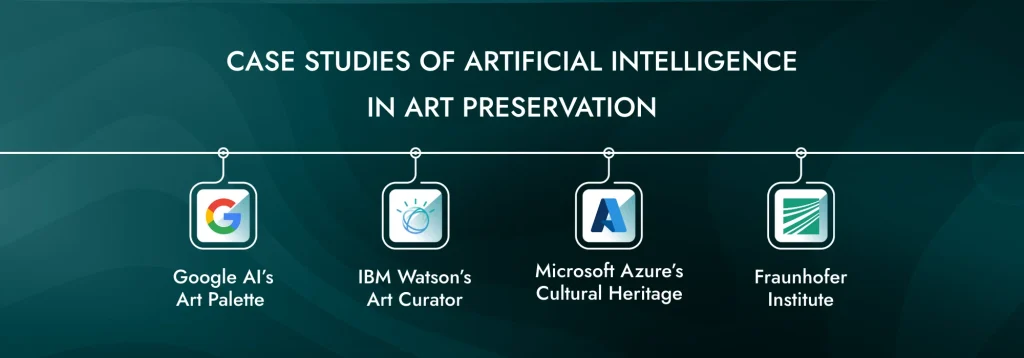
Here are a few examples of artificial intelligence in art preservation:

  • Google AI’s Art Palette project uses AI to identify and analyze the pigments used in paintings. This information can be used to better understand the painting’s history and provenance, as well as to develop more effective conservation treatments.
  • IBM Watson’s Art Curator project uses AI to help museums catalog and manage their collections. AI can be used to automatically identify objects in photographs, transcribe handwritten documents, and generate descriptions of artwork.
  • Microsoft Azure’s Cultural Heritage Imaging project uses AI to digitize and restore historical photographs. AI can be used to remove noise from images, correct color fading, and even fill in missing pixels.
  • Fraunhofer Institute for Secure Information Technology’s AI-powered art restoration system uses AI to restore paintings with greater precision and accuracy than traditional methods. AI can be used to identify and remove damaged areas of a painting, and to reconstruct the original image using data from other similar paintings.

Utilizing AI in art preservation revolutionizes the conservation process, offering advanced tools for digitization, damage detection, and restoration.

To conclude

AI can be used to digitize and document art, detect and assess damage to art, restore and repair art, and create virtual reconstructions of art. In short, it has changed the way we preserve art and cultural treasures. In the future, we can expect to see AI-powered tools that are even more sophisticated and effective at preserving art.

Several organizations are working to develop and implement AI-powered solutions for art preservation. If you are looking for one, ViitorCloud makes the right choice. Experience the transformative power of AI art preservation solutions with us. Connect for a visionary approach to safeguarding art!

Frequently asked questions

AI in art preservation involves digitizing, documenting, detecting, and restoring artworks, ensuring their accessibility, security, and longevity.

AI art restoration aids in identifying, mapping, and guiding inpainting, enhancing precision and reducing the risk of damage to artworks.

Automated art conservation with AI offers early detection of damage, improved decision-making for restoration treatments, and cost reduction in the detection process.

Yes, AI can create virtual reconstructions, increase art accessibility, enhance understanding, and preserve artworks at risk of loss or destruction.

Yes, projects like the “Rembrandt Project” and the Louvre Museum’s restoration of “The Virgin and Child with Saint Anne” showcase the success of AI art restoration and preservation.

How AR can be used for augmented reality engineering solutions

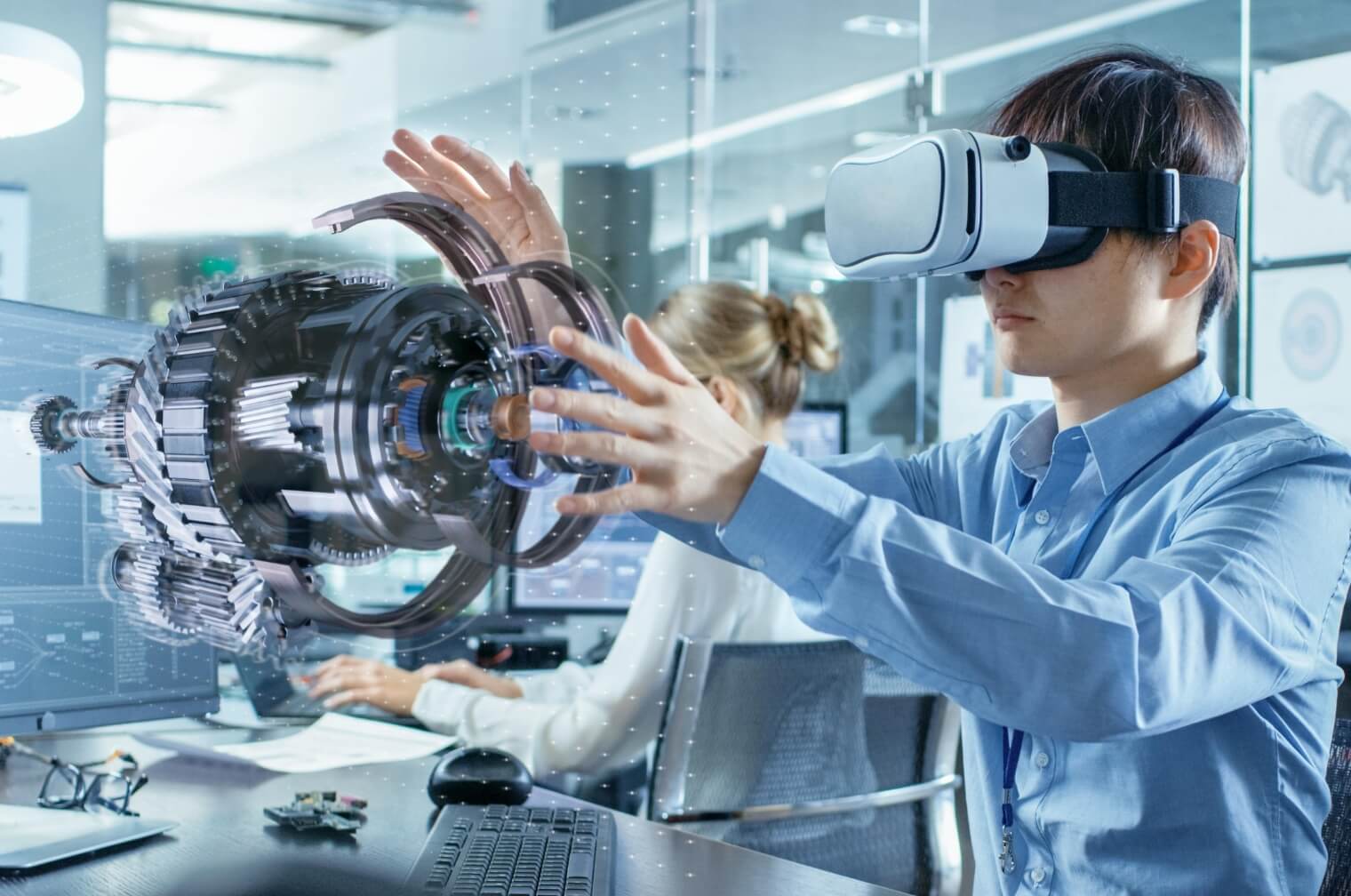
Today, Augmented Reality (AR) has emerged as one of the most significant futuristic technologies used across many industries, including engineering. The integration of augmented reality engineering solutions can unlock a realm of possibilities, fundamentally altering how professionals design, construct, and maintain various structures and systems.

AR overlays digital information onto the real world, enabling engineers to visualize and interact with their designs in a more immersive and intuitive way. This can help to improve the accuracy, efficiency, and safety of engineering projects.

Applications of AR in engineering

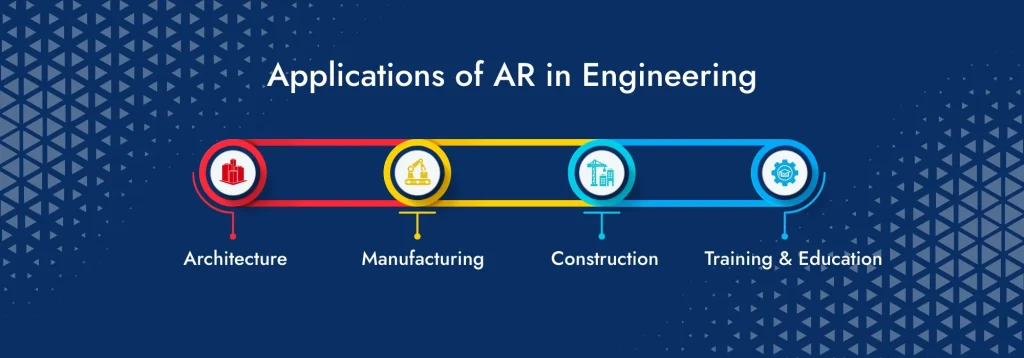
Augmented reality (AR) is being applied in a wide range of engineering fields, including architecture, manufacturing, and construction. By transforming traditional approaches and enhancing various fields, AR has made substantial strides in the engineering sector.

Let’s understand the role of AR in engineering:

Applications of AR in Engineering

Architecture

Augmented reality in engineering is revolutionizing the way blueprints and designs are visualized. Using AR applications, architects can overlay digital models onto physical spaces. This allows them to see how the design will look and feel in the actual space, and to make necessary adjustments before construction begins.

Such a visualization not only aids in improving the design process but also facilitates better communication with clients and stakeholders by providing them with a realistic preview of the final product.

For example, an architect can show a client how their new home will look on their property, or they can collaborate with engineers to ensure that the design is feasible and meets all applicable codes and standards.

Manufacturing

AR is optimizing assembly line processes in manufacturing industries. Through AR-powered engineering solutions, workers receive step-by-step visual guidance overlaid onto the physical work environment.

This guidance significantly reduces errors, enhances productivity, and accelerates the learning curve for new processes or machinery. Workers can access critical information in real-time, ensuring accuracy in complex assembly tasks.

Construction

AR can be used to visualize the layout of construction sites. This can help to improve the efficiency of construction operations and to reduce the risk of errors. By using AR, engineers and workers can detect potential safety risks, such as underground utilities or structural weaknesses, before initiating construction.

This proactive approach not only minimizes risks but also ensures a safer working environment for on-site workers, significantly reducing accidents and project delays. AR can also be used to train workers in new construction techniques.

Training and education

Today, a large number of companies are leveraging AR to enhance training and education for engineers, For instance:

Boeing utilizes AR technology to train aircraft mechanics, offering digital experiences on wiring and repairing airplanes.

Siemens employs AR to train factory workers, guiding them through the assembly of complex machines with step-by-step interactive instructions.

Autodesk incorporates AR to educate students on engineering concepts, such as thermodynamics and fluid mechanics, providing an interactive learning environment.

Big brands led engineering innovation with AR

Let’s explore how leading brands have embraced AR, revolutionizing their engineering processes:

BMW: visualizing prototypes with precision

This popular automobile brand has integrated augmented reality software with its product data management system. This integration allows them to visualize and interact with true-to-scale prototypes, offering an in-depth understanding before finalizing designs for manufacturing.

BASF: leveraging digital twin technology for on-site precision

BASF has adopted augmented reality engineering solutions, through the implementation of digital twins. Engineers at BASF use AR to visualize planned pipelines on-site, ensuring accurate assessments of their intended functionality. AR aids in on-site monitoring, enabling swift identification of any design faults before they escalate into larger problems.

Lockheed Martin: enhancing aircraft assembly with ar integration

This global aerospace and defense company has embraced augmented reality to optimize its aircraft assembly processes. By integrating AR technology into their assembly lines, they can overlay digital schematics and instructions onto physical aircraft components in real time. This innovative approach reduces the likelihood of errors and improves overall efficiency while resulting in substantial cost savings.

Implementing an augmented reality engineering solution

The process of implementing an augmented reality engineering solution typically involves the following steps:

  • Identify the specific engineering needs and goals for the business or project. What are the specific challenges that the business or project is facing? How can AR be used to address these challenges?
  • Choose the right AR platform and hardware. There are a variety of AR platforms and hardware devices available on the market. It is important to choose the right platform and hardware for the specific needs of the business or project.
  • Develop or customize the AR solution. Partner with a reputable AR solutions provider company like ViitorCloud to build a custom AR engineering solution.
  • Deploy and train your workforce on the AR solution. Once the AR solution is developed, the users need to be trained on how to use it.

Starting augmented reality development

If you are considering implementing an augmented reality engineering solution, there are many companies like ViitorCloud that offer AR development services.

In the engineering field, AR is being used to revolutionize design, manufacturing, construction, and training processes. Engineers are increasingly leveraging AR to innovate and enhance their processes, leading to more efficient and effective solutions.

Conclusion

As the tech landscape continues to evolve, the future of engineering through AR presents an unparalleled horizon of possibilities. AR is not just a futuristic concept but a present-day reality shaping how engineers design, build, and innovate. ViitorCloud is at the forefront of this AR-led innovation in the field of engineering.

If you are looking for ways to improve the efficiency, accuracy, and safety of your engineering projects, consider building a custom augmented reality engineering solution that addresses these needs. Choose ViitorCloud as your partner for AR integration in engineering and embrace the future today!

Frequently asked questions

Augmented reality in engineering is revolutionizing designs, simulations, and safety assessments across the industry, transforming the way engineers visualize and interact with complex structures.

Applications of AR in engineering significantly enhance efficiency, accuracy, and safety, propelling the industry toward innovative solutions and streamlined processes.

Augmented reality in engineering optimizes processes by offering step-by-step visual guidance, reducing errors in complex assembly tasks, and improving overall productivity.

Applications or AR in engineering span across diverse sectors, from architecture to manufacturing and construction.

Engineers can get started with augmented reality by using existing AR platforms and hardware, or by developing their own AR applications.

How virtual reality HSC training solution is increasing safety

Health, Safety, and Environment (HSE) training is necessary for protecting the integrity of organizations and the well-being of individuals in the evolving field of workplace safety.

Although these approaches have shown some success, they often struggle to deliver fully immersive and captivating learning environments. However, with the integration of a virtual reality HSE training solution, the landscape of learning experiences is revolutionized.

Digital experience solutions, specifically those powered by virtual reality (VR) technology, are revolutionizing HSE training. VR offers a whole new level of education, transforming how we approach workplace safety. Let’s delve deeper into the importance of immersive HSE training in VR and how it’s reshaping our perspective on safety in the workplace.

Importance of virtual reality for HSE training

Before we explore virtual reality in HSE solution development, let’s first understand why HSE training is important.

Health, safety, and environmental considerations are supreme in any industry.

A workplace that prioritizes these aspects is not only compliant with regulations but also fosters a culture of care and responsibility among its employees.

Here are some key reasons why HSE training is vital:

  • Safety First: The primary goal of Virtual Reality HSE Training Solution is to prevent accidents and injuries. Proper training equips employees with the knowledge and skills to identify and mitigate potential hazards, ensuring a safe working environment.
  • Compliance: Virtual Reality HSE training solution helps in ensuring compliance, which is not only a legal requirement but also essential for reputation management.
  • Risk Reduction: Comprehensive HSE training reduces the risk of accidents, which can result in financial losses, downtime, and damage to a company’s image.
  • Employee Well-being: When employees feel safe at work, their morale and job satisfaction improve. A safe working environment also reduces absenteeism and turnover rates.
  • Compliance with Regulations: Utilizing a Virtual Reality HSE Training Solution helps organizations comply with regulatory requirements by ensuring that employees are adequately trained in handling safety protocols, emergency response procedures, and environmental protection measures.

Limitations of traditional HSE training

Classroom-based HSE solution development with PowerPoint presentations has been the norm for decades.

While these traditional methods cover the required knowledge aspects, they have limitations when it comes to building skills and shaping behaviors.

Passively sitting through lectures and presentations often leads to low engagement and poor retention of information.

Additionally, classroom training lacks realism and makes it difficult for employees to apply learnings to real-life hazardous situations.

Traditional methods are unable to simulate risk scenarios like working from heights, confined spaces, fire hazards, chemical spills, etc.

This leaves employees underprepared to face dangers in the workplace.

Need for immersive VR HSE training

Virtual reality based HSE solution development provides highly realistic, interactive and engaging learning experiences.

VR training simulations expose employees to life-like hazardous scenarios and dynamic risk environments.

This helps imprint safe behaviors and build muscle memory on correct emergency response procedures.

VR technology offers complete flexibility and control over the training environment.

Various high-risk situations like working at heights, electrical accidents, fire hazards, etc. can be accurately simulated without any real danger.

This enables employees to prepare for emergencies and prevent accidents.

Research shows that VR training improves learning outcomes by up to 75% compared to conventional methods.

As employees retain more information, the ROI of VR training investments also becomes significantly higher.

Developing virtual reality HSE training solution

The first step is identifying the specific HSE training needs of employees based on work hazards.

For example, VR fire safety drills will be a priority for manufacturing units. On the other hand, construction companies may need VR training for elevation-related risks.

The training content must accurately replicate real work environments and standard operating procedures.

The VR simulators and scenarios have to provide realistic visuals, auditory and other sensory cues for maximum immersion.

It is crucial to integrate VR training with existing learning management systems (LMS) and e-learning programs.

This enables seamless training delivery and unified reporting. Tracking employee performance data across VR and other mediums provides vital insights.

Leading companies like ViitorCloud are pioneering VR solutions tailored to the HSE needs of different industries.

Our offerings like Immerse Virtual Reality Training provide video game-like immersion combined with real-world hazards for the best learning outcomes.

Success stories of organizations that used VR for HSE training

Ensuring a safe work environment is crucial for any business. This is where virtual reality (VR) comes in as a game-changing technology for HSE solution development.

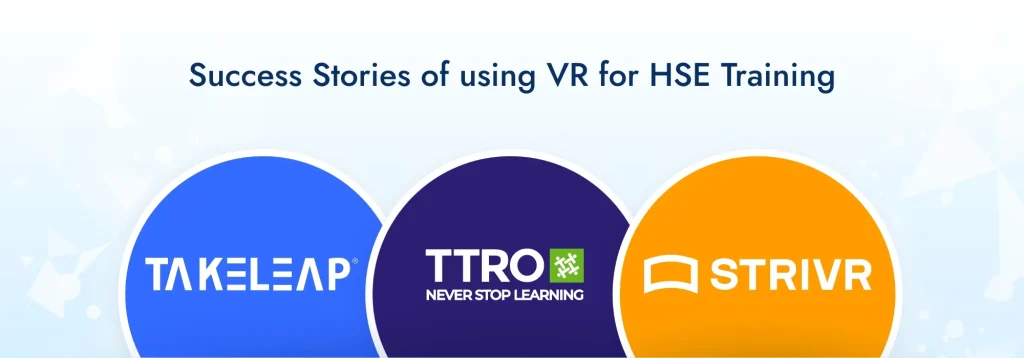
Success Stories of Organizations that Used VR for HSE Training

TakeLeap

TakeLeap is using the Immerse VR training solution to deliver highly engaging fire safety drills across its manufacturing units.

Employees are put through emergency scenarios on the factory floor and taught how to operate fire extinguishers and hoses.

VR training is being credited for a 57% improvement in fire safety compliance.

Ttro

Ttro has deployed VR simulators to train its developers on handling radioactive isotopes and chemical spills in an R&D facility.

Employees appear for VR tests before getting lab access. This has led to 63% fewer accidents due to improved safety behaviors.

Strivr

Strivr has used Virtual Reality HSE Training Solution for construction crews on fall protection, trenching hazards, PPE usage and other critical safety topics.

Their proprietary 360-degree VR video training has reduced incidents by 52% across projects.

Conclusion

Virtual reality has proven to be a disruptive innovation for occupational safety and HSE compliance training.

The immersive simulations and life-like experiences lead to stronger learning outcomes.

Considering the immense benefits, investing in customized Virtual Reality HSE Training Solutions is highly recommended for businesses today.

Frequently asked questions

By using Virtual Reality for HSE Training, trainees can engage in hands-on training, making it more engaging and memorable.

Virtual reality can improve HSE training by allowing trainees to practice dangerous tasks without the risk of physical harm, reducing the likelihood of accidents in real-life situations.

The future trends for virtual reality HSE training solutions include advancements in technology, such as haptic feedback devices and full-body motion tracking, to create more realistic and interactive training experiences.

Virtual Reality HSE Training Solution enhances trainee engagement and retention by providing an immersive and interactive learning experience. VR training can be conducted remotely, allowing trainees to access training modules from anywhere, at any time.

How real estate 3d rendering development is a game changer

The real estate industry is one of the industries which is constantly updating and upgrading. With the use of the latest technologies, this industry is undergoing an intense transformation in its marketing and sales strategies.

Real Estate 3D Rendering development has emerged as a game-changing innovation in the industry.

Let’s further explore everything about Real Estate 3D Rendering development, including its definition, applications, challenges, and area of app development with 3D rendering real estate solutions.

Real estate marketing and sales landscape

More than any other industry, Real Estate relies more on effective marketing and sales techniques.

The success of real estate transactions depends on the ability to capture the imagination of potential buyers and investors.

Traditional methods of showcasing properties, such as photographs and blueprints, often fall short in conveying the full appeal of a space.

Role of technology in transformation:

The real estate industry has embraced technological innovations over the years to improve the marketing and sales processes.

From online listings to virtual tours, technology has played a pivotal role in redefining how properties are presented to clients. 3D rendering for is the next logical step in this evolution.

What is 3d rendering?

3D rendering is a technology that allows for the creation of highly realistic visualizations and representations of physical spaces.

3D rendering for real estate can bring properties to life, providing potential buyers and investors with immersive experiences.

The future of real estate rendering is taking shape, and it promises to revolutionize the industry.

3D solutions for real estate refer to the process of generating three-dimensional visualizations of properties, both interior and exterior.

These visualizations are highly detailed and photorealistic, offering a comprehensive view of what a property looks like.

How does 3d rendering work?

The process involves creating a digital model of the property and applying textures, lighting, and other elements to make it look as realistic as possible.

The result is a virtual representation that can be explored from different angles, much like a real property.

A comparison with traditional methods

When compared to traditional real estate marketing methods, 3D rendering real estate solution stands out.

While photographs and 2D-floor plans offer limited perspectives, 3D rendering allows potential buyers to virtually walk through a property and visualize it as their own.

By creating engaging and informative digital experiences, businesses can significantly enhance decision-making and shorten the sales cycle.

Applications of 3d rendering in real estate

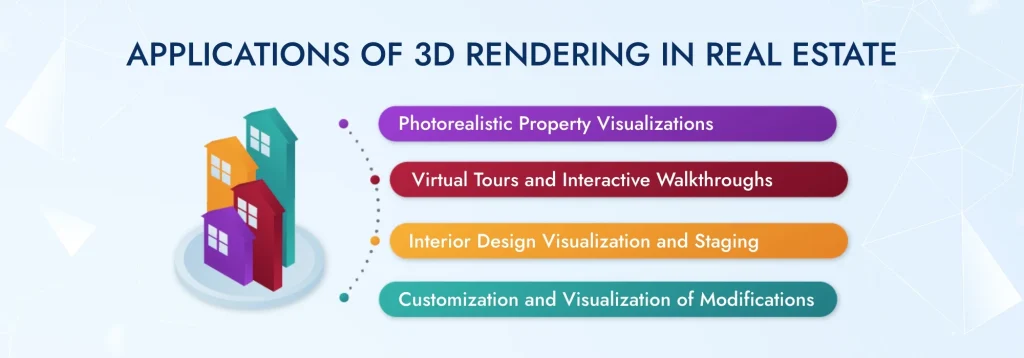
Real estate 3D rendering development offers a wide range of applications that enhance design, marketing, decision-making, and customer engagement. Some of these applications are:

Applications of 3D Rendering in Real Estate

Photorealistic property visualizations

Real estate 3D rendering development is instrumental in creating visually striking marketing materials. From brochures to online listings, photorealistic renderings make properties appear as captivating as they are in reality.

Virtual tours and interactive walkthroughs

3D rendering real estate solution enables the creation of virtual tours, allowing clients to explore properties from the comfort of their homes. Interactive walkthroughs provide a sense of spatial awareness that traditional photographs cannot.

Interior design visualization and staging

For vacant or unfinished properties, 3D rendering real estate solutions can be used to stage and decorate spaces, helping buyers envision the potential of the property.

Customization and visualization of modifications

Prospective buyers can request specific modifications to a property and 3D rendering real estate app development can illustrate these changes before construction, allowing for customization and reducing misunderstandings.

Its ability to provide immersive and detailed visualizations has transformed the way real estate professionals operate, ultimately benefiting both property developers and prospective buyers or renters.

Challenges and limitations of real estate 3d rendering development

Challenges and Limitations in 3D Rendering for Real Estate Marketing and Sales.

While 3D rendering real estate app development is undoubtedly a game-changing tool for real estate marketing and sales, it comes with its fair share of challenges and limitations. Here’s a brief overview:

  1. Costs: Creating high-quality 3D renderings can be expensive. It requires skilled professionals, powerful hardware, and software licenses, which may not be feasible for all real estate businesses.
  2. Time-Consuming: Producing detailed 3D rendering real estate app development can be time-consuming. This can lead to delays in marketing campaigns and potentially longer listing times.
  3. Complexity: 3D rendering is a specialized skill. Finding or training professionals to create these renderings can be challenging, particularly for smaller real estate agencies.
  4. User Experience: While interactive 3D tours are captivating, not all potential buyers or investors may have the necessary devices or internet connections to experience them fully.
  5. Data Privacy and Security: Handling sensitive property data in the digital realm raise concerns about data security and privacy, necessitating robust measures to protect information.

Understanding and addressing these challenges is essential for real estate professionals looking to fully harness the potential of 3D rendering in their marketing and sales strategies.

Real estate 3d rendering development

As the demand for 3D rendering in real estate grows, so does the need for specialized apps. These apps can streamline the process of creating, sharing, and viewing 3D renderings.

The development process involves designing user-friendly interfaces, integrating rendering engines, and ensuring compatibility across various devices.

Enhanced visualization

3D rendering development allows potential buyers or investors to visualize the property’s layout, design, and features in detail before construction or renovation.

This can help them make informed decisions about the property and increase their confidence in the project.

Realistic lighting and textures

3D rendering development allows for realistic lighting and textures to be applied to the property.

This provides a more realistic representation of the property’s appearance and helps clients visualize the space better.

The cost of development

The cost of developing a real estate 3D rendering development can vary significantly based on the features, complexity, and platform chosen.

It’s important to consider these factors when budgeting for app development.

Conclusion

Real estate 3D rendering is a transformative tool that has the potential to redefine how properties are marketed and sold.

ViitorCloud Technologies has been delivering cutting-edge solutions across various industries for years and it extends to the Real Estate industry as well.

We have expertise in creating immersive and visually stunning applications and websites for Real Estate 3D Rendering Development that provide the specific requirements with the most seamless and engaging experience.

Don’t miss the opportunity to leverage the power of 3D rendering in your real estate business and stay ahead of the game.

Frequently asked questions

3D rendering is the process of creating two-dimensional images or animations from 3D models. It works by simulating the interaction of light with objects, textures, and camera angles to produce realistic visual representations.

The cost of 3D rendering for real estate can vary widely depending on factors like complexity, quality, and the service provider. Basic renders may start at a few hundred dollars, while high-end, photorealistic renders can cost several thousand.

To find a good 3D rendering solution for real estate, research reputable rendering companies, check their portfolios, read client reviews, and request quotes to compare pricing and quality before making a decision.

How VR construction safety solutions transform safety?

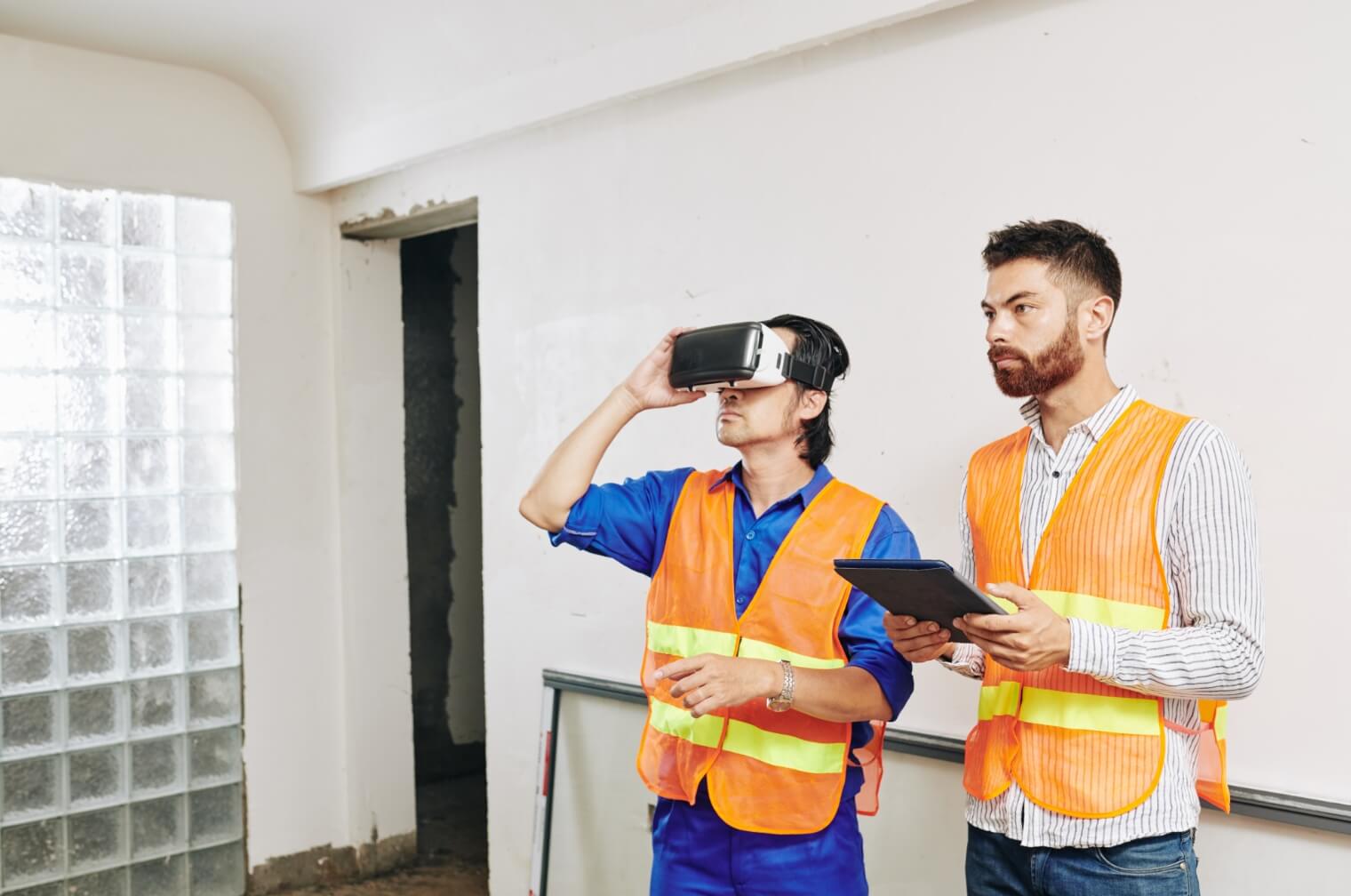
Construction Safety VR Solutions are rapidly transforming the way workers are trained to navigate the perilous world of construction sites.

VR, which stands for Virtual Reality, is a technology that creates an artificial, immersive environment for training purposes.

VR immerses trainees in realistic construction environments, allowing them to learn and practice safety protocols without real-world risks.

By providing a safe and controlled learning environment, VR construction safety solution training addresses the unique challenges of the industry.

Evaluation of VR construction safety solution training programs

Evaluating the effectiveness of Virtual Reality VR safety training Solution programs is a crucial step to ensure that your investment in this innovative technology is delivering the desired results.

Measuring learning outcomes and knowledge retention

Evaluate trainee knowledge by assessing how effectively they apply safety measures in real-world scenarios with VR construction safety solution.

Assessing behavioral change and performance improvement

Look for improved safety behaviors and performance on construction sites, as this indicates the effectiveness of VR construction safety solution.

Analyzing cost savings and efficiency gains

Analyze cost savings related to reduced injuries, accidents, and training expenses, while also measuring efficiency gains.

Reviewing user feedback and satisfaction ratings

User feedback is invaluable. Collect ratings, comments, and suggestions to continually improve VR training programs.

Realism and accuracy

Evaluate the realism and accuracy of the VR simulations in representing construction site scenarios. Assess if the virtual environment accurately reflects potential hazards, site conditions, and safety procedures.

How to use VR for construction safety training

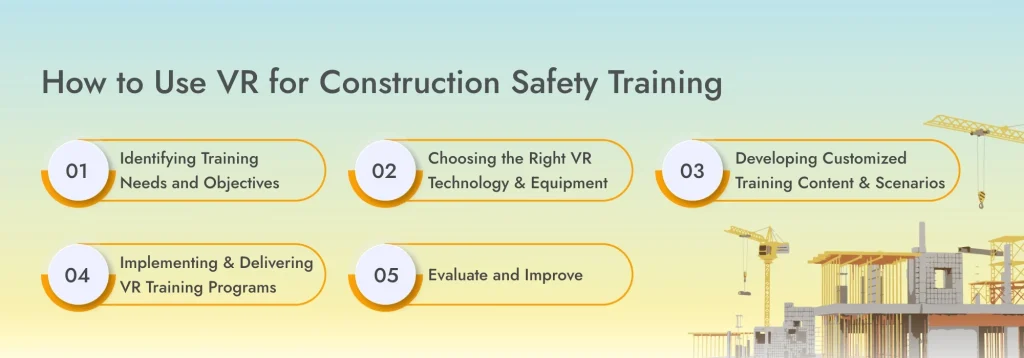
Virtual Reality (VR) has emerged as a game-changing technology for enhancing construction safety training. Here’s a step-by-step guide for Effective VR Training Techniques:

How to Use VR for Construction Safety Training

Identifying training needs and objectives

Before implementing VR training, it’s essential to identify the specific safety training needs and objectives for your construction workforce.

Choosing the right VR technology and equipment

Selecting the appropriate equipment for VR construction safety solution is crucial. Factors like cost, compatibility, and durability should be considered to ensure a seamless training experience.

Developing customized training content and scenarios

Tailoring training content to your construction projects and hazards ensures that trainees receive relevant, scenario-specific training.

Implementing and delivering VR training programs

The successful implementation of VR training involves onboarding, technical support, and training management. A clear delivery plan is crucial for trainees to access the content easily.

Evaluate and improve

Evaluate the effectiveness of the VR training program through ongoing assessment, feedback, and continuous improvement. Use evaluation results to refine the VR content, adjust training objectives, and enhance the overall training program.

Benefits of VR in construction safety training

Ensuring that construction workers are well-trained to handle the difficulties they face on the job site is important. The benefits of VR in construction are listed below.

Enhanced learning and retention

The immersive nature of VR makes training more engaging, resulting in better knowledge retention.

Digital experience services, like VR construction development, allow trainees to experience the consequences of their actions in a safe, virtual environment. This immersive training reinforces the importance of safety procedures in a way that traditional methods cannot.

Realistic and immersive training scenarios

Construction Safety VR Solutions recreates real construction environments, enabling trainees to experience realistic scenarios.

This enhances their preparedness for on-site situations and helps them develop effective safety habits.

Safe and controlled environment for practice

VR allows trainees to make mistakes and learn from them without jeopardizing their safety.

This controlled environment is ideal for mastering complex safety procedures and equipment operation.

Reduced costs and increased efficiency

Traditional safety training often involves expenses like travel, equipment setup, and physical materials.

VR construction development eliminates these costs and increases training efficiency, as it can be accessed from anywhere with compatible equipment.

Customizable training

VR allows for customizable training scenarios based on the specific needs of the trainees.

They can experience different scenarios, hazards, and procedures, allowing them to practice and master skills in a variety of situations.

Developing effective VR construction safety training programs

VR technology is offering a revolutionary approach to safety training. It provides an immersive and interactive learning experience, imitates real hazards, and offers cost-effective and customizable solutions.

With VR construction safety training programs, companies can better protect their workers, reduce incidents, and create a safer working environment.

As technology continues to advance, the construction industry must embrace these innovations to ensure the well-being of its workforce.

ViitorCloud Technologies has expertise in software development and VR application design has allowed our VR Developers to create highly realistic and effective safety training programs for the construction industry.

Conclusion

VR construction safety solution offers a groundbreaking solution to the safety challenges faced by the construction industry.

Implementing VR construction safety solutions will not only improve your workforce’s safety but also your bottom line.

By investing in Construction Safety VR Solutions, we invest in the lives and well-being of our construction workforce, making the future of construction brighter, safer, and more sustainable.

Frequently asked questions

VR can be used to improve construction safety in several ways, including Training workers on safety procedures, Identifying and mitigating hazards, and Improving communication and collaboration.

The cost of VR training for construction can vary depending on a number of factors, including the size and complexity of the training program, the type of VR equipment used, and the experience of the VR training provider.

Some of the best VR training providers for construction include STRIVR, Stantec, VR Training Alliance, HTC VIVE Enterprise, and 360Training.

Some of the benefits of using VR for construction designs are Visualizing designs in 3D, collaborating with stakeholders, Improved communication, and identifying and assessing potential problems.

How augmented reality travel solutions are changing the tourism industry?

The tourism industry is one of the largest and most dynamic economic sectors in the world. Technology has always played an important role in the industry, helping to make travel more convenient, affordable, and accessible. One of the most promising new technologies for travel is augmented reality travel solutions.

Augmented reality for tourists is revolutionizing the way travelers explore new destinations, offering immersive and interactive experiences that go beyond traditional guidebooks. In this blog, we will delve into the world of innovative AR travel solutions, uncovering the endless possibilities they offer to both travelers and businesses.

What is augmented reality (AR) in travel?

Augmented reality in travel industry refers to the integration of digital information into the real-world travel experience. Through the use of AR-enabled devices such as smartphones or smart glasses, travelers can overlay virtual elements onto their physical surroundings, creating an enhanced and immersive travel experience.

Whether it’s exploring historical landmarks, discovering hidden gems, or accessing real-time information, augmented reality travel app development helps elevate the way we interact with destinations.

How AR works in travel applications

AR in travel applications utilizes the capabilities of smartphones, tablets, smart glasses, or headsets to deliver AR experiences. These devices are equipped with cameras, sensors, and GPS, enabling them to detect the user’s location and orientation in real-time.

Here’s how augmented reality travel apps are used:

  • Real-time Object Recognition: By analyzing the visual data from the device’s camera, AR technology can identify specific objects and trigger virtual content associated with them.
  • Digital Overlays: Once the real-world object is recognized, AR overlays digital information onto the user’s view.
  • Interactive Elements: AR allows users to interact with the virtual elements overlaid on their physical environment.
  • Real-time Data Integration: AR can integrate real-time data into the user’s view, enriching their travel experience.

Travel businesses can unlock a new dimension of exploration with augmented reality travel solutions, providing real-time information and interactive experiences at their fingertips. 

Applications of augmented reality for travel industry

Technology’s constant evolution is reshaping how we experience the world. In the travel industry, augmented reality (AR) is a game-changer, crafting innovative digital experiences that elevate your journeys.

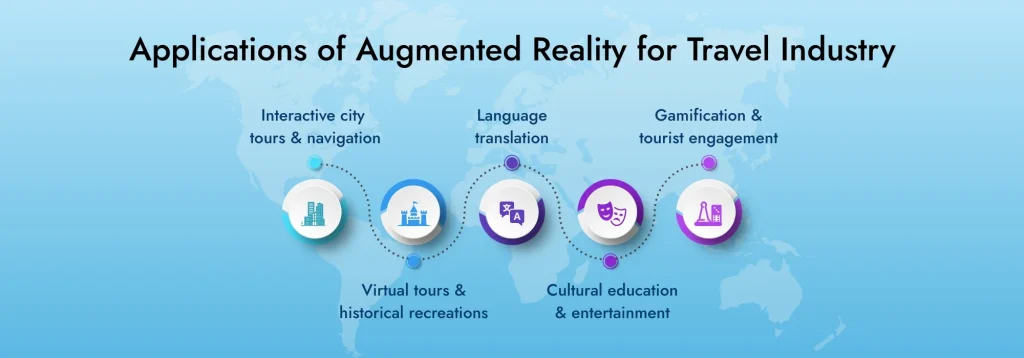
Applications of Augmented Reality for Travel Industry

Here are some of the key applications of AR in travel:

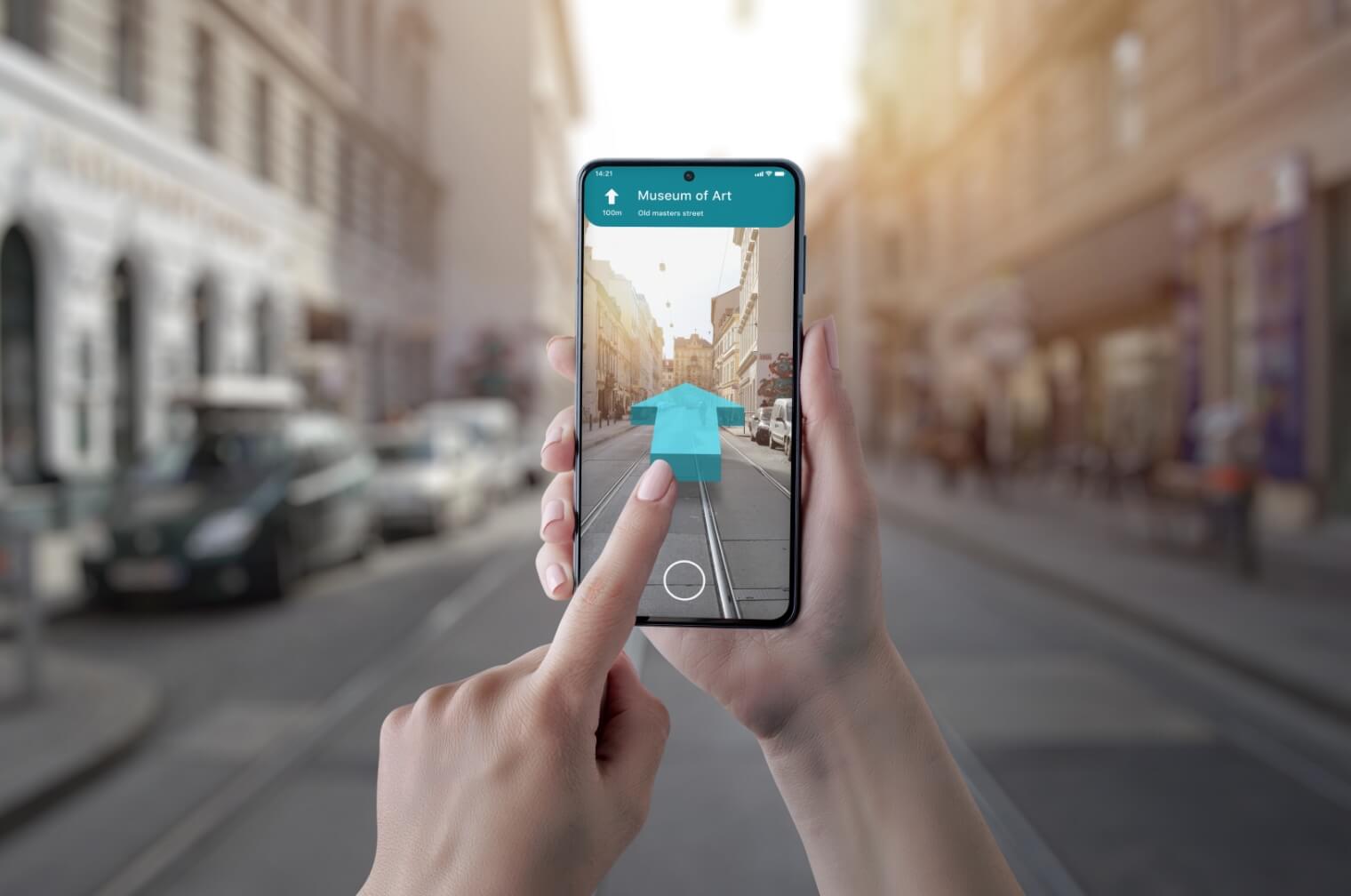
  1. Interactive city tours and navigation: AR apps can be used to help travelers to navigate unfamiliar cities and find their way around.
  2. Virtual tours and historical recreations: It can be used to transport travelers back in time or to visit places that are inaccessible or no longer exist.
  3. Language translation: It can be used to translate text and spoken language in real time, helping travelers to communicate with locals and overcome language barriers.
  4. Cultural education and entertainment: It can be used to create engaging and interactive educational experiences that teach travelers about different cultures and histories.
  5. Gamification and tourist engagement: It can be used to create fun and interactive games and experiences that can engage travelers and make exploring new places more enjoyable.

These augmented reality tourism trends redefine the way we explore, making travel an immersive and revolutionary experience.

Challenges and limitations of AR navigation in travel

Here is a table that discusses the challenges and limitations of augmented reality navigation in travel, as well as how businesses can overcome these challenges:

ChallengeLimitationHow to Overcome
Hardware LimitationsAugmented reality heavily relies on hardware such as AR glasses or smartphones with advanced capabilities, limiting accessibility for some travelers.Develop applications that are compatible with a wide range of devices, optimizing performance for various specifications to reach a larger user base.
Accuracy and ReliabilityAR navigation accuracy can be affected by factors like GPS signal accuracy, environmental interference, and technical limitations, leading to potential misguidance.Employ multiple sensors and technologies for better location accuracy. Integrate machine learning to improve location and direction accuracy over time.
Data Privacy and SecurityAR apps collecting location data raise concerns about user privacy and potential security vulnerabilities, impacting user trust and confidence.Allow users to control data sharing and offer clear opt-in/opt-out choices regarding location sharing.
User Experience ComplexityComplex user interfaces and overwhelming AR features can confuse or overwhelm users, hindering the adoption and ease of use for some travelers.Simplify user interfaces for intuitive navigation. Offer tutorials or onboarding sequences to guide users.  Implement user feedback mechanisms to refine and improve the app over time.

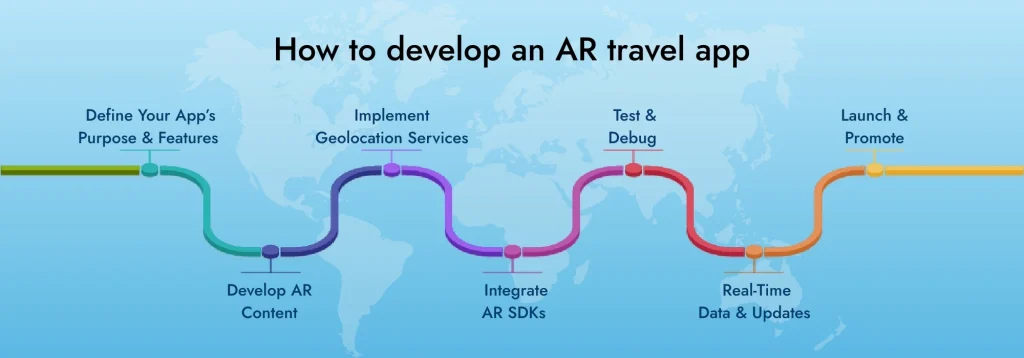
How to develop an AR travel app

AR travel apps are reshaping the way people navigate the world, offering immersive and personalized experiences. If you’re intrigued by the idea of creating your own augmented reality travel app, here is a step-by-step guide for you:

How to Develop an AR Travel App

Define your app’s purpose and features

Begin by identifying the primary goal of your augmented reality travel app. What unique value will it bring to users? Clearly defining your app’s purpose is the first and crucial step.

Develop AR content

This step involves creating the AR content that will be superimposed onto the real world. It may include 3D models, geolocation data, historical information, or any content relevant to your app’s purpose.

Implement geolocation services

For location-based AR features, you’ll need to integrate geolocation services. This allows your app to recognize the user’s position and provide context-aware information.

Integrate augmented reality SDKs

Incorporate the chosen AR development tools and SDKs into your app’s architecture. This will enable your app to recognize real-world objects and augment them with digital information.

Test and debug

Thoroughly test your app on various devices to ensure its functionality, stability, and performance. Address any bugs, glitches, or compatibility issues that arise during testing.

Real-time data and updates

Keep your app current by providing real-time data, updates on attractions, events, and travel-related information. Ensure that your content remains fresh and relevant.

Launch and promote

Once your augmented reality travel app is fully developed and thoroughly tested, launch it on the app stores. Promote it across marketing channels.

Are you ready to experience the future of travel with our cutting-edge augmented reality travel solution, seamlessly guiding you through unfamiliar destinations? At ViitorCloud, we specialize in creating immersive augmented reality solutions. Our expert team can help turn your vision of an AR travel app into reality.

Real-world examples of augmented reality travel solutions

Augmented reality travel solutions elevate your travel experience, by turning every step into a captivating story through interactive digital overlays. Here are some examples of travel businesses that have successfully implemented augmented reality navigation solutions:

  1. GuideAR is an app that provides users with real-time directions, turn-by-turn navigation, and information about nearby points of interest.
  2. Timelooper app allows users to explore the history of famous landmarks and locations, while the app AR Walking Tours provides virtual tours of popular tourist destinations.
  3. The app AR Museums allows users to scan artifacts and paintings to learn more about them, while the app AR Interactive History provides augmented reality experiences at historical sites.

To wrap up

Augmented reality navigation is revolutionizing the travel industry, offering innovative solutions that enrich the travel experience. Collaborating with AR app development experts like ViitorCloud opens the door to unlocking the full potential of this innovative technology for the travel industry.

From immersive virtual tours and seamless navigation to cultural insights, the potential for augmented reality in travel is vast. As this technology continues to shape the future of exploration, it’s imperative for travel businesses to harness these advancements. Partner with us and revolutionize your itinerary planning with our augmented reality travel solution, offering detailed insights and engaging visual aids for a memorable trip.

Frequently asked questions

It is the integration of digital information and virtual elements into the real-world travel experience, enhancing exploration and providing interactive and immersive content.

It utilizes cameras, sensors, and GPS on AR-enabled devices to overlay digital directions and points of interest onto the user’s real-time view, guiding them through their surroundings.

They include advanced AR wearables, seamless integration with voice assistants, personalized recommendations, and AI-driven content generation.

By offering virtual tours, 360-degree experiences, and real-time information about attractions, accommodations, and transportation, helping travelers make informed decisions and visualize their itinerary.

How VR solutions for supply chain are changing the industry?

In today’s fast-paced and highly competitive business environment, optimizing logistics and supply chain operations is more critical than ever.

Explore the VR solutions for supply chain, examining its definition, benefits, applications, challenges, and real-world case studies.

Virtual Reality Logistics, often referred to as VR Logistics or VR in logistics, is the application of virtual reality technology to streamline and enhance various aspects of supply chain management.

VR solutions for supply chain involve the use of VR headsets and software to create immersive, three-dimensional simulations that mimic real-world logistics scenarios.

What is a virtual reality logistics solution?

A Virtual Reality Logistics development is a comprehensive system that combines VR technology with supply chain management.

It offers a virtual environment that allows users to visualize, interact with, and analyze various logistics processes and scenarios.

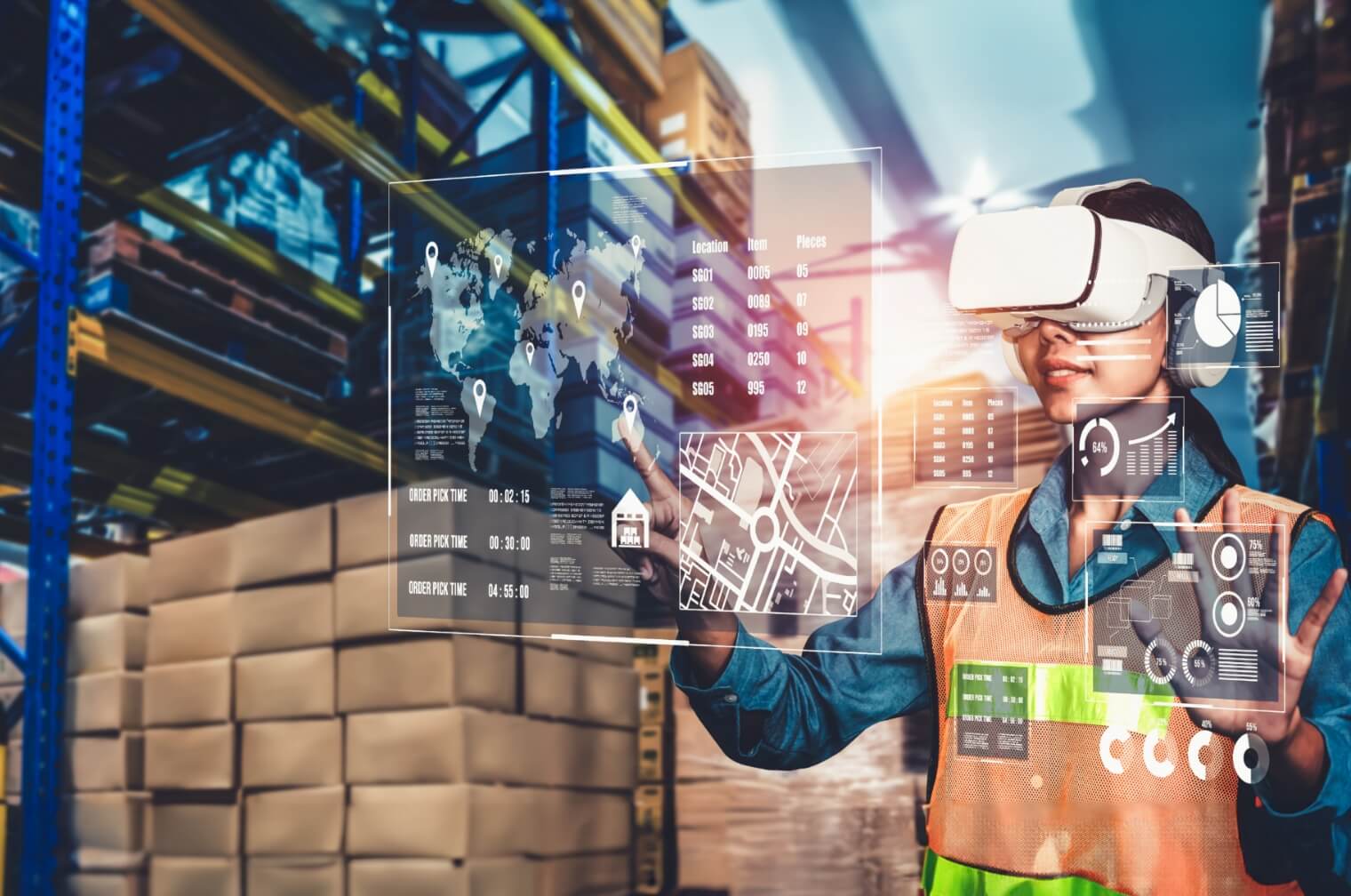
Virtual reality logistics solutions use VR headsets and software to create immersive environments that replicate real-world logistics operations.

Users can navigate these virtual spaces, monitor processes, and make informed decisions in real-time.

How VR can optimize logistics and supply chain operations

VR helps businesses optimize logistics and supply chain operations by providing real-time data, creating a collaborative environment, and enabling more accurate planning.

VR solutions for supply chain enhance visibility, reduce errors, and ensure smoother operations throughout the supply chain.

Comparison Between Virtual Reality Logistics Solutions and Traditional Logistics Solutions

VR logistics solutions revolutionize traditional approaches by providing a richer digital experience. Users can navigate virtual warehouses, visualize data in real time, and gain a deeper understanding of their supply chains.

They provide a real-time, 360-degree view of operations, enabling better decision-making and optimization.

Traditional solutions, on the other hand, often rely on static reports and historical data.

Benefits of virtual reality logistics solution

VR solutions for supply chain offer a multitude of benefits that can positively impact various aspects of logistics and supply chain operations.

Improved efficiency in logistics and supply chain operations

One of the primary benefits of Virtual Reality logistics solutions is improved efficiency.

Businesses can monitor and optimize their logistics processes, reducing delays, and ensuring products reach their destinations more quickly.

Enhanced safety in warehouse and transportation management

VR solutions for supply chains can be used to train employees in safe and efficient logistics operations, reducing the risk of accidents and injuries.

It also allows for the simulation of hazardous scenarios without real-world consequences.

Reduced costs in logistics and supply chain operations

By identifying and addressing inefficiencies, Virtual Reality logistics solutions can lead to significant cost reductions in transportation, warehousing, and inventory management.

Better customer experience through improved delivery times

Faster and more accurate deliveries result in improved customer satisfaction, which can lead to increased customer loyalty and positive reviews.

Challenges and limitations of VR solutions for supply chain

While Virtual Reality logistics development offers numerous benefits, they are not without challenges. Some of the key limitations and obstacles include:

  • High Initial Costs: Implementing VR technology can be expensive, including the purchase of VR headsets and software.
  • Complex Integration: Integrating VR logistics solutions into existing systems can be complex and may require specialized IT expertise.
  • User Training: Employees may need training to use VR technology effectively.
  • Data Security: Protecting sensitive supply chain data in a virtual environment is crucial.

Overcoming these challenges involves careful planning, cost-benefit analysis, and the selection of the right technology partners. With proper training and data security measures in place, many businesses successfully implement VR logistics solutions.

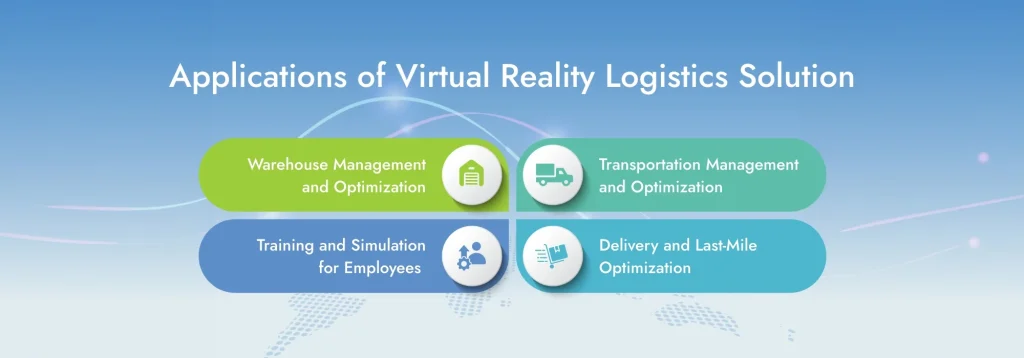
Applications of virtual reality logistics solution

VR solutions for supply chain leverage the immersive and interactive nature to optimize various aspects of the supply chain.

Applications of Virtual Reality Logistics Solution

Warehouse management and optimization

VR logistics solutions can be used to optimize warehouse layouts, track inventory, and improve the efficiency of storage and retrieval processes.

Transportation management and optimization

In transportation, VR can assist in route planning, vehicle tracking, and load optimization, ultimately reducing costs and improving delivery times.

Training and simulation for employees

Virtual reality is a valuable tool for employee training, particularly in safety procedures, equipment operation, and emergency response.

Delivery and last-mile optimization

For last-mile delivery challenges, Virtual reality in logistics can assist in route planning and navigation, ensuring that packages reach their final destinations more efficiently.

Case studies of VR logistics solutions

Examples of Businesses that Have Successfully Implemented Virtual Reality Logistics Development:

  1. Walmart: Walmart employs VR simulations to train its employees in various logistics scenarios, resulting in safer and more efficient operations.
  2. DHL: DHL uses VR to optimize route planning for its delivery trucks, reducing fuel consumption and emissions.
  3. Amazon: Amazon is using VR to simulate the loading and unloading of trucks in its warehouses. This VR simulation helps Amazon to identify and eliminate potential bottlenecks in its order fulfillment process.

These businesses have reported improved efficiency, enhanced safety, cost reductions, and increased customer satisfaction as direct results of implementing VR solutions for supply chain.

Conclusion

Virtual Reality Logistics Solutions have emerged as a powerful tool for optimizing logistics and supply chain operations.

They offer numerous benefits, including enhanced efficiency, safety improvements, cost reductions, and better customer experiences.

By harnessing the power of VR solutions for supply chain, businesses can streamline operations, reduce costs, enhance safety, and improve customer satisfaction.

The world of logistics is evolving, and virtual reality is leading the way. Develop your projects with such immersive technologies.

Frequently asked questions

VR can be utilized for virtual warehouse design and layout planning, allowing companies to optimize space and improve efficiency.

Virtual reality in logistics can streamline training processes, instead of investing in physical training facilities and equipment to save costs.

VR has the potential to greatly improve safety in logistics. By creating virtual environments, workers can undergo safety training in realistic scenarios without being exposed to actual risks.

Virtual reality in logistics enables teams located in different geographical locations to virtually meet and collaborate in real-time, eliminating the need for travel expenses.

How VR safety training can improve the oil and gas industry

In the dynamic and high-risk world of the oil and gas industry, safety is paramount. Workers often face perilous situations, complex machinery, and challenging environments that require rigorous training and preparedness.

Ensuring the well-being of employees is a top priority, and this is where VR Safety Training solution comes into play.

Let’s explore the various facets of VR safety training solutions for the oil and gas sector, its benefits, applications, challenges, and how to develop and implement VR Safety Training app development.

Overview of the oil and gas industry and its safety challenges

Virtual Reality, or VR, is an immersive technology that transports users to computer-generated environments, providing a realistic and interactive experience solution.

It has gained prominence in numerous industries, including healthcare, education, and entertainment.

From drilling rigs to refineries, employees are exposed to potential risks like fires, explosions, toxic gases, and heavy machinery accidents.

However, VR Training for Safety has proven to be a game-changer in the oil and gas sector, where its applications for safety training are transforming the way workers prepare for the challenges they may encounter.

VR Safety Training app development is non-negotiable due to the potential for catastrophic incidents.

Importance of VR in oil and gas safety training

VR technology is addressing the unique safety training needs of the oil and gas industry.

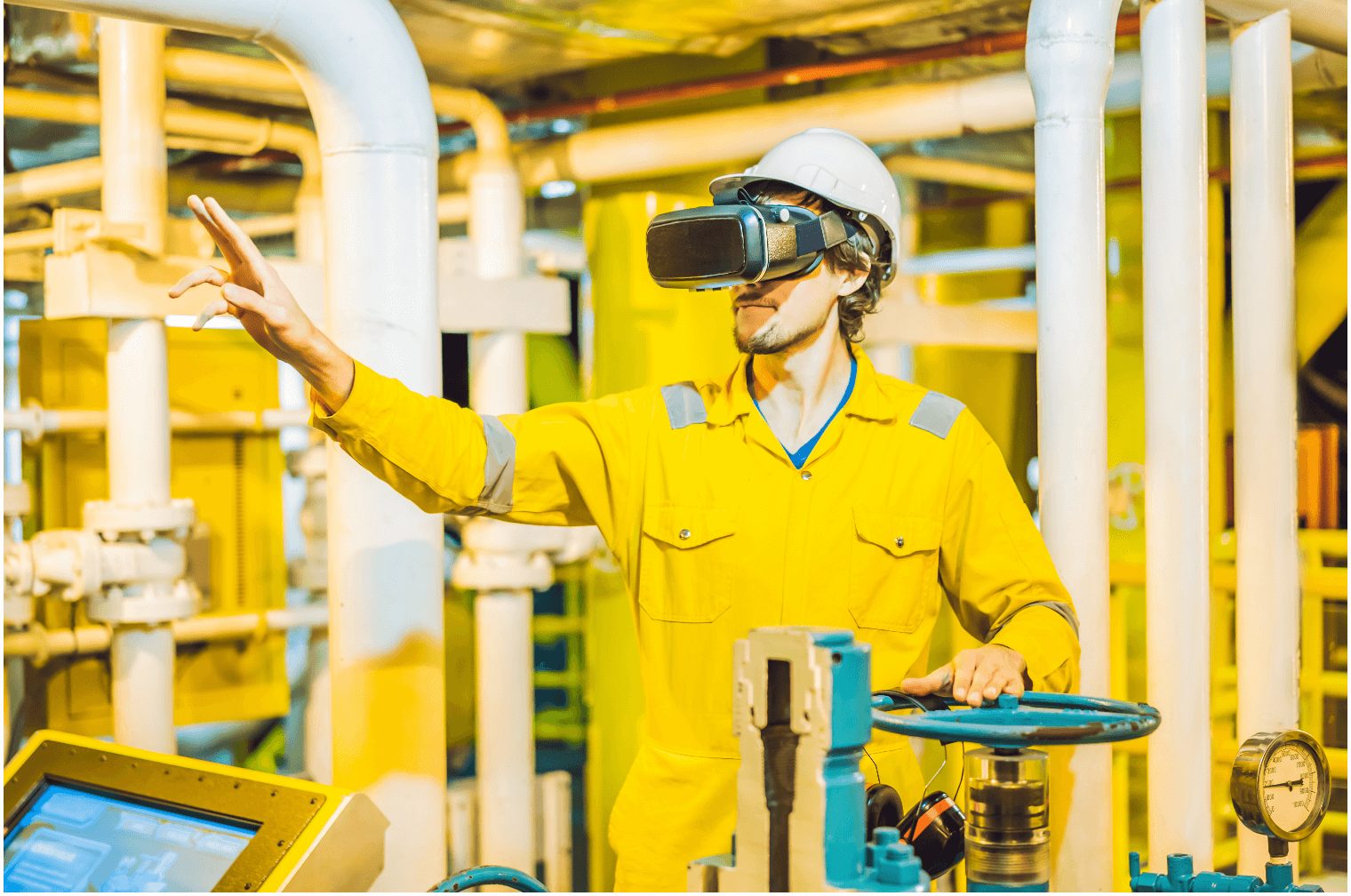
It offers a practical solution to immerse workers in realistic simulations, enabling them to practice and refine their skills without real-world risks.

The importance of VR in this context cannot be overstated, as it enhances safety measures, minimizes accidents, and ultimately saves lives.

Challenges and solutions of VR in oil and gas safety training

Challenges and LimitationsSolutions
Adoption and Implementation BarriersEnhanced Learning and Retention
Technical Challenges and Integration IssuesRealistic and Immersive Training Scenarios
Regulatory Compliance and CertificationSafe and Controlled Environment for Practice
Limited Access to Technology and ResourcesReduced Costs and Increased Efficiency

Real-life example:

There are numerous examples of companies using VR for safety training in the oil and gas industry.

Companies like Shell and BP have implemented VR safety training solution programs, reporting substantial benefits in terms of improved safety records, reduced accidents, and cost savings.

User feedback and satisfaction ratings in these programs have been overwhelmingly positive.

Applications of VR in oil and gas safety training

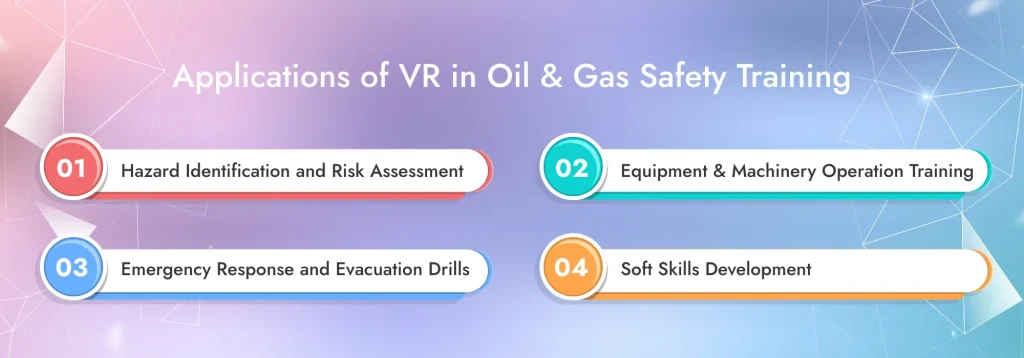
As we move forward, it is clear that VR has a pivotal role to play in the well-being of the industry and its workers. Some examples of application of VR in Oil and gas safety training are:

Applications of VR in Oil & Gas Safety Training

Hazard identification and risk assessment

VR training for safety enables employees to identify potential hazards and assess risks in a lifelike environment. This empowers them to proactively mitigate dangers, enhancing overall safety.

Equipment and machinery operation training

Operating heavy machinery and equipment in the oil and gas industry demands precision and skill.

VR simulations allow workers to familiarize themselves with machinery operations without the inherent risks of hands-on training.

Emergency response and evacuation drills

Oil and gas facilities must be prepared for emergency situations.

VR allows for realistic emergency drills, helping employees practice response procedures, evacuation routes, and crisis management.

Soft skills development (communication, leadership, etc.)

In addition to technical skills, soft skills are vital for safety in the industry.

VR can simulate challenging communication and leadership scenarios, helping employees develop the necessary interpersonal skills to manage critical situations effectively.

How to develop and implement a VR safety training solution program

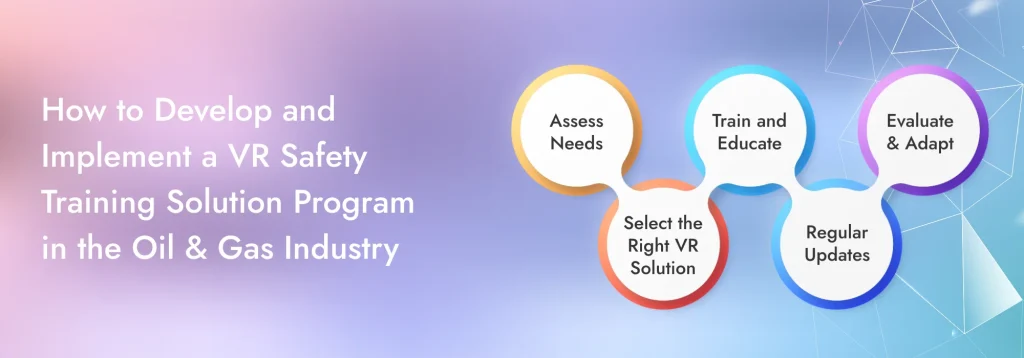
To develop and implement a VR safety training solution program in the oil and gas sector, companies should consider the following steps:

How to Develop and Implement a VR Safety Training Solution Program in Oil & Gas Industry
  • Assess Needs: Identify specific safety training requirements and areas where VR can make the most impact.
  • Select the Right VR Solution: Choose or develop VR training programs that cater to your industry’s specific needs.
  • Train and Educate: Provide comprehensive training for employees, ensuring they are comfortable using VR technology.
  • Regular Updates: Keep VR simulations and training materials up to date to reflect industry changes and emerging risks.
  • Evaluate and Adapt: Continuously assess the effectiveness of VR training, gather feedback, and make necessary adjustments for improvement.

Conclusion

VR is revolutionizing safety training in the oil and gas industry. The benefits are clear, from enhanced learning and risk reduction to improved efficiency and cost savings.

While there are challenges to overcome, the future of VR Safety Training app development in oil and gas safety training is promising.

VR Safety Training Solutions, VR for Safe Work Environments, and VR for oil and gas safety training are no longer just catchphrases; they are vital tools for enhancing safety and protecting lives in this high-risk industry.

Embracing this technology is not just a choice; it’s a responsibility.

Frequently asked questions

VR enhances oil and gas safety by offering immersive, risk-free training scenarios that prepare workers for real-world challenges.

VR can prevent falls in oil and gas by simulating working at heights and helping workers practice safety measures in a safe, virtual environment.

Leading VR safety training solution providers for oil and gas include Honeywell, EON Reality, and Strivr for their tailored safety programs.

Virtual reality is used in safety training by creating lifelike simulations for hazard identification, equipment operation, and emergency response.

How extended reality manufacturing solutions changing the industry?

In the ever-evolving landscape of manufacturing, staying ahead of the competition and optimizing processes is vital.

Extended Reality (XR), a revolutionary technology, is paving the way for a transformative shift in the manufacturing industry.

This comprehensive guide is tailored for manufacturing professionals, including engineers, designers, production managers, and C-suite executives.

We will explore Extended Reality Manufacturing Solutions in the industry, along with applications, benefits, development, real-world examples, and best practices for successful implementation.

What is extended reality (XR)?

Extended Reality, commonly referred to as XR, is a broad term that includes various immersive technologies designed to merge the real world with the virtual one.

XR includes Augmented Reality (AR), Virtual Reality (VR), and Mixed Reality (MR).

These digital experience solutions offer distinctive interactions merging physical settings with digital components, presenting users with fresh perspectives and engagement opportunities in their environment.

Augmented reality (AR)

AR enhances the real-world environment by overlaying digital information. For instance, AR can project assembly instructions onto a physical product, aiding workers in the manufacturing process.

Virtual reality (VR)

VR immerses users in a completely digital environment. It is often used for training and simulations, allowing employees to practice complex tasks without real-world consequences.

Mixed reality (MR)

MR combines aspects of both AR and VR, enabling the interaction of digital and physical objects. It is particularly useful for visualizing and inspecting products in real-time.

Why is XR relevant to manufacturing?

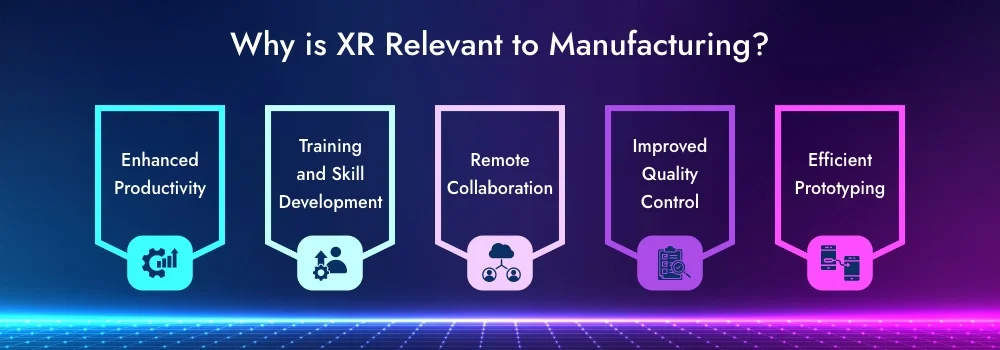
Extended reality manufacturing app development has become relevant for several compelling reasons:

XR Benefits in the Industry are spreading widely. With the below-listed XR Benefits for Manufacturers, the industry is growing rapidly by implementing XR.

Why is XR Relevant to Manufacturing
  • Enhanced Productivity: XR technologies streamline processes, reduce errors, and enhance productivity on the factory floor.
  • Training and Skill Development: XR provides a safe and cost-effective environment for training employees, especially in high-risk industries.
  • Remote Collaboration: XR enables experts to provide remote assistance, reducing downtime and minimizing travel costs.
  • Improved Quality Control: XR aids in identifying defects, and ensuring products meet stringent quality standards.
  • Efficient Prototyping: XR facilitates the rapid development and testing of prototypes, saving time and resources.

XR applications in manufacturing

Extended Reality Manufacturing Solutions is becoming a versatile tool. Some of the applications are as follows:

Product design and prototyping

Manufacturers can create and manipulate 3D prototypes, allowing for more efficient and accurate design iterations.

Virtual training and simulation

XR provides a safe environment for employees to train and simulate complex tasks, reducing the risk of accidents and errors.

Remote inspection and maintenance

Technicians can remotely inspect and maintain complex machinery, reducing downtime and improving maintenance efficiency.

Quality control and assurance

XR technologies help in identifying defects and ensuring products meet the highest quality standards.

Process optimization

Manufacturers can use XR to visualize and optimize production processes, reducing waste and improving efficiency.

Supply chain management

XR assists in tracking inventory and managing the supply chain more efficiently, ensuring products reach customers on time.

Extended reality manufacturing solutions development

Implementing extended reality manufacturing solutions is developing a structured approach:

Identify your needs and goals

Begin by identifying the specific areas in your manufacturing process that can benefit from XR. Set clear goals to measure the success of the implementation.

Choose the right XR technology for your application

Select the most suitable XR technology—AR, VR, or MR—based on the requirements of your application.

Develop or select an XR solution

Depending on the complexity of your needs, you can either develop a custom XR solution or choose from existing ones.

Integrate the XR solution into your manufacturing workflow

Ensure a seamless integration of XR into your existing processes, considering hardware, software, and user interfaces.

Train your employees to use the XR solution

Comprehensive training is crucial for the successful adoption of XR technology. Provide hands-on training to ensure your employees are comfortable with the new tools.

ViitorCloud uses Extended Reality to develop customized solutions according to your requirements.

Extended reality manufacturing solutions examples

Real-world examples of Extended Reality Manufacturing solutions are given below:

  • Boeing employs AR glasses to guide workers through the intricate process of assembling aircraft wiring, reducing errors and improving efficiency.
  • BMW utilizes VR simulations to train employees in complex production processes, ensuring they are well-prepared for real-world tasks.
  • Siemens employs AR technology to guide technicians in maintaining complex machinery, reducing downtime and saving on travel costs.
  • Ford utilizes MR to allow workers to visualize and inspect products in real-time, improving quality control and reducing errors.

Best Practices for implementing XR manufacturing solutions

Extended reality manufacturing solutions are transforming the industry. These technologies offer innovative solutions that improve efficiency, safety, and productivity.

ViitorCloud helps in the successful implementation of XR manufacturing solutions which requires careful planning and process to best practices.

Here are some key guidelines for a successful XR integration in manufacturing:

Start small and scale up gradually

Begin with pilot projects in specific areas of your manufacturing process. Once proven successful, expand XR implementation to other areas.

Get buy-in from employees and stakeholders

Involve employees and key stakeholders in the decision-making process to ensure support and enthusiasm for XR adoption.

Provide adequate training

Invest in comprehensive training programs to equip your workforce with the skills needed to effectively use XR technology.

Measure and track results

Continuously monitor the impact of XR in Smart Factories, on your manufacturing processes, and optimize performance.

Conclusion

The future of Extended Reality in manufacturing is promising. XR technologies offer innovative solutions to enhance productivity, improve quality control, and provide cost-effective training.

As manufacturing professionals, embracing XR can revolutionize your operations, keeping you at the forefront of the industry’s evolution.

Develop your projects with extended reality manufacturing solutions, because it’s not just a trend, it is here to stay.

Frequently asked questions

How to implement XR in manufacturing?

Implementing Extended Reality Manufacturing solutions involves defining needs, selecting the right technology, integrating it into workflows, and providing thorough employee training.

How does XR improve manufacturing productivity?

XR improves manufacturing productivity through streamlined processes, reduced errors, and efficient training, leading to enhanced efficiency on the factory floor.

How does XR reduce manufacturing costs?

XR reduces manufacturing costs by minimizing the need for physical prototypes, enabling remote maintenance, and lowering travel expenses through remote collaboration.

How could the manufacturing sector utilize extended reality?

The manufacturing sector can utilize extended reality for product design, training, remote collaboration, quality control, and supply chain management, among other applications.

What are some use cases of XR in manufacturing?

Some use cases of XR in manufacturing include AR-guided assembly, VR-based training simulations, MR-enhanced inspections, and AR-driven quality control.