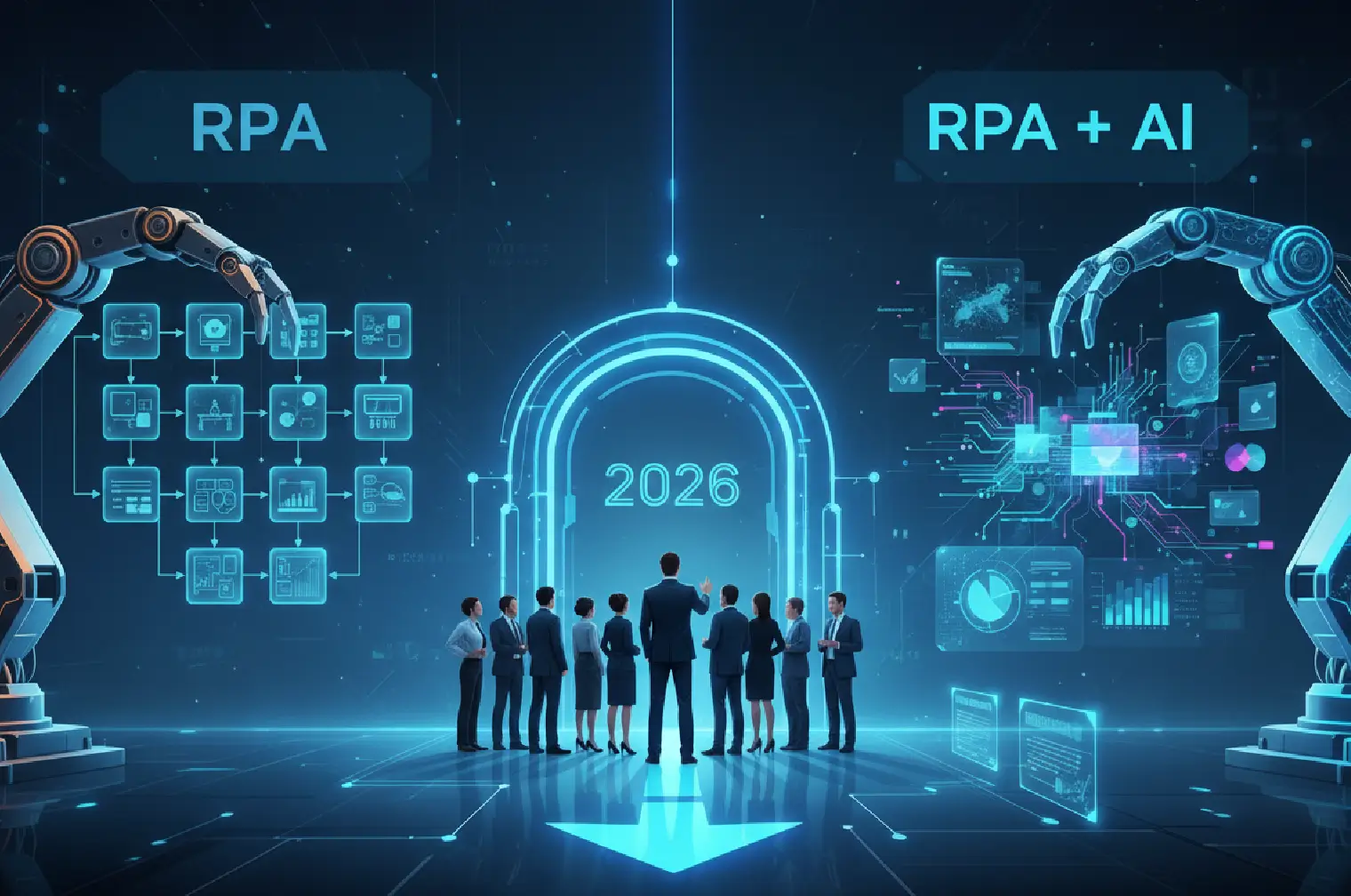
SaaS founders currently operate in a market where standard software automation is a baseline requirement. The competitive advantage now shifts toward building a SaaS with embedded AI.
This approach moves intelligence from a secondary feature to the primary engine of the platform. Building a scalable SaaS with embedded AI requires a focus on architectural decoupling, data governance, and specialized engineering.
SaaS is Shifting to AI-First Architecture
A traditional SaaS application follows a request-response cycle. An AI-first SaaS platform uses continuous learning loops. To achieve this, the engineering team must implement an AI integration strategy that separates the user interface from the inference engine. This separation prevents the heavy computational load of model processing from slowing down the user experience.
When a founder chooses AI integration, they must decide between synchronous and asynchronous processing. Asynchronous processing allows the system to handle large datasets without blocking the main thread. This technical choice is a core component of SaaS product engineering at scale.
According to industry research, companies that transition to these models see significant improvements in operational efficiency (McKinsey & Company).
Many Choose Custom AI Solutions for Differentiation
Generic artificial intelligence tools often provide generic results. For a SaaS to provide high value, it must offer custom AI solutions that use proprietary customer data. These custom AI solutions address vertical-specific challenges in industries like fintech, healthcare, and logistics.
For example, a generic model might summarize a text, but custom AI solutions can identify specific medical anomalies or predict supply chain delays based on historical private records.
Implementing custom AI solutions allows a business to create a proprietary data moat. This moat makes the product harder for competitors to copy. You can learn more about how these tailored tools drive ROI in our guide to custom AI solutions for SaaS.
Build Scalable SaaS with Embedded AI
Accelerate growth with Custom AI Solutions and expert SaaS Product Engineering tailored to your product vision.
Leveraging Professional AI Integration Services
Building a production-ready AI system requires deep technical knowledge of MLOps, vector databases, and API security. Many startups utilize AI integration services to accelerate their time to market. These services provide the engineering framework needed to connect large language models to existing software databases.
By hiring professional AI integration services, founders reduce the risk of technical debt. Specialized services ensure that the model remains accurate over time through continuous monitoring and retraining. This managed approach is essential for maintaining the reliability of a SaaS with embedded AI. Founders can explore our specialized AI integration services and solutions to understand the technical requirements of this process.
Technical Comparison: Implementation Strategies
The following table compares different methods for embedding intelligence into a software platform.
| Feature | Off-the-Shelf APIs | Custom AI Solutions | Hybrid Integration |
| Development Speed | High | Low | Medium |
| Data Privacy | Low | High | High |
| Cost Control | Variable (API usage) | Fixed (Infrastructure) | Balanced |
| Accuracy | General | High (Domain-specific) | High |
Architecting for Scalability and Performance
Scalability in a SaaS with embedded AI depends on how the system handles data pipelines. Developers must build robust ETL (Extract, Transform, Load) processes to feed data into the models. The AI integration process must include a vector database to manage semantic search and retrieval-augmented generation (RAG).
Without a structured AI integration plan, the cost of running inference can exceed the revenue generated from the feature. Effective engineering teams use model quantization and caching to lower these costs. This level of optimization is a primary focus for system integration services when modernizing legacy SaaS platforms.
Turn Your SaaS Idea into an AI-Driven Product
Leverage Custom AI Solutions and proven SaaS Product Engineering to build intelligent, scalable applications.
The Importance of Custom AI Solutions in Regulated Markets
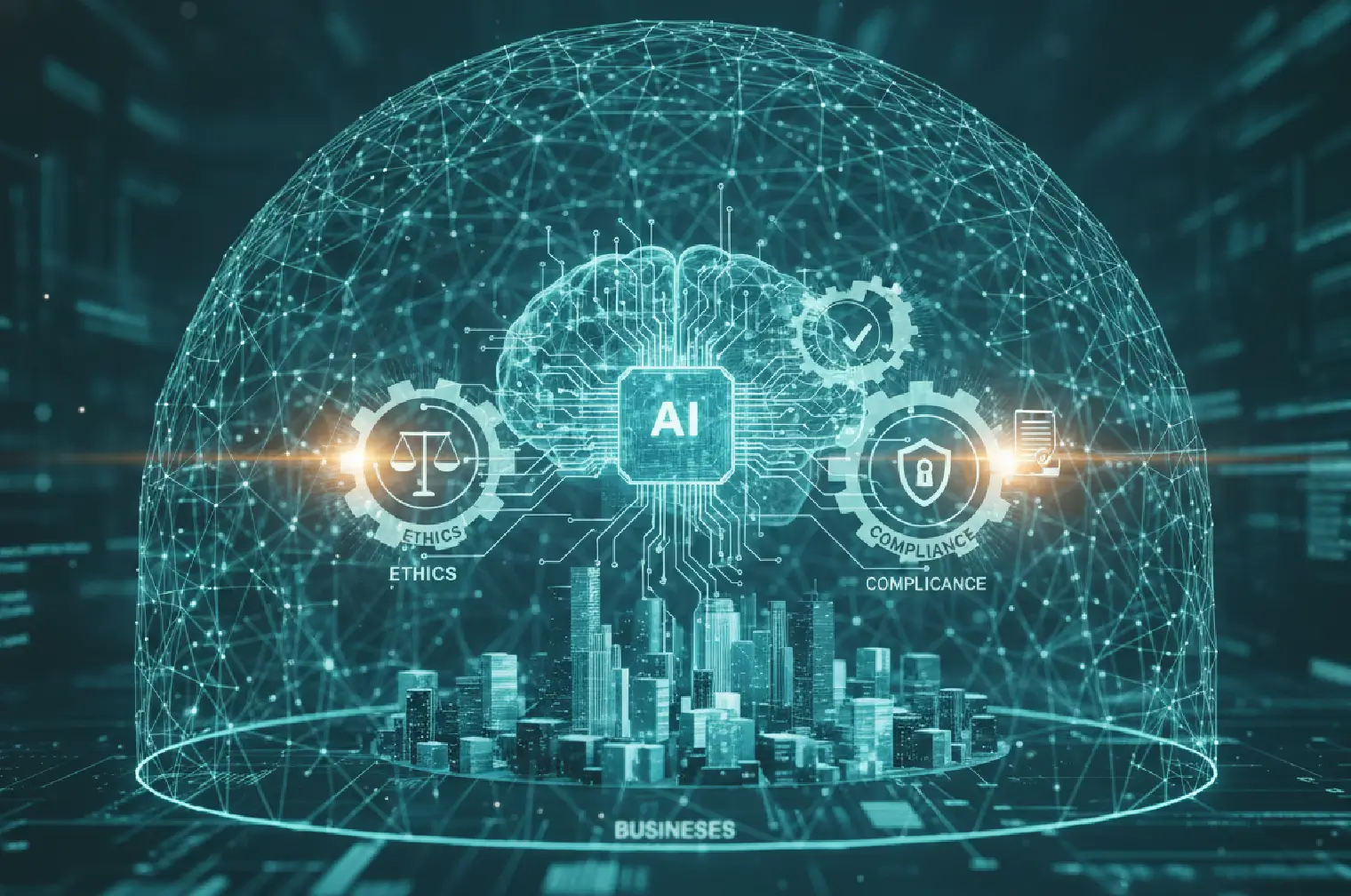
In markets like the United States and Europe, data residency and privacy laws are strict. Using custom AI solutions allows founders to keep data within their own secure cloud environment. Unlike public AI tools, custom AI solutions do not use client data to train public models. This control is vital for compliance with GDPR and HIPAA.
Furthermore, custom AI solutions allow for better explainability. In highly regulated sectors, the system must explain why it reached a specific conclusion. This is only possible when the engineering team has full control over the model’s weights and training parameters. For more details, see our analysis of 7 benefits of custom AI solutions for small businesses.
Optimize Costs with AI Integration Services
Compute costs are the largest expense for a SaaS with embedded AI. Third-party AI integration services help founders implement cost-monitoring tools that track spending at the user level. This data allows for more accurate seat-based or usage-based pricing models.
Managed AI integration services also handle the complexities of model versioning. As new models become available, AI integration services facilitate seamless transitions without breaking existing user workflows. This ensures that the platform remains at the cutting edge of technology without requiring a complete rebuild.
Execution Roadmap for SaaS Founders
- Discovery: Identify the specific user pain points that require intelligence.
- Architecture Design: Define the microservices and data pipelines required for AI integration.
- Prototyping: Develop an MVP using custom AI solutions to validate the core value proposition.
- Integration: Partner with AI integration services to build secure, scalable APIs.
- Monitoring: Use MLOps to track model performance and user feedback.
Research published in ResearchGate highlights that the most successful implementations are those that prioritize data quality over model size. High-quality, clean data is the fuel for effective custom AI solutions.
The Competitive Edge of AI-First Engineering
Adopting an AI-first mindset changes the way a product evolves. Instead of manual feature updates, the platform uses feedback loops to improve its suggestions and automations. This level of AI integration creates a self-improving system.
When a company invests in custom AI solutions, it creates a product that is uniquely tailored to its users. This leads to higher retention rates and lower churn. Professional AI integration services provide the technical backbone to sustain this growth over multiple years.
To maintain SEO and AEO visibility, the content on your platform must consistently demonstrate technical authority. Integrating these advanced technologies is a multi-step journey. You can read more about this evolution in our post on AI-first SaaS development.
Scale Smarter with AI-Powered SaaS
Design, build, and scale faster using Custom AI Solutions backed by robust SaaS Product Engineering.
Conclusion
Building a scalable SaaS with embedded AI is a requirement for modern software growth. Success depends on choosing the right AI integration strategy and utilizing custom AI solutions to differentiate from competitors. By leveraging professional AI integration services, founders can navigate the complexities of deployment and focus on their core business objectives.
ViitorCloud offers the engineering expertise and AI integration services required to build and scale your next-generation platform. Whether you need to implement custom AI solutions for a niche market or optimize your existing AI integration, our team provides the technical roadmap to success.
Contact our team for experienced expert services at [email protected] and set up a complimentary consulting call.
Frequently Asked Questions
What is a SaaS with embedded AI?
A SaaS with embedded AI is a software platform where artificial intelligence is integrated directly into the core workflows rather than being an optional add-on. This architecture allows the software to perform predictive tasks, automate complex decision-making, and provide personalized user experiences natively. Effective AI integration ensures these features scale alongside the user base without compromising system latency.
How do custom AI solutions benefit SaaS startups?
Custom AI solutions provide a competitive advantage by training models on proprietary, industry-specific data that generic LLMs cannot access. These tailored systems offer higher accuracy for specialized tasks, such as medical coding or financial fraud detection. Implementing custom AI solutions also ensures greater data privacy and compliance with regional regulations like GDPR or HIPAA by keeping data within private cloud environments.
Why should founders use professional AI integration services?
Professional AI integration services provide the technical expertise required to build secure, scalable, and cost-efficient machine learning pipelines. These services handle the complexities of MLOps, vector database management, and model versioning, which reduces technical debt. By leveraging AI integration services, founders can accelerate their time to market while ensuring their AI integration remains stable as the product grows.
What is the cost of implementing AI integration in software?
The cost varies based on whether a company uses third-party APIs or develops custom AI solutions. API-based models involve variable usage fees, while custom AI solutions require upfront investment in infrastructure and data engineering. Utilizing managed AI integration services helps businesses optimize these costs by implementing efficient caching, model quantization, and consumption-based pricing models.